How to Carve a Wood Bowl by Hand: Tools, Wood and 8 Steps
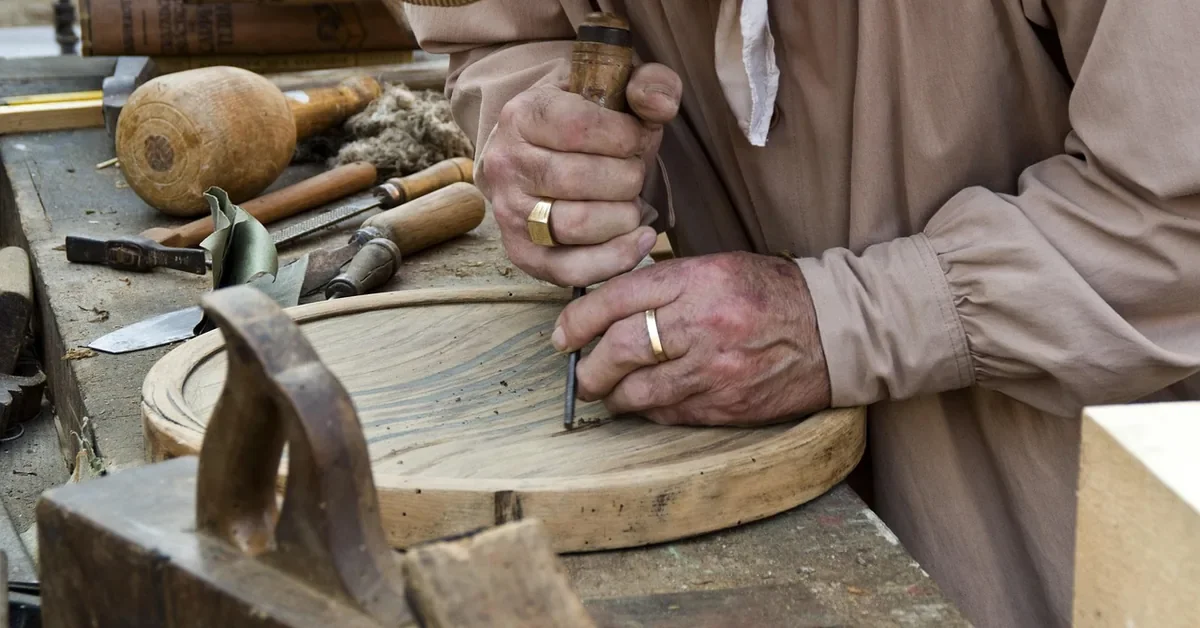
You can carve a wood bowl by hand with three core tools: a carving axe to rough out the blank, an adze to hollow it, and a hook knife to refine the walls. Green (freshly cut) wood carves far more easily than dry lumber, but it shrinks as it dries, so the walls start thicker than the finished size. This guide covers the tools, the right wood, eight steps, drying, and a food-safe finish.
Tools You Need to Carve a Wood Bowl by Hand
Best Bowl Hook Knife Pick
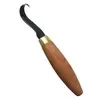 | Flexcut Single Bevel Sloyd Hook Knife (KN52), $62.95 A hook knife is the tool for the pulling cuts in steps 5 and 6 below, where you smooth the inside curve and even out the wall thickness.
|
As an Amazon Associate we earn from qualifying purchases.
A hand-carved bowl needs fewer tools than most people expect, but each one has a distinct job. Sharpness matters more than price: a dull edge needs more force, and forced cuts are how carvers get hurt.
| Tool | Job | Handling note |
|---|---|---|
| Carving axe (small hatchet) | Rough out the outside shape and remove bulk waste | Chop on a stump or chopping block, not the ground, so the edge stays sharp |
| Bowl adze (curved blade) | Hollow the inside quickly | Swing away from your legs and keep your off hand clear of the arc |
| Hook knife | Refine the inside curve and even out the walls | Use pulling strokes; the cutting edge is on the inside of the hook |
| Straight (sloyd) knife | Shape the outside, rim and foot | Also cleans up adze marks near the rim |
| Bent gouge and mallet (optional) | Alternative to an adze for hollowing | See our guide on how to gouge wood for sweep numbers and angles |
| Calipers or your fingers | Check wall thickness as you go | Pinching the wall works for small bowls |
| Strop and honing compound | Keep every edge sharp | Strop often, before the edge feels dull |
You also need a way to hold the work. A bowl clamp, a bench vise or a chopping stump with the blank pinned in place all work. What does not work is holding the blank in your lap or against your body while you cut.
Carving Safety That Matters Most
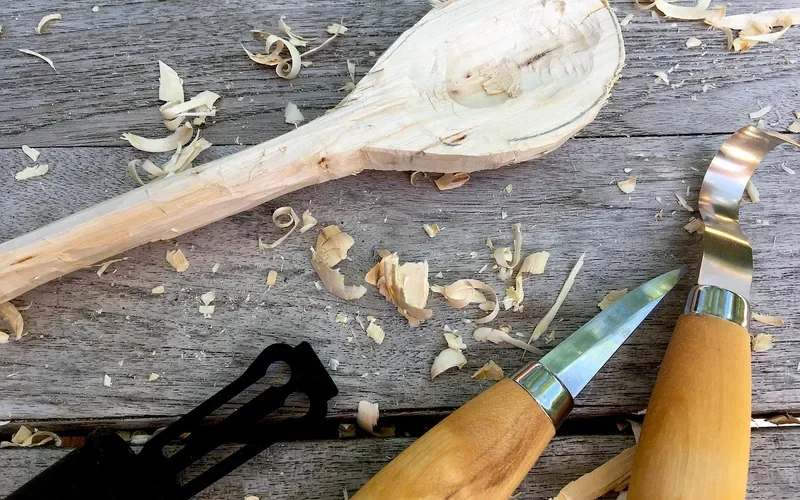
- Wear a cut-resistant glove on the hand that holds the wood. It reduces slice cuts, but a sharp hook-knife point can still puncture, so keep both hands out of the blade path.
- Wear safety glasses whenever you swing an axe or adze; green wood throws wet chips.
- Clamp or pin the blank so it cannot roll or slide while you cut.
- Keep your feet and legs out of the swing path, and never adze toward your own legs.
- Stop when you are tired. Most carving cuts happen late in a long session.
Best Wood for Carving a Bowl (and Why Green Wood Is Easier)
Fresh-cut green hardwood cuts in long, clean shavings, while dry hard maple or oak fights every stroke. Cherry, maple, birch, apple and walnut are the classic choices, and basswood is the softest and easiest for a practice bowl. Oak works when green but is harder on your edges once it dries; our oak carving guide covers the grain risks. If the bowl will hold food, the species that make good spoons also make good bowls, as ranked in our best wood for cooking utensils guide.
Sugar maple shrinks 9.9% around the growth rings but only 4.8% across them between green and oven-dry. That difference is why a round green bowl dries slightly oval. Source: USDA Forest Products Laboratory, Wood Handbook, Chapter 4 (2021)
| Wood | Radial shrinkage | Tangential shrinkage | Carving note |
|---|---|---|---|
| Black cherry | 3.7% | 7.1% | Carves cleanly and moves less than most; a favorite |
| Black walnut | 5.5% | 7.8% | Carves well and shows off dark heartwood |
| Sugar (hard) maple | 4.8% | 9.9% | Strong but moves the most; expect an oval bowl |
| American basswood | 6.6% | 9.3% | Very soft and easy; best for a first practice bowl |
The practical takeaway is to carve the walls thick, let the bowl dry, then finish-carve. You can also accept a gently oval shape, which many carvers consider part of the charm of a green-wood bowl.
How to Carve a Wood Bowl: 8 Steps
- Choose and split the log: Pick a straight, crack-free green log about 8 to 12 inches across and split it through the pith. Use one half as your blank and keep the pith out of the bowl, since it is the most crack-prone part.
- Mark the outline: Draw the rim outline and a centerline on the flat split face, leaving a margin around it. The flat face becomes the opening and the bark side becomes the base.
- Rough out the outside with the axe: Pin the blank to a chopping block and chop away bark and waste toward your outline, cutting downhill with the grain and stopping short of the line.
- Hollow the inside with the adze: Work from the rim toward the center in stages, removing bulk with the adze while keeping your legs and off hand out of the swing path.
- Refine the inside with the hook knife: Switch to short pulling cuts with the hook knife to smooth the curve and even out the wall, generally cutting from the rim downward toward the bottom.
- Check wall thickness: Pinch the wall between thumb and finger or use calipers, and stop at about 10 percent of the bowl’s diameter if the bowl still has to dry.
- Shape the outside and rim: Use the sloyd knife to round the outside, soften the rim and cut a slightly flat foot so the bowl sits stable.
- Dry, then sand and finish: Let a rough-carved bowl dry slowly, then finish-carve, sand from 120 to 220 grit and apply a food-safe oil.
How Thick Should the Walls Be?
A common rule of thumb is to leave the walls at about 10 percent of the bowl’s diameter while the wood is still green. This is a guideline from carving practice, not a code, but it gives the wood room to warp safely while it dries.
| Bowl diameter | Wall while drying (about 10%) | Wall after drying and finishing |
|---|---|---|
| 6 in | about 5/8 in | about 1/4 in |
| 8 in | about 3/4 in | 1/4 to 3/8 in |
| 10 in | about 1 in | about 3/8 in |
Reading the Grain While You Hollow
If the wood tears or the surface turns fuzzy, you are cutting against the grain. Turn the bowl and approach the cut from the other direction, or take a lighter pass. Cutting downhill, in the direction the fibers slope toward the surface, leaves the smoothest walls. If you are new to knife work in general, our beginner guide to carving wood and easy whittling projects are good practice before you commit to a bowl.
How to Dry a Carved Green Bowl Without Cracking
Cracks start at the end grain and the pith, so slow the drying there first. Brush a wax-based end-grain sealer or a thick coat of wax on the rim ends, then let the bowl dry slowly out of sun and away from heaters. Our green wood bowl drying guide compares six methods; the paper bag method, with the bowl wrapped in damp shavings, takes roughly 2 to 3 months.
To know when a bowl is ready, weigh it every few days. When the weight stops dropping, the bowl has reached equilibrium with your room, and it is safe to finish-carve and sand it.
Sanding and Finishing a Hand-Carved Bowl
Sand through 120, 180 and 220 grit, working with the grain. Wipe the bowl with a damp cloth to raise the grain, let it dry, and do a final light pass at 220. Many carvers leave the crisp knife facets on the inside and sand only the rim and outside, which is a matter of taste.
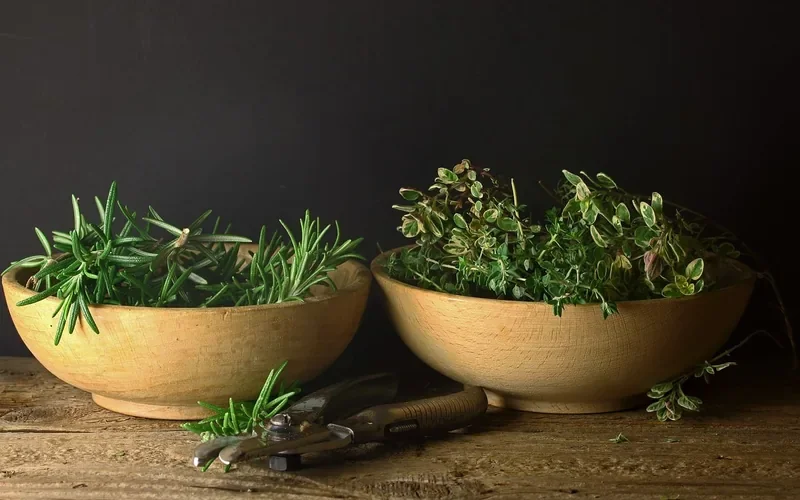
For a bowl that will hold food, wipe-on oils are the usual choice. Food-grade mineral oil never cures and needs periodic reapplying, while pure tung oil cures harder over several weeks; our tung oil vs mineral oil comparison explains the trade-off. Avoid nut oils on bowls you plan to give away, since nut allergies are a real concern.
Common Mistakes When Carving a Bowl
- Carving the walls thin while green. Thin green walls warp and crack as they dry. Leave them near 10 percent of the diameter.
- Leaving the pith in the bowl. The center of the log is the most crack-prone part.
- Working with dull edges. Dull tools need force, and force means slips. Strop often.
- Cutting against the grain. It tears the wood and leaves a rough surface that no amount of sanding fixes quickly.
- Drying in the sun or by a heater. Fast drying is the main cause of cracks.
- Skipping clamps. A blank that moves mid-cut is a cut waiting to happen.
Carve by Hand or Turn on a Lathe?
Hand carving needs only a few inexpensive tools and no power, which makes it a good entry point. Turning on a lathe is quicker once you own the equipment and gives perfectly round bowls. If you have a lathe, start with our ash wood bowl lathe guide instead.
Frequently Asked Questions About Carving a Wood Bowl
What tools do you need to carve a wooden bowl?
At minimum you need a carving axe for roughing out the shape, a curved adze for hollowing, and a hook knife for refining the inside. A straight sloyd knife, a way to hold the blank securely, and a strop to keep the edges sharp complete the kit. A cut-resistant glove and safety glasses are worth adding.
What is the best wood for carving a bowl?
Freshly cut green hardwood carves best. Cherry, maple, birch, apple and walnut are the usual choices, and basswood is the easiest for a first practice bowl because it is soft. Pick a straight, crack-free log and avoid woods that are toxic or irritating if the bowl will hold food.
Can you carve a bowl without a lathe?
Yes. Hand-carving needs only an axe, an adze, a hook knife and a way to hold the wood. It is slower than turning on a lathe, but the tools are inexpensive, quiet and need no power, and green wood makes the work much easier.
How thick should the walls of a carved bowl be?
For a bowl that still has to dry, leave the walls at roughly 10 percent of its diameter, about 3/4 inch on an 8 inch bowl. After drying, finish-carve and sand the walls to roughly 1/4 to 3/8 inch. Even thickness matters more than the exact number.
Why did my carved bowl crack while drying?
Cracks usually come from drying too fast, from thin walls carved while the wood was green, or from leaving the pith in the bowl. Wood shrinks about twice as much around the growth rings as across them, so uneven or rapid drying builds stress. Dry the bowl slowly, seal the end grain, and keep the walls even.
Is a hand-carved wooden bowl food safe?
The wood itself is safe if you choose a non-toxic species, and the finish decides the rest. Food-grade mineral oil or a beeswax and oil blend is the usual choice for bowls that hold food. Avoid nut oils if the bowl will be given to others, because of nut allergies.
Final Thoughts
Carving a bowl is mostly patience: split a green log, rough it out with the axe, hollow it with the adze and hook knife, and keep the walls thick until the wood has dried. Start with basswood or cherry, keep your tools sharp, and your first bowl will be a solid one.
Sponsored / affiliate links. As an Amazon Associate I earn from qualifying purchases. I may earn additional commission from eligible campaigns.