How to Clean an Area Rug on a Wood Floor Without Damaging It
Clean an area rug on a wood floor by vacuuming both sides, spot-cleaning stains with mild detergent, and letting it dry fully — but only after laying a plastic sheet or drop cloth underneath, since wet cleaning is when a PVC-backed rug pad can leach residue into the finish below. This guide covers vacuuming, spot-cleaning, shampooing, drying times, and protecting the floor underneath before you start.
Preparing For Deep Cleaning
Best Hardwood-Safe Rug Pad Pick

RUGPADUSA Dual Surface Felt + Rubber Rug Pad 8’x10′ – $84.94
100% felt on top, natural rubber underneath — no PVC or solvent adhesives, so it’s safe to leave down through the wet shampoo or steam cleaning covered above.
- Best for: large area rugs staying on hardwood long-term
- Why we picked it: passes the felt/rubber-only test this guide’s floor-protection section covers
- Main drawback: pricier than PVC pads, but that’s the safety trade-off
Compare more hardwood-safe rug pad sizes
 Option 1 Mohawk Home 8’x10′ Felt + Rubber – $60.00
|
 Option 2 BAGAIL Felt + Natural Rubber 5’x7′ – $36.99
|
 Option 3 Mohawk Home 3’x5′ Felt + Rubber – $19.99
|
As an Amazon Associate we earn from qualifying purchases.
Before you begin deep cleaning your area rug on a wood floor, it’s important to properly prepare for the task at hand. By following these simple steps, you’ll ensure that your cleaning process goes smoothly, effectively removing dirt, stains, and spots.
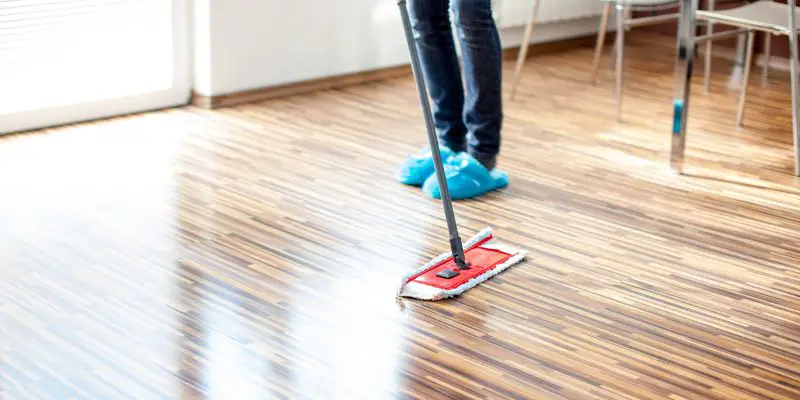
Removing Loose Dirt And Debris
- Start by vacuuming the area rug on a low-power setting to remove loose dirt and debris. If the rug is small enough, you can also shake it outside to get rid of any loose particles.
- Use a soft-bristle brush or broom to gently loosen any stubborn dirt or pet hair from the rug fibers.
- For heavily soiled rugs, consider using a carpet rake to further remove ingrained dirt. A carpet rake consists of closely spaced metal bristles that help agitate the rug fibers, loosening embedded dirt for more effective cleaning.
Identifying Stains And Spots
Once the loose dirt and debris have been removed, it’s time to identify and tackle any stains or spots on your area rug. Here’s how you can do that:
- If you notice any specific stains, try to identify their origin. This will help you choose the most suitable cleaning solution.
- Prepare a cleaning solution appropriate for the type of stain you are dealing with. For example, for water-based stains, a mild detergent mixed with warm water may be sufficient. For oil-based stains, a specialized rug cleaner or a mixture of vinegar and water can be effective.
- Test the cleaning solution on a small, inconspicuous area of the rug to ensure it doesn’t cause any discoloration or damage. Once the solution passes the test, apply it to the stained area using a clean cloth or sponge, gently blotting the stain until it lifts.
- For stubborn stains that don’t respond to the cleaning solution, consider contacting a professional rug cleaner for assistance.
Now that you’ve removed loose dirt and identified stains or spots, you’re prepared to protect the floor underneath and deep clean the rug itself.
Protect Your Wood Floor Before You Start Cleaning
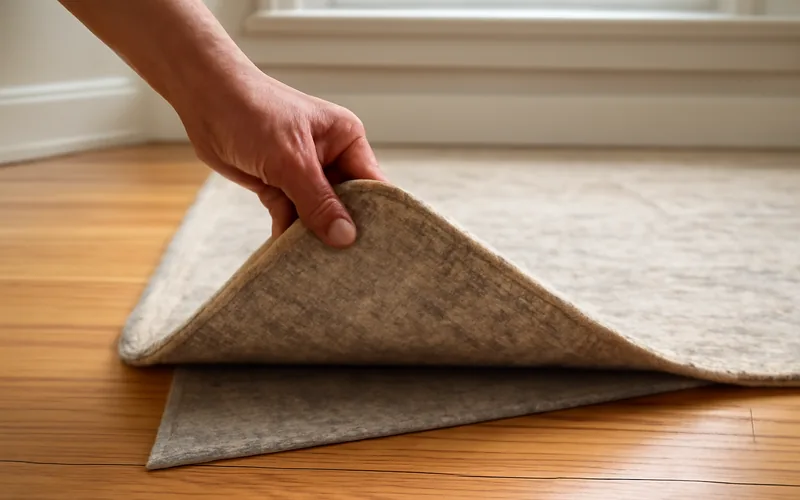
Lay a plastic sheet or waterproof drop cloth under the rug before you spot-clean or shampoo it. Floor damage from rug cleaning almost always comes from moisture or chemicals seeping down through the pad — not from the cleaning itself.
Check the rug pad’s backing before you get it wet. Felt and natural-rubber pads are safe to leave in place, but PVC, vinyl, and solvent-adhesive pads contain plasticizers that leach out faster once damp, leaving a hazy, rug-shaped stain in the finish that usually needs sanding and refinishing to fix — not just cleaning.
If you’re shopping for a pad that won’t put the floor at risk, our guide to rug pads for wood floors lists the felt and rubber options that pass that test, and our rug color guide for dark wood floors covers the same pad-safety check at the point you’re buying the rug.
Planning to steam clean instead of shampooing? Keep the steamer head at least 6 inches from the rug surface and use a lower heat setting — high heat close to the pile can warp the hardwood underneath even with a plastic barrier in place.
📊 A wet PVC or solvent-adhesive rug pad can leach enough plasticizer to permanently discolor a hardwood finish, typically requiring a sand-and-refinish rather than a simple cleaning. — Source: Rug Pad USA, 2026
Deep Cleaning Methods
Cleaning your area rug is an essential part of maintaining its beauty and prolonging its lifespan. While regular vacuuming helps to remove surface dirt, deep cleaning methods are necessary to tackle tough stains and restore the rug’s freshness. In this section, we will explore three effective deep cleaning methods: vacuuming the rug, spot cleaning stains, and shampooing the rug.
Vacuuming The Rug
Vacuuming is the first step in deep cleaning your area rug. It helps to remove loose dirt, allergens, and debris that accumulate over time. Follow these steps to vacuum your rug:
- Start by removing any furniture or obstacles from the rug.
- Adjust the vacuum’s height to the appropriate setting based on the rug’s pile and thickness.
- Ensure that the vacuum cleaner has a clean bag or filter.
- Before vacuuming, gently beat the rug to shake loose any embedded dirt.
- Slowly run the vacuum over the entire surface of the rug, paying particular attention to high-traffic areas and corners.
- For rugs with fringes or tassels, use the vacuum’s upholstery attachment to prevent damage.
- Repeat the process at least twice to ensure thorough cleaning.
Spot Cleaning Stains
Accidents happen, and when they do, it’s important to act quickly to prevent stains from setting in. Spot cleaning can effectively remove isolated stains on your area rug. Follow these guidelines for spot cleaning:
- Blot the stained area with a clean, white cloth or paper towel to absorb any excess liquid.
- Do not rub the stain as it may cause it to spread.
- Apply a small amount of mild detergent diluted with water to the stained area.
- Gently blot the stain with the cleaning solution, working from the outer edges toward the center.
- Rinse the area with clean water and blot dry.
- Repeat the process if necessary until the stain is fully removed.
Shampooing The Rug
For a more thorough deep clean, shampooing your area rug can revive its appearance and eliminate embedded dirt and odors. Here’s how to shampoo your rug:
- Prepare the rug by vacuuming it thoroughly to remove loose dirt.
- Select a suitable rug shampoo or mild detergent designed for the type of rug fiber.
- Foam or mix the shampoo according to the manufacturer’s instructions.
- Apply the foam or mixed solution to the rug using a sponge or soft bristle brush.
- Gently work the shampoo into the fibers using circular motions, focusing on heavily soiled areas.
- Avoid saturating the rug with excessive moisture.
- Rinse the rug with clean water using a damp cloth or sponge.
- Remove excess water by blotting with a dry towel.
- Allow the rug to air dry completely, 24 to 48 hours in a well-ventilated room, before placing it back on the wood floor.
Always refer to the manufacturer’s guidelines and test any cleaning solutions on a small inconspicuous area before applying them to the entire rug.
Drying And Maintaining
Properly drying and maintaining an area rug on a wood floor is essential to preserve its beauty and extend its lifespan. Plan on 24 to 48 hours to dry fully in a well-ventilated room with fans running — longer for a thick shampooed rug or humid weather. Setting a damp rug back down early traps moisture against the finish and is one of the more common causes of cupped or discolored boards under a rug.
Properly Drying The Rug
Improper drying can lead to mold, mildew, and damage to both the rug fibers and the wood floor beneath it. To properly dry your area rug, follow these steps:
- After cleaning, gently squeeze out any excess water from the rug.
- Hang the rug in a well-ventilated area with sufficient air circulation.
- Avoid direct sunlight, as it can cause fading or discoloration.
- Alternatively, lay the rug flat on a clean surface, making sure to flip it regularly to promote even drying.
Brushing And Fluffing The Fibers
Brushing and fluffing the fibers of your area rug after drying helps restore its texture and appearance. Follow these steps for best results:
- Using a soft-bristle brush or a rug rake, gently brush the fibers in the direction of the pile to remove any tangled or matted areas.
- Avoid excessive brushing, as it can cause damage to the rug fibers.
- If necessary, lightly vacuum the rug using a brush attachment to remove any loose dirt or debris.
Regular Maintenance Tips
- Vacuum your rug at least once a week to remove dirt and prevent it from settling into the fibers.
- Use a rug pad underneath the area rug to provide cushioning, prevent slipping, and protect the wood floor from scratches.
- Rotate the rug every few months to minimize wear and tear and ensure even exposure to sunlight.
- Blot spills and stains immediately using a clean cloth or paper towel. Avoid rubbing, as it can cause the stain to spread.
- Avoid placing heavy furniture directly on the rug to prevent flattening and indentations.
- Trim any loose threads or fringes to maintain a neat appearance.
- For a heavily soiled rug beyond a quick refresh, see our guide to deep-cleaning very dirty wood floors for the floor itself once the rug is off it.
Frequently Asked Questions For How To Clean Area Rug On Wood Floor
How Do You Clean An Area Rug Without Damaging Hardwood Floors?
Vacuum the rug regularly to remove loose dirt, then lay a plastic sheet under it before spot-cleaning with a damp cloth so moisture can’t reach the floor. Use a felt or rubber (not PVC) rug pad, choose a cleaner made for hardwood-adjacent use, and let the rug dry completely before setting it back down.
Should You Put Area Rugs On Hardwood Floors?
Yes, area rugs can be placed on hardwood floors. They provide both aesthetic appeal and functional benefits. Rugs protect the floor from scratches and damage, add warmth and cozy feel, reduce noise, and enhance the overall decor.
How Do You Clean An Area Rug Without Moving It?
Start by vacuuming it thoroughly. Then mix a solution of mild detergent and water, and spot clean any stains using a soft-bristle brush. Blot the area with a damp cloth and allow it to air dry. Finally, use a fabric freshener to eliminate any odors.
How Do You Remove Rug Residue From Hardwood Floors?
Vacuum to remove loose dirt, then mix equal parts water and vinegar and dampen a cloth with the solution. Gently scrub the residue, then wipe with a clean, damp cloth. Dry the area thoroughly to prevent damage. For pet-related residue specifically, see our guide to removing cat urine from hardwood floors.
Do You Need A Rug Pad When Cleaning A Rug On A Hardwood Floor?
Yes, but check its backing first. A felt or natural-rubber pad is safe to leave down during wet cleaning; a PVC or solvent-adhesive pad should come out before you shampoo or steam-clean, since moisture speeds up the plasticizers that stain a hardwood finish. If you’re not sure what your pad is made of, treat it as unsafe and remove it before cleaning. For the full risk breakdown and a safer method, see our guide on steam cleaning a rug on hardwood floors.
How Long Should A Rug Dry Before Going Back On A Hardwood Floor?
Give it 24 to 48 hours in a well-ventilated room with fans running, longer for a thick shampooed rug or humid weather. Setting a damp rug back down early traps moisture against the finish, which is one of the more common causes of cupped or discolored boards.
Conclusion
Maintaining the cleanliness of your area rug on a wood floor is crucial for a healthier living environment and a floor finish that lasts. By protecting the floor with a barrier before you clean, checking the rug pad’s backing, and giving the rug enough time to dry, you can keep both the rug and the hardwood underneath it looking their best.
Sponsored / affiliate links. As an Amazon Associate I earn from qualifying purchases. I may earn additional commission from eligible campaigns.