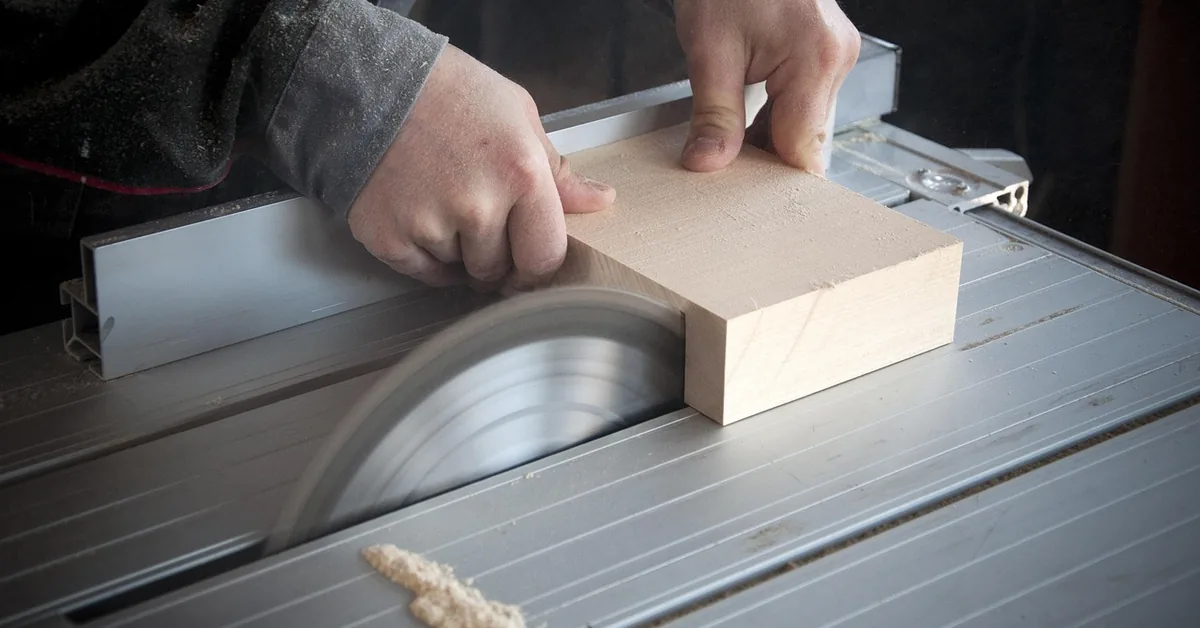
How to Cut an Octagon on a Miter Saw (22.5-Degree Setup)
Cutting a regular octagon on a miter saw means setting the miter angle to 22.5 degrees for every cut, not 45 — a true octagon has a 135-degree interior angle at each corner. Get the angle wrong and the last board won’t sit flush, forcing a re-cut. This guide covers the exact saw setup, how to calculate cut length before you touch the saw, and the stop-block trick that keeps all eight boards identical.
Tools and Materials
Best Angle Finder Pick
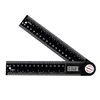
GemRed 82305 Aluminum Digital Angle Finder – $17.99
Confirms your saw’s 22.5° detent is actually 22.5° before you cut all eight boards — the check this guide’s Step 2 recommends.
- Best for: verifying miter angle accuracy before a multi-board cut
- Why we picked it: magnetic base holds it against the saw table or blade for a hands-free reading
- Main drawback: needs a battery and occasional re-calibration on a flat reference surface
Compare more angle finder options
 Option 1 LEXIVON 7-inch Digital Angle Finder Gauge – $26.97
|
 Option 2 UNIPEC Digital Angle Finder Protractor – $9.99
|
 Option 3 Klein Tools 935DAF Digital Angle Finder – $39.60
|
As an Amazon Associate we earn from qualifying purchases.
- Miter saw (single-bevel is fine — you only need the miter/rotation angle, not the bevel tilt)
- Tape measure and pencil
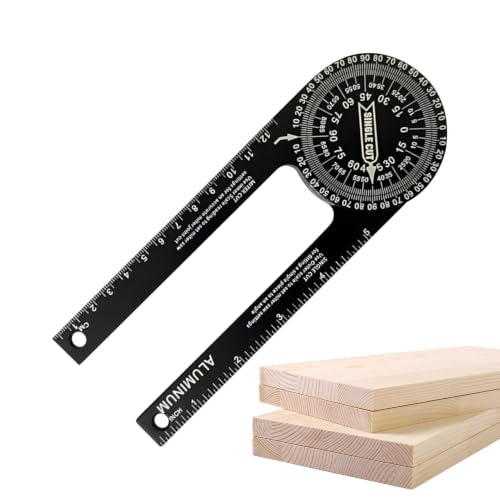
- A digital angle finder or protractor, to confirm the saw’s factory 22.5° detent is actually accurate
- A scrap block clamped to the fence as a stop, for repeat cuts of identical length
- Sandpaper or a sanding block for cleaning up the joints
This guide is part of our full library of miter saw angle guides, covering everything from calibration to compound cuts.
Miter Saw Angle Setting for an Octagon: 22.5°, Not 45°
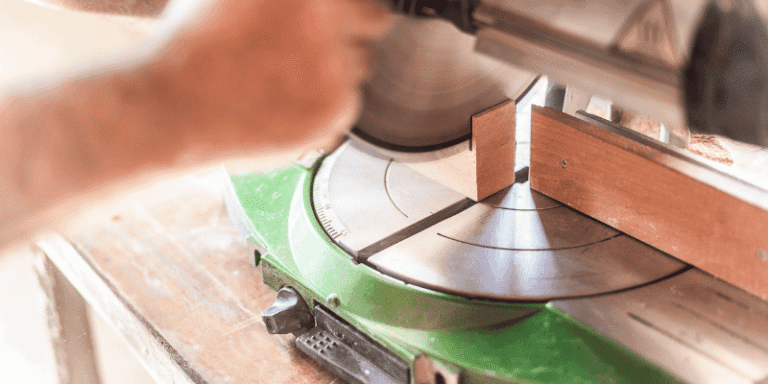
A regular octagon is an eight-sided polygon where every side and every interior angle is equal. The interior angle at each corner is 135 degrees. Two boards meeting at that corner each contribute half the miter, so each board end is cut at 135° ÷ 2 subtracted from 90°, which works out to 22.5 degrees measured off square. Set your miter saw’s rotation to 22.5° and leave the bevel at 0° — this is a flat miter, not a compound angle.
The 45-degree confusion happens because 360° ÷ 8 sides = 45°, which is the octagon’s exterior angle — the number most people land on first. But a miter saw cut is referenced from square (90°), not from the exterior angle, so the actual saw setting is half of that: 22.5°. Every one of the eight boards gets a 22.5° cut on both ends, for 16 cuts total. Our miter saw angle chart has the settings for other common shapes if you’re cutting hexagons or pentagons next.
| What you’re setting | Reference point | Correct value |
|---|---|---|
| Miter saw rotation angle | Measured from square (90°) | 22.5° |
| Bevel/tilt angle | Blade tilt | 0° (flat cut) |
| Resulting interior corner angle | Where two boards meet | 135° |
| Octagon exterior angle (not a saw setting) | 360° ÷ 8 sides | 45° |
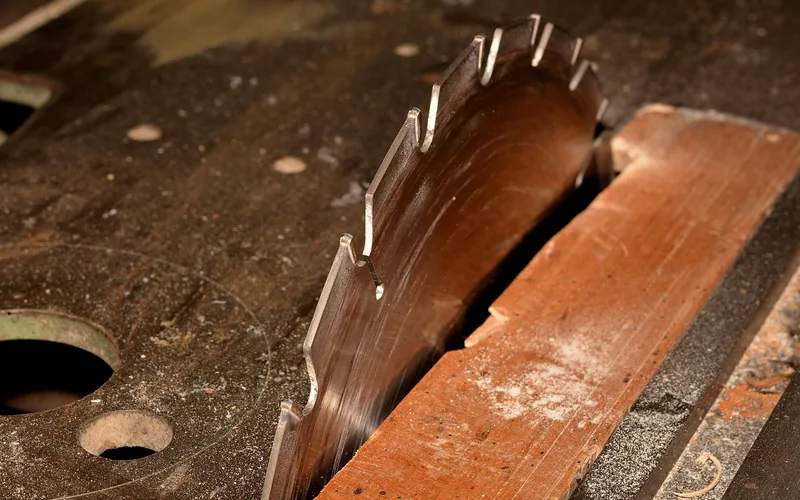
Step-by-Step: Cutting an Octagon with a Miter Saw
- Calculate your board length: decide the finished side length you want (see the cut-length formulas below) and cut eight boards to that length, measuring long edge to long edge.
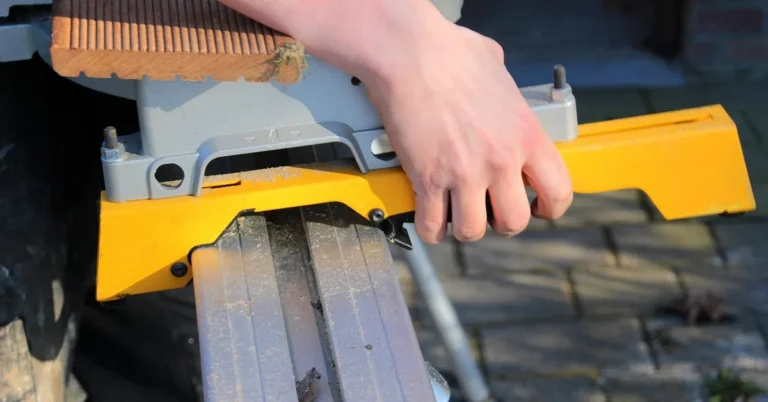
- Set the miter angle to 22.5°: unlock the miter arm and rotate it until the pointer lines up with the 22.5° mark. Most saws have a detent here — confirm it with a digital angle finder before cutting, since factory detents drift over time.
- Cut a test piece first: cut both ends of one scrap board at 22.5° and dry-fit it against a second test piece. Adjust the angle by a degree in either direction if the joint gaps open on the inside or outside edge.
- Clamp a stop block to the fence: once the angle is confirmed, clamp a scrap block at the exact distance needed for your board length. This keeps every board identical without re-measuring each one.
- Cut all eight boards: keep the same face against the fence for every cut so the angles stay consistent, and cut one end of all eight boards before flipping to cut the second end.
- Dry-fit the full ring: lay all eight pieces out flat before gluing or fastening. Check that the ring closes with no gaps and adjust any one board’s angle by a degree if needed.
- Sand the joints: lightly sand the mitered edges to remove saw marks before final assembly.
How to Calculate Cut Length for an Octagon
How long each board needs to be depends on which method you’re using. For the eight-board ring method above, board length simply equals your target side length — there’s no extra math beyond picking that number. The formula matters more for the second common method: turning a square post into an octagonal one by cutting the four corners off.

To chamfer a square blank into a regular octagon, set a table saw blade to a 45° bevel and rip the same amount off each of the four corners. If the square blank’s width is S, the corner cut-off length is S × 0.293 and the new flat face created by each cut is S × 0.414 wide. Both new faces and the original faces end up the same width, which is what makes the shape a true octagon.
| Square blank width (S) | Corner cut-off length (S × 0.293) | Finished octagon face width (S × 0.414) |
|---|---|---|
| 24 in (common porch post blank) | ~7.03 in | ~9.94 in |
| 12 in | ~3.51 in | ~4.97 in |
| 6 in | ~1.76 in | ~2.49 in |
| 3.5 in (4×4 post, actual size) | ~1.02 in | ~1.45 in |
Working from a circular blank instead? A regular octagon inscribed in a circle uses a different ratio: side length equals the circle’s diameter × 0.383. For a 24-inch-diameter round post, that puts each of the eight faces at roughly 9.19 inches wide.
📊 A regular octagon’s interior angle is 135°, derived from the polygon interior-angle formula (n−2) × 180° ÷ n for n = 8 sides. — Source: Math Is Fun, Interior Angles of Polygons
Cutting an Octagon on a Table Saw (Alternative Method)
A table saw handles the corner-chamfer method better than a miter saw, since it’s a straight rip rather than a crosscut. Tilt the blade to 45 degrees, set the rip fence to the corner-cut-off length from the table above, and run each corner of the square blank past the blade with the same face down every time. Rotate the workpiece 90° between cuts so all four corners come off at the same distance from the original edge.
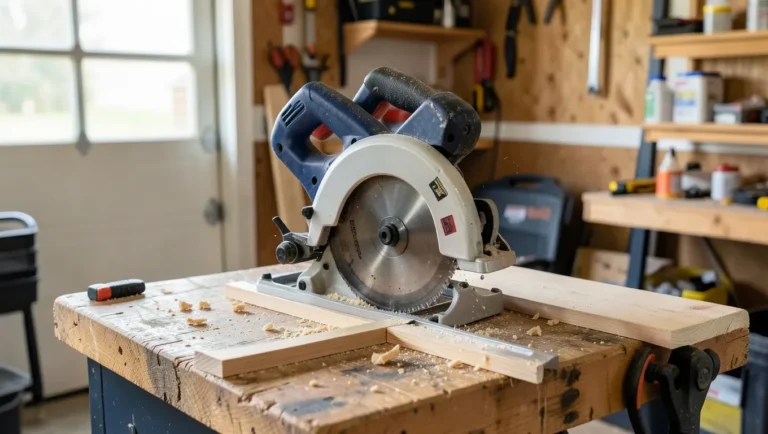
Use a miter gauge or a stable push block to keep the workpiece square to the fence — a blank this size shifting mid-cut is a real kickback risk. If you don’t have a table saw, a circular saw with a straightedge guide clamped at the same offset works, though the cut will need more sanding to true up.
Common Mistakes When Cutting an Octagon
- Setting the saw to 45° instead of 22.5°. This is the single most common error, and it comes from confusing the octagon’s exterior angle with the actual miter setting.
- Trusting the detent without checking it. Miter saw stops drift with use — see our guide on adjusting and calibrating your saw. A digital angle finder confirms the true angle before you commit eight boards to it.
- Cutting all eight boards before a test fit. Cut one test piece, dry-fit it against a second, and adjust by a degree if needed — redoing one board is far cheaper than redoing eight.
- Flipping the board inconsistently. Keep the same reference face against the fence for every cut, or the angles won’t be mirror-consistent and the ring won’t close evenly.
- Skipping the stop block. Re-measuring each board by hand introduces small errors that compound around all eight sides.
FAQ: Cutting an Octagon on a Miter Saw
What angle do you cut wood to make an octagon?
22.5 degrees, measured from square on your miter saw’s rotation scale. Every one of the eight boards gets a 22.5° cut on both ends, with the bevel left flat at 0°.
Why isn’t the angle 45 degrees?
45° is the octagon’s exterior angle (360° ÷ 8 sides), not the saw setting. A miter saw cut is referenced from square, so the actual setting is half that exterior angle: 22.5°. Cutting at 45° instead produces a four-sided shape, not an octagon.
How long should each board be for an octagon?
For an eight-board ring, board length equals your target side length — pick the finished side length first and cut all eight boards to match. For chamfering a square post, the corner cut-off length is the blank’s width × 0.293, which leaves a finished face width of the blank’s width × 0.414.
Can you cut an octagon on a table saw instead of a miter saw?
Yes, for the corner-chamfer method — tilt the blade to 45°, set the rip fence to the corner cut-off length, and rip each of the four corners off a square blank. For the eight-board ring method, a miter saw is faster since it’s designed for repeat angled crosscuts.
Why won’t my octagon close up evenly?
Lay all eight pieces out flat before fastening anything. A gap on the inside edge of a joint means the angle is slightly too shallow; a gap on the outside edge means it’s slightly too steep. Pull that one board and adjust its angle by a degree, then re-check the whole ring rather than assuming every board shares the same error.
Conclusion
Cutting an octagon on a miter saw comes down to one number: 22.5 degrees, on every one of the sixteen cuts. Confirm that angle with a test piece before committing full boards to it, use a stop block to keep lengths identical, and dry-fit the whole ring before final assembly. For the underlying angle math in more depth, see our octagon angle guide, and for the general 22.5°/135° technique used on hexagons and other shapes, see cutting 22.5-degree angles on a miter saw.
Sponsored / affiliate links. As an Amazon Associate I earn from qualifying purchases. I may earn additional commission from eligible campaigns.