How to Cut Ironwood: Best Blades for 3,260 Janka Wood
“Ironwood” isn’t one wood — it’s a nickname for several unrelated species, and the hardest, desert ironwood, hits about 3,260 lbf on the Janka scale versus red oak’s 1,290. Cut it with a standard steel blade and you’ll glaze the teeth and stall the saw before you’re through. This guide covers which ironwood you actually have, the right carbide blade for each tool, and how to glue and finish it once it’s cut.
Quick Answer
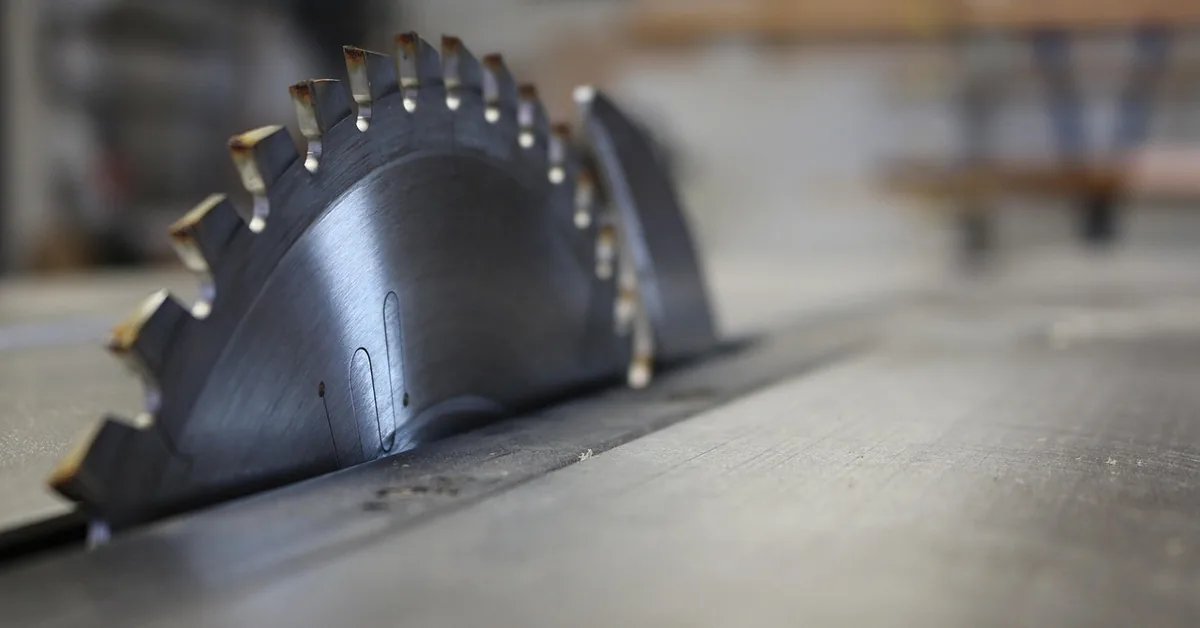
Cut ironwood with a carbide-tipped blade: a carbide or bi-metal chainsaw chain for felling, a 6+ TPI carbide bandsaw blade for resawing, or a 60-tooth carbide circular/table saw blade for milling. Feed slowly and let the blade do the work — a standard steel chain has been reported to dull after just three cuts.
Which “Ironwood” Are You Cutting? Species & Janka Hardness Compared
Best Carbide Blade Pick for Ironwood
Diablo Ultra Finish Carbide Blade (7-1/4in, 60T, 2-Pack) – $45.50
A 60-tooth ATB carbide blade sized for standard circular saws — the tooth count and carbide tips this guide recommends for crosscutting dense, oily hardwood like ironwood without glazing over.
- Best for: 7-1/4 inch circular saws crosscutting ironwood boards or blanks
- Why we picked it: 60-tooth carbide holds an edge far longer than the stock steel blade most circular saws ship with
- Main drawback: thin-kerf carbide teeth are more brittle — avoid twisting the blade in the cut
Compare more carbide blade options
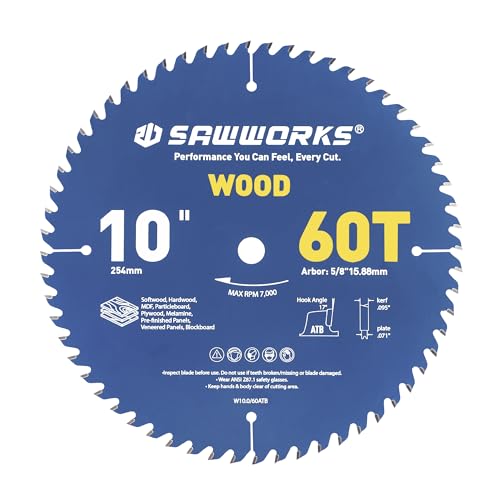
 Option 1 Freud 10in x 60T Carbide Ripping/Crosscut Blade – $59.89
|
 Option 2 AvantiPro by Freud 10in 60-Tooth Blade (2-Pack) – $24.99
|
 Option 3 CRALY 6-1/2in 60T Carbide Blade (2-Pack) – $23.99
|
As an Amazon Associate we earn from qualifying purchases.
“Ironwood” is a common name, not a single species — it gets applied to at least four unrelated trees with very different hardness. That matters here because the blade that handles a 1,860 Janka board will glaze over on a 3,260 Janka one. Before you pick a saw, figure out which wood you actually have.
| Common Name | Species | Janka Hardness | Native Region |
|---|---|---|---|
| Desert Ironwood | Olneya tesota | ~3,260 lbf | Sonoran Desert (US Southwest, Mexico) |
| Black Ironwood | Krugiodendron ferreum | up to ~3,660 lbf | Caribbean, South Florida |
| American Hophornbeam (“Eastern Ironwood”) | Ostrya virginiana | ~1,860 lbf | Eastern North America |
| Persian Ironwood | Parrotia persica | Ornamental — rarely milled | Northern Iran (landscape tree in the US) |
For reference, lignum vitae — a different wood sometimes lumped into the same “hardest wood” conversation — rates even higher, around 4,500 lbf. Desert ironwood is also so dense it’s used as a benchmark in wood density comparisons: it doesn’t float. If you’re unsure which species you’re holding, check our full types of wood guide for identification pointers before you commit a blade to it.
Best Tools and Blades for Cutting Ironwood
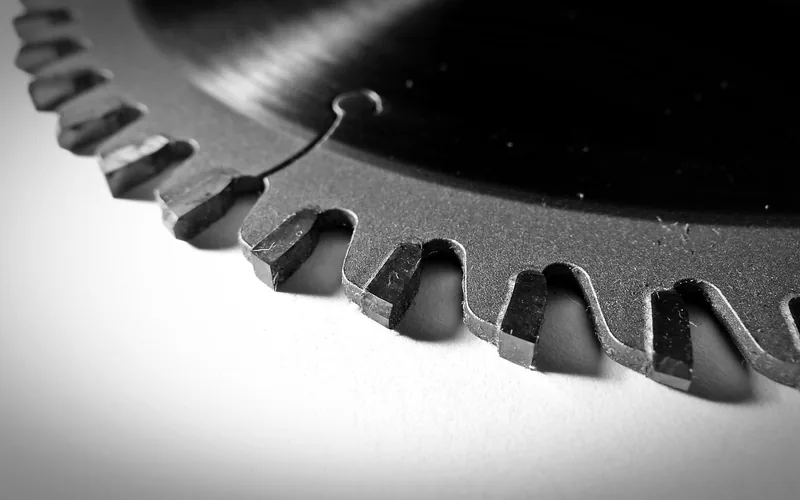
Every tool below needs the same upgrade: carbide instead of plain steel. Here’s how that breaks down by tool.
- Chainsaw: use a carbide-tipped or full-chisel chain. A sharp, properly filed chain matters even more here — a dull one will smoke and stall instead of cutting.
- Bandsaw: a 6+ TPI skip-tooth or carbide blade resaws logs into blanks with far less binding than a standard wood blade.
- Circular or table saw: a 40–60 tooth carbide-tipped (ATB grind) blade gives clean crosscuts; a thin-kerf blade puts less load on the motor.
- Hand tools: a chisel and mallet or a hand saw will get through ironwood eventually, but treat this as a last resort for small pieces only — it’s slow going even with sharp tools.
📊 Desert ironwood rates about 3,260 lbf on the Janka hardness scale — roughly 2.5× harder than red oak (1,290 lbf). — Source: The Wood Database
That hardness has a real cost in blade life. Community reports from woodturners cutting desert ironwood blanks describe a brand-new steel chainsaw chain going dull after just three cuts, while a carbide blade can get through roughly 100 cuts before it needs resharpening. Budget for carbide from the start rather than finding this out mid-project.
How to Cut Ironwood: Step by Step
- Identify your species and match the blade: confirm whether you have desert ironwood, hophornbeam, or another species (see the table above), then fit a carbide-tipped or carbide-chain blade before you start.
- Cut oversized: leave 2–3 inches of extra length on each end. Ironwood develops radial cracks (checks) as it dries, and the extra length lets you trim those off later instead of losing the whole piece.
- Wedge the log before bucking: drive a wedge into the first kerf on a round log so it can’t roll and pinch the blade mid-cut.
- Feed slow and let the blade clear itself: forcing the cut just burns the wood and dulls the teeth faster — a slow, steady feed rate is what actually saves the blade.
- Watch for embedded grit: desert ironwood in particular can carry sand or silica in the grain; expect occasional sparks or smoke, and stop to clear the blade if it happens.
- Seal the cut ends immediately: coat freshly cut ends with a wax-based sealer (such as Anchorseal) within minutes of cutting to slow moisture loss and reduce cracking while the piece dries.
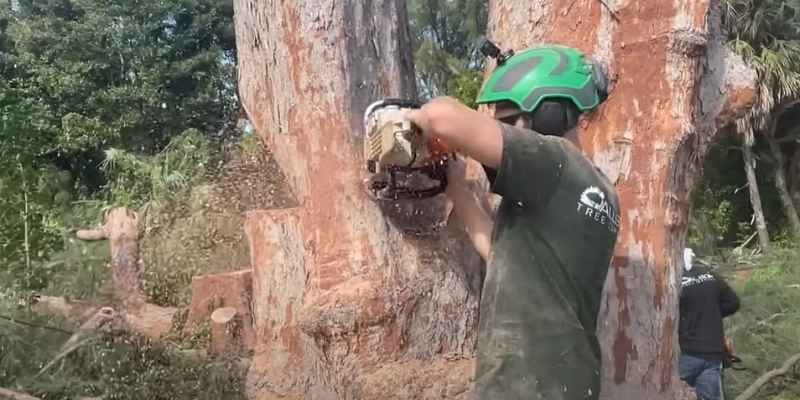
Felling a standing ironwood tree follows the same slow-feed, sharp-chain rules above, just at a larger scale — a chainsaw with a well-maintained chain is the practical choice over an axe or hand saw for anything beyond small trimming.
Working With Ironwood After You Cut It
Gluing: ironwood’s natural oils resist common wood glues. In one documented case, thin CA glue failed on roughly 10% of ironwood pen blanks from oil migrating back into the joint, while switching to 5-minute epoxy eliminated the failures. Wipe the mating surfaces with acetone right before gluing to cut the surface oil, then use epoxy rather than standard PVA or CA for anything load-bearing — see our notes on gluing other oily, dense hardwoods like Ipe for the same prep approach.
Sanding: skip aluminum oxide sandpaper — it dulls almost instantly on wood this hard. Silicon carbide sheets hold an edge far longer and are the standard choice among turners working desert ironwood.
Finishing: ironwood already takes a natural sheen from its own density and oil content, so many turners skip film finishes in favor of a friction polish, or a thin CA-and-acetone mix for a durable, crack-resistant gloss on turned pieces.
“On any wood over about 2,500 on the Janka scale, we reach for a carbide blade before we even measure the board — a steel blade might survive the first pass, but on wood this dense it’s usually glazed over by the third.”
Common Mistakes When Cutting Ironwood
- Reaching for a standard steel blade or chain because “it’s just wood,” then relearning the hard way when it glazes over mid-cut.
- Cutting pieces to exact finished length, then losing the whole piece to end checks that could have been trimmed off.
- Skipping a sealer on freshly cut ends, which speeds up cracking as the outer wood dries faster than the core.
- Gluing without prepping the surface — CA glue alone often fails on oily ironwood without an acetone wipe or a switch to epoxy.
- Sanding with aluminum oxide paper, which dulls almost immediately; silicon carbide holds up far longer.
- Treating every “ironwood” board the same — a 1,860 Janka hophornbeam board and a 3,260 Janka desert ironwood board don’t need the same blade or feed rate.
FAQ: Cutting and Working With Ironwood
Is ironwood the hardest wood in the world?
No. Desert ironwood (about 3,260 lbf Janka) and black ironwood (up to about 3,660 lbf) are both extremely hard, but lignum vitae rates even higher at around 4,500 lbf. “Hardest wood” depends on which specific species you’re comparing.
Can a regular chainsaw cut ironwood?
Yes, a regular chainsaw can cut ironwood, but expect fast dulling with a standard chain — community reports describe a new chain going dull in as few as three cuts. A carbide-tipped or full-chisel chain, kept sharp, holds up much better.
Why does ironwood dull blades so fast?
Two factors combine: extreme density (up to 3,260+ lbf Janka, versus about 1,290 for red oak) and, in desert ironwood specifically, embedded grit or silica picked up from the soil. Both wear down a steel edge far faster than ordinary hardwood does.
Can you glue ironwood?
Yes, but wipe the surface with acetone first to cut through the wood’s natural oils, then use a 5-minute epoxy rather than standard PVA or thin CA glue — CA alone has a documented failure rate on oily ironwood joints.
Is hophornbeam the same wood as desert ironwood?
No. American hophornbeam (Ostrya virginiana) is an eastern North American tree rated around 1,860 lbf Janka, while desert ironwood (Olneya tesota) is a Sonoran Desert species rated around 3,260 lbf. Both are informally called “ironwood,” but they’re unrelated species with different hardness.
What is ironwood used for?
Because of its density and natural polish, ironwood is used for tool handles, knife and pen blanks, turned objects, bearings, and historically railroad ties and charcoal. Persian ironwood, by contrast, is grown as an ornamental landscape tree and isn’t typically milled for lumber.
Ironwood rewards patience more than force: match the blade to the actual species, keep the feed rate slow, and seal the cut ends before the wood has a chance to crack. Do that, and the same density that eats blades also gives you a finished piece that will outlast almost anything else in the shop.
Sponsored / affiliate links. As an Amazon Associate I earn from qualifying purchases. I may earn additional commission from eligible campaigns.