How to Cut Wood Dowels Without Splintering Them
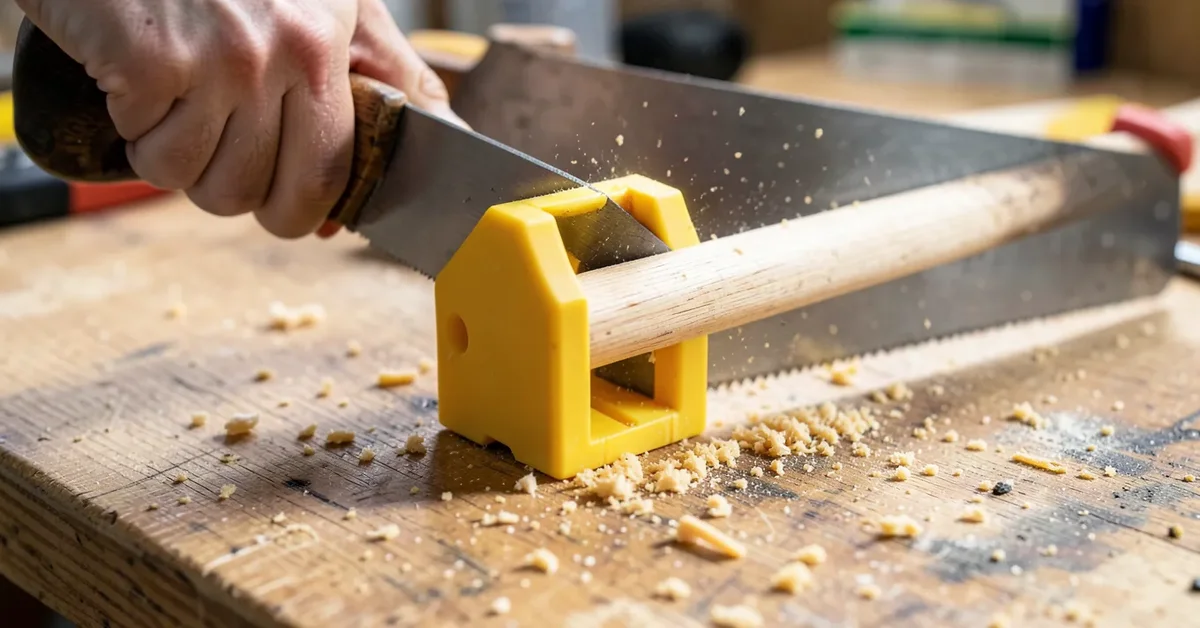
The most reliable way to cut a wood dowel cleanly is with an inexpensive miter box and backsaw: the box holds the dowel steady and square while the saw does the cutting, and a quick pass with fine-grit sandpaper cleans up the cut end afterward. Scoring a shallow groove around the entire circumference before you cut through is what actually prevents the splintered, ragged edge dowels are notorious for.
Tools for Cutting Wood Dowels
Best Basic Setup for Dowel Cuts
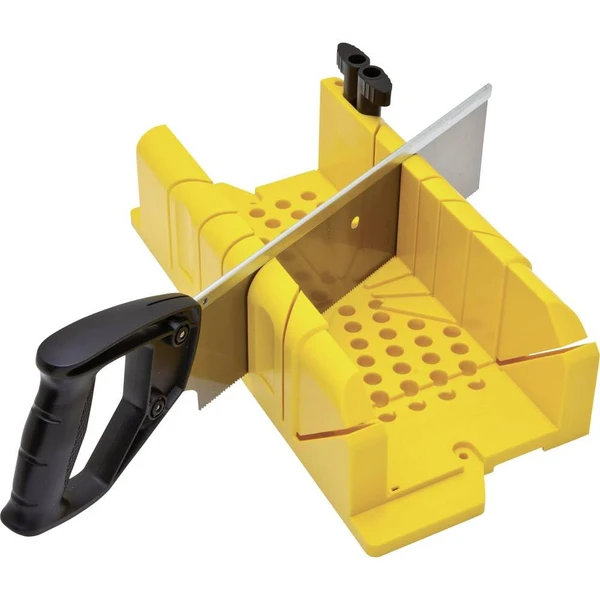 |
Stanley Miter Box with Saw – $34.08 The exact combination this guide recommends – a molded box with 45° and 90° slots plus a backsaw sized to fit it.
|
Miter Box and Backsaw
This is the standard tool for the job. The miter box holds the dowel square to the saw and guides the blade in a straight line, which matters more with a round dowel than with flat stock – a round profile is much easier to accidentally cut at an angle freehand. Most miter boxes include 45- and 90-degree slots, covering the angles most projects need.
A Dowel-Length Cutting Jig
If you need many dowels cut to the exact same length – shelf pins, pegs, or a batch for a repeated joint – a simple stop-block jig clamped to your miter box or saw table pays for itself fast. Clamp a scrap block at your target length, butt each dowel against it, and every cut comes out identical without re-measuring.
The Block-and-Drill Method
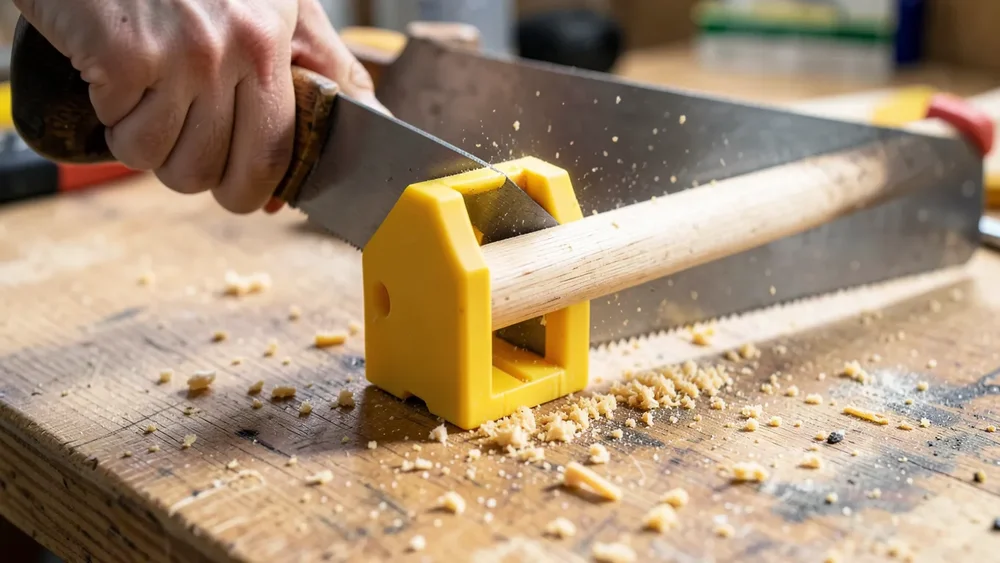
No miter box on hand? Drill a hole matching your dowel’s diameter through a scrap block of wood, slide the dowel through, and use the block’s edge as your saw guide – a stand-in for a real miter box that works surprisingly well for one-off cuts.
The Technique That Actually Prevents Splintering
Splintering happens because the saw’s teeth tear through unsupported wood fibers as they exit the far side of the cut. Three things fix most of it:
- Score a groove first. Rotate the dowel in the miter box and make a light pass all the way around the circumference before cutting through. This pre-cuts the fibers on every side, so the saw isn’t tearing through unsupported wood when it finishes the cut.
- Wrap the cut line in masking tape. The tape holds the surface fibers together as the blade passes through, which noticeably reduces tear-out on softer woods like pine.
- Use a sharp, fine-toothed saw and let it cut at its own pace. A dull blade or a rushed cut both increase tearing. Slow, even strokes with a sharp backsaw give the cleanest edge.
After the cut, a sanding block with fine-grit (150-220) sandpaper knocks down any remaining fuzz and squares up the end for a clean, finished look.
Cutting Small-Diameter Dowel Rods
Thin dowels (under 1/4″) need extra care since they flex and can snap under side pressure from the saw. Secure the dowel firmly with a clamp or vise rather than just holding it by hand – movement is what causes both twisting during the cut and an uneven, angled result. If you’re cutting a lot of thin dowels to the same length, the stop-block jig described above is worth setting up even for a small batch, since re-measuring each one by hand is where small errors creep in.
Alternative Cutting Methods
Splitting a Dowel Lengthwise
Some projects call for a half-round dowel rather than a full cross-cut – trim molding or a curved edge detail, for instance. Mark the center line down the dowel’s length, then run it through a table saw with a fence set to the dowel’s radius, or use a sharp knife and a straightedge for a hand-cut split on smaller diameters.
Cutting With Threaded Rod as a Guide
For thicker or harder dowels, some woodworkers thread a length of metal all-thread through a matching hole drilled in the dowel, then lock it in place with nuts on either side of the cut line. The rod and nuts act as a rigid cutting guide for a hacksaw or rotary tool, which helps on dense hardwood dowels that tend to wander under a standard handsaw.
Safety Basics
Wear safety glasses (sawdust and small offcuts fly more than you’d expect from a hand cut), a dust mask if you’re cutting more than a few dowels, and gloves suited to handling wood without snagging on a moving blade. Clamp the dowel to your workbench or hold it firmly in the miter box rather than freehanding it in your other hand – a secured workpiece is both safer and produces a straighter cut, since the dowel can’t shift mid-stroke.
Fixing Common Problems
- The dowel twists mid-cut: it isn’t secured well enough. Clamp it in a vise or the miter box’s own clamps rather than holding it by hand.
- Cuts come out at an angle: usually means the dowel wasn’t seated flush in the miter box slot, or the saw drifted off the guide mid-stroke. Re-check the dowel’s position before every cut.
- The end tears out badly: score the groove-around technique above before your final pass, and check that the blade is actually sharp – a dull saw is the most common overlooked cause.
Frequently Asked Questions
What is the best tool to cut a dowel?
An inexpensive miter box and backsaw is the most reliable combination for a straight, clean cut. Score a groove around the dowel before the final cut, then finish the end with a sanding block for a smooth result.
How do you cut wooden dowels without splintering?
Score a light groove all the way around the dowel before cutting through, wrap the cut line with masking tape for extra fiber support, and use a sharp fine-toothed saw at a steady, unhurried pace.
What can cut dowels?
A miter box and backsaw handles most jobs. A simple stop-block jig helps with repeated identical lengths, and a hacksaw or rotary tool works for thicker hardwood dowels when guided by a clamped jig.
What saw is used to cut wooden dowels?
A fine-toothed backsaw paired with a miter box gives the most control. For thin dowels, a sharp Japanese pull saw also works well since it cuts on the pull stroke with less tendency to bind.
Conclusion
A clean dowel cut comes down to three things: a miter box or equivalent guide to keep the saw square, a scored groove before the final pass to prevent tear-out, and a sharp blade moving at a steady pace. Get those three right and the specific tool brand matters far less than the technique.
Sponsored / affiliate links. As an Amazon Associate I earn from qualifying purchases. I may earn additional commission from eligible campaigns.