How to Decorate With Dark Hardwood Floors (60-30-10 Rule)
Dark hardwood floors already act as roughly 60% of a room’s visual weight, so the fastest way to decorate around them is to treat them as your dominant color instead of fighting them with more dark tones. Get that ratio wrong and even beautiful flooring reads as a cave. This guide covers the 60-30-10 balance rule, wood-tone mixing, rug sizing, layered lighting, and the mistakes that make dark-floor rooms feel heavy.
Insert your Affiliate Disclosure reusable block here
Quick Answer
Decorate dark hardwood floors using the 60-30-10 rule: let the dark floor act as your 60% dominant color, light walls and large furniture as the 30% secondary, and warm metallic or jewel-tone accents for the final 10%. Size your rug so the front furniture legs sit on it, and layer ambient, task, and accent lighting.
Choosing the Right Dark Hardwood Shade for Your Room
Best Dimmable Floor Lamp Pick
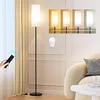
Ambimall 64" Modern Floor Lamp with Remote Control
Adjustable from warm white (3000K) to cool white (6000K) with stepless dimming, so one lamp covers both task reading light and warm accent lighting for a dark-floor room.
- Best for: adding warm task and accent light beside a sofa or reading chair
- Why we picked it: adjustable color temperature means you can dial in warm light that enhances dark wood instead of washing it out
- Main drawback: requires 4-piece pole assembly on setup
Compare more layered-lighting options
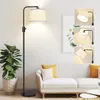 Option 1 Nintiue Dimmable Arc Floor Lamp
|
 Option 2 SUNMORY LED Standing Lamp
|
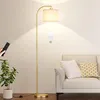 Option 3 Ambimall Gold Arc Floor Lamp
|
As an Amazon Associate we earn from qualifying purchases.
Match the shade to your existing decor style and the amount of natural light the room gets before you fight the floor with paint and rugs later. A north-facing room with limited daylight can look almost black by evening under a very dark stain, while the same floor in a sunlit south-facing room reads warm instead of heavy.
- Espresso: a rich, near-black brown that reads modern and formal — needs the most light-color balancing.
- Walnut: a warmer tone with reddish undertones that pairs easily with both cool and warm wall colors.
- Mahogany: a reddish-brown hue that leans traditional and elegant, best with neutral or jewel-tone accents.
If you’re choosing the stain yourself rather than working with existing flooring, our guide to staining oak floors dark covers which stains hold true to these undertones instead of drifting gray or muddy.
The 60-30-10 Rule for Decorating Dark Hardwood Floors
Interior designers use the 60-30-10 rule to keep any color scheme balanced: 60% dominant color, 30% secondary, 10% accent. Most versions of this rule assume the floor sits quietly in the background. Dark hardwood doesn’t — it’s visually heavy enough to function as your dominant 60% on its own, which changes how you should spend the other 40%.
| Color Role | % of Room | Where It Goes | Example |
|---|---|---|---|
| Dominant (60%) | 60% | The dark floor itself | Espresso or walnut hardwood |
| Secondary (30%) | 30% | Walls and large furniture | Warm white, soft gray, or pale blue walls; cream sofa |
| Accent (10%) | 10% | Small decor and fixtures | Brass lamp base, throw pillows, artwork frames |
In practice: if the floor is already your dominant color, keep walls and the biggest furniture pieces (sofa, bed, dining table) light — that’s your 30%. Save bold jewel tones and metallics for the smallest 10%, like a vase, a picture frame, or a single accent chair. Rooms that break down this way consistently read as balanced rather than cave-like, even with very dark flooring.
Mixing Wood Tones Without Looking Busy
You don’t need to match every piece of wood furniture to the floor — in fact, matching everything usually looks flatter, not more cohesive. Contrast is what makes dark floors read as intentional instead of accidental.
- Pair dark floors with lighter wood furniture — maple, ash, white oak, driftwood, or bleached pine all create visible contrast without clashing.
- Avoid mixing two different medium-brown woods with different undertones (one orange-leaning, one gray-leaning) — that combination is what usually reads as “busy.”
- Furniture legs matter more than the tabletop: dark-stained table or chair legs visually anchor to the floor even when the tabletop itself is a lighter wood.
If you’re specifically choosing furniture finishes to pair with the floor rather than mixing what you already own, see our full breakdown of what color goes with dark wood furniture.
Creating Contrast With Wall Colors
Wall color is where most of your 30% secondary allowance should go. Light, neutral wall colors reflect the most light back into the room and make dark floors look intentional rather than like the room ran out of light fixtures.
Selecting Light-Colored Paints
Soft grays, creamy whites, and pale blues create the strongest contrast against dark hardwood and help a room feel more spacious. For the full undertone-matching breakdown and a named paint-color table, see our dedicated guide to wall colors for dark wood floors.
Incorporating Accent Walls
An accent wall is one of the few places a bold, jewel-toned color (deep teal, burnt orange, emerald) can safely live without breaking the 60-30-10 balance — treat it as part of your 10% accent allowance, not your 30% secondary, and keep the other three walls light.
Balancing the Space With Area Rugs
A large, light-colored rug is one of the fastest ways to break up the visual heaviness of dark hardwood. Layering a smaller patterned rug on top of a larger neutral one adds texture without adding more dark tone to the room.
Choosing the Right Rug Size
A rug that’s too small makes a room feel disjointed; one that’s too large overwhelms it. The standard rule of thumb: the front legs of your main seating should sit on the rug, anchoring the furniture to it. For rectangular rooms, use a rectangular or oval rug; for square rooms, a square or round rug reads more balanced.
For undertone-matched rug color picks and real sizing data by room, see our guide to the best rug colors for dark wood floors.
Layering Textures Beyond the Rug
Texture does the same visual-weight work as color, and it’s an easy way to soften dark flooring without adding more light paint. Mixing textures — not just colors — is what separates a decorated room from a room that just has light furniture in it.
- Hides, leather, and suede upholstery add warmth and read well against dark wood without competing with it for attention.
- Velvet throw pillows or a velvet accent chair catch light differently than flat cotton, which helps break up a monochrome dark-and-light scheme.
- Woven natural-fiber baskets or jute accents keep a room from feeling too polished or showroom-like.
Lighting Techniques to Complement Dark Hardwood Floors
Dark floors absorb light instead of bouncing it back, so a single overhead fixture usually isn’t enough. Layered lighting — ambient, task, and accent — does more to brighten a dark-floor room than switching to a brighter bulb in one fixture.
Incorporating Layered Lighting
- Ambient lighting: recessed lights or ceiling fixtures that evenly distribute light across the whole room.
- Task lighting: table lamps or floor lamps placed where you actually read, cook, or work.
- Accent lighting: wall sconces or picture lights that highlight architectural features or artwork, adding depth after dark.
Warm-toned bulbs (around 2700K–3000K) enhance the richness of dark wood instead of washing it out the way cool white bulbs can. A dimmable floor lamp is the easiest single upgrade for adding both task and accent lighting to a dark-floor room without an electrician.
Decorating Room-by-Room: Where to Start
The principles above apply everywhere, but each room has its own constraints — a kitchen needs to think about cabinet color, a bedroom about softness underfoot, a living room about furniture scale. Start with the room where the dark floor bothers you most:
- Living room: the widest range of furniture and lighting choices — see our full dark hardwood floor living room ideas for style-by-style breakdowns (modern, farmhouse, traditional, bohemian).
- Bedroom: prioritize soft rugs and warm bedding over hard contrast — see our dark wood floor bedroom ideas.
- Kitchen: cabinet color carries more of the 30% secondary weight than walls do — see our kitchen ideas for dark wood floors.
Common Mistakes When Decorating With Dark Hardwood Floors
- Stacking too many dark tones. Dark floor plus dark furniture plus dark walls pushes well past the 60% the floor should be carrying alone.
- Choosing a rug that’s too small. A rug that only the coffee table sits on, with furniture legs hanging off the edge, makes the whole layout look unfinished.
- Relying on one overhead light. Dark floors absorb light instead of bouncing it, so a single ceiling fixture almost always reads dimmer than it would over a light floor.
- Ignoring undertones. Pairing a warm walnut floor (reddish undertone) with cool blue-gray walls can clash more than most people expect — test a sample against the actual floor before committing to a full wall.
Frequently Asked Questions
How do you decorate a room with dark hardwood floors?
Use the 60-30-10 rule: let the dark floor be your dominant 60%, balance it with light walls and large furniture for 30%, and add metallic or jewel-tone accents for the final 10%. Size a rug so furniture front legs sit on it, and layer ambient, task, and accent lighting.
What colors go best with dark hardwood floors?
Light neutrals — off-white, soft gray, or beige — give the most classic, balanced look. Rich tones like deep red or navy work as accents, and warm accent colors like mustard, olive green, or terracotta add a pop without overwhelming the space.
What is the design rule for dark floors?
The clearest version is the 60-30-10 rule applied to the floor itself: treat the dark floor as your 60% dominant color, put light walls and large furniture in the 30% secondary role, and reserve bold or metallic accents for the smallest 10%. Add glossy finishes and layered lighting to reflect what light the room does get.
What color accent wall goes best with dark wood floors?
A light gray or beige accent wall complements dark wood floors without disrupting the room’s balance. If you want a bolder accent wall color, treat it as your 10% accent allowance and keep the remaining walls light.
Should furniture match dark wood floors or contrast with them?
Contrast, not match. Furniture in lighter wood tones (maple, ash, white oak) or light upholstery reads as intentional design; furniture stained to match the floor exactly tends to blend into one dark mass and makes the room feel smaller.
Are dark wood floors going out of style in 2026?
No — dark hardwood remains a timeless, versatile choice for both modern and traditional interiors. See our full breakdown of whether dark wood floors are out of style for current trend data.
Conclusion
Dark hardwood floors work in almost any room once you stop treating them as a problem to hide and start treating them as your dominant color. Apply the 60-30-10 rule, size your rug to anchor the furniture, mix in lighter wood tones instead of matching everything, and layer your lighting — and the same floor that reads heavy today will read intentional and elegant.
Sponsored / affiliate links. As an Amazon Associate I earn from qualifying purchases. I may earn additional commission from eligible campaigns.