How to Remove Dark Stains From Hardwood Floors (Water, Pet, Black)
Dark stains on hardwood floors almost always come from one of three things: water that got under the finish, pet urine that soaked into the boards, or iron reacting with the tannin in the wood. The right fix depends less on the color than on how deep the stain sits. A mark trapped inside the finish needs a recoat, a mark in the wood fibers needs bleaching or sanding, and cleaning products only work on what is sitting on top. Below is how to tell which one you have, what to try first, and what to skip because it makes dark stains worse.
This guide is about floors: finishes, sanding depth, and pet accidents. If you are working on furniture, trim, or a bare board, our guide to removing dark stain from wood has the full drop-test and oxalic acid method.
Read the Stain Before You Clean It
Best Pet Urine Stain Pick
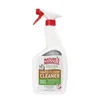 |
Nature’s Miracle Hard Floor Cleaner, Stain & Odor Remover If the dark mark on your floor is a fresh or recent pet accident, this is the cleanup step to do before any bleaching or sanding.
|
Color and location tell you most of what you need. Use this as a first sort, then confirm with the water-drop test in the next section.
| What you see | Most likely cause | First move |
|---|---|---|
| Amber or yellow-brown patch, smooth and glossy to the touch | Aged or sun-darkened finish, or heat damage to the coating | Screen and recoat the area; cleaning will not change it |
| Dark brown or black patch with a ring or halo, often near a door, pet bowl, or favorite spot | Pet urine soaked into the wood | Clean and deodorize first, then bleach or sand what remains |
| Gray to black patches with soft edges, often under a rug or plant pot | Trapped moisture, possibly mold, plus tannin | Dry the area fully, then treat the black stain |
| Black spots around nail heads or under metal furniture feet | Iron reacting with tannin in oak and other tannin-rich woods | Oxalic acid on bare wood; see the black-stain guide below |
| Dark blotches that appear only after sanding | Urine, water, or old stain left deep in the fibers | Spot-bleach the bare wood before the final sanding and finish |
Is the Stain in the Finish or in the Wood?
This is the question most guides skip, and it decides everything. Wipe the area with a barely damp cloth and a drop of mild dish soap. If the mark comes off, it was surface grime and you are done. If it does not, put a few drops of water on the stain and on a clean spot of the same floor and watch for a few minutes.
- Water beads on the stain: the finish is intact, so the darkness is inside or underneath the coating. Cleaners and bleach cannot reach it. The fix is a screen-and-recoat, or a refinish if the discoloration is under the coating.
- Water soaks in and the wood darkens: the finish has been breached and the stain is in the wood. This is where bleaching, sanding, or board replacement comes in.
- Water soaks in on the stain but beads on the clean spot: the finish is worn through at that spot only, which is typical of pet accident areas and doorways.
Pet Urine Stains on Hardwood
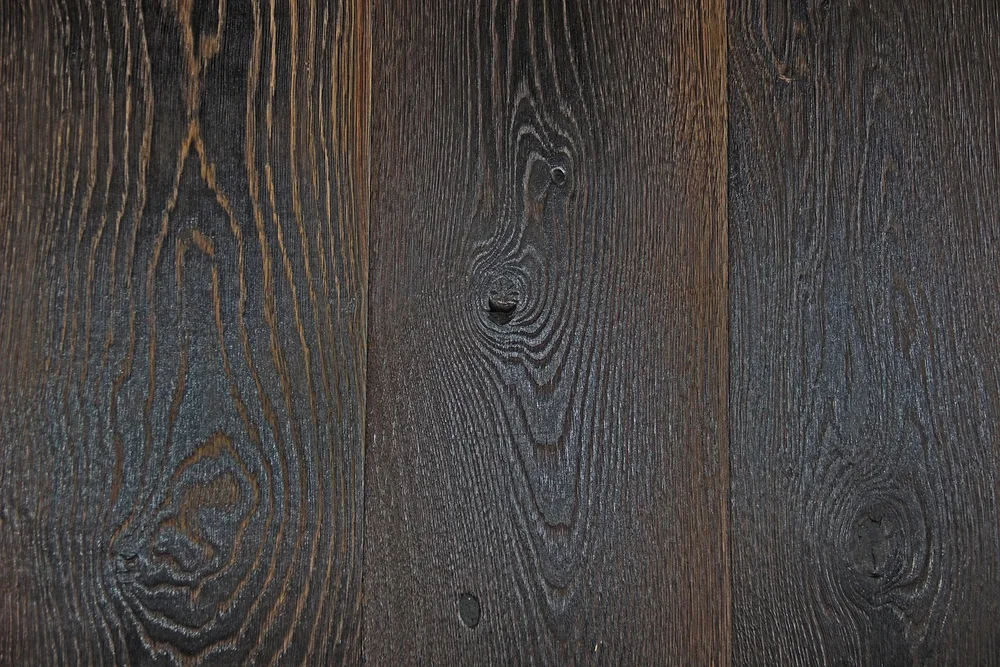
Urine is the stain people most often treat wrong, because the visible darkness is only half the problem. A fresh accident can usually be blotted and cleaned before it reaches the wood. An old one has been soaking into the boards and seams, and it can leave both a dark stain and an odor that returns in humid weather.
- Blot, never rub. Rubbing pushes liquid into the seams between boards.
- Clean with an enzyme-based pet cleaner made for sealed floors, and let it sit for the time on the label before wiping.
- Dry the spot with a fan or dry cloth. Do not leave wet towels on the floor.
- If a dark stain remains after the odor is gone, the pigment is in the wood. On a floor with intact finish nothing will lift it; on bare or sanded wood, a two-step oxalic acid treatment is the usual next step (full steps in our black stains on hardwood floors guide).
- If the board is still dark and smells after bleaching, the urine has reached the subfloor side and replacing the board is the dependable answer.
Our best hardwood floor cleaner roundup covers routine cleaners that are safe for finished floors, but keep in mind that a general floor cleaner is not an odor treatment.
For the full depth-by-depth protocol, including the blacklight and water-drop tests, see our guide to removing pet urine stains from hardwood floors.
Water Stains and Black Spots Under Rugs
Water that sits long enough to get under the finish turns the wood gray first. Gray is the early stage and often fades after the board dries out. When the water stays, the wood turns dark brown to black. Two things are usually happening: tannins in the wood darken when they get wet, and mold can grow where the moisture has nowhere to go. That second part explains the black patches people find after lifting a rug or a plant pot.
Before you treat the color, fix the cause. Lift the rug, run a fan or dehumidifier, and check for a leak. A pinless moisture meter helps here: interior hardwood normally sits somewhere around 6 to 9 percent moisture content, so a reading well above that means the board is still wet and bleaching it now is wasted effort. Once the wood is dry, a black tannin stain responds to oxalic acid, not to household cleaners.
Why vinegar and baking soda often disappoint
Vinegar and baking soda are the most repeated home remedies, and they are fine for light surface grime on a sealed floor. They do not bleach a stain that is inside the wood. Vinegar can also make an iron-tannin stain darker, and used repeatedly or undiluted it can dull a polyurethane finish. If you try either, test a hidden spot, wipe with a barely damp cloth, and dry immediately. Do not use chlorine bleach on a wood floor: it tends to leave blotchy, uneven color and weakens the finish.
Dark Spots That Show Up After Sanding
Several searches that land on this page are about dark spots appearing mid-sanding, and it is a real and common problem. Sanding removes the finish and a thin layer of wood, but it does not remove stain that has soaked deeper than the sanding depth. As the floor gets cleaner, the leftover urine, water, or iron stain looks even darker by contrast.
- Do not sand deeper to chase it. Each pass removes only a small amount of wood, and engineered floors have a thin wear layer that can be sanded through. Check what you have before going aggressive.
- Bleach the bare wood. Treat the spot with oxalic acid following the steps in our dark stain removal guide, let it dry fully, then sand lightly with a fine grit.
- If it is still dark after one treatment, a two-part wood bleach is the next step, as described in our guide to lightening stained wood.
- Replace the board if the wood feels soft, or if the stain is dark all the way through at the cut edge.
Match the Fix to the Depth
| Depth | What it looks like | Fix | What it will not do |
|---|---|---|---|
| On the surface | Dirt, scuffs, residue that wipes away | Damp cloth and a mild cleaner | Lift anything under the finish |
| In the finish | Amber or cloudy patch, water beads on it | Screen and recoat | Remove pigment in the wood |
| In the wood fibers | Water soaks in, dark spot persists | Oxalic acid or wood bleach, then sand and refinish | Fix rot or structural damage |
| Through the board | Soft, crumbly, or dark to the edge | Replace the board | Be a quick afternoon job on a glued floor |
If the damage is more of a scuff than a stain, our guide to removing scuff marks from wood floors is the quicker route, and our hardwood floor care guide covers keeping the finish sealed so stains stay on top.
Mistakes That Make Dark Stains Worse
- Using a steam mop. Heat and moisture force water through the finish and into the seams.
- Scrubbing a wet stain with a soaked cloth, which spreads it along the grain.
- Skipping the test spot. Always test bleach or a cleaner somewhere hidden.
- Treating the color before fixing the leak or the moisture source.
- Sanding a thin engineered floor without checking the wear layer.
Frequently Asked Questions
Why is there a dark spot on my hardwood floor after sanding?
The stain was deeper than the sanding depth. Urine, water, or an iron-tannin reaction soaks into the fibers, and sanding only exposes it. Spot-treat the bare wood with oxalic acid or wood bleach, let it dry, and sand lightly again rather than sanding deeper.
What causes black spots under a rug on hardwood floors?
Usually trapped moisture. Rugs and pads limit airflow, and damp wood can darken from tannin reactions or mold. Dry the area, fix any moisture source, and then treat the black stain on bare wood.
Can dark water stains be removed from hardwood floors?
Often, but only if the stain is in the wood and you can reach it. If the finish is intact and the stain sits underneath it, a recoat or refinish is needed. Deep black stains may require replacing the board.
Does vinegar remove dark stains from hardwood floors?
Not reliably. Vinegar can clean light surface grime, but it does not lift stains that are inside the wood, it can darken iron-tannin stains, and repeated use can dull the finish.
Sponsored / affiliate links. As an Amazon Associate I earn from qualifying purchases. I may earn additional commission from eligible campaigns.