How To Fertilize Japanese Maple: Essential, Genius Tips
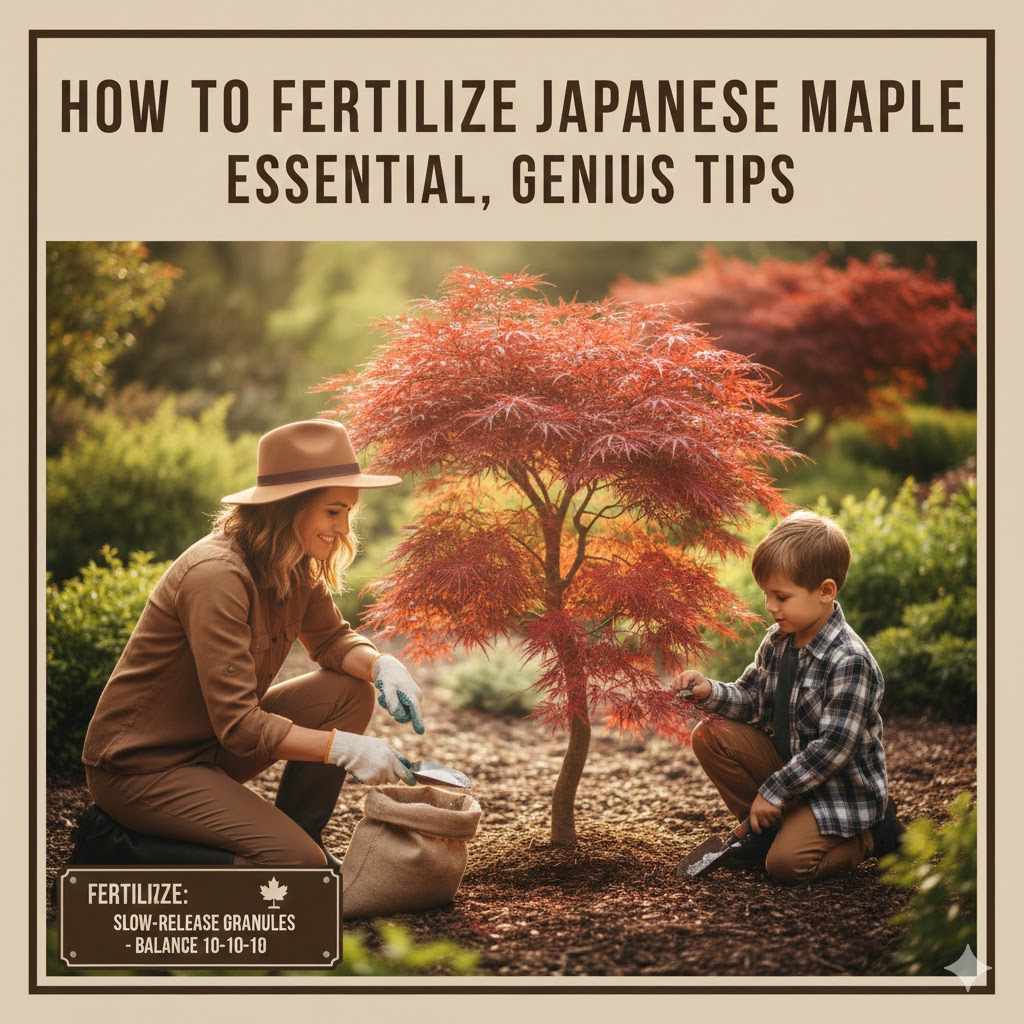
Fertilize Japanese maples sparingly once a year in early spring using a slow-release, low-nitrogen granular fertilizer. For best results, apply it around the tree’s drip line, not against the trunk. Avoid fertilizing newly planted trees for the first year to allow their roots to establish naturally.
Hello there! It’s Md Meraj. In our workshop, we spend a lot of time crafting beautiful things from wood. But I’ve found that the same care and gentle approach we use on a piece of timber also applies to the living works of art in our yards—like the stunning Japanese maple. So many people have these graceful trees but are terrified of feeding them, worried they’ll do more harm than good. I get it completely.
But I’m here to tell you that it’s not as tricky as you think. Today, I’ll walk you through everything, step-by-step, just like we’re in the workshop together. We’ll make sure your tree stays healthy, vibrant, and beautiful for years to come.
Why Fertilizing Your Japanese Maple Matters (But Less Is More)
Before we grab our tools, let’s talk about the “why.” Think of fertilizer as a vitamin supplement for your tree, not its main meal. Japanese maples are naturally elegant and slow-growing. They aren’t hungry trees that demand constant feeding. In many healthy garden soils, they might not need any extra fertilizer at all!
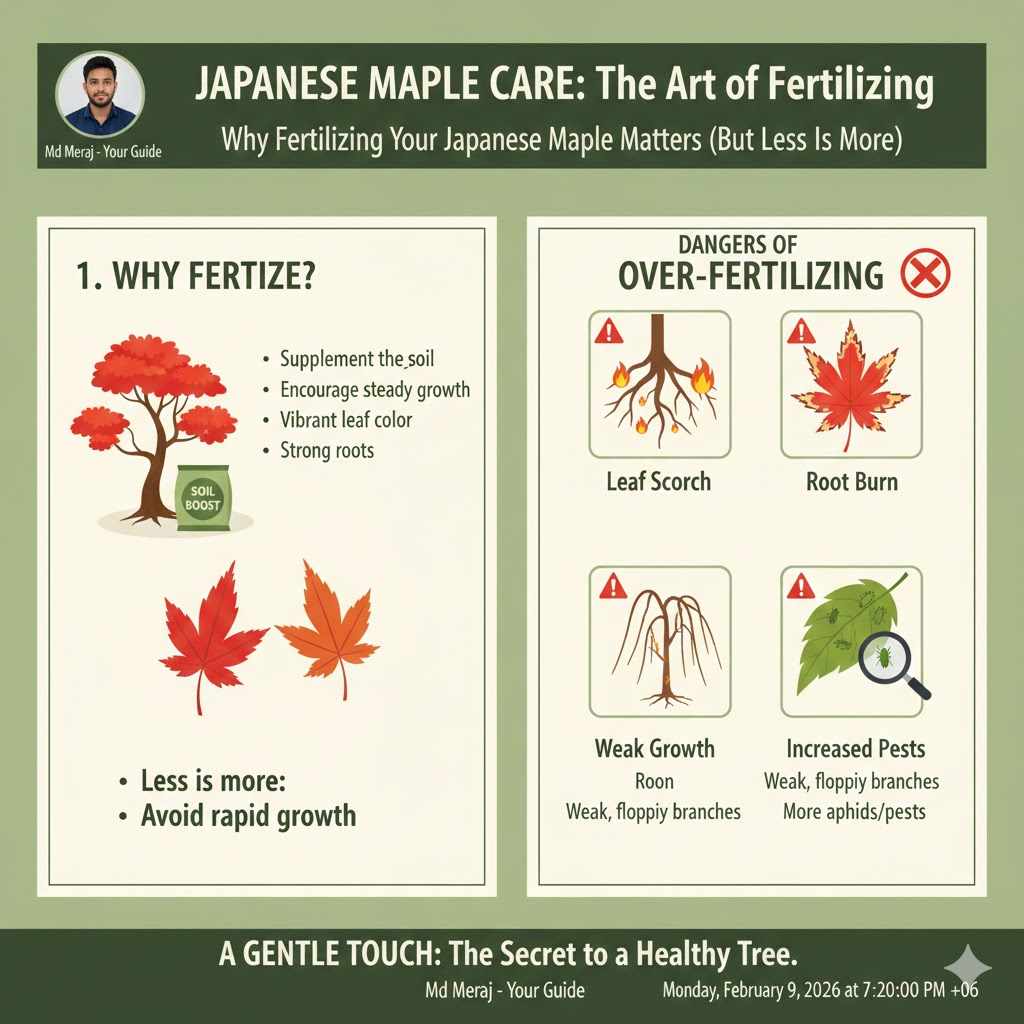
So, why do we fertilize? We do it to supplement the soil, especially if it’s sandy, heavy clay, or just lacking in nutrients. The goal is to encourage steady, healthy growth, vibrant leaf color, and strong roots. The key word here is steady. We want to avoid causing a sudden, rapid growth spurt. That kind of fast growth leads to weak, floppy branches that can easily be damaged by wind or snow.
The biggest mistake I see beginners make is over-fertilizing. Too much fertilizer, especially the wrong kind, can be a disaster. It can cause:
- Leaf Scorch: The edges of the beautiful leaves turn brown and crispy.
- Root Burn: The delicate roots can be chemically burned by the salts in the fertilizer.
- Weak Growth: The tree shoots up quickly, but the new stems are weak and vulnerable.
- Increased Pest Problems: Lush, forced growth can be more attractive to aphids and other pests.
Remember our main rule: with Japanese maples, less is always more. A gentle touch is the secret to success.
When to Fertilize a Japanese Maple: Perfect Timing Is Key
Just like timing a perfect cut in the workshop, timing your fertilizer application is crucial for your Japanese maple. Applying it at the right time gives the tree the nutrients it needs when it can actually use them. Applying it at the wrong time can cause serious problems.
The golden rule is simple: fertilize only once a year in late winter or early spring. This is the moment when the tree is just starting to wake up. You might see the buds begin to swell. Giving it a gentle meal now provides the energy it needs for the upcoming season of leafing out and growing.
The Best and Worst Times to Fertilize
Here’s a simple table to help you remember the best and worst times to feed your tree.
| Time of Year | Should You Fertilize? | Why or Why Not? |
|---|---|---|
| Late Winter / Early Spring (As buds swell) | Yes – The Perfect Time | The tree is waking up and can use the nutrients for healthy new growth throughout the season. |
| Late Spring / Early Summer | No, if you already fertilized. | Fertilizing again is unnecessary and can cause leaf burn during the hotter months. |
| Late Summer / Fall | No – Avoid at All Costs | This encourages a late spurt of new growth that won’t have time to harden before the first frost, leading to winter damage. |
| During a Drought or Heatwave | No – Never Fertilize a Stressed Tree | A tree stressed by heat or lack of water can’t process fertilizer properly, and its roots are more likely to burn. |
| The First Year After Planting | No – Let it Rest | A newly planted tree needs to focus all its energy on establishing a strong root system. Fertilizing can interfere with this process. |
Sticking to this simple schedule will protect your tree and ensure you’re helping, not hurting.
Choosing the Best Fertilizer for Japanese Maples
Walking down the fertilizer aisle can be overwhelming. You’ll see bags with all sorts of numbers and claims. But for our Japanese maples, the choice is actually quite simple. We need something gentle and balanced.
Understanding the N-P-K Numbers
Every fertilizer bag has three numbers on it, like 10-10-10 or 4-8-5. This is the N-P-K ratio, and it tells you what’s inside.
- N (Nitrogen): Promotes leafy, green growth. This is the one we need to be careful with. Too much nitrogen causes weak, spindly growth on Japanese maples.
- P (Phosphorus): Helps with root development, flowers, and fruit. It’s great for overall strength.
- K (Potassium): Boosts the tree’s overall health, disease resistance, and hardiness.
For a Japanese maple, you want a fertilizer where the first number (N) is lower than or equal to the other two numbers. Look for formulas like 4-8-5 or 5-8-6. Avoid general-purpose lawn fertilizers, like 20-5-10, as they are way too high in nitrogen and will harm your tree.
Types of Fertilizer for Your Tree
You have a few great options that work well for beginners. Let’s break them down.
| Fertilizer Type | Pros | Cons | Best For |
|---|---|---|---|
| Slow-Release Granular | Easy to apply, feeds for months, low risk of burning roots. | Slower to show results. | The best choice for beginners and trees in the ground. This is the most foolproof method. |
| Organic Options (Compost, etc.) | Improves soil structure, very gentle, virtually impossible to overdo. | Nutrient levels are less precise and it acts very slowly. | Improving the soil around your tree year-round. It’s more of a soil conditioner than a “fertilizer.” |
| Liquid Fertilizer | Fast-acting, great for a quick boost. | Must be diluted properly, easy to burn roots, requires more frequent application. | Japanese maples in containers that need a little pick-me-up during the growing season (use at half-strength). |
My recommendation for almost everyone? Stick with a high-quality, slow-release granular fertilizer formulated for trees and shrubs or acid-loving plants (like rhododendrons or azaleas). It’s the safest and most effective choice.
How to Fertilize Japanese Maples: A Simple Step-by-Step Guide
Alright, you’ve got the right timing and the right fertilizer. Now for the easy part—the actual application. We’ll do this together. It’ll take you less than 15 minutes.
Step 1: Gather Your Tools and Materials
Just like any good project, let’s get our supplies ready first. You won’t need much.
- Your chosen slow-release granular fertilizer
- A measuring cup or scoop (an old yogurt container works great)
- Garden gloves to protect your hands
- A watering can or a hose with a gentle spray nozzle
- A small hand rake or cultivator (optional, but helpful)
Step 2: Read the Instructions (Seriously!)
I know, I know. It’s tempting to just start tossing fertilizer around. But this is the most important step. Every fertilizer brand has slightly different concentrations and application rates. The instructions on the bag are your best friend. They will tell you exactly how much to use based on the size of your tree. Don’t skip this step!
Step 3: Measure the Right Amount
The package will likely tell you to measure based on the area of the root zone or the diameter of the trunk. A common method is one tablespoon of fertilizer for every two feet of the tree’s height. But again, trust the bag over a general rule. It’s always better to use a little less than you think you need rather than a little too much.
Step 4: Apply the Fertilizer Correctly
This is where technique matters. We don’t want to just dump the fertilizer at the base of the trunk. The fine feeder roots that absorb nutrients are further out.
Imagine your tree’s branches are an umbrella. The area on the ground where the rain would drip off the edges of that umbrella is called the drip line. This is where you want to apply the fertilizer.
- Stay away from the trunk. Keep the fertilizer at least 6-12 inches away from the tree’s main stem. Piling fertilizer against the trunk can cause it to rot.
- Broadcast it evenly. Take your measured amount of granular fertilizer and sprinkle it evenly on the ground, all around the tree, from just outside the trunk to the drip line. Try to make it look like you’re lightly salting a giant dish.
- Gently rake it in (optional). If you have mulch around your tree, you can gently rake the granules into the top inch or two. This helps the fertilizer make contact with the soil. If you don’t have a rake, that’s okay too!
For Japanese Maples in Pots: If your tree is in a container, the rules are similar but scaled down. Use about half the recommended amount of fertilizer for a tree of its size in the ground. Sprinkle the granules evenly over the soil surface, avoiding the trunk.
Step 5: Water Thoroughly
This final step is absolutely essential. Watering does two important things:
- It washes the fertilizer granules off any surface leaves.
- It activates the slow-release fertilizer and helps it start moving down into the soil where the roots can access it.
Water the entire area where you applied the fertilizer. Give it a good, slow soaking. This ensures the nutrients are distributed evenly and prevents any risk of root burn. And that’s it! You’ve successfully fed your Japanese maple.
Signs You’re Over-Fertilizing Your Japanese Maple
It’s important to know what to look for, just in case you’ve been a little too generous in the past. Your tree will give you warning signs if it’s unhappy. Keep an eye out for these symptoms:
- Crispy Leaf Edges: This is the most common sign, often called “leaf scorch.” The tips and margins of the leaves turn brown and look burnt.
- Sudden Wilting: The leaves wilt or droop, even though the soil is wet. This can mean the roots have been burned and can no longer take up water.
- White Crust on Soil: You might see a crusty, white build-up on the surface of the soil from fertilizer salts.
- Leaf Drop: The tree may suddenly drop its leaves during the spring or summer.
- Weak, Spindly Growth: Long, thin, floppy new branches that don’t look sturdy are a clear sign of too much nitrogen.
If you see these signs, don’t panic. There are ways to help your tree recover.
What to Do if You Accidentally Over-Fertilized
Mistakes happen. If you think you’ve given your tree too much food, here’s how to perform some first aid.
- Remove any excess. If you can still see granular fertilizer on the surface, scrape away as much as you can.
- Flush the soil with water. The goal is to leach the excess fertilizer salts out of the root zone. Water the tree deeply. Let it drain. Then water it deeply again. Do this several times over the course of a week. This deep, heavy watering will wash the extra nutrients down and away from the delicate roots.
- Hold off on future feeding. Do not fertilize the tree again for at least a full year. Let it recover.
- Prune later. Wait until the following spring to prune away any branches that died back as a result of the fertilizer burn.
A Genius Tip: Focus on Healthy Soil First
Here’s something I’ve learned over years of working with both wood and plants: a strong foundation is everything. For your Japanese maple, that foundation is healthy soil. In fact, if you focus on the soil, you might find you rarely need to use fertilizer at all.
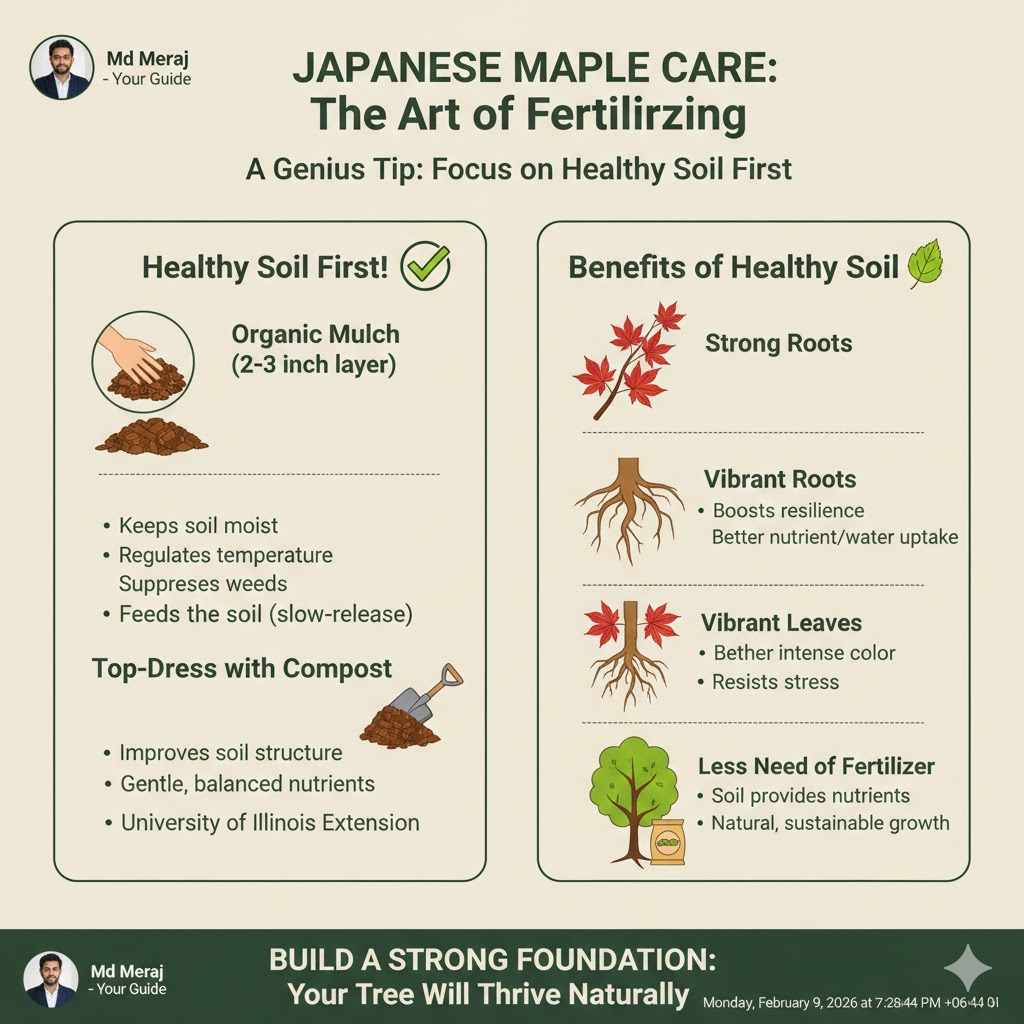
The absolute best thing you can do for your Japanese maple is to give it a layer of organic mulch. A 2 to 3-inch layer of something like pine bark fines, shredded hardwood, or leaf compost does amazing things:
- Keeps soil moist: It reduces water evaporation, so you don’t have to water as often.
- Regulates temperature: It keeps the roots cool in summer and insulated in winter.
- Suppresses weeds: It’s a natural barrier against pesky weeds.
- Feeds the soil: As the mulch breaks down, it slowly releases organic matter and nutrients into the soil. It’s like the ultimate super-slow-release fertilizer!
Each spring, you can also top-dress the area around the tree with a thin layer of high-quality compost. This is a practice promoted by many horticulture programs, like the University of Illinois Extension. Compost improves soil structure and provides a gentle, balanced mix of nutrients naturally. When you build healthy soil, your tree will thank you with a strong, beautiful structure and vibrant leaves.
Frequently Asked Questions (FAQ)
What is the best fertilizer for Japanese maples?
The best choice is a slow-release granular fertilizer with a low-nitrogen N-P-K ratio, like 4-8-5 or 5-8-6. Fertilizers designed for acid-loving plants, trees, or shrubs are often a great fit.
Can I use Miracle-Gro on my Japanese maple?
It’s best to be cautious. Many all-purpose Miracle-Gro products are high in nitrogen and designed for fast growth, which can harm Japanese maples. If you must use it, choose a formula for trees and shrubs, dilute it to half-strength, and use it very sparingly in the spring.
How often should I fertilize my Japanese maple?
Only once a year, in late winter or early spring just as the tree’s buds are beginning to swell. Fertilizing more often than that can cause more harm than good.
Do Japanese maples in pots need more fertilizer?
They can need it a bit more regularly because nutrients leach out of pots faster with watering. However, you should use a much smaller amount. Feed them in early spring with a slow-release formula, or use a diluted liquid fertilizer at half-strength once a month during the early growing season (April-June).
What are the signs of a Japanese maple needing fertilizer?
A healthy, established Japanese maple may not need any. But signs that it could use a gentle boost include pale green or yellowing leaves (chlorosis), very slow growth over several years, or smaller-than-usual leaves. Always check for other issues like poor drainage or pests first.
Why are the leaves on my Japanese maple turning brown at the tips?
This is called leaf scorch and it has several common causes. The most frequent are under-watering (especially during hot, windy weather), too much direct sun, or over-fertilizing. Too much fertilizer burns the delicate roots, preventing them from taking up enough water, which shows up as brown, crispy leaf edges.
Should I fertilize a newly planted Japanese maple?
No, you should wait at least one full year after planting. A new tree needs to focus its energy on establishing its root system in its new home. Adding fertilizer can disrupt this process and burn the sensitive new roots.
Conclusion: Your Gentle Approach to a Beautiful Tree
Caring for a Japanese maple is a lot like fine woodworking—it’s not about force or speed, but about patience and a gentle, thoughtful approach. You don’t need to be a master gardener to keep your tree thriving. All you need to remember is our core principle: less is more.
By choosing a simple, slow-release fertilizer, applying it just once in the early spring, and focusing on building healthy soil with mulch and compost, you are giving your tree everything it needs to flourish. You now have the knowledge and the confidence to feed your tree correctly. Go ahead and enjoy its graceful beauty, knowing you’re giving it the best care possible. Happy growing!