How to Get Paint Off Trex Decking (Without Damaging It)
Trex’s own guidance is clear on this: never use acetone or other solvents on composite decking, including mineral spirits, since both can chemically damage the surface. What actually works is Krud Kutter with a plastic brush, or Trex’s own Pour-N-Restore spot remover, applied gently and tested on a hidden area first. This guide covers exactly what to use, what to avoid, and where a low-PSI pressure washer fits in.
Quick Answer
Apply Krud Kutter (or Trex’s own Pour-N-Restore) to the paint stain, let it sit a few minutes, scrub gently with a plastic-bristle brush, then rinse with water. Never use acetone, mineral spirits, or paint thinner — all are solvents that Trex explicitly warns can damage the composite surface.
Why Regular Paint Removers Can Damage Trex Decking
Trusted Composite Deck Stain Remover
Rust-Oleum RockSolid Composite Deck Stain Remover, 32 oz
A biodegradable, fast-acting cleaner formulated for composite decking, concrete, and stone patios — not a generic household solvent.
- Best for: paint, grease, food, and drink stains on Trex and similar composite decking
- Why we picked it: multi-surface composite deck cleaner from a widely trusted brand, works quickly on tough stains
- Main drawback: still test on a hidden spot before treating visible areas
Compare more Trex-safe cleaning options
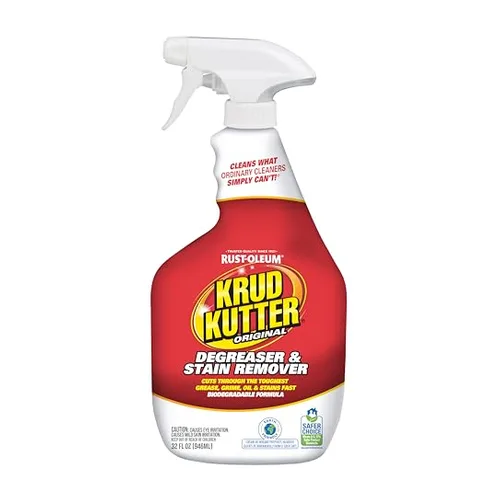 Option 1 Krud Kutter Original Cleaner/Degreaser
|
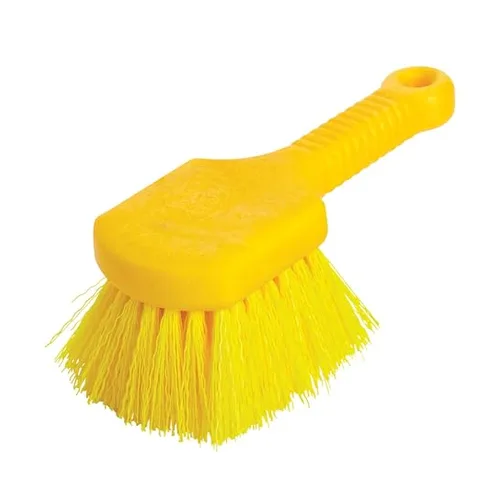 Option 2 Synthetic-Bristle Scrub Brush
|
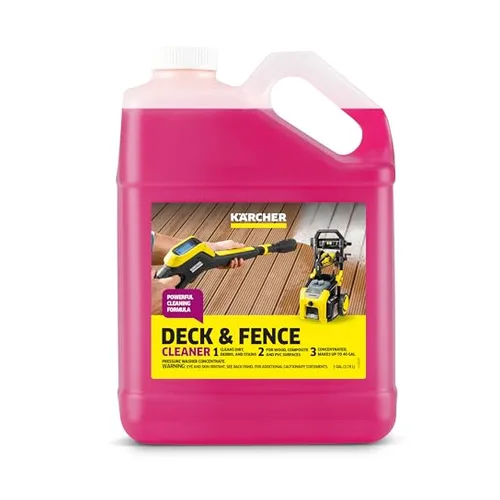 Option 3 Kärcher Wood & Composite Deck Cleaner
|
As an Amazon Associate we earn from qualifying purchases.
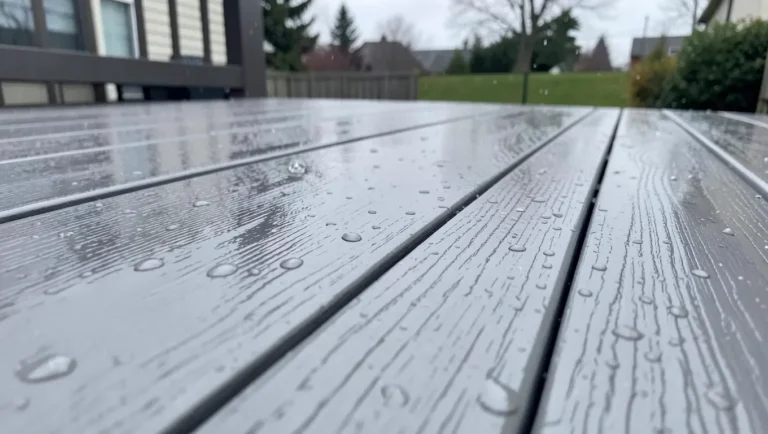
Trex composite decking is made from a blend of recycled wood fiber and plastic, capped with a protective outer layer. That plastic cap is exactly what solvents attack: acetone, mineral spirits, paint thinner, and lacquer thinner can all soften, discolor, or permanently mark the cap layer. Trex’s own care documentation states plainly that acetone and other harsh solvents should never be used on its decking, railing, or Signature product lines — the risk is chemical damage to the plastic component, not just a cosmetic issue.
📊 Trex’s official guidance permits pressure washing at up to 3,100 PSI with a fan-tip nozzle held at least 8 inches from the surface — but this is for general dirt and mud, not a substitute for solvent-free stain removal. Source: Trex Transcend/Enhance/Select Care and Cleaning Guide.
What Actually Removes Paint from Trex — And What to Avoid
Several products get recommended online for this exact problem, but they aren’t equally safe. Here’s how the common options actually stack up against Trex’s own guidance:
| Product | Safe on Trex? | Why |
|---|---|---|
| Krud Kutter (Original or Deck & Fence) | Yes, with caution | Widely used and generally safe with a plastic brush, but test on a hidden spot first — it can emulsify some surface coloring |
| Trex Pour-N-Restore | Yes | Trex’s own spot-remover product, formulated specifically for composite decking |
| Dish soap + warm water | Yes | Safest option for fresh, light paint spatter |
| Acetone | No | Explicitly warned against by Trex — can chemically damage the plastic cap |
| Mineral spirits | No | A solvent, not officially approved by Trex despite some sites claiming otherwise |
| Paint thinner / turpentine | No | Same solvent risk as acetone and mineral spirits |
If you’ve seen advice online recommending mineral spirits as a “safe alternative” to acetone, that’s a common mistake — mineral spirits is itself a solvent, and Trex does not list it as an approved cleaner. When in doubt, stick to the products above and always test in an inconspicuous spot first.
“Anything that will remove oils is going to emulsify some of that colorant in the wood portion of the Trex. This means some surface marking or shadowing may occur — test the solution on a hidden portion of your deck first.”
How to Remove Paint from Trex Decking, Step by Step
- Test first: Apply your chosen cleaner to a hidden section of decking and check for discoloration before treating the visible stain.
- Apply the cleaner: Spray or pour Krud Kutter or Pour-N-Restore directly onto the paint stain.
- Let it sit: Give it a few minutes to loosen the paint — don’t let it dry out on the surface.
- Scrub gently: Use a soft, plastic-bristle brush only. Stiff or metal-bristle brushes can scratch the cap layer.
- Rinse thoroughly: Wash the area with clean water to remove all cleaner residue.
- Repeat if needed: Stubborn or dried paint may need a second application rather than a stronger, riskier chemical.
Using a Pressure Washer for General Cleaning
A pressure washer can help with general dirt and grime around a paint stain, but follow Trex’s specs closely: no more than 3,100 PSI, a fan-tip nozzle, and at least 8 inches of distance from the board. Keep the nozzle moving — holding it in one spot, even at low pressure, can gouge the surface. This is a supplement to stain removal, not a replacement for it.
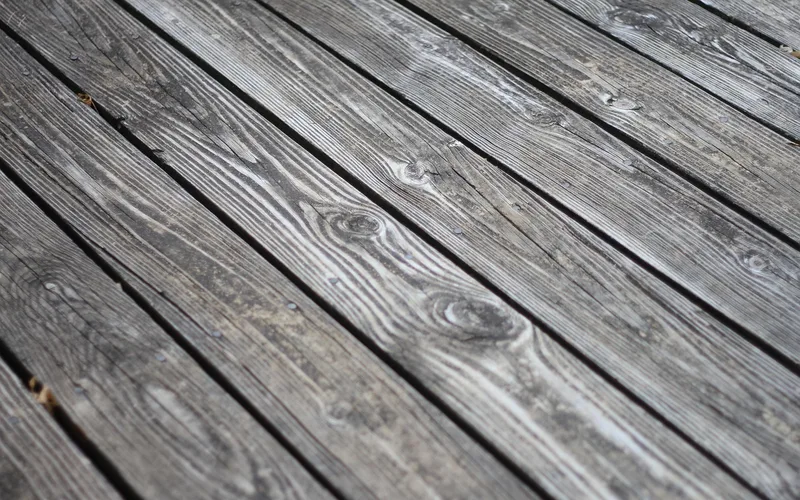
Preventing Paint Stains on Trex Decking
- Cover the decking with a drop cloth or tarp before any painting project nearby — the same precaution applies whether you’re working with the right tools for a new install or painting something nearby.
- Clean up spills immediately — fresh paint comes off far more easily than cured paint.
- Keep dish soap and water on hand during any painting job as a first line of defense.
Frequently Asked Questions
Will paint thinner hurt Trex decking?
Yes. Paint thinner is a solvent, and Trex’s own guidance warns against solvents on its composite decking because they can damage the plastic cap layer.
Can I use mineral spirits on Trex decking?
No. Mineral spirits is itself a solvent and is not on Trex’s list of approved cleaners, despite some sites recommending it as an alternative to acetone. Use Krud Kutter or Pour-N-Restore instead.
Can you use Dawn soap on Trex decking?
Yes. Dish soap and warm water is one of the safest options for fresh, light paint spatter and general cleaning.
What takes stains out of Trex decking?
Trex’s own Pour-N-Restore spot remover is formulated specifically for this. Krud Kutter with a plastic brush is a widely used alternative — just test on a hidden area first.
If you’re also dealing with paint on a nearby concrete surface, that requires different products entirely — concrete can handle solvents composite decking can’t. For the decking itself, the safest path for paint on Trex decking is Krud Kutter or Trex’s own Pour-N-Restore, a plastic-bristle brush, and a water rinse — not acetone, mineral spirits, or paint thinner, all of which Trex explicitly warns against. A gentle low-PSI pressure wash can help with surrounding grime, but treat the actual stain with a purpose-made cleaner and always test an inconspicuous spot first. See our full breakdown of Trex decking prices if you’re weighing a repair versus a board replacement.
Sponsored / affiliate links. As an Amazon Associate I earn from qualifying purchases. I may earn additional commission from eligible campaigns.