How to Get Wood Stain off Glass (Wet, Cured, Oil or Water-Based)
Which method works depends on whether the stain is still wet or has fully cured. Fresh stain wipes off with a damp cloth in seconds. Cured, dried-on stain needs a solvent or gentle abrasive to break the bond — and the fix changes again depending on whether it’s an oil-based or water-based stain. Here’s how to tell which situation you’re in and the right fix for each.
Still Wet? Wipe It Now
Best For Cured Stain On Glass
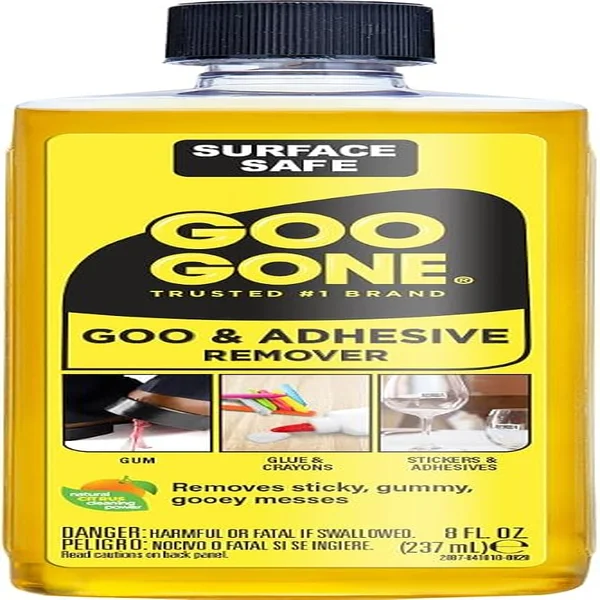 |
Goo Gone Original Surface-Safe Remover – $7.85 A citrus-oil formula that softens cured stain film without the strong fumes of mineral spirits or acetone.
|
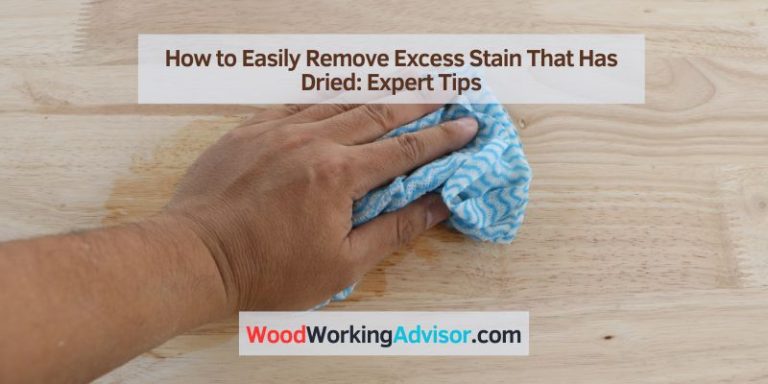
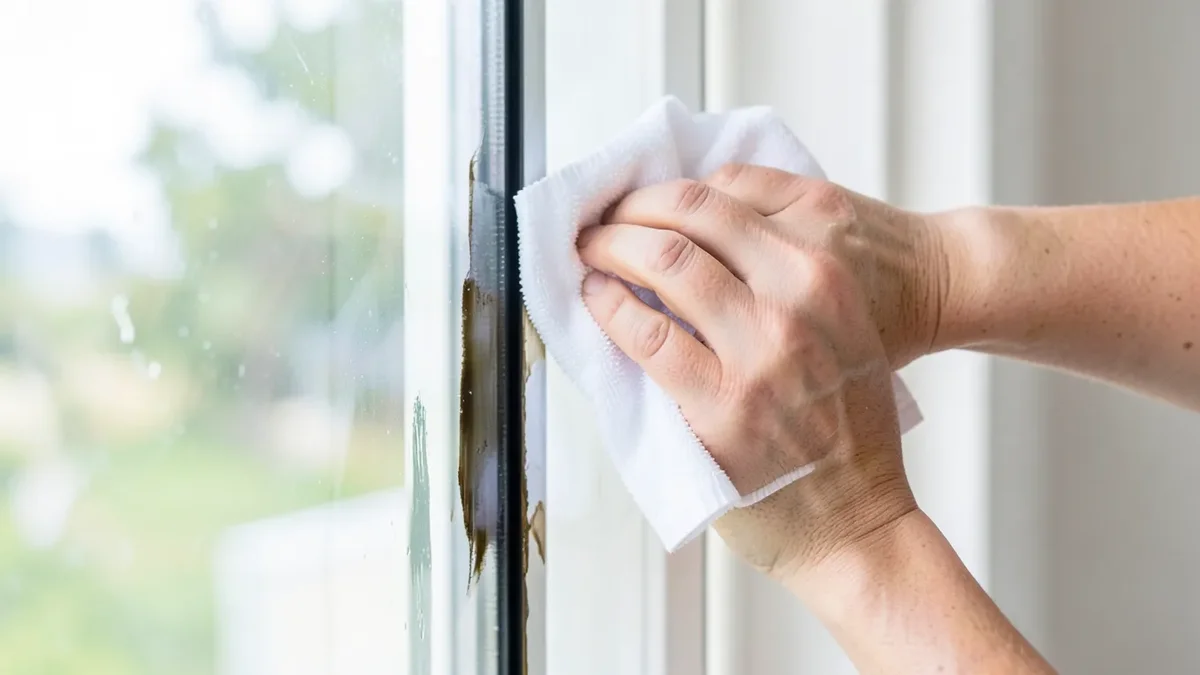
If you just splashed or brushed stain onto a window pane or glass panel and it hasn’t dried, don’t reach for solvents yet. A damp microfiber cloth and a little dish soap will lift wet stain off glass completely — glass is non-porous, so nothing has soaked in yet. Wipe from the outside of the spill inward so you don’t spread it further, then dry with a clean cloth to avoid streaking.
Cured Stain: Match the Method to the Stain Type
Oil-Based Stain: Mineral Spirits First
Oil-based wood stains cure into a film that plain soap and water won’t touch. Mineral spirits is the right first tool because it dissolves the oil binder without attacking glass — glass has no pores for the solvent to damage, unlike the wood or painted trim around it. Dampen a lint-free cloth (not soaked — dripping mineral spirits onto a window frame can soften paint or finish on the surrounding wood or aluminum), work it into the stain in small circles, and switch to a clean section of cloth once the first area starts lifting. Finish with warm soapy water to clear the solvent residue, then dry with a squeegee or microfiber cloth to avoid streaks.
For a stain that’s fully hardened and mineral spirits alone won’t touch, acetone or lacquer thinner works faster — but both are more aggressive on nearby painted or finished surfaces, so mask off the frame first and test on a small hidden corner of the glass before going over the whole stain.
Water-Based Stain: Baking Soda Paste
Water-based stains don’t need a solvent — a mild abrasive paste breaks the bond just as well without the fumes. Mix baking soda with a few drops of water until it’s the consistency of toothpaste, spread it over the stained area, and let it sit for 2-3 minutes before working it in with a soft cloth or nylon-bristle brush (never a scouring pad — it will scratch glass). Rinse thoroughly and dry with a microfiber cloth or squeegee. This same paste works on oil-based stains too if you’d rather skip solvents, though it usually takes more scrubbing.
Stubborn, Fully Cured Residue: the Razor Blade Method
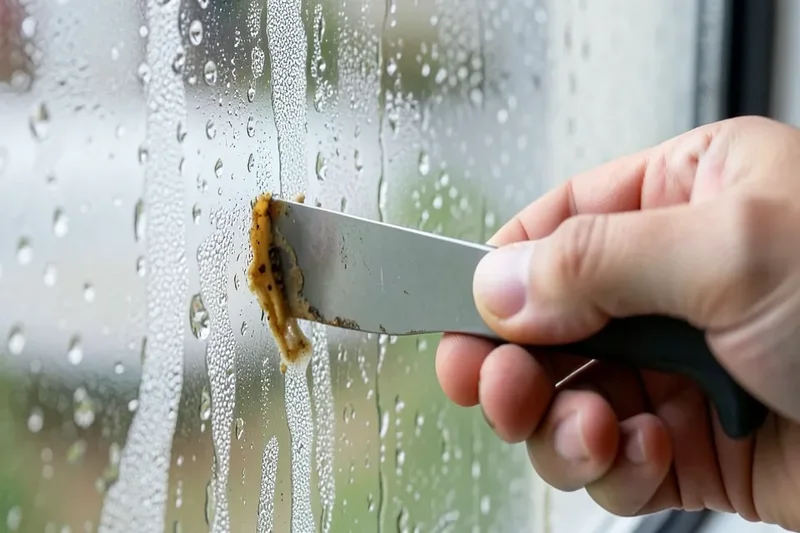
For a hard shell of dried stain that laughs off both solvent and paste, a fresh single-edge razor blade held at a shallow angle (close to flat against the glass, not perpendicular) will shave the residue off without scratching. Keep the glass wet with soapy water while you work — a dry blade on dry glass is what causes scratches, not the blade itself. Always scrape away from yourself and in one direction, and stop the moment you feel the blade catch on something gritty, since that’s usually a piece of grit trapped under the stain that will scratch on the next pass.
Best Pick: A Dedicated Adhesive & Residue Remover
If you don’t already have mineral spirits on hand, a citrus-based surface-safe remover made for stuck-on residue is a gentler, less-fume-heavy option that still cuts through cured oil-based stain film on glass.
Frequently Asked Questions
How do you remove stain from glass?
It depends on whether the stain is wet or cured. Wet stain wipes off with soapy water. Cured oil-based stain needs mineral spirits or a surface-safe remover; cured water-based stain usually comes off with a baking soda paste.
Will mineral spirits damage glass?
No, glass is non-porous so mineral spirits won’t etch or stain it. Be careful with the surrounding window frame or trim, though, since mineral spirits can soften paint or finish on wood or aluminum.
Is it safe to scrape dried stain off glass with a razor blade?
Yes, as long as the glass stays wet with soapy water while you scrape and the blade is held at a shallow angle. Scraping dry glass, or scraping over trapped grit, is what causes scratches.
Can baking soda paste remove oil-based wood stain from glass?
It can, but it usually takes more scrubbing than it does on water-based stain since it’s a mild abrasive rather than a solvent. For heavily cured oil-based stain, mineral spirits or a surface-safe remover works faster.
Conclusion
Wet stain just needs soap and water before it sets. Once it’s cured, match the fix to the stain: mineral spirits or a surface-safe remover for oil-based stain, a baking soda paste for water-based stain, and a wet razor blade held at a shallow angle for whatever residue is left behind. Work in a well-ventilated area with any solvent, and test on a small corner first if you’re not sure which type of stain you’re dealing with.
Sponsored / affiliate links. As an Amazon Associate I earn from qualifying purchases. I may earn additional commission from eligible campaigns.