How to Make a Box Out of Wood: Easy DIY Guide
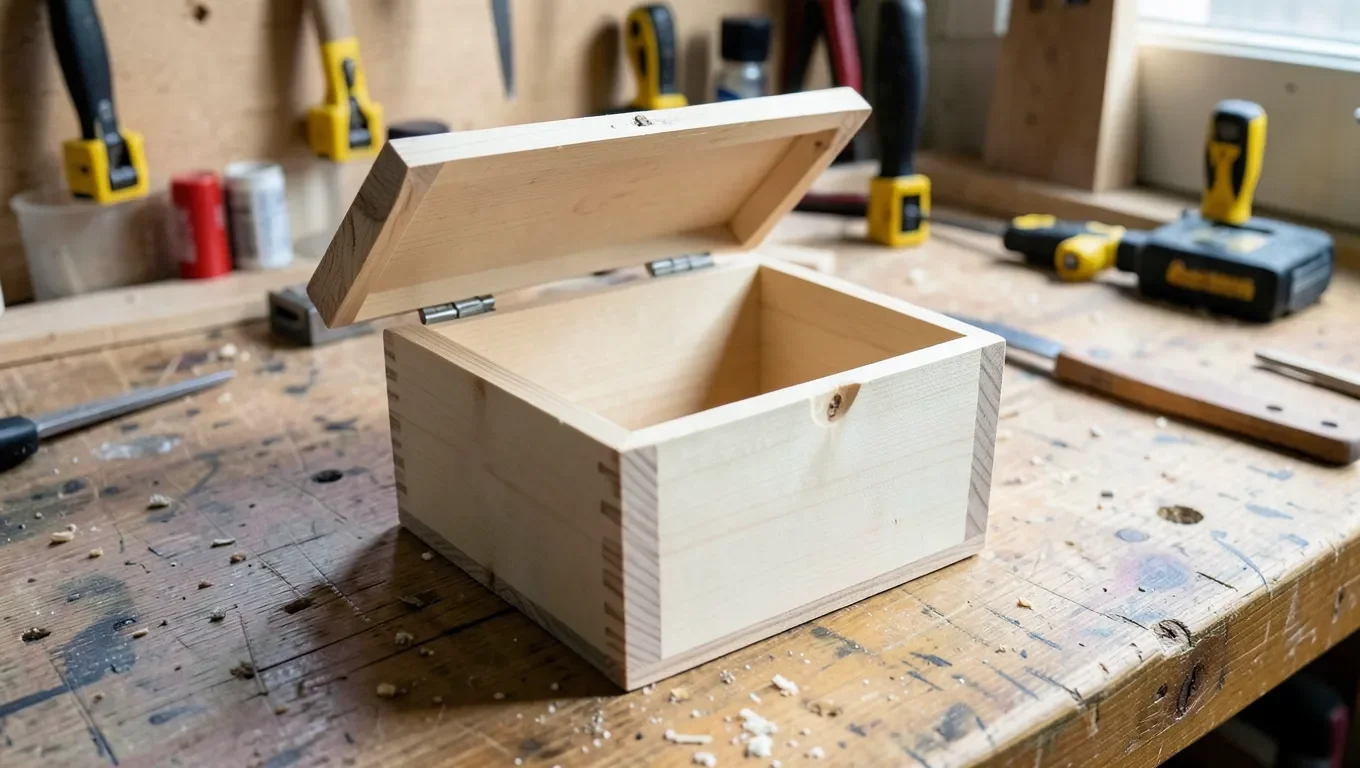
To make a wooden box, cut four side pieces and a bottom panel to size, join the corners (miter, rabbet, or box/finger joints all work), glue and clamp the assembly square, then let the bottom float in a groove rather than gluing it in solid so it can expand and contract with humidity. That last detail — a floating bottom — is the one most beginner guides skip, and it’s the difference between a box that still closes properly next winter and one that cracks.
Here’s the full build, corner-joint options included, with real dimensions to work from rather than vague steps.
Choosing Wood and Planning Dimensions
Best For Strong, Hidden Corner Joints
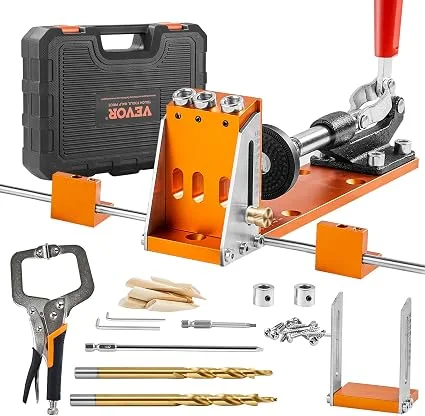 |
VEVOR Pocket Hole Jig Kit – $48.90 If cutting box/finger joints or miters feels out of reach for a first box, pocket screws hidden on the inside faces give a strong, square corner with basic tools.
|
For a first box, pine is forgiving and cheap; poplar cuts almost as easily and takes paint better; oak, maple, and cherry look better but are harder to work and cost more per board foot. A practical starting size is 8″ long x 5″ wide x 3″ tall, using 1/2″-thick sides — small enough to finish in a weekend, large enough that minor mistakes aren’t ruinous. Whatever size you choose, decide on your joinery before cutting: miters and box joints both need extra length added to the side pieces to account for the joint itself, so this decision changes your cut list.
Cutting the Pieces
Cut two side pieces and two end pieces to your planned length and width on a table saw or miter saw, keeping the sides slightly longer than the finished width so you can trim to final size after test-fitting. Cut the bottom panel about 1/8″ smaller in each dimension than the inside box footprint, so it has room to expand without binding once it’s fit into a groove. Sand every piece to at least 220 grit before assembly — sanding after glue-up is much harder to do evenly across a glued joint.
Choosing a Corner Joint
- Butt joint: simplest option — sides meet at 90 degrees and are glued and pinned or screwed. Weakest joint of the three, fine for a quick utility box, not for anything that will see heavy handling.
- Miter joint: each corner is cut at 45 degrees so no end grain shows on the outside. Looks the cleanest but relies entirely on glue strength unless reinforced with splines or biscuits, since end-grain-to-end-grain glue joints are inherently weak.
- Box (finger) joint: interlocking fingers cut on a table saw jig or router table. The strongest and most visually distinctive of the three — the joint itself becomes a decorative feature — but it needs a jig and more setup time.
For a first box, a butt joint reinforced with glue and brad nails, or pocket screws hidden on the inside, gets a solid result without needing specialized jigs.
Cutting the Bottom Groove
Before gluing anything, cut a groove (a dado, roughly 1/4″ wide and 1/4″ deep) around the inside bottom edge of all four side pieces, positioned about 3/8″ up from the bottom edge. The bottom panel slides into this groove during assembly and is never glued in place — this lets the panel expand and contract across its width with seasonal humidity changes without splitting the box or popping a glued seam. Skipping this and just gluing a flat bottom on is the most common reason a beginner’s first box eventually cracks.
Gluing and Assembling
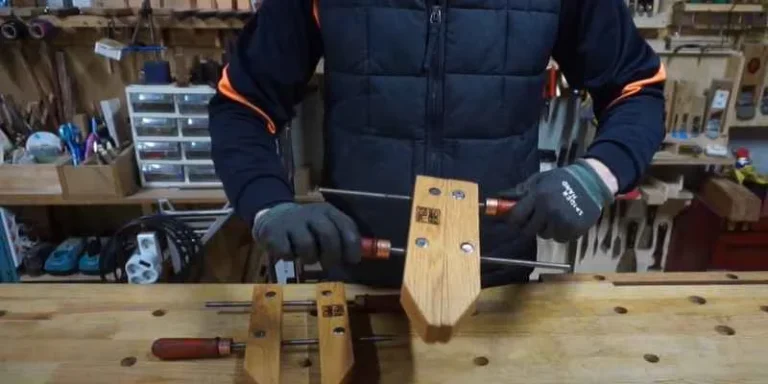
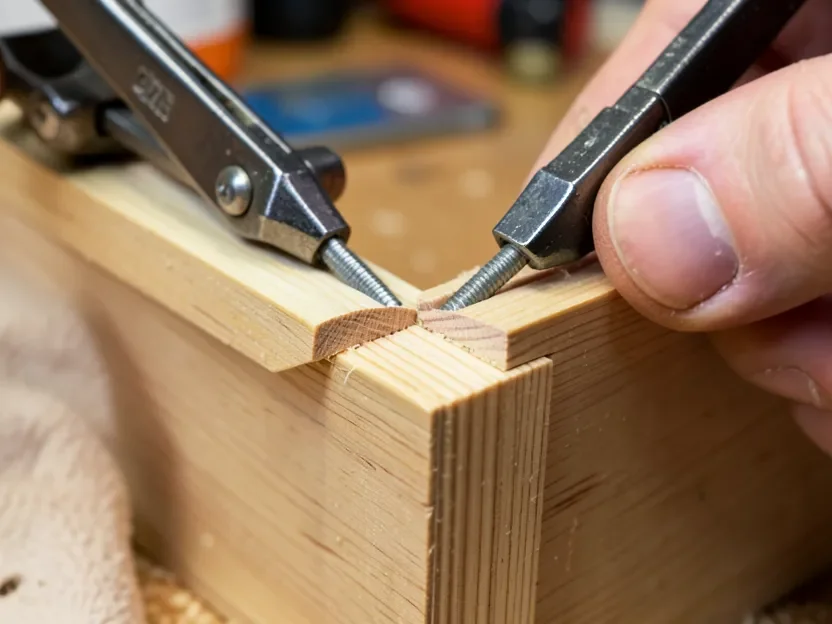
Dry-fit all four sides and the bottom panel before any glue goes on, to catch sizing problems while they’re still easy to fix. Apply wood glue to the corner joints (never to the bottom panel itself, since it needs to float), assemble the box, and clamp it square. Check squareness by measuring both diagonals corner-to-corner — if they match, the box is square; if they don’t, adjust the clamps before the glue sets. Let it cure fully per the glue’s instructions (usually 24 hours) before removing clamps and moving on to the lid.
Making and Fitting the Lid
The simplest lid is a flat panel cut to match the box’s outer footprint, attached with a pair of small hinges at the back edge. For a cleaner look, cut the lid slightly oversized and rout or plane a small lip on its underside that fits just inside the box opening, which keeps the lid centered and hides any small gaps around the edge. Mortise the hinges flush into both the lid and the box’s back edge so they sit level rather than proud of the surface.
Finishing
Sand the whole assembled box to a final 220-320 grit, breaking (rounding slightly) all sharp edges and corners so the finish doesn’t wear through immediately at those high-contact points. For a natural look, a wipe-on oil or a stain followed by a wipe-on polyurethane brings out the grain with minimal equipment; for a painted finish, prime first, then apply 2 thin coats of paint rather than one thick one, which avoids drips and brush marks. Whatever finish you choose, do the interior too, even if it’s just a coat of shellac or oil — an unfinished interior absorbs moisture unevenly and can warp the bottom panel over time.
Decorative Touches and Hardware
Wood burning, carved details, or an inlay strip of contrasting wood are all straightforward additions before finishing. Hardware matters more than it might seem: a lid stay or support arm prevents the lid from swinging back too far and stressing the hinges, and a simple brass clasp or hook-and-eye latch is worth adding if the box will hold anything you don’t want falling open by accident.
Frequently Asked Questions
How Do I Choose the Right Wood for a Box?
Pine and poplar are the most forgiving for a first project — inexpensive and easy to cut. Hardwoods like oak, maple, and cherry look better and hold detail more crisply but cost more and are harder on tools, so they’re worth saving for a second or third box once the basic techniques feel comfortable.
What Tools Do I Need to Make a Wooden Box?
At minimum: a saw for cutting to size, a way to cut the bottom groove (a table saw with a dado stack, or a router), clamps, wood glue, and sandpaper. A miter saw or box-joint jig is only needed if you choose those specific corner joints over a simple butt joint.
Why Should the Bottom Panel Float Instead of Being Glued In?
Wood expands and contracts across its width with seasonal humidity changes. A bottom panel glued solidly to all four sides has nowhere to move, so it eventually splits the panel or cracks a glue joint. Letting it float in a groove lets it shift slightly without damaging the box.
How Can I Personalize and Decorate a Wooden Box?
Wood burning, carved engravings, and inlay strips of contrasting wood are all approachable additions before finishing. Decorative hardware — hinges, clasps, or handles in a finish that complements the wood — also changes the look significantly for relatively little extra work.
Conclusion
A wooden box comes down to five real decisions: wood species, dimensions, corner joint, whether the bottom floats, and finish. Get the floating bottom right and pick a corner joint that matches your tools and patience, and the rest of the build is straightforward measuring, cutting, and gluing.
Sponsored / affiliate links. As an Amazon Associate I earn from qualifying purchases. I may earn additional commission from eligible campaigns.