How to Remove Water Stains From Lacquered Wood (Safely)
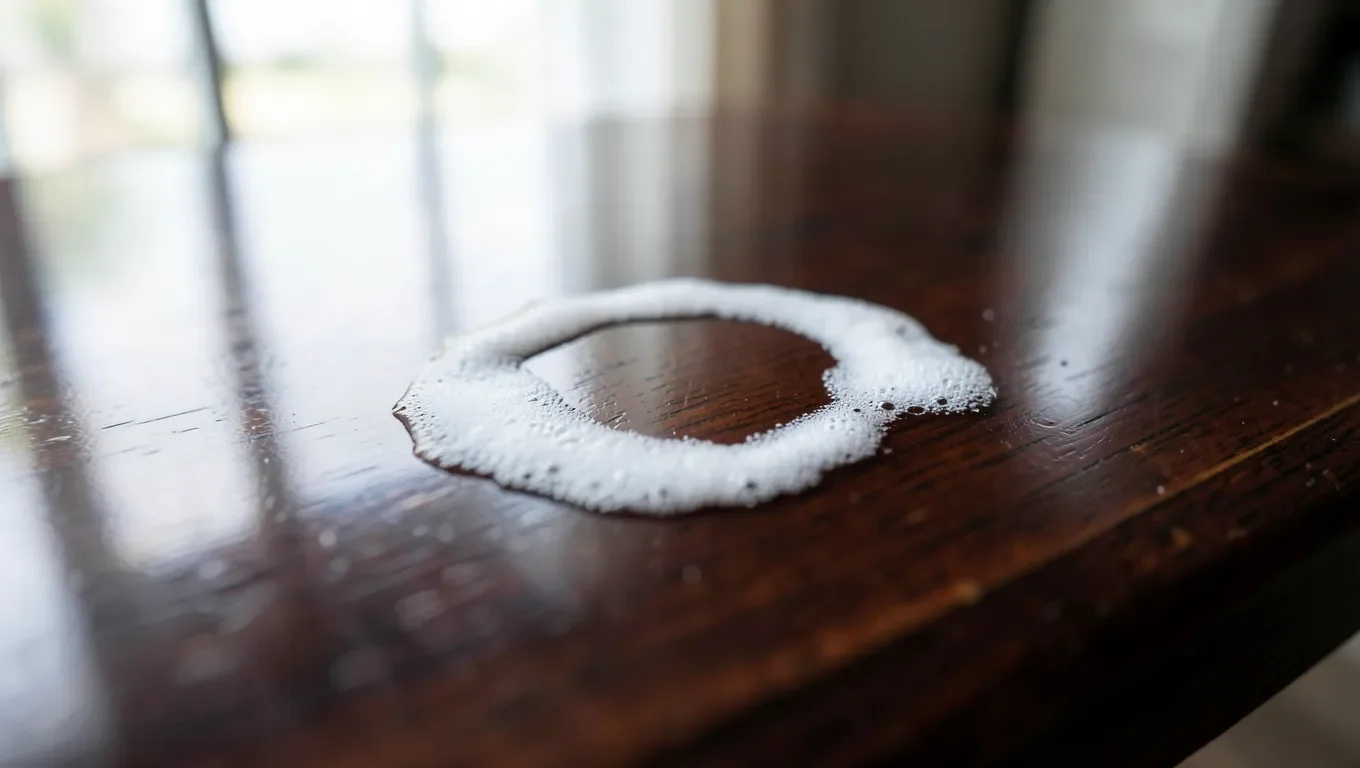
That cloudy white ring on your lacquered tabletop looks like permanent damage, but in most cases it is not. It is moisture trapped inside the finish’s own microscopic pores, sitting on top of the wood rather than soaked into it. The fix is usually straightforward, but lacquer needs a gentler, more specific approach than the polyurethane advice you will find on most cleaning sites, because lacquer behaves differently once it is dry.
Below are the two removal methods that are actually safe for lacquer, plus the one mistake that turns a fixable haze into a real problem: reaching for a solvent that is not formulated for lacquer specifically.
Why Water Rings Form on Lacquer (and Why It Is Different From Polyurethane)
Lacquer finish is a hard but microscopically porous surface. When a cold glass sweats or a spill sits for a while, moisture works its way into those pores and gets trapped just under the very top layer of the finish. Trapped water scatters light instead of letting it pass through cleanly, which is what reads as a white or grayish haze. Most of the time this is a finish problem, not a wood problem. Real damage to the wood itself is uncommon unless the moisture sat for weeks or found a crack straight through to bare wood.
The chemistry is the real reason lacquer needs different handling. Lacquer cures purely by solvent evaporation, and it stays solvent-reactive indefinitely after that. A furniture refinisher can literally reflow decades-old lacquer with the right solvent. Catalyzed conversion varnish and most modern polyurethanes work the opposite way: they cross-link into a new, stable chemical structure as they cure and stop reacting to ordinary solvents once fully hardened. That is why a product or technique that is perfectly safe on a polyurethane tabletop, like wiping on mineral spirits or a generic wood restorer spray, can soften, cloud, or strip a lacquer finish instead of fixing it.
Best Fine Abrasive Pick for Lacquer
 |
3M Synthetic Steel Wool Pads (0000 Super Fine, 6-Pack) – $6.61 Same super-fine grit as traditional 0000 steel wool for the mild-abrasive method below, but the synthetic fibers will not shred, rust, or leave metal fragments in the wood grain.
|
Surface Haze or Deep Stain? How to Tell Before You Start
The look of the mark tells you how much work it will take, so check it closely before picking a method:
- Fine white or gray haze right on the surface: a recent event, only sitting in the top of the finish, and usually clears in one round of the heat method below.
- Darker ring with a slightly raised or rough edge: the moisture had longer to work into the lacquer layer, so plan on a few short rounds of heat, possibly followed by the mild abrasive method.
- Gray-black stain, or the finish is cracked and the wood underneath looks dark: moisture likely reached bare wood through a break in the finish. That calls for a real finish repair (drying the wood out, then patching or refinishing that spot), not a simple stain-removal job.
Whichever type it is, test any method in an inconspicuous spot first, like the underside of a tabletop edge or the back leg of a chair. Lacquer sheen varies from one manufacturer and one coat count to the next, so a technique that is perfectly safe on one piece can leave a faint dull patch on another if you skip the test.
Method 1: Gentle Heat (Start Here)
Heat evaporates the trapped moisture back out through the same pores it went in through, and it is the lowest-risk method to try first.
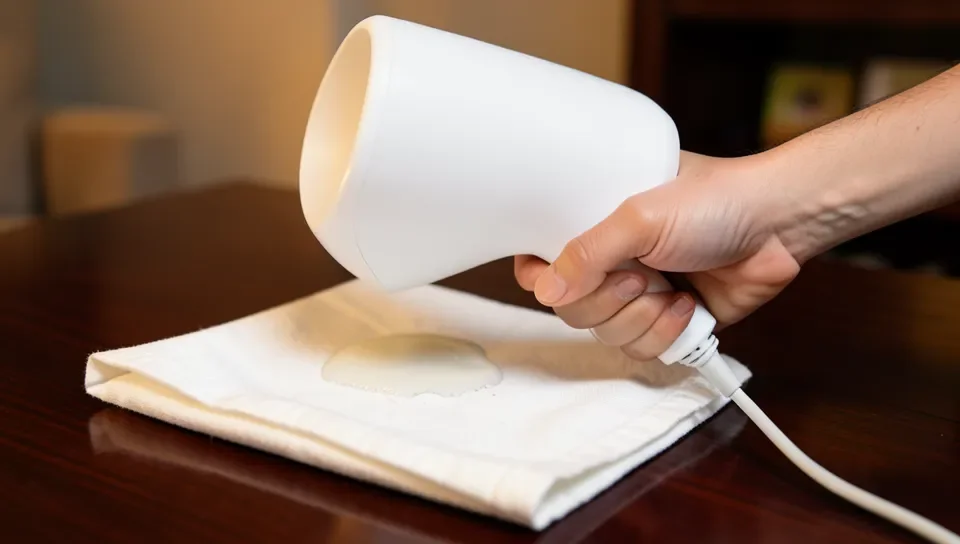
Hair dryer: set it to low heat, hold it a few inches from the surface, and keep it moving constantly in small circles over the stain. Warm, not hot, is the target. Check every 30 to 60 seconds. A fresh, light haze often clears in 3 to 5 minutes.
Iron and cloth: fold a plain cotton cloth (no synthetic fibers) into a few layers and lay it directly over the stain. Set the iron to low with no steam, and press for only a few seconds at a time, lifting to check often. This works faster than a hair dryer but carries more risk, since an iron that is too hot can soften the lacquer itself.
Method 2: A Mild Abrasive, If Heat Alone Does Not Fully Clear It
If the ring is still faintly visible after a couple of rounds of heat, a very mild abrasive can buff out what is left. Apply a light lubricant first, either mineral oil or a bit of the same wax or polish you would use to finish the piece, then rub gently in the direction of the wood grain only, using light pressure. Wipe clean and buff with a dry cloth.
Fine (0000-grade) steel wool is the traditional choice, but a synthetic 0000 pad does the same job without the drawback real steel wool has on wood: tiny metal fibers can break off, embed in the grain, and rust later, leaving faint dark specks long after the water stain itself is gone. Non-gel toothpaste or a baking soda paste (baking soda mixed with a few drops of water or mineral oil) work as milder household alternatives at roughly the same grit.
What Not to Use on Lacquer (This Is the Part Most Guides Get Wrong)
- Mineral spirits or generic wood restorer sprays not labeled safe for lacquer specifically. Since lacquer stays solvent-reactive even fully cured, these can re-dissolve or cloud the finish instead of cleaning it.
- Ammonia-based glass or multi-surface cleaners carry the same solvent risk and can dull the sheen on top of it.
- High heat or steam. Beyond warm, gentle heat, you risk softening or bubbling the lacquer, or driving the moisture deeper instead of out.
- Pressing hard with an abrasive. Lacquer is a thin film. Heavy pressure can burn straight through it to bare wood and turn an easy fix into a real refinishing job.
Preventing the Next Water Ring
Use coasters and trivets under glasses, mugs, and hot dishes, and wipe up spills within a few minutes rather than letting them sit. A light coat of a lacquer-safe furniture wax every few months adds a thin sacrificial barrier that takes the hit instead of the finish itself. It also helps to keep lacquered pieces away from spots with constant humidity swings, such as right next to an exterior door or a humidifier.
Frequently Asked Questions
Does mayonnaise or toothpaste really remove water stains from lacquer?
Non-gel toothpaste works because it is a genuine mild abrasive, the same idea as the baking soda paste described above, not because of anything special in the ingredients. Mayonnaise is a much less reliable folk remedy: any improvement people see is usually the oil temporarily hiding the haze rather than actually clearing the trapped moisture, and it can leave an oily residue on some finishes. Try heat first, then a real mild abrasive if needed.
How long does it take for a water stain to go away with the hair dryer method?
A fresh, light haze often clears in 3 to 5 minutes of gentle, moving heat. Older or darker rings can take several short rounds spread over a day or two. Evaporate, then check, rather than holding heat on one spot continuously.
Can I use mineral spirits or wood restorer on a lacquer finish?
Not unless the product label specifically says it is safe for lacquer. Mineral spirits and many general wood restorer sprays are formulated for cured, cross-linked finishes like polyurethane and can re-dissolve or cloud lacquer, since lacquer stays solvent-reactive even after it is fully dry.
Will the water stain come back in the same spot?
Not from the same event once the trapped moisture is actually evaporated out, but that spot is just as vulnerable to a new spill or a sweating glass, since removing a stain does not add any extra protection. Coasters and a light lacquer-safe wax coat afterward meaningfully cut the odds of a repeat.
Should I just sand the water stain out?
Treat sanding as a last resort, not a first step. Sanding cuts through the lacquer layer along with the stain, so it leaves a bare patch that needs to be refinished (or at least re-coated and blended) to match the surrounding sheen. Heat and a mild abrasive fix the vast majority of water rings without ever touching the finish itself, so save sanding for a stain that has not budged after both of those and shows the darker, deeper signs described above.
Sponsored / affiliate links. As an Amazon Associate I earn from qualifying purchases. I may earn additional commission from eligible campaigns.