How to Remove Wood Stain Overspray: Car Paint, Concrete, Skin & More
Wood stain overspray removes quickly when treated within the first 15 minutes — but dried stain on car paint requires mineral spirits, not acetone, which strips clear coat. Concrete needs TSP; skin needs olive oil, not solvents. This guide covers six surfaces: car paint, concrete, glass, vinyl windows, skin, and fabric — with the exact solvent for each.
Quick Answer
For oil-based wood stain overspray: use mineral spirits on a cloth, wipe with the grain, then wash with soap and water. For water-based stains: white vinegar or rubbing alcohol works on most surfaces. Never use acetone on car paint — it damages clear coat within hours. Act within 15 minutes for the easiest removal.
What You Need to Remove Wood Stain Overspray
Best Wood Stain Remover Pick
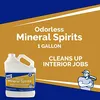
Klean-Strip Odorless Mineral Spirits, 1-Gallon – $18.22
The same mineral spirits recommended throughout this guide for removing oil-based wood stain from car paint, concrete, and finished wood. Odorless formula makes indoor use bearable when treating vinyl windows or furniture.
- Best for: Oil-based stain overspray on car paint, concrete, and finished wood surfaces
- Why we picked it: Odorless formula, 1-gallon size covers multiple cleanup jobs, widely available for refill
- Main drawback: Requires immediate soap-and-water rinse on car paint — don’t let it sit
Compare more wood stain remover options
 Option 1 Rust-Oleum Low VOC Mineral Spirits Quart – $17.63
|
 Option 2 DEFY Exterior Wood Stain Stripper – $30.54
|
 Option 3 #1 Deck Wood Stain Stripper, Ready to Use – $24.99
|
As an Amazon Associate we earn from qualifying purchases.
Before treating any surface, identify whether the stain is oil-based (penetrating stains like Minwax Oil-Based or Cabot Australian Timber Oil) or water-based (Minwax Water-Based, General Finishes Water-Based). This single fact determines which solvent will work — and which ones will make it worse. If you’re unsure what type of stain you’re dealing with, our wood stain remover guide covers how to identify stain formulations before treating overspray.
- Mineral spirits — for oil-based stains on hard surfaces (car paint, concrete, wood)
- Rubbing alcohol (70–91% isopropyl) — for both stain types on hard surfaces; safest for car paint
- White vinegar — for water-based stains on soft and hard surfaces
- TSP (trisodium phosphate) — for concrete and masonry
- Olive oil or coconut oil — for skin (never use solvents on skin)
- Dish soap + warm water — for fabric (never hot water, never the dryer until fully clear)
- Stiff-bristled brush — for concrete and wood scrubbing
- Clean cloths or rags — several, for blotting and wiping
- Gloves and eye protection — when using solvents
Fresh vs. Dried Wood Stain Overspray: Act Fast or Change Strategy
Fresh wood stain overspray (still wet) lifts from most surfaces with just soap, water, and a cloth — no solvents required. The moment stain starts to cure — typically within 15 to 30 minutes depending on temperature and humidity — solvent strength becomes necessary. On porous surfaces like concrete, stain can penetrate too deeply to remove completely if left more than 24 hours.
| Time Since Overspray | Best Approach | Surfaces It Works On |
|---|---|---|
| Under 15 minutes (wet) | Soap + water + cloth | All surfaces |
| 15–60 minutes (tacky) | Rubbing alcohol or white vinegar | Hard surfaces; blot fabric |
| 1–24 hours (cured) | Mineral spirits (oil-based) or rubbing alcohol (water-based) | Car, wood, glass, vinyl |
| Over 24 hours (hardened) | TSP scrub + pressure wash (concrete); light sanding (wood) | Concrete, bare wood only |
How to Remove Wood Stain Overspray from Car Paint
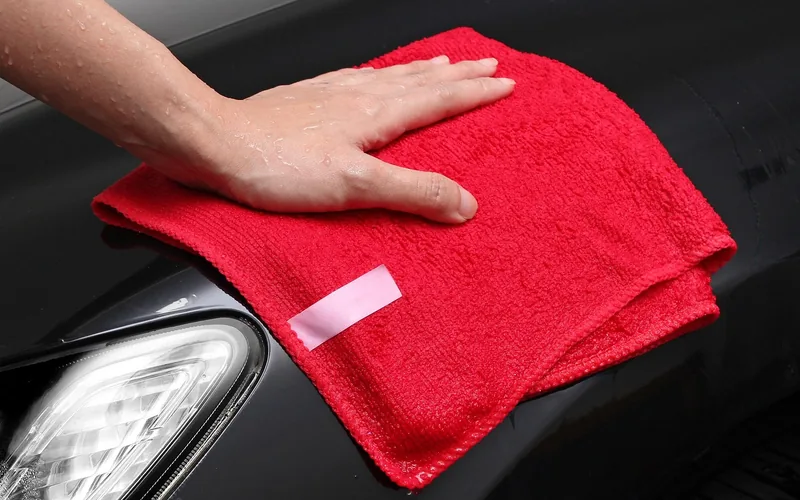
Car paint is the most common — and most nerve-wracking — overspray target. The good news: mineral spirits and rubbing alcohol remove wood stain from car finishes without damaging clear coat, as long as you rinse immediately after. Avoid acetone entirely — it dissolves clear coat within a few hours and is not recoverable without repainting.
- Wash first: Rinse the affected area with soap and water to remove loose particles. Use a soft cloth, never a brush.
- Apply solvent: Dampen a clean microfiber cloth with mineral spirits (for oil-based stain) or rubbing alcohol (safest for any stain type). Never pour solvent directly on the paint surface.
- Wipe gently: Rub in small circular motions with light pressure. The stain should begin lifting after 10–15 seconds of contact.
- Rinse immediately: Wipe the area with a clean damp cloth, then wash with car soap. Do not let mineral spirits sit on paint for more than 30 seconds — rinse each section as you go.
- Wax the area: After the surface is dry, apply a coat of paste wax to restore the clear coat protection mineral spirits slightly diminishes with prolonged contact.
“Rubbing alcohol evaporates faster than mineral spirits and doesn’t degrade car paint — for small overspray spots on a vehicle, I always reach for the isopropyl first. I’ve cleaned deck stain off the hood of my truck this way three times and the clear coat is still perfect.”
How to Remove Wood Stain Overspray from Concrete
Concrete is porous — the longer stain sits, the deeper it penetrates. For fresh overspray (under 1 hour), scrub with dish soap and water. For cured stain, TSP is the most reliable option: it breaks down both oil-based and water-based wood stains without damaging most concrete surfaces.
- Mix TSP solution: Combine 1 cup of TSP (trisodium phosphate) with 1 gallon of warm water. Wear gloves and eye protection — TSP is caustic and causes skin and eye irritation.
- Apply and scrub: Pour the solution over the stained area and scrub vigorously with a stiff-bristled brush. Work in 3–4 foot sections.
- Let it dwell: Allow the TSP solution to sit for 5–10 minutes before rinsing.
- Pressure wash or rinse: Rinse thoroughly with clean water. A pressure washer at 1,500–2,000 PSI removes loosened stain faster than a garden hose and prevents it from redepositing.
- Repeat if needed: Old, set stain may require 2–3 applications. For oil-based stains, add a 5-minute mineral spirits pre-treatment before the TSP scrub to dissolve the oil component first.
📊 Concrete absorbs liquid at roughly 0.5–1 oz per square foot per minute on an unsealed surface — Source: Concrete Network (2024). This is why removing wood stain from concrete within the first 30 minutes dramatically improves results.
How to Remove Wood Stain Overspray from Glass and Vinyl Windows
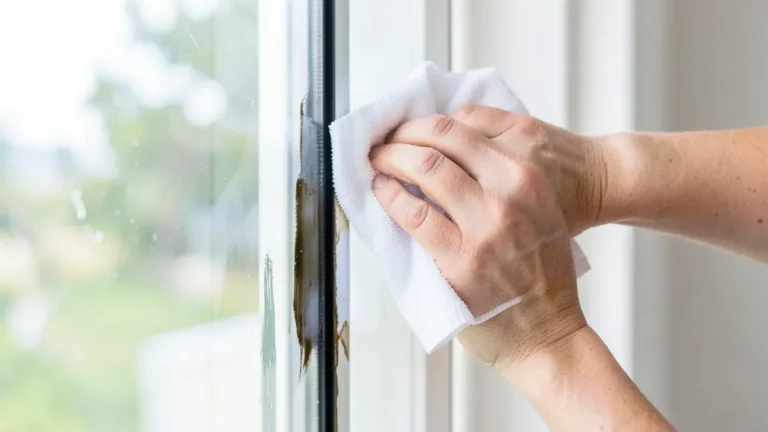
Glass windows are the easiest surface to clean — stain does not soak into glass, so even dried overspray comes off with the right solvent. Vinyl windows are slightly more porous than glass but respond to the same approach.
For glass windows: apply turpentine or mineral spirits to a cloth and wipe the stained area, then rinse with glass cleaner. A razor blade scraper held at a 45° angle removes cured, thick spots without scratching glass. For vinyl windows: use a mild detergent solution first; if that fails, a vinyl-safe cleaner available at hardware stores (look for labels specifying vinyl siding or window frames) removes wood stain without dulling or pitting the vinyl surface.
Avoid acetone on vinyl — it softens and permanently discolors vinyl frames. Rubbing alcohol at 70% concentration is safe for vinyl if the detergent solution alone fails. You can also learn more about whether mineral spirits leave a residue before using them on window frames.
How to Remove Wood Stain Overspray from Skin
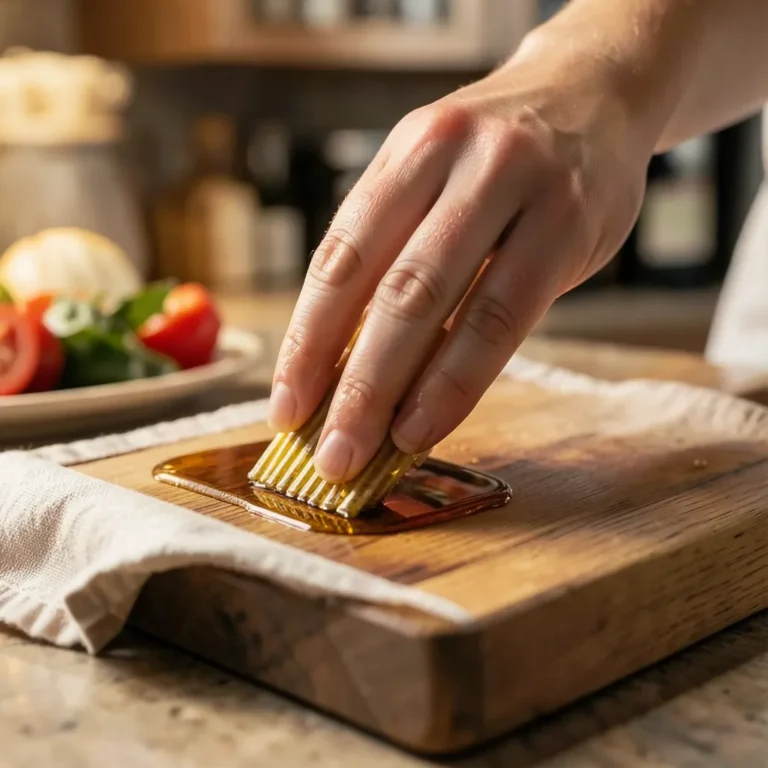
Never use mineral spirits, paint thinner, or acetone directly on skin — even short exposure causes dermal irritation, and repeated use dries and damages skin tissue. The safe, effective method uses cooking oil followed by dish soap.
- Apply olive oil or coconut oil generously to the stained skin area. Natural oils dissolve the pigment binders in both oil-based and water-based stains without irritating skin.
- Let it sit 10–15 minutes. The oil needs time to break down the pigment’s bond with skin cells. Stain that’s been on skin over 30 minutes may need two applications.
- Wipe off with a clean towel, removing as much stain as the oil has loosened.
- Scrub with dish soap and warm water for 2–3 minutes. The surfactants in dish soap lift the remaining oil-and-pigment mixture off skin.
- Moisturize after — both the oil treatment and scrubbing dry out skin. A gentle hand lotion restores moisture barrier.
How to Remove Wood Stain from Clothes and Fabric
Fabric is the most unforgiving surface for wood stain: heat permanently bonds pigment to fibers. The non-negotiable rules are to keep the garment out of the dryer and away from an iron until every trace of stain is gone — even a small amount of residual stain set by dryer heat becomes permanent.
- Blot immediately — do not rub. Rubbing spreads the stain into more fibers. Use a dry cloth to absorb as much stain as possible.
- For water-based stains: Mix dish soap with warm (not hot) water and work it gently into the stain with a soft brush or fingers. Let sit 5 minutes, then rinse with cool water.
- For oil-based stains: Apply denatured alcohol or rubbing alcohol to a cotton ball and blot the stain (do not rub). Test first on a hidden seam — avoid denatured alcohol on silk or wool. Rinse thoroughly after.
- Repeat until the stain is gone before washing the garment. Run the garment through a standard cold-water wash cycle.
- Air dry only — check that the stain is fully removed before putting the garment in a dryer or using an iron.
How to Remove Wood Splatter Stain from Wood Surfaces
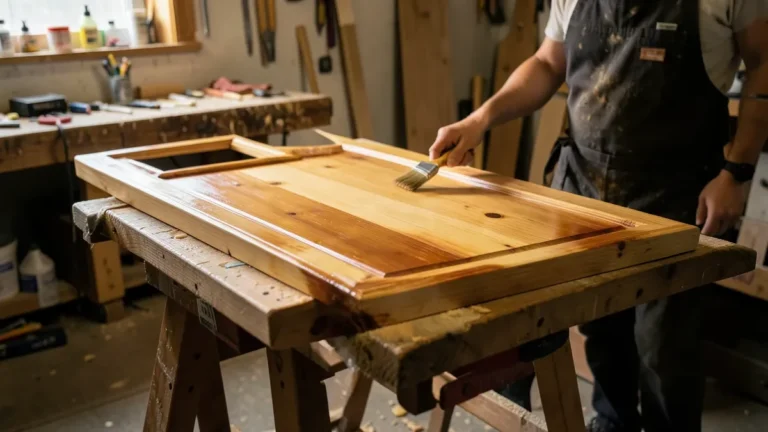
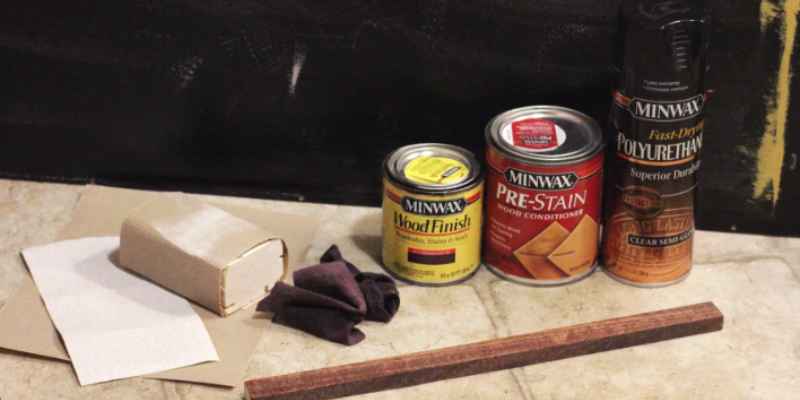
When wood stain splatter lands on a finished wood surface, the key question is whether the surface has a protective topcoat (polyurethane, varnish, lacquer) or is bare/raw wood. Finished surfaces are easier — the stain sits on the topcoat, not in the wood grain itself.
For finished wood: dampen a cloth with mineral spirits and wipe along the grain — the stain lifts off the topcoat without penetrating it. If mineral spirits alone don’t work, try a small amount of rubbing alcohol. Sand only as a last resort — it removes the finish along with the stain. For bare or raw wood, light sanding with 220-grit sandpaper is often the most practical fix for dried stain splatter. Sand with the grain and feather the edges to blend the repaired area with the surrounding wood before re-staining.
Oil-Based vs. Water-Based Stain: Quick Solvent Guide by Surface
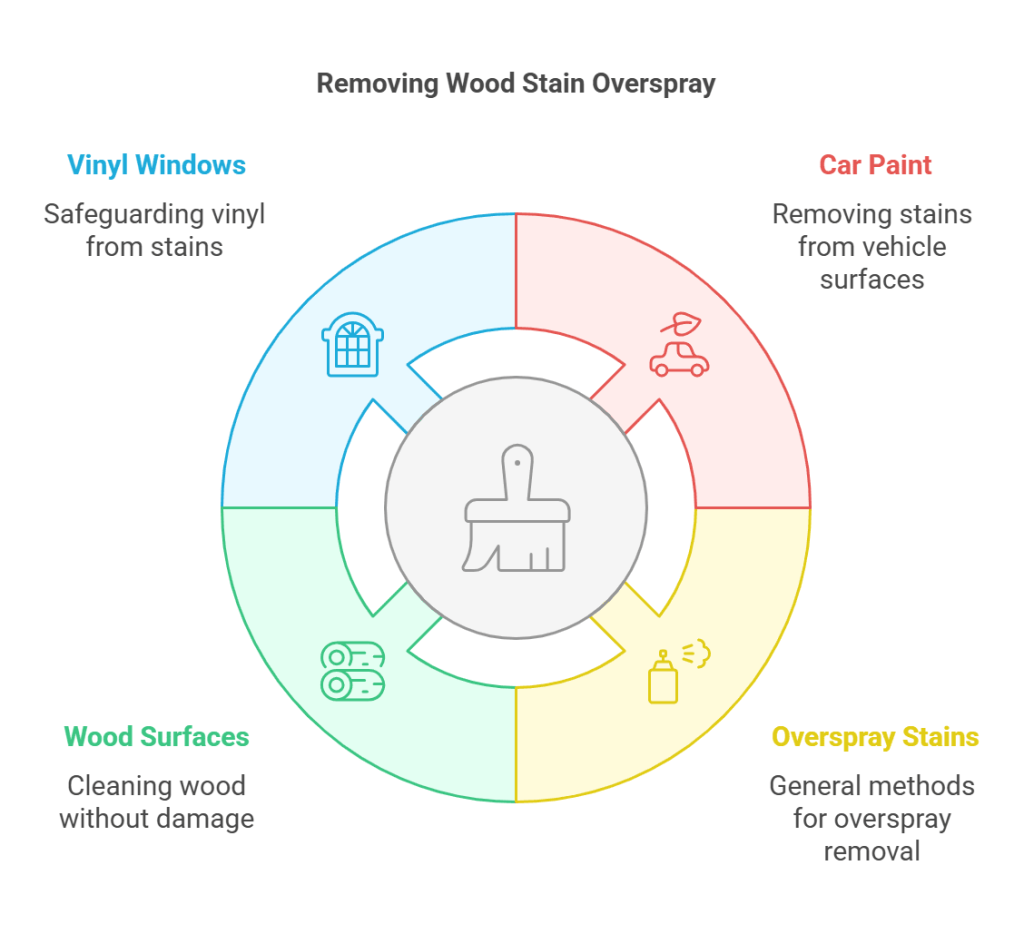
The right solvent for wood stain overspray depends on two things: the stain type and the surface it landed on. This table covers the most common combinations.
| Surface | Oil-Based Stain | Water-Based Stain | What to Avoid |
|---|---|---|---|
| Car paint | Mineral spirits or rubbing alcohol | Rubbing alcohol | Acetone (strips clear coat) |
| Concrete | Mineral spirits pre-treat + TSP scrub | TSP or oxygen bleach | Letting it dry over 24 hours |
| Glass | Mineral spirits or turpentine | White vinegar or rubbing alcohol | Abrasive scrubbers (scratch glass) |
| Vinyl windows | Mineral spirits (brief contact) | Detergent + water; vinyl cleaner | Acetone (discolors vinyl) |
| Skin | Olive oil + dish soap | Olive oil + dish soap | Mineral spirits, acetone, paint thinner |
| Fabric / clothes | Denatured or rubbing alcohol + cold wash | Dish soap + warm water + cold wash | Heat (dryer/iron sets stain permanently) |
| Finished wood | Mineral spirits along grain | Rubbing alcohol or white vinegar | Sanding (removes topcoat) |
Frequently Asked Questions
Can you remove dried wood stain overspray, or is it permanent?
Yes, dried wood stain overspray can be removed from most surfaces — it just requires stronger solvents and more dwell time than fresh stain. Mineral spirits dissolved in a cloth held on the stain for 20–30 seconds will lift most cured oil-based stains from hard surfaces. On concrete, dried stain may require multiple TSP applications. The only surfaces where removal becomes very difficult after full cure are unfinished porous wood and fabric — in those cases, light sanding (wood) or professional dry cleaning (fabric) may be the only options.
Does acetone damage car paint when removing wood stain?
Yes — acetone damages car paint clear coat significantly. Unlike mineral spirits (which are relatively safe for one-time, brief contact), acetone is aggressive enough to begin dissolving automotive clear coat within a few hours of contact. Use rubbing alcohol as your first choice on car paint: it evaporates quickly, doesn’t degrade the finish, and removes both oil-based and water-based wood stain effectively. If mineral spirits are needed, apply briefly, wipe off completely, and rinse with car soap immediately.
How do you remove wood stain overspray from concrete?
Mix 1 cup of TSP (trisodium phosphate) in 1 gallon of warm water, apply to the stain, and scrub with a stiff-bristled brush. Let it dwell 5–10 minutes, then pressure wash or rinse with clean water. For oil-based wood stain on concrete, pre-treat with mineral spirits for 5 minutes before the TSP scrub to break down the oil component. Wear gloves and eye protection — TSP is caustic. Repeat up to three times for fully-cured stains over 24 hours old.
Is it safe to use mineral spirits to remove wood stain from skin?
No — avoid mineral spirits, paint thinner, and acetone on skin. These solvents irritate and dry out skin even with brief exposure. Use olive oil or coconut oil instead: apply generously, let sit 10–15 minutes to dissolve the pigment binders, wipe off with a cloth, then follow with dish soap and warm water. This approach is effective on both oil-based and water-based wood stains and is completely safe for skin.
Will wood stain overspray come off vinyl siding?
Yes, but timing matters. Fresh overspray on vinyl siding wipes off with a damp cloth or mild detergent solution. For dried stain, use a vinyl-safe cleaner (labeled for vinyl siding or window frames) applied with a soft cloth — avoid abrasives. Rubbing alcohol at 70% also works safely on vinyl for stubborn spots. Avoid acetone entirely on vinyl — it softens and permanently discolors the surface.
If you’ve also overspray a nearby deck or fence, check out our guide on how to remove wood stains from wood surfaces for a detailed sanding and solvent approach.
Conclusion
The fastest wood stain overspray fix is always to act within 15 minutes — soap and water handle most surfaces when the stain is still wet. Once cured, match your solvent to the surface: mineral spirits for car paint and hard surfaces, TSP for concrete, olive oil for skin, and cold-water washing (never heat) for fabric. The comparison table above covers every common surface combination. When in doubt, rubbing alcohol is the safest starting point that works on nearly all hard surfaces without damaging finishes. For more on wood stains and finishes, browse our complete stain guides.
Sponsored / affiliate links. As an Amazon Associate I earn from qualifying purchases. I may earn additional commission from eligible campaigns.