How to Tell If Japanese Maple Is Root Bound
Figuring out if your lovely Japanese maple has too many roots tangled up in its pot can be tricky, especially if you’re new to gardening. It’s easy to worry about your plant’s health when its roots might be feeling cramped. But don’t fret!
We’ll walk through this together with simple steps so you can easily know what your tree needs. Let’s find out the easy signs your Japanese maple is root bound and what to do next.
Signs Your Japanese Maple Is Root Bound
Discovering that your Japanese maple is root bound means its roots have grown so much that they fill the entire pot. This is a common challenge for plant owners, as overcrowded roots can stop your tree from getting the water and nutrients it needs to grow strong and healthy. Recognizing these signs early helps you keep your Japanese maple looking its best and prevents bigger problems down the road.
This section will show you the clear indicators to watch for.
Root Growth Around The Pot
One of the most obvious signs your Japanese maple is root bound is seeing the roots growing right out of the drainage holes at the bottom of the pot. These are the roots that have reached the edge of their space and are pushing through any opening they can find. They might look like a dense mat of thick, woody strands or a tangled web.
- Visible Roots Emerging From Drainage Holes
This is a primary indicator that the roots have exhausted the available soil volume. When roots consistently emerge, it suggests they’ve circled the pot multiple times and are seeking new space. Look for this not just once, but as a persistent feature of your potted maple. - Roots Circling The Soil Surface
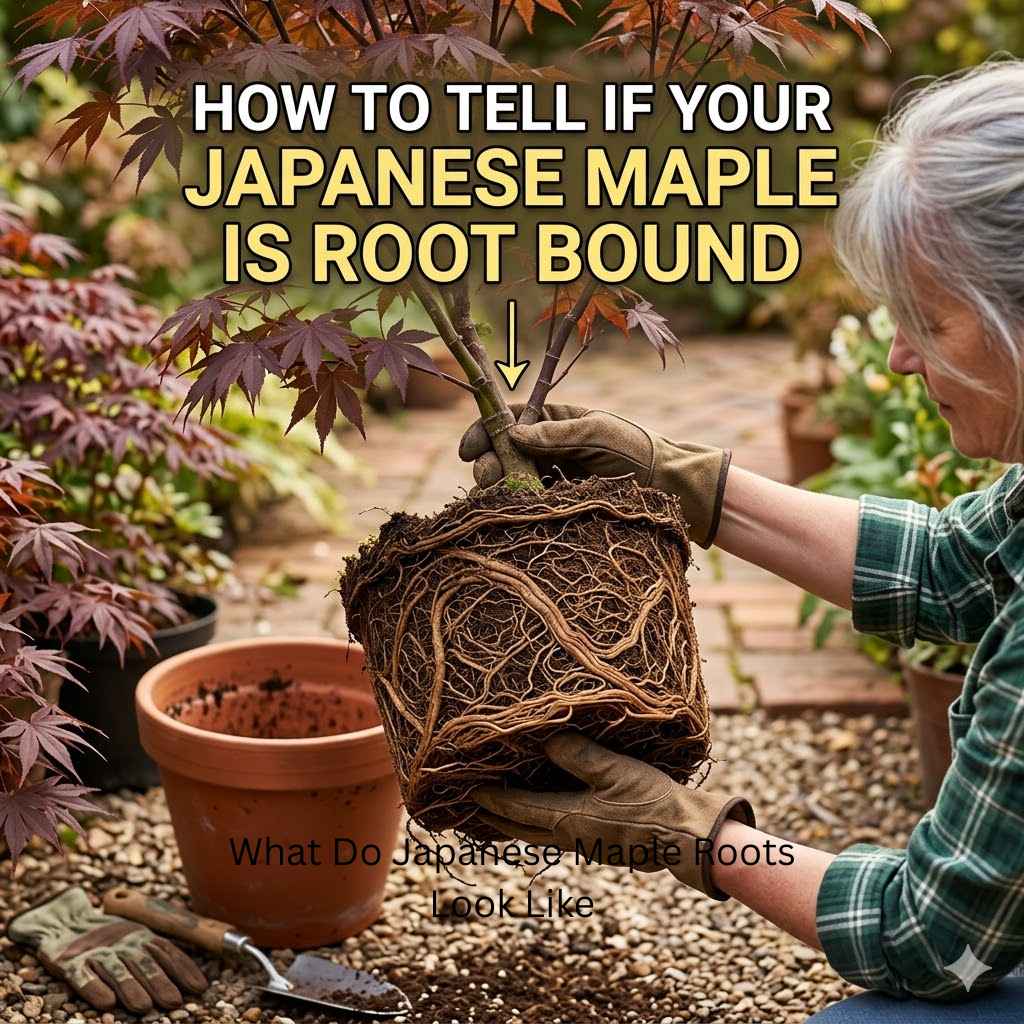
Sometimes, before roots come out the bottom, you’ll see them circling just under the soil surface, especially around the edges of the pot. Gently scraping away a little bit of the topsoil can reveal this tightly wound root ball. This circling is a sign of confinement. - Dense Root Ball When Gently Pulled
If you can gently pull the plant out of its pot, you’ll likely see a solid mass of roots. Instead of loose soil with some roots, you’ll see mostly roots that have taken the shape of the container. This indicates the root system is very compact.
Plant Health Indicators
Beyond just looking at the roots, your Japanese maple will show signs in its overall health if it’s root bound. These are the subtle, and sometimes not so subtle, ways the plant tells you it’s struggling. Paying attention to these can save your tree.
- Slowed Growth Or Stunted Appearance
A root-bound tree often stops growing as vigorously as it used to, or its growth might seem stunted. New leaves might be smaller, or the branches might not extend as much each season. This is the plant’s way of saying it can’t get enough resources to support new growth. - Frequent Wilting Even With Watering
If your Japanese maple wilts quickly after watering, or if it seems to be wilting more often even when the soil is moist, it’s a strong sign of root issues. The dense roots can’t absorb water efficiently, or they might be suffocating. The soil might dry out much faster than usual. - Yellowing Leaves Not Related To Season
While Japanese maples naturally change color in the fall, consistent yellowing of leaves during the growing season, especially at the bottom of the plant, can signal distress. This often happens because the roots can’t take up essential nutrients like nitrogen. The plant essentially starves itself.
Soil And Water Absorption Issues
How your soil behaves and how well your plant drinks water can also point to a root-bound problem. These are practical observations you can make during your regular plant care routine.
- Soil Dries Out Very Quickly
When a pot is packed with roots, there’s less soil to hold moisture. This means the soil will dry out much faster than normal, even if you water it thoroughly. You might find yourself watering almost daily. - Water Runs Straight Through The Pot
If water just pours out of the drainage holes without seeming to soak into the soil, the root ball might be so dense that it repels water. The roots have become hydrophobic, meaning they actively push water away. This prevents proper hydration. - Difficulty Getting Soil To Feel Moist
Conversely, sometimes the soil can become so compacted by roots that it’s hard to get it to feel evenly moist. You might water, but the soil surface remains dry, or water pools on top. This indicates poor water penetration.
Why Japanese Maples Become Root Bound
Japanese maples, with their beautiful shapes and colors, are popular choices for container gardening. However, like many plants, they can outgrow their pots. Understanding why this happens helps us prevent it and manage it when it occurs.
It’s a natural part of plant growth, but in a pot, it requires our intervention.
Natural Root Growth Patterns
Plants naturally grow roots in all directions, seeking water and nutrients. In a pot, these roots eventually encounter the confines of the container. This leads to a phenomenon where roots begin to grow around the inside perimeter of the pot, seeking any available space.
This is a healthy response to a limited environment.
- Seeking Space And Resources
Roots are designed to expand outwards. When a plant is young and in a small pot, this growth is usually manageable. However, as the tree matures and the root system becomes more extensive, the need to spread becomes paramount. The pot becomes a barrier to this natural drive. - Response To Environmental Cues
Roots can sense moisture and nutrient gradients. In a pot, these gradients are often concentrated near the edges and bottom. This guides the roots to explore these areas, which, in a confined space, leads to circling. Light also plays a role, as roots generally grow away from light. - Gaps In Soil Fill With Roots
As the roots grow, they fill any available air pockets or spaces within the soil. This creates a dense, interconnected network. Over time, these networks solidify, making the entire mass of roots behave like a single unit, often pushing the soil away from the pot’s sides.
Pot Size And Material
The size and type of pot you use for your Japanese maple significantly influence how quickly it becomes root bound. Some pots can encourage root growth more than others, leading to faster confinement.
- Under-Potting The Tree
Starting with a pot that is too small for the root system is the most direct cause of root binding. If the pot is significantly smaller than the root ball, the tree will quickly become root bound. Always choose a pot that offers ample space for growth, at least a few inches larger in diameter. - Terracotta vs. Plastic Pots
Terracotta pots are porous, allowing air and water to pass through. This can help roots stay healthier and may slow down root circling slightly compared to non-porous plastic pots. Plastic pots can trap heat and moisture, potentially encouraging faster root growth towards the edges. - Shallow Pots
While some Japanese maples can do well in shallow bonsai pots, for general container growing, very shallow pots can lead to root binding more quickly. They offer less vertical space for roots to spread downwards.
Watering And Fertilizing Practices
How you water and fertilize can also contribute to root-bound conditions over time. Incorrect practices can encourage roots to grow in ways that lead to binding.
- Overwatering
Constantly soggy soil can lead to root rot, but it can also encourage roots to grow more densely in search of oxygen pockets. It can also prevent the soil from drying out appropriately, which is a natural signal for roots to manage their growth. - Underwatering
Conversely, letting the soil dry out too much consistently can stress the plant. When you do water, the roots might become more aggressive in seeking out moisture at the pot’s edges. This can lead to a more compacted root ball. - Fertilizing Too Much Or Too Little
Excessive fertilizer can promote rapid, unchecked growth, leading to roots filling the pot quickly. Not fertilizing enough can stress the plant, making it less resilient and potentially encouraging more desperate root growth to find nutrients.
How To Check Your Japanese Maple For Root Binding
When you suspect your Japanese maple might be root bound, the best approach is to perform a gentle inspection. This involves carefully examining the plant and its pot to gather evidence. It’s not about guessing; it’s about observing.
The Gentle Pot Removal Method
This is the most direct and reliable way to see the root ball. It requires a bit of care so you don’t damage your tree. The goal is to slide the entire root ball out of the pot.
- Water The Tree A Day Before
This helps the soil cling to the roots, making it less likely to fall apart. It also makes the soil slightly heavier, which can aid in sliding the root ball out. - Loosen The Edges
Gently tap the sides of the pot with your hand or a rubber mallet. You can also use a trowel or a dull knife to carefully run around the inside edge of the pot, between the soil and the pot wall. This breaks any seal the roots might have formed. - Invert The Pot And Tap The Bottom
Place one hand over the soil surface, with your fingers on either side of the trunk. Invert the pot so it’s upside down. Support the root ball with your hand and gently tap the bottom of the pot. The root ball should slide out smoothly. If it doesn’t, try tapping the sides again. - Inspect The Root Ball
Once out, look at the roots. If they are tightly packed, circling the pot, or forming a dense mat, your tree is likely root bound. The soil should be visible amongst the roots, not completely obscured by them.
Assessing The Root Ball Condition
Once you have the root ball out, take a close look. What you see will tell you a lot about the plant’s condition and its needs.
- Root Density And Structure
A healthy root ball will have a good mix of fine feeder roots and thicker structural roots, with some soil still visible. A root-bound ball will be very dense, with roots packed tightly together, often obscuring most of the soil. You’ll see many roots running parallel to each other around the pot’s perimeter. - Presence Of Healthy White Roots
Look for some white or light-colored roots. These are new, actively growing roots. If you only see dark, old, or mushy roots, it could indicate a problem like root rot, which can be exacerbated by being root bound. However, the presence of white roots doesn’t automatically mean the plant isn’t root bound; it just means it’s still trying to grow. - Root Ball Size Relative To Pot
Compare the size of the root ball to the size of the pot. If the root ball is almost the same size as the pot or is pushing outwards against the pot walls, it’s a clear sign of being root bound. There should be a visible gap between the root ball and the pot’s edge if the plant is healthy and not root bound.
Signs When Pot Removal Isn’t Possible
Sometimes, especially with larger trees or in very restrictive pots, removing the root ball can be difficult or risky. In these cases, you rely more on external signs.
- Persistent Wilting And Dryness
As mentioned before, if your tree wilts quickly and the soil dries out far too fast, even after watering, it’s a strong indicator. This means the roots are struggling to take up water, likely due to being too crowded. - Slowed Or Stunted Growth Over Time
If your Japanese maple hasn’t shown significant new growth for a season or two, and you know it’s in good soil with adequate light and water, being root bound is a likely culprit. The plant’s energy is being used to sustain the existing root system rather than producing new foliage or branches. - Roots Growing Significantly Out Of Drainage Holes
While not a definitive sign on its own, if you see a substantial amount of root mass consistently emerging from the drainage holes, it suggests the pot is full. The roots are desperate for more space.
What To Do If Your Japanese Maple Is Root Bound
Finding out your Japanese maple is root bound is not the end of the world! It’s actually an opportunity to give your tree a fresh start and encourage healthier growth. The process involves carefully repotting and sometimes pruning the roots.
Repotting Your Japanese Maple
Repotting is the primary solution. This involves moving your tree to a larger container with fresh soil. It gives the roots more space and new nutrients to thrive.
- Choosing The Right Size Pot
Select a new pot that is at least 2-4 inches wider and deeper than the current one. This provides ample room for the roots to expand. Consider the material of the pot; breathable materials like terracotta can be beneficial. - Using Appropriate Potting Mix
Use a well-draining potting mix specifically formulated for trees or shrubs. A good mix will include materials like perlite, bark chips, and peat moss to ensure aeration and moisture retention without becoming waterlogged. - The Repotting Process
Carefully remove the tree from its old pot, loosen the circling roots, and place it in the new pot. Fill the pot with fresh soil, ensuring there are no air pockets. Water thoroughly after repotting.
Root Pruning Techniques
Sometimes, especially if you can’t go to a much larger pot or if the root ball is extremely dense, root pruning is necessary. This involves trimming some of the roots to encourage new growth and reduce the mass.
- When To Prune Roots
Root pruning is best done during the dormant season, typically late winter or early spring before new growth begins. It’s usually combined with repotting. - How To Prune Roots
Gently untangle the roots and trim away any thick, circling roots or those that are dead or damaged. Aim to remove about one-third of the root mass. The goal is to stimulate the growth of new, fine feeder roots from the cuts. - Post-Pruning Care
After root pruning and repotting, provide consistent moisture and avoid excessive direct sunlight for a few weeks. This allows the tree to recover and establish new roots.
Maintenance After Repotting
Once your Japanese maple is repotted, it needs some special care to help it adjust to its new home and recover from the process.
- Watering Schedule Adjustments
Water thoroughly after repotting. For the next few weeks, monitor the soil moisture closely. The new soil may retain moisture differently, so you might need to adjust your watering frequency. Avoid letting the soil dry out completely or become waterlogged. - Fertilizing Caution
Avoid fertilizing immediately after repotting. Wait at least 4-6 weeks, or until you see signs of new growth. This gives the roots time to heal and establish themselves without being stressed by fertilizers. - Light And Environmental Considerations
Place the repotted tree in a location with appropriate light conditions for Japanese maples. Initially, some shade might be beneficial to prevent transplant shock, especially if it was previously in a more protected spot.
Frequently Asked Questions
Question: How often should I check if my Japanese maple is root bound?
Answer: It’s a good idea to check your potted Japanese maple every 1-2 years, especially when the tree is young and growing fast. You can do this visually by looking for roots in drainage holes or by gently checking the root ball during repotting season.
Question: Can I just add more soil on top if my maple is root bound?
Answer: No, simply adding more soil on top won’t solve the problem of a root-bound tree. The roots are already crowded in the existing soil volume and need more space to grow outward and downward.
Question: What happens if I don’t repot a root-bound Japanese maple?
Answer: If you don’t repot a root-bound Japanese maple, its growth will slow down or stop. It may become stressed, prone to wilting, and more susceptible to pests and diseases, eventually leading to decline.
Question: Is it okay to repot my Japanese maple at any time of year?
Answer: It’s best to repot Japanese maples during their dormant period, usually in late winter or early spring before new growth begins. This minimizes stress on the tree.
Question: How do I know if my Japanese maple needs a bigger pot or just root pruning?
Answer: If the root ball is very dense and circling, but the tree is still healthy, you might repot into a slightly larger pot. If the tree is significantly root-bound and the pot size cannot be increased much more, or if you need to control size, root pruning along with repotting is appropriate.
Summary
Knowing how to tell if a Japanese maple is root bound is key to keeping it healthy. You can spot it by roots coming out of the pot, slowed growth, or quick drying soil. Repotting into a larger container or carefully pruning the roots gives your tree room to grow strong.
This simple care ensures your Japanese maple will thrive for years to come.