How to Use an O-Cedar EasyWring Spin Mop (Setup to Storage)
O-Cedar’s EasyWring system cleans floors by wringing the mop head with a foot pedal instead of your hands — but over-wetting it can leave standing water on hardwood or engineered wood floors long enough to lift the finish. Skipping the wring step, or using the wrong refill pad, is why most people never get the streak-free result the box promises. This guide covers setup, the wringer mechanism, mopping technique, and safe use on wood floors.
How to Set Up Your O-Cedar EasyWring Mop and Bucket
Best O-Cedar Spin Mop Pick
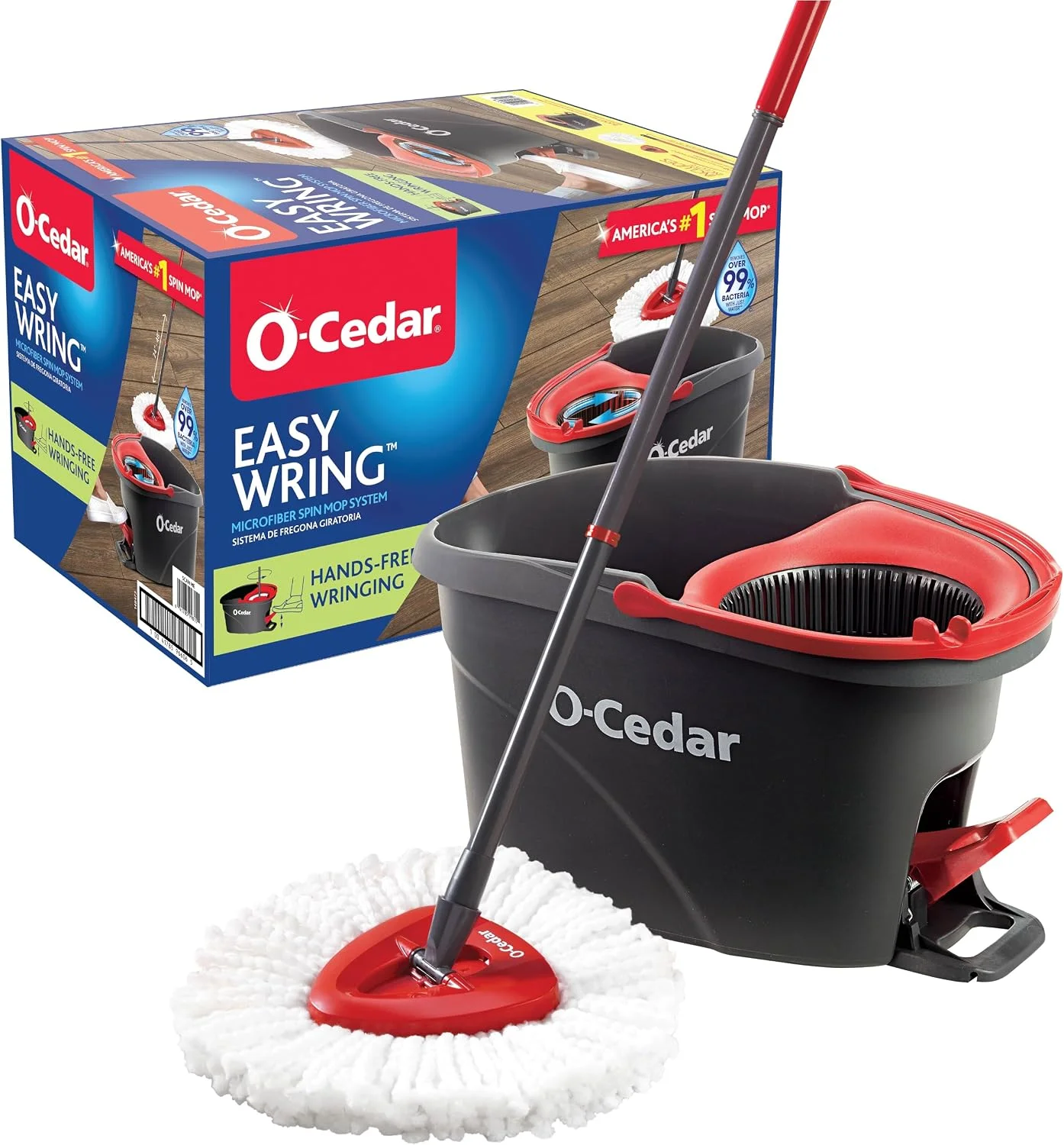 |
O-Cedar EasyWring Microfiber Spin Mop and Bucket System – $34.96 This is the exact foot-pedal wringer bucket system this guide walks through below — the wringer basket lets you dial in a damp, not soaking, mop head before it touches your floor.
|
Setup takes about two minutes the first time. Snap the mop head onto the telescoping handle until it clicks, then seat the bucket’s wringer basket in the center of the bucket — it should lock in place and not wobble when you press it.
- Fill the bucket: Add water to the fill line and, if you want, a small amount of cleaning solution — too much soap leaves a residue film on hard floors.
- Dunk the mop head: Submerge it fully so the microfiber strands soak up water evenly.
- Load the wringer: Lift the mop head into the wringer basket and press straight down.
- Press the foot pedal: This spins the basket and wrings the head in a few seconds — no bending or hand-wringing.
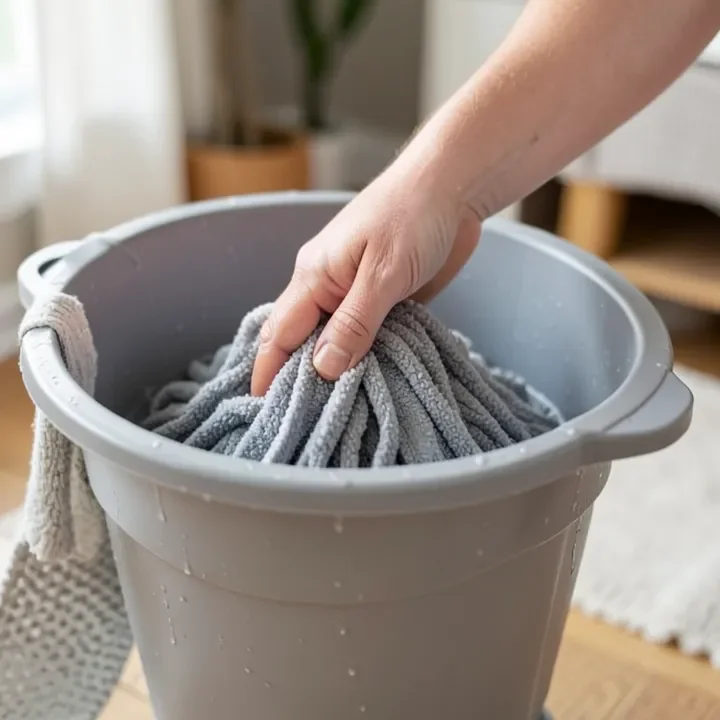
How the Foot-Pedal Wringer Actually Controls Moisture
The wringer basket is a centrifuge, not a squeeze: pressing the pedal spins the mop head fast enough to fling water out through the basket’s slots, the same principle as a salad spinner. That’s why an O-Cedar mop can be wrung much drier than a twist-mop or sponge mop wrung by hand — and why leaving the pedal only half-pressed is the most common reason floors end up wetter than expected.
The two-bucket RinseClean version adds a separate rinsing chamber so dirty water never mixes back into the clean fill water — useful for larger homes where one bucket of water would otherwise get grimy halfway through. For the full manufacturer walkthrough of both systems, see O-Cedar’s official use and care guide.
Step-by-Step: Mopping Technique for a Streak-Free Floor
- Clear loose debris first: Sweep or vacuum — mopping over grit just drags it across the floor and scratches finished surfaces.
- Wring to damp, not dripping: A fully-pedaled wring should leave the head feeling barely moist to the touch.
- Work in a figure-eight motion: This covers more surface per pass than straight back-and-forth strokes and avoids re-depositing dirty water.
- Start farthest from the exit: Work backward toward the door so you never walk over a just-mopped section.
- Re-wring every 3-4 passes: A mop head that’s picked up dirt spreads grime instead of lifting it once it’s saturated.
Change the bucket water once it looks cloudy or gray — continuing to mop with dirty water just redistributes what you already picked up.
Is O-Cedar Safe for Hardwood and Engineered Wood Floors?
Yes, on sealed and finished hardwood or engineered wood — but only when the mop head is wrung to damp, not left soaking. Standing water is the actual risk, not the mop itself.
Budget engineered hardwood can carry a wear layer as thin as 0.6-2mm of real hardwood veneer over a plywood core. Water that sits on the seams long enough to soak through that thin top layer reaches the core beneath it, which swells and can cup or lift at the edges — a repair that usually means replacing the affected boards, not just refinishing them. That’s a direct consequence of how thin some engineered floors are built, not a flaw in the mop.
📊 Engineered hardwood wear layers commonly range from about 0.6mm on budget lines up to 6mm on premium floors — Source: FloorFreight, engineered hardwood wear layer guide
If you’re maintaining real hardwood day to day, our guides on how to care for hardwood floors long-term and caring for engineered hardwood specifically cover the moisture limits for each floor type in more depth.
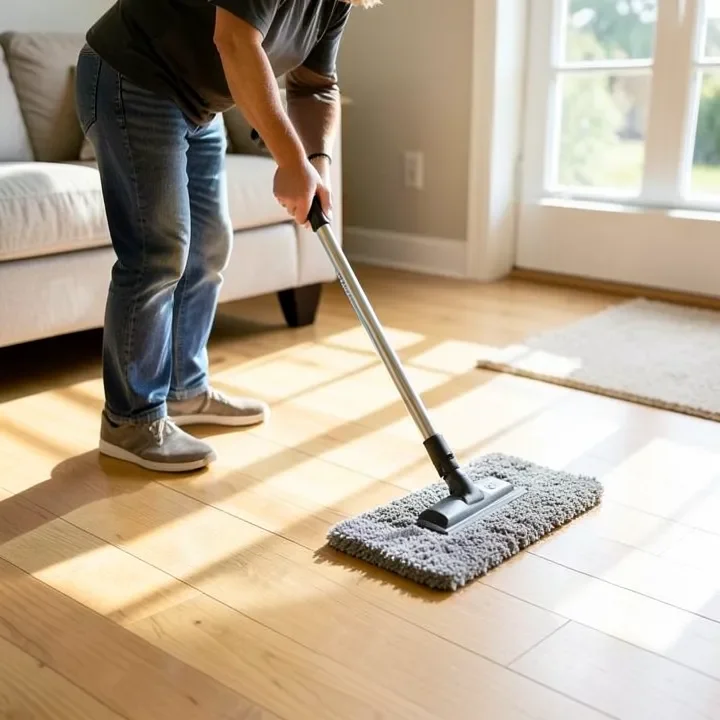
Cleaning, Storing, and Replacing Your O-Cedar Mop
Rinse the mop head under warm water after every use, or toss it in the washing machine on cold with no fabric softener (softener coats the microfibers and kills their ability to grab dust). Let it air-dry fully before storing — a damp head folded into a closet grows mildew within a day or two.
Store the mop head-up or hang the handle so the fibers aren’t compressed against a shelf. Replace the refill head every 3-6 months of regular use, or sooner if it stops picking up dust and starts pushing it around instead.
Common Mistakes That Damage Wood Floors
- Half-pressing the pedal: Leaves the head too wet for wood floors specifically, even though it’s fine on tile.
- Letting water pool at board seams: This is where engineered flooring is most vulnerable — wipe up any puddle within a minute or two.
- Using too much cleaning solution: Extra soap doesn’t clean better; it leaves a dull film that attracts more dirt.
- Skipping the pre-sweep: Mopping over grit scratches finished wood and tile alike.
Frequently Asked Questions
How do I use an O-Cedar mop effectively?
Fill the bucket with water, dunk the mop head, load it into the wringer basket, and press the foot pedal fully until the head feels damp rather than dripping. Mop in a figure-eight motion working backward toward the door, and re-wring every 3-4 passes to avoid spreading dirty water around.
What surfaces can I use O-Cedar on?
O-Cedar mops work on sealed hardwood, engineered wood, tile, laminate, and vinyl. On any wood floor, always fully wring the head first — standing water is what causes damage, not the mop itself.
How often should I replace the mop head?
Replace the refill head every 3-6 months with regular use, or sooner once it looks matted, smells musty even after washing, or stops picking up dust the way it used to.
Can an O-Cedar spin mop damage engineered hardwood floors?
Only if water is left standing on the surface. Engineered hardwood’s thin wear layer, sometimes under 1mm on budget lines, means pooled water at a seam can soak through to the plywood core and cause cupping. A properly wrung, damp mop head is safe; a soaking one is not.
Used correctly — fully wrung, worked in a figure-eight, with the refill head replaced on schedule — an O-Cedar EasyWring system is a fast, low-effort way to keep tile, laminate, and sealed wood floors clean without the streaks or standing water that damage wood over time.
Sponsored / affiliate links. As an Amazon Associate I earn from qualifying purchases. I may earn additional commission from eligible campaigns.