Kobalt Air Impact Wrench Specs: 350-1000 ft-lbs Compared
Kobalt’s air impact wrenches span five models, from a 350 ft-lb entry-level unit (SGY-AIR134) to the 1,000 ft-lb SGY-AIR236 — but every one of them needs roughly 90 psi of steady air pressure to hit its rated torque, and an undersized compressor is the most common reason buyers report weak performance. This guide compares torque, PSI, and CFM across the full current lineup, plus the newer 24V XTR cordless alternative Kobalt now sells alongside it — part of our ongoing Kobalt tool guides.
Quick Answer
Kobalt’s air impact wrenches range from 350 ft-lbs (SGY-AIR134) up to 1,000 ft-lbs (SGY-AIR236), and all of them need roughly 90 psi and 4–11 SCFM depending on model. For most DIY tire and automotive work, the 750 ft-lb SGY-AIR228 is the sweet spot — save the 1,000 ft-lb SGY-AIR236 for seized suspension bolts and lug nuts that won’t budge.
How Much Torque Does a Kobalt Air Impact Wrench Have?
Best Overall Air Impact Wrench Pick
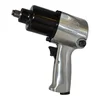
Ingersoll Rand 231C 1/2″ Drive Air Impact Wrench
A professional-grade twin-hammer wrench that’s been an industry benchmark for decades — a step up if you want a shop-standard tool instead of a big-box house brand.
- Best for: Frequent automotive/shop use where reliability matters more than upfront price
- Why we picked it: Decades-long reputation as a benchmark shop tool, widely stocked parts and service
- Main drawback: Heavier and pricier than any Kobalt model in this lineup
Compare more air impact wrench options
 Option 1 AIRCAT 1150 Composite Impact Wrench, 900 ft-lb
|
 Option 2 ACDelco ANI405A 5-Speed Twin Hammer, 500 ft-lb
|
 Option 3 VEVOR 1/2-Inch Air Impact Wrench, 1,400 ft-lb
|
As an Amazon Associate we earn from qualifying purchases.
Kobalt doesn’t sell one air impact wrench — it sells a full 1/2-inch drive lineup, and the torque rating you see at Lowe’s depends entirely on which model is on the shelf. Here’s how the current models compare, pulled from Kobalt/Lowe’s own product listings for each:
| Model | Max Torque | Working Air Pressure | Air Consumption | Free Speed |
|---|---|---|---|---|
| SGY-AIR134 | 350 ft-lbs | 90 psi | – | – |
| SGY-AIR227 | 400 ft-lbs | 90 psi | – | – |
| SGY-AIR185 | 450 ft-lbs | 90 psi | – | – |
| SGY-AIR228 | 750 ft-lbs | 90 psi | ~11 SCFM | – |
| SGY-AIR236 | 1,000 ft-lbs | 90–120 psi | ~5 SCFM avg | 7,000 RPM |
Notice the air-consumption gap between the 750 ft-lb SGY-AIR228 and the 1,000 ft-lb SGY-AIR236 — the higher-torque model actually averages less continuous draw, though its instantaneous demand still spikes well above that during each hammer strike. That’s exactly why matching your compressor to the tool, not just the tool to the job, matters as much as the torque number on the box.
If you’re shopping and don’t need a Kobalt specifically, a 60-gallon air compressor like Kobalt’s own is the kind of setup that can actually sustain the higher-torque end of this lineup through repeated use, rather than bogging down mid-job.
What PSI and CFM Do You Actually Need to Run One?
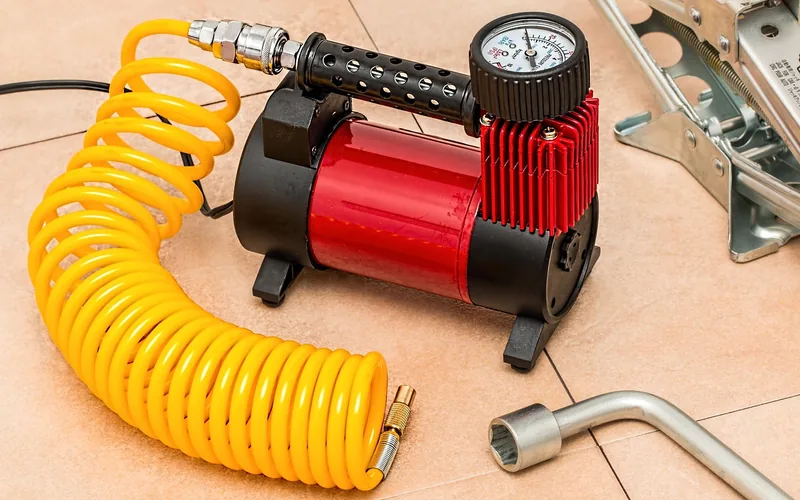
Every Kobalt air impact wrench is rated at roughly 90 psi — that’s the pressure at the tool, not just the pressure showing on your compressor’s tank gauge. A long or undersized air hose, a cheap quick-connect fitting, or a compressor that can’t recover fast enough under load will all drop the pressure the tool actually sees, and torque falls off fast when that happens.
📊 A 1/2-inch air hose rated for at least 90 psi, kept as short as practical, moves noticeably more air to the tool than a coiled 3/8-inch hose — the hose size bottlenecks CFM delivery before the compressor ever does. Source: Kobalt/Lowe’s use-and-care guide, item #0402535.
As a practical rule, undersized pancake compressors (the small 6-gallon models sold for framing nailers) can’t keep up with continuous impact wrench use — they’ll fire the tool for a few seconds, then need to recover. A 60-gallon (or larger) compressor with a continuous CFM output above the tool’s rated draw is what lets any of these models hit their advertised torque consistently, not just on the first pulse.
How a Twin-Hammer Air Impact Wrench Works
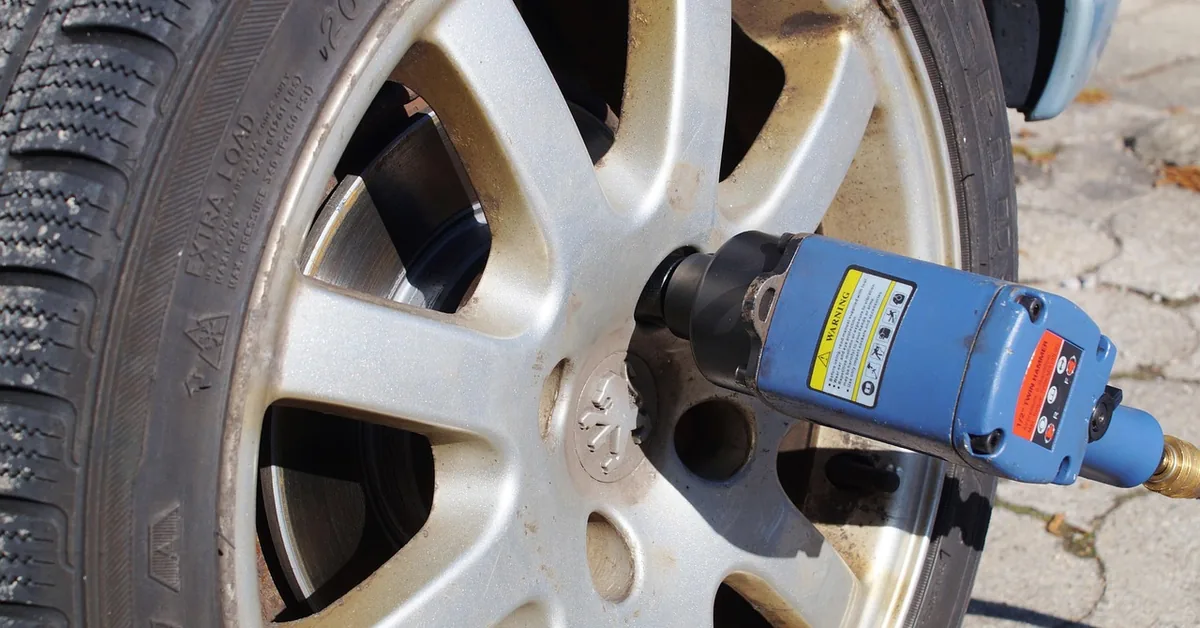
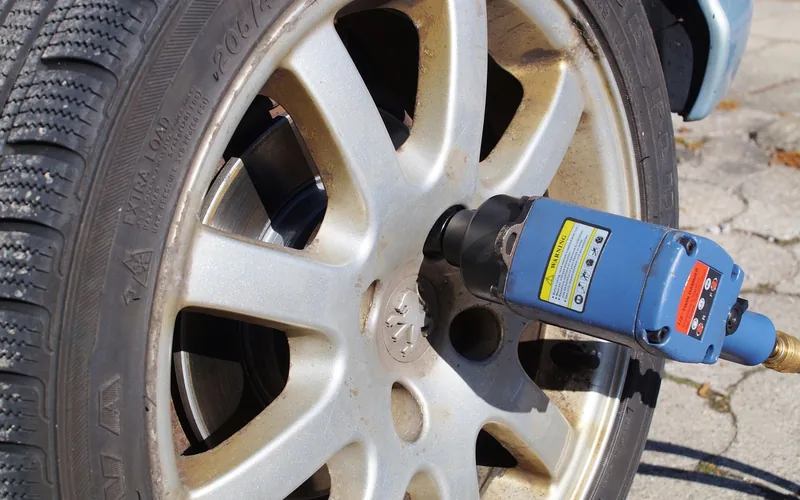
A Kobalt air impact wrench converts compressed air into rotational force through a twin-hammer mechanism. When you pull the trigger, air drives a rotor that spins a hammer assembly; the hammer strikes an anvil connected to the drive square dozens of times per second, delivering short, concentrated bursts of torque instead of one continuous twisting force. That’s what lets a tool this compact break loose a bolt that would stall a hand ratchet.
Power Settings and Reverse
Most Kobalt air impact models offer 3–4 forward power settings plus one full-power reverse. Forward settings let you throttle torque down for delicate fasteners (like wheel lug nuts on aluminum rims, where over-torquing can strip threads or crack the rim), while reverse always runs at full power so a seized bolt gets maximum breaking force in the direction that matters.
Kobalt Air Impact Wrench vs. the 24V XTR Cordless — Which Should You Buy?
Kobalt now sells a cordless alternative worth knowing about: the 24V XTR (model KXIW 1424A-03), rated at 1,200 ft-lbs of nut-busting torque and 750 ft-lbs of fastening torque, with three speed settings up to 1,900 RPM and a 4.0Ah battery included in the roughly $269 kit. On paper it out-torques even the 1,000 ft-lb SGY-AIR236 air model — but the comparison isn’t as simple as “more torque wins.”
- Choose air (pneumatic) if you already own a compressor, do repeated heavy-duty work where sustained duty cycle matters more than portability, or want the lowest per-tool cost — a 350–750 ft-lb air model runs $40–$180 versus roughly $269 for the cordless kit.
- Choose the 24V XTR if you don’t have (or don’t want to run) a compressor, need to work away from a shop — on a driveway, at a job site, roadside — or you’re buying into Kobalt’s 24V battery platform for other tools anyway.
Common Mistakes and Real-World Problems
Owner reviews of Kobalt’s air impact wrenches are mixed on one specific point worth flagging honestly: some buyers report the tool not reaching its advertised torque figure in real use. In nearly every documented case, the cause traces back to the air supply, not the tool itself — running below 90 psi at the tool, using an undersized hose or fitting, or pairing the wrench with a compressor that can’t sustain the required CFM under continuous load. Before assuming a tool is underpowered, check pressure at the tool (not just the tank gauge) with a hose-end gauge.
A second common mistake is using a Kobalt air impact wrench at full power on lug nuts for aluminum or alloy wheels. Full-power settings are built for steel fasteners and can strip threads or crack softer alloy rims — drop to a lower forward setting and finish with a torque wrench to the vehicle manufacturer’s spec instead of relying on the impact wrench for final tightening.
Frequently Asked Questions
What is a Kobalt air impact wrench used for?
A Kobalt air impact wrench is a compressed-air tool that delivers high rotational torque in short bursts to loosen and tighten nuts and bolts. It’s most commonly used for automotive work — changing tires, removing suspension and engine components — but the higher-torque models also see use in construction and heavy equipment maintenance.
How does a Kobalt air impact wrench work?
It converts compressed air into rotating force through a twin-hammer mechanism inside the tool. Pulling the trigger lets air spin a rotor that drives a hammer against an anvil connected to the drive square, striking it dozens of times per second. Each strike adds torque without the operator having to apply continuous force, which is why the tool can break loose fasteners a hand wrench can’t.
How much air pressure and CFM does a Kobalt impact wrench need?
Every current Kobalt air impact wrench is rated for roughly 90 psi at the tool. Air consumption varies by model — Kobalt’s own documentation lists around 11 SCFM for the 750 ft-lb SGY-AIR228 and roughly 5 SCFM average for the 1,000 ft-lb SGY-AIR236. A short 1/2-inch air hose and a compressor sized above the tool’s continuous draw (not just its peak tank pressure) will get you closer to the advertised torque than a small pancake compressor will.
Can you use a Kobalt air impact wrench for other applications besides automotive?
Yes. While automotive repair is the most common use, the higher-torque Kobalt models (750 ft-lbs and up) are also used in construction, equipment maintenance, and heavy assembly work where a standard drill/driver doesn’t have enough torque to seat or remove large fasteners.
Is the Kobalt cordless XTR impact wrench better than the air version?
Not universally — it depends on your setup. The 24V XTR (1,200 ft-lbs nut-busting torque) is more portable and needs no compressor, which makes it better for mobile or roadside work. The air models cost less per tool and hold up well under sustained, repeated use if you already have a compressor sized to run them. Neither is a strict upgrade over the other; they solve different problems.
Across Kobalt’s air impact lineup, torque and price scale together in a predictable way: pick the 350–450 ft-lb models for light DIY work, the 750 ft-lb SGY-AIR228 for most home garage and automotive use, and the 1,000 ft-lb SGY-AIR236 only if you’re regularly breaking loose seized fasteners — and size your compressor and hose to match whichever one you choose, since that’s what determines whether you actually get the torque printed on the box.
Sponsored / affiliate links. As an Amazon Associate I earn from qualifying purchases. I may earn additional commission from eligible campaigns.