Makita 9000 9.6V Battery: Specs and Replacement Options
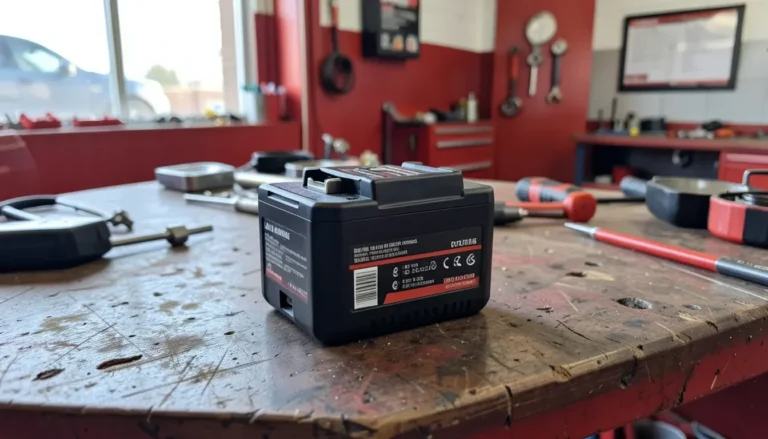
The Makita 9000 is a 9.6V stick-style battery from Makita’s older cordless line, and Makita no longer sells it. If your drill still works but the pack does not hold a charge, you have two real options: buy a replacement pack or move to a current Makita platform. This guide gives you the verified specs, what the numbers on replacement packs actually mean, how to check that a pack fits before you order, and how to get rid of the dead one safely.
Best Makita 9000 Replacement Battery
Best 9000 Stick NiMH Replacement
|
HeShunChang 9.6V 3Ah NiMH Battery for Makita 9000, 9001, 9002, 9033, 9034
|
The pick above is a single-pack Ni-MH replacement listed for the 9000, 9001, 9002, 9033 and 9034 packs. It is not a Makita part, and the 3Ah figure is the seller’s rating, not something we measured. We do not test batteries, so treat capacity numbers on any aftermarket pack as claims until you see how it runs in your own drill.
What the Makita 9000 Battery Is
Makita’s own product page for the B9000 describes it as a 9.6V (1.3Ah) Ni-Cd stick battery and marks it discontinued. The related 9034 is listed as a 9.6V (2.6Ah) Ni-MH stick battery, also discontinued. The model numbers 9000, 9001, 9002 and 9033 are names for packs in this same stick family that sellers cross-reference against each other, but only the B9000 and 9034 figures above come from Makita’s pages.
That gap between 1.3Ah and 2.6Ah is the first thing to notice. Even Makita’s own later pack doubled the rated capacity in the same shape, which is why replacement packs claiming two or three times the original capacity are plausible on paper.
Original Packs vs Replacement Capacity
Battery energy is voltage times capacity, so at 9.6V a pack’s watt-hours are simply 9.6 times its amp-hours. The table below does that arithmetic. The first two rows are Makita’s listed ratings; the others are ratings printed by third-party sellers, which we could not verify.
| Pack | Chemistry | Rated capacity | Energy (9.6V x Ah) | Rating source |
|---|---|---|---|---|
| Makita B9000 | Ni-Cd | 1.3Ah | 12.5 Wh | Makita product page |
| Makita 9034 | Ni-MH | 2.6Ah | 25.0 Wh | Makita product page |
| Typical aftermarket | Ni-MH | 3.0Ah | 28.8 Wh | Seller listing |
| Typical aftermarket | Ni-MH | 3.5Ah | 33.6 Wh | Seller listing |
| Typical aftermarket | Ni-MH | 4.5Ah | 43.2 Wh | Seller listing |
On paper, a 3Ah pack stores about 2.3 times the energy of the original 1.3Ah Ni-Cd. Real-world runtime gains are usually smaller than the ratio suggests, especially under heavy load, and unusually high ratings on small cells deserve some skepticism. A sensible approach is to buy one pack first and time a familiar task before you order a spare.
A common myth: more mAh means more power
A higher milliamp-hour number does not make the drill stronger. Voltage sets how hard the motor can push, and the pack stays at 9.6V regardless of capacity. Capacity only sets how long it runs before it needs a charge. Buying a 4.5Ah pack for a 9.6V drill gets you longer runs, not more torque.
Ni-Cd vs Ni-MH for an Old 9.6V Tool
The original 9000 pack is Ni-Cd, and most modern replacements are Ni-MH. Battery University’s comparison table gives these general figures for the two chemistries:
| Trait | Ni-Cd | Ni-MH |
|---|---|---|
| Specific energy | 40 to 60 Wh/kg | 60 to 100 Wh/kg |
| Cycle life | About 1,000 cycles | 300 to 1,000 cycles |
| Self-discharge | About 15% per month | About 15 to 20% per month |
| Maintenance | Needs regular upkeep to prevent memory effect | Minimal |
The trade-off is straightforward. Ni-MH gives you more runtime from the same-size pack and needs less babying, while Ni-Cd can outlast it in cycle count. Both lose a noticeable share of charge sitting on a shelf, so a drill you use twice a year will usually need a top-up before each job. Our guide on how long a drill battery takes to charge covers charging habits in more detail.
How to Check a Replacement Pack Fits
Fit is where old-battery shopping goes wrong. Seller listings for the 9.6V family mix several different pack shapes together. For example, an older pick on this page was a Hanaix pack listed for the PA09 and 9100, 9120, 9122 and 9133 series and for tools such as the 6207D and 6260D, which is a different list of tools than the 9000-stick drills. Before you order:
- Read the model number stamped on your old pack and match it against the listing title, not just the voltage.
- Compare the listing’s fit list to your drill model (for example, the listing for our pick names the 4093D, 5090D and 6012HD among others).
- Look at the photo: the 9000 stick is a long, narrow pack with contacts at one end, unlike a flat slide-in pack.
- Confirm the return window, since compatibility claims come from sellers rather than Makita.
For a wider look at what does and does not swap between brands, see Are drill batteries universal? and our brand compatibility chart.
Which Capacity Should You Buy?
Because a bigger pack only buys runtime, the right capacity depends on how you use the drill, and on whether you mind a longer charge. These are our rules of thumb from the arithmetic above, not test results:
| How you use the tool | Sensible rating | Why |
|---|---|---|
| A few screws or pilot holes a month | About 3Ah | Roughly double the runtime of the original 1.3Ah pack at a low price |
| Weekend projects with long drilling sessions | 3.5Ah to 4.5Ah | More stored energy per charge, though the rating is the seller’s claim |
| A drill that sits for months | Any rating; top it up first | Both chemistries self-discharge roughly 15% or more per month, so a full charge beforehand matters more than size |
| Daily professional use | Consider a current platform | A discontinued pack family and third-party cells are a weak base for daily work |
If you buy a two-pack, rotate the packs rather than leaving one unused in the drawer; an idle pack drains itself just as a spare in the tool bag would.
Replace the Pack or Rebuild It?
Some hobbyists open a dead pack and swap the individual cells. It can work, but it means spot-welding tabs onto new cells and keeping all eight cells matched, and a poor rebuild risks overheating. Makita does not support it, and we have not tried it, so we recommend buying a complete replacement pack instead. If the charger is very old, also read about charging a drill battery with a different charger before you pair it with a new Ni-MH pack.
Is It Worth Keeping a 9.6V Tool?
If the drill still runs well and your use is light, such as driving screws or drilling small pilot holes, a replacement pack costs far less than a new kit. If you use the tool daily, or you want more torque, moving to a current platform makes more sense. Our DeWalt vs Makita comparison walks through the current lineups.
Safety and Disposal of Old 9.6V Packs
- Do not throw rechargeable batteries in the trash or curbside recycling. The EPA says to use specialized battery recyclers, participating retailers with take-back, or household hazardous waste programs.
- Cover the terminals of the old pack with non-conductive tape, such as electrical tape, before you drop it off, as the EPA advises.
- Makita publishes a Safety Data Sheet for its Ni-MH batteries; read it for handling details. We did not find an equivalent page for the Ni-Cd pack, so treat it with the same care.
- Stop using and charging a pack that gets very hot, swells or leaks.
Frequently Asked Questions About the Makita 9000 Battery
Is the Makita 9000 battery still made?
Makita’s own product page lists the B9000 (9.6V, 1.3Ah Ni-Cd stick battery) as discontinued, and the 9034 (9.6V, 2.6Ah Ni-MH stick battery) is also marked discontinued. Replacement packs today are third-party.
What voltage and chemistry is the Makita 9000 battery?
It is a 9.6V pack. Makita lists the B9000 as a 1.3Ah Ni-Cd stick battery. Nickel-based cells are 1.2V nominal each, so 9.6V works out to eight cells in series.
Can I use a Ni-MH pack in a tool that came with a Ni-Cd pack?
Sellers of Ni-MH stick packs for the 9000 series say they work in tools and chargers made for the original pack. We could not confirm this from Makita’s pages, so check the listing, and if the charger is old, ask the seller whether it is safe with Ni-MH cells before you rely on it.
Is a higher mAh replacement battery more powerful?
No. Higher capacity mainly means longer runtime per charge, not more torque. The voltage stays at 9.6V, so the tool’s power stays about the same.
How do I dispose of an old Makita 9.6V battery?
Do not put it in the trash or curbside recycling. The EPA advises taking rechargeable nickel-cadmium and nickel-metal hydride batteries to specialized battery recyclers, participating retailers with take-back, or a household hazardous waste program, and putting non-conductive tape over the terminals first.
Conclusion
The Makita 9000 is a discontinued 9.6V stick pack, so replacements come from third parties. Match your old pack’s model number and your drill’s fit list, treat capacity ratings as seller claims, and recycle the old pack instead of binning it. That is usually enough to give an older drill a few more working years.
Sponsored / affiliate links. As an Amazon Associate I earn from qualifying purchases. I may earn additional commission from eligible campaigns.