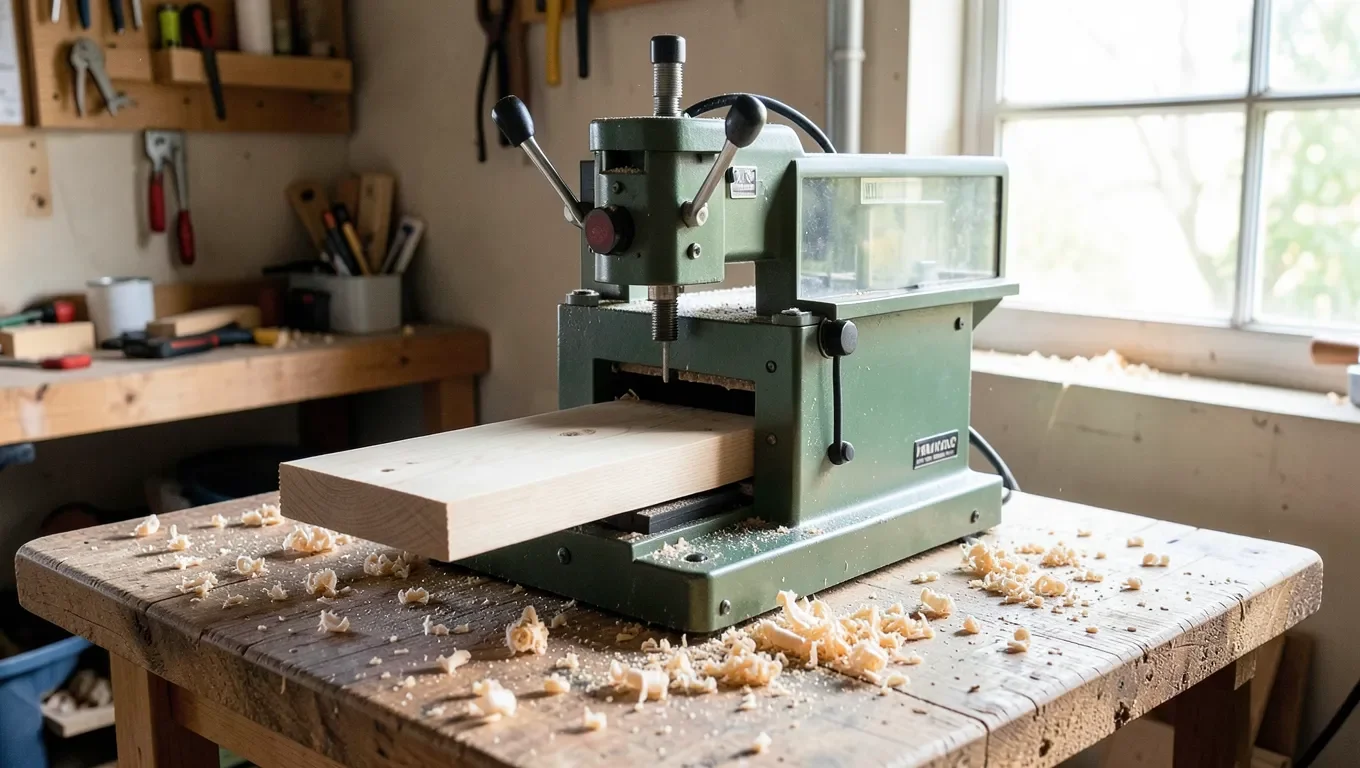
Ridgid Planer Stand: Does One Exist? Best Mobile Base Options
If you’ve been searching for a “Ridgid planer stand,” here’s the surprising answer: Ridgid doesn’t sell one under that name. Ridgid’s own mobile-base lineup is built and marketed as miter saw stands, not planer stands, so what most woodworkers actually end up buying is a universal benchtop-tool stand from another brand, or a way to bolt a planer onto a stand Ridgid already makes for something else. Below is what actually fits a Ridgid planer, the option we’d buy first, and how to mount it safely.
Does Ridgid Make a Dedicated Planer Stand?
No. Search Ridgid’s own accessory catalog and you won’t find a product called a “planer stand” — the closest thing is the Ridgid Universal Mobile Miter Saw Stand (sold under model numbers like AC9945 and AC9946), which is designed and marketed for miter saws. Woodworking forums confirm this is a known point of confusion: DIYers regularly report drilling new mounting holes into a Ridgid miter-saw stand’s top plate to bolt on a thickness planer instead, since the folding legs, wheels, and infeed/outfeed rollers all still work fine for a planer once the bolt pattern lines up.
That workaround is fine if you already own a Ridgid miter-saw stand and don’t mind drilling it. But if you’re starting from scratch, it’s usually faster and less risky to buy a stand actually designed for benchtop power tools, with a mounting pattern that’s already documented. That’s the option below.
Best Mobile Base For A Ridgid Planer
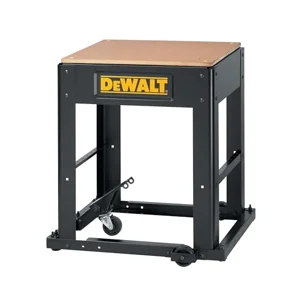 |
DEWALT Planer Stand with Integrated Mobile Base, 24″ x 22″ x 30″ (DW7350) – $189.99 A universal mobile base built for benchtop planers, not repurposed from a miter-saw stand — no drilling required to get your Ridgid planer up on wheels.
|
Benefits of Putting Your Ridgid Planer on a Mobile Stand
A benchtop planer left sitting on the floor or a folding table is awkward to feed long boards through and hard to move once it’s set up. A proper mobile stand fixes both problems at once, and the benefits compound once you’re actually running boards through it regularly.
Working Height and Stability
Most benchtop planer stands put the tool at 30-34 inches off the floor, which is closer to a comfortable feeding height than a low bench or sawhorses. The wider wheelbase on a purpose-built stand also resists the side-to-side rocking that happens when a heavy planer sits on a narrow folding table — that rocking is what causes snipe and uneven passes, not just a wobbly feel.
Mobility Without Breakdown
Folding-leg stands with locking wheels let you roll a fully assembled planer out of a corner, plane a stack of boards, then fold it back down to a few inches thick for storage — no re-clamping or re-leveling the tool each time. That matters more in a one-car-garage shop than in a dedicated shop where the planer has a permanent spot.
Your Options for Mounting a Planer on a Stand
There are really three routes, in order of how much work they take:
- Buy a universal benchtop-tool stand (like the DW7350 above) built with a mounting pattern and accessory adapter meant for planers, jointers, and similar tools. No drilling.
- Repurpose a Ridgid miter-saw stand you already own by drilling new bolt holes into the top plate to match your planer’s base. Works, but you’re on your own for the bolt pattern and it voids any warranty tied to modifying the stand.
- Build a plywood mobile base sized to your planer’s footprint with locking casters bolted underneath. Cheapest option if you have scrap plywood and casters on hand, but it won’t fold down for storage.
For most people upgrading from “planer on the floor” to “planer on wheels,” option one is the one to buy — it’s the only route that doesn’t involve drilling into a tool you already paid for, and the up-front cost is close to what a good caster kit and plywood would run anyway once you count your own time.
Setting Up and Mounting Your Planer Safely
Whichever stand you go with, the setup steps are the same. Rushing this is where most stability complaints actually come from — not a bad stand, but a planer that isn’t actually bolted down.
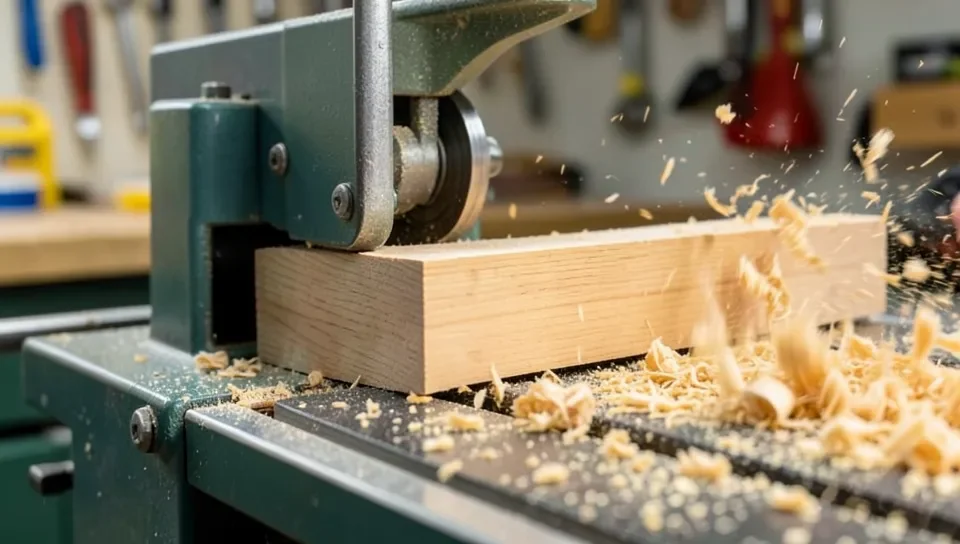
- Unfold and lock the stand’s legs and wheel brakes before lifting the planer onto it — never assemble the stand with the planer already sitting on top.
- Match the planer’s base bolt holes to the stand’s mounting slots. Most universal stands have slotted holes specifically so they fit multiple planer brands, including Ridgid’s footprint.
- Bolt the planer down on all four corners, not just two — a planer bolted at only two points can rock diagonally under load even on a rigid stand.
- Extend the stand’s infeed/outfeed support arms or shelf if it has them, so long boards don’t tip the planer forward or backward as they exit.
- Check that the stand sits level on the shop floor before your first pass — shim a leg if needed rather than compensating with the planer’s depth adjustment.
Once it’s bolted down, give the whole assembly a firm shove test from the side. If the planer shifts on the stand at all, re-torque the mounting bolts before running a board through it.
What to Look for Before You Buy a Stand
Not every “mobile base” on Amazon is built for a planer. A few things to check before ordering:
- Weight rating: a benchtop thickness planer typically runs 80-100 lbs; make sure the stand’s rated capacity clears that with room for the boards you’ll be feeding.
- Mounting pattern: universal slotted mounting holes are more forgiving than a stand built for one specific tool model.
- Locking wheels: at least two of the four casters should lock, or the stand will creep during a pass.
- Folding legs: only worth paying extra for if you’re actually short on permanent floor space — a fixed stand is more rigid if you have the room.
- Built-in shelf: useful for keeping extra planer knives, a push block, or a dust bag within reach.
If your Ridgid planer came with a compatible benchtop-style base already, double check it before assuming you need a separate stand at all — some Ridgid planer models ship with fold-out support wings that only need a table or a plywood base underneath, not a full rolling stand.
Maintaining Your Planer Stand
A stand doesn’t need much upkeep, but skipping it shortens the life of the wheels and hardware fast in a dusty shop.
- Blow out sawdust from the wheel axles and folding hinges every few uses — packed dust is the most common reason folding legs start binding.
- Re-check the mounting bolts monthly; vibration from planing loosens them faster than most other shop tools.
- Wipe down and lightly oil exposed steel legs if your shop isn’t climate controlled, to keep surface rust off the folding mechanism.
- Store the stand folded flat against a wall rather than leaving it deployed when not in use — it’s the main reason to buy a folding model in the first place.
Frequently Asked Questions For Ridgid Planer Stand
Does Ridgid Make a Dedicated Planer Stand?
No. Ridgid’s mobile-base products are sold as miter saw stands, not planer stands. Most woodworkers use a universal benchtop-tool stand from another brand, or drill new mounting holes into a Ridgid miter-saw stand to fit a planer instead.
Is Ridgid Tools Owned By Home Depot?
No, Ridgid Tools is not owned by Home Depot. They are separate companies with different ownership.
Who Makes Ridgid Brand Tools?
Emerson Electric Company manufactures Ridgid brand tools. The company is known for producing high-quality tools for both professionals and DIY enthusiasts.
Where Is The Serial Number On A Ridgid Miter Saw Stand?
The serial number on a Ridgid miter saw stand can be found on the product’s packaging or on a label attached to the stand itself. Look for a sticker or plate with a series of numbers and letters.
Where Is Ridgid Tool Company Located?
Ridgid Tool Company is located in Elyria, Ohio.
Conclusion
Ridgid doesn’t sell a stand called a “planer stand” — but that doesn’t mean you’re stuck improvising. A universal benchtop-tool stand like the DEWALT DW7350 gets your planer onto a stable, rolling base without drilling into a tool you already own, and the setup steps above apply no matter which route you take.
Bolt it down on all four corners, check it’s level, and give it a shove test before your first real pass.
Sponsored / affiliate links. As an Amazon Associate I earn from qualifying purchases. I may earn additional commission from eligible campaigns.