Wood Threading Kit: How to Cut Threads in Wood (Sizes Guide)
A wood threading kit is a tap and die set made specifically for wood, not metal — it cuts real screw threads into a dowel using a threadbox (male threads) and a matching tap (female threads). Skip straight-grain hardwood or lubrication and the threads tear out instead of cutting clean, ruining the dowel. This guide covers picking the right kit size, the step-by-step cutting process, and the mistakes that ruin a threaded dowel on the first pass.
Quick Answer
A 3/4-inch, 6 TPI wood threading kit (thread box, tap, and bottoming tap) is the most versatile size for shop projects like hand-screw clamps and wooden vises. Use straight-grain hard maple or oak dowel, soak it in boiled linseed oil for 24 hours first, then cut the threads dry and slow to avoid tear-out.
What Is a Wood Threading Kit?
A wood threading kit is a set of woodworking tools that cuts external (male) and internal (female) screw threads directly into wood, letting you build wooden nuts, bolts, and knobs without any metal hardware. A complete kit includes a two-handled threadbox for cutting the male threads on a dowel, a matching tap for cutting female threads into a hole, and a bottoming tap to finish the bottom of a blind hole.
Kits are sold by diameter — typically 1/2 inch through 1-1/2 inch in 1/4-inch steps — and each size has a fixed thread pitch (threads per inch, or TPI) built into the cutter. Unlike a metal tap and die, the cutting edges are shaped and clearance-cut for wood fiber, so they shear the grain instead of tearing it.
Best Wood Threading Kit for Most Shops
For a first wood threading kit, 3/4 inch at 6 TPI hits the sweet spot: strong enough for a shop-made vise or clamp, and 3/4-inch dowel stock is easy to find at any hardwood supplier.
Best Wood Threading Kit Pick
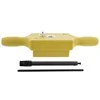 |
DCT Plastic Jig Dowel Thread Tap Kit — 3/4 in. x 6 TPI A complete threadbox-and-tap set sized for the most commonly used dowel diameter in shop-made vises, clamps, and knobs.
|
As an Amazon Associate we earn from qualifying purchases.
How to Cut Threads in Wood With a Tap and Die Kit
Cutting clean wood threads comes down to prep more than technique — a dry, unlubricated dowel is the most common reason threads tear out on the first pass.
- Choose straight-grain dowel: pick hard maple, birch, or oak dowel with no visible runout in the grain, sized to the kit’s diameter (slightly oversized dowel threads more reliably than undersized).
- Soak the dowel in oil: soak the end in boiled linseed or mineral oil for at least 24 hours (several days for dense hardwoods). This softens the fibers so the cutter shears instead of tearing them.
- Lock the dowel in a vise: clamp it vertically, leaving 2 to 3 inches proud of the jaws so the threadbox has room to travel.
- Start the threadbox square: slip the threadbox over the end and turn clockwise with steady, even pressure — starting off-square is the second most common cause of stripped threads.
- Back off every full turn: reverse a quarter turn every full rotation to clear waste and reduce tear-out, the same technique used when tapping metal.
- Cut the female threads to match: drill a pilot hole sized to the kit’s tap, then run the tap in with the same steady, back-off rhythm, finishing with the bottoming tap if the hole doesn’t go all the way through.
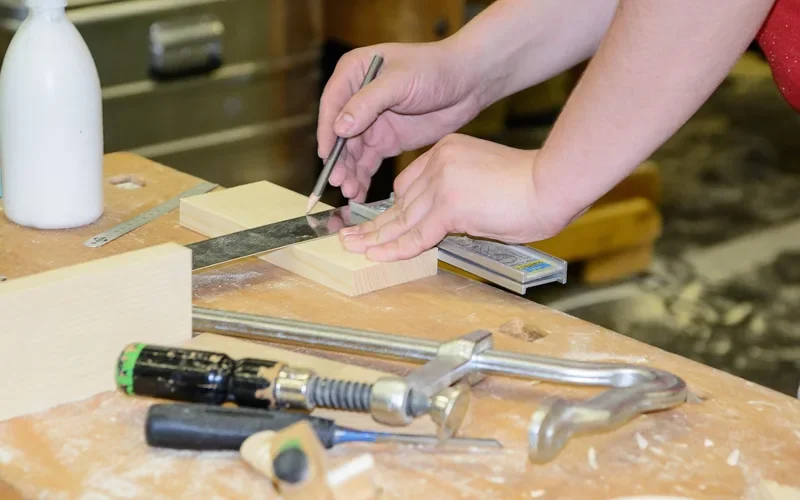
📊 The 1/2 in. wood threader cuts 8 TPI, while the 3/4 in. and 1 in. sizes cut 6 TPI — Source: Highland Woodworking product specifications.
Choosing the Right Wood Threading Kit Size
Every wood threading kit size has a fixed thread pitch, and the right size depends on how much load the finished part needs to carry.
| Dowel Size | Thread Pitch (TPI) | Best For |
|---|---|---|
| 1/2 in. | 8 TPI | Small knobs, toys, puzzle joints |
| 3/4 in. | 6 TPI | Hand-screw clamps, light vise screws |
| 1 in. | 6 TPI | Woodworking vises, bench presses |
| 1-1/4 in. | 6 TPI | Heavy-duty clamps, large presses |
| 1-1/2 in. | 6 TPI | Shop-built vises carrying real clamping load |
Best Wood for Threading
Straight-grain hardwood is wood with fibers running parallel to the dowel’s length and no knots or figure — it is the category of stock that threads cleanly because the cutter shears the fiber instead of tearing across it. Hard maple, birch, and white oak are the standard picks for wood threading; softwoods like pine and any figured or knotty stock tear instead of cutting clean threads.
If you’re gluing a threaded dowel into an assembly rather than cutting it from solid stock, check which wood glue actually holds under load before committing — a threaded joint that loosens because of a weak glue-up will fail before the threads themselves wear out.
Common Mistakes That Ruin Threaded Dowels
- Cutting a bone-dry dowel: skipping the oil soak is the single biggest cause of torn, crumbling threads — always soak at least 24 hours first.
- Undersized dowel stock: a dowel more than a few thousandths under the kit’s nominal size won’t engage the cutter fully, producing shallow, weak threads.
- Starting the threadbox crooked: even a few degrees off-square at the start telegraphs down the entire length of the thread.
- Forcing the cut: pushing through resistance instead of backing off every turn overheats the cutter and tears the fiber instead of shearing it.
- Using figured or knotty wood: curly grain and knots interrupt the fiber direction, so the threads collapse right where the pattern changes.
Frequently Asked Questions
What is a wood threading kit used for?
A wood threading kit cuts real screw threads into a wood dowel so it can be used as a wooden bolt, knob, or vise screw. It is used for shop-made vises, hand-screw clamps, wooden puzzles, furniture hardware, and any project that calls for a threaded wood fastener instead of metal.
Can you cut threads in wood without a special tool?
No. A single-point tool or a metal tap and die will tear the grain instead of cutting a clean profile. Wood threading kits use an oversized cutting geometry made specifically for wood fiber, so the threads stay sharp and don’t crumble like they would with a standard metal die.
What size wood threading kit should I buy?
For a first kit, 3/4 inch at 6 TPI is the most versatile size — strong enough for vises and hand clamps, and the dowel stock is easy to find. Go with 1/2 inch (8 TPI) for small knobs and toys, or 1 inch and larger for heavy-duty clamps and presses.
What is the best wood for threading?
Straight-grain hardwoods cut the cleanest threads: hard maple, birch, and white oak are the standard choices. Avoid knots, figured grain, and softwoods like pine — the fibers tear instead of shearing cleanly, which produces weak, rounded-over threads.
Conclusion
A wood threading kit turns a plain dowel into a working wooden bolt, knob, or vise screw — the results depend almost entirely on prep: straight-grain hardwood, a long oil soak, and a square, unhurried start. Pick 3/4 inch at 6 TPI for the most versatile first kit, and size up only once you know the project needs the extra strength.
Sponsored / affiliate links. As an Amazon Associate I earn from qualifying purchases. I may earn additional commission from eligible campaigns.