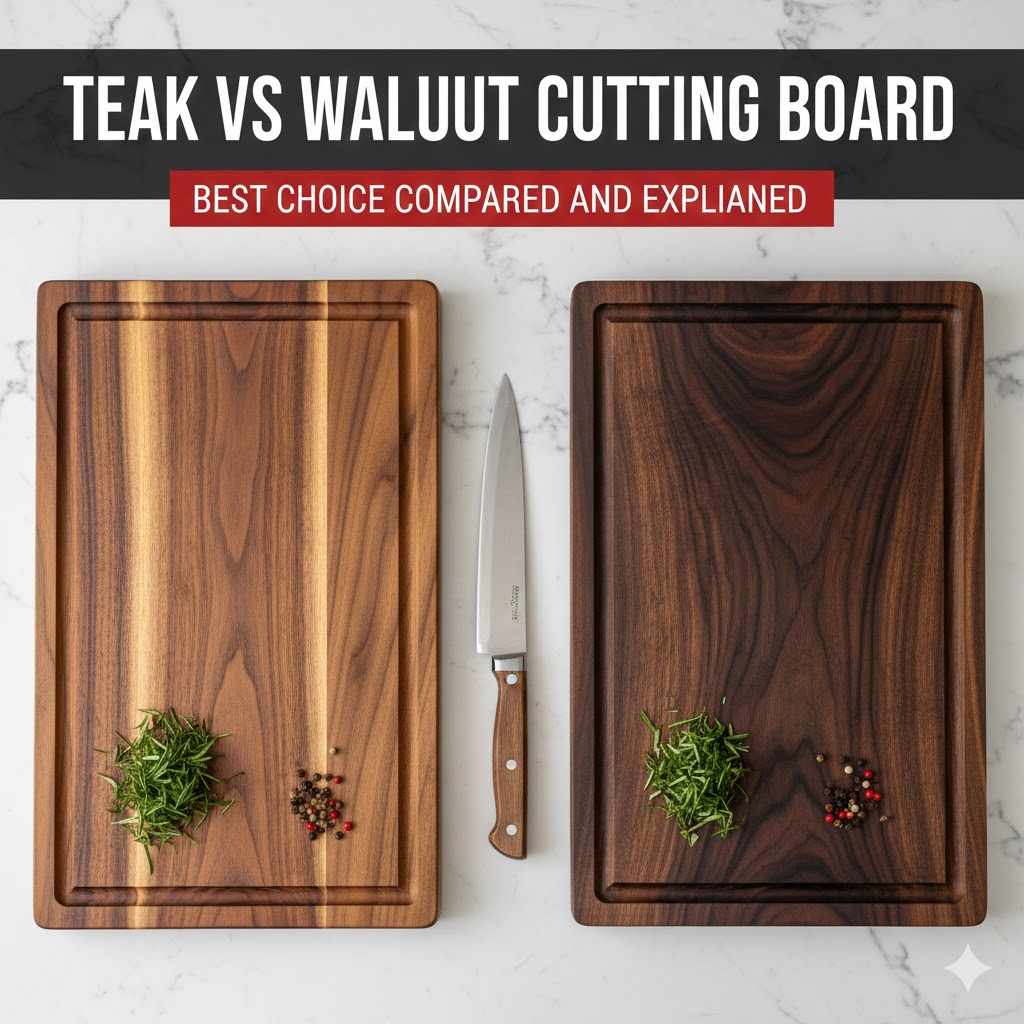
Teak vs Walnut Cutting Board: Best Choice Compared and Explained
Choosing the right cutting board can feel tricky, especially when you start looking at materials like wood. Deciding between a Teak vs Walnut Cutting Board: Best Choice Compared is a common question, and it’s understandable to feel a little lost at first. Don’t worry, we’re here to help! We’ll break down the important stuff in a way that’s easy to follow, making your decision straightforward. Get ready to explore the pros and cons of each wood type, and learn which one might be the best fit for your kitchen.
What Makes a Great Kitchen Companion?
When searching for a new board, you want something that’s safe, durable, and looks good. The best boards are made from materials that can handle daily use, resist wear and tear, and also protect your knives. They should also be easy to clean to avoid any contamination of your food. Beyond those essentials, there are other features to consider, such as whether the board is hard enough to resist scratches but soft enough not to dull your blades. Different woods bring a unique blend of these qualities, so the right choice depends on what’s most important to you.
Durability and Hardness
Durability is key, meaning a cutting board should withstand constant chopping, slicing, and dicing. Hardness measures how well the wood resists dents, scratches, and damage from knives. Woods like teak and walnut have different natural hardness levels, which affects how long the board will last and how well it handles regular kitchen tasks. The harder the wood, the more resistant it is to marks and cuts, which extends the board’s useful life.
Teak’s Strength: Teak is naturally oily and has a high silica content, making it exceptionally durable and resistant to water and warping. This makes it a great option.
Teak’s density also provides resistance to scratches from knives. It can withstand heavy use without showing significant wear over time. This quality makes it a smart pick for busy kitchens where the board gets frequent use.
Walnut’s Resilience: Walnut is also quite durable but slightly less so than teak. It’s still a hard wood and resists wear well. Its natural properties make it a good option.
Walnut is less likely to warp or split, which contributes to its long lifespan in the kitchen. The board’s resilience means it can handle various cutting activities without significant damage, which extends its usefulness.
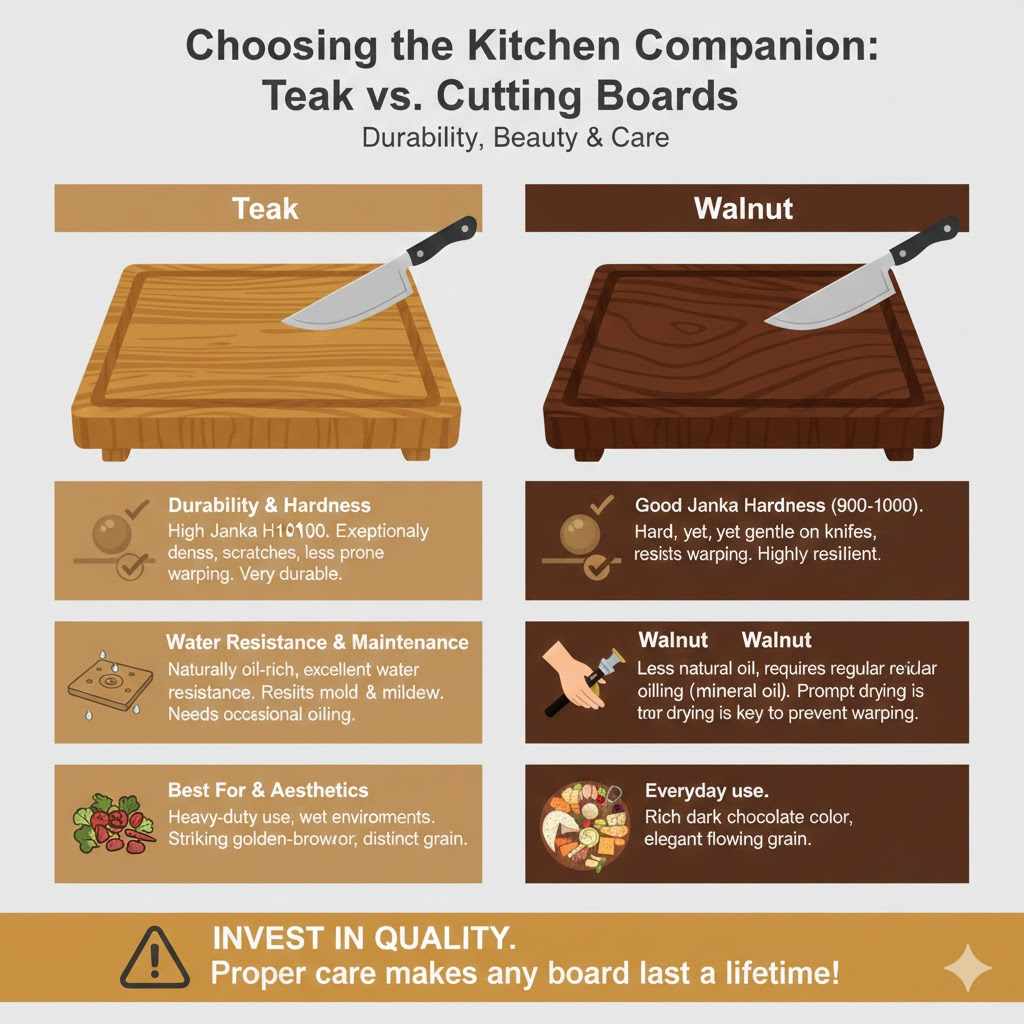
Hardness Comparison: The Janka hardness scale measures how much force it takes to embed a .444-inch steel ball into the wood. Teak usually scores between 1000-1100, while walnut is typically between 900-1000.
This means teak is generally slightly harder, but both woods offer good durability for cutting boards. The difference isn’t enormous, so other factors might influence your choice.
Water Resistance and Maintenance
Water resistance is vital for preventing the cutting board from absorbing moisture, which can cause warping, cracking, or the growth of mold and bacteria. Teak naturally excels in this area. Walnut needs proper care to maintain its integrity, ensuring the board stays clean and safe. Regular oiling and cleaning habits contribute significantly to the lifespan of a cutting board, regardless of the wood type.
Teak’s Natural Oils: Teak’s high oil content makes it highly water-resistant. This natural protection helps repel water, preventing it from soaking into the wood and causing damage.
The oils also create a barrier that helps prevent the growth of mold and mildew, which is important for kitchen hygiene. This is why teak is a popular option.
Walnut’s Care: Walnut cutting boards require more attention to water exposure. Proper maintenance includes regular oiling, preferably with food-safe mineral oil, to protect the wood from moisture.
Oiling helps replenish the wood’s natural oils and creates a protective barrier. Avoiding prolonged water contact and cleaning it promptly after use also helps keep walnut boards in good shape.
Maintenance Steps: To care for a wooden cutting board, wash it with warm, soapy water after each use. Avoid the dishwasher. Then, wipe it dry and apply mineral oil every few weeks or whenever the wood starts to look dry.
This routine helps keep the board clean, hydrated, and ready for use. Proper care will help extend the life of any wooden cutting board and maintain its appearance.
Exploring the Characteristics of Each Wood Type
Both teak and walnut offer distinct qualities that make them ideal for cutting boards. Teak is known for its durability and resistance to water. Walnut brings an aesthetic appeal and good performance. Knowing the specific properties of each wood will help you make a selection that matches your kitchen needs and your preferences.
Teak: The Durable Choice
Teak is a dense, close-grained hardwood, highly prized for its durability and natural oils, which make it well-suited for a kitchen setting. Its ability to resist moisture, along with its toughness, makes it a favored option in many kitchens. Teak also has a lovely color and grain pattern, adding elegance to any workspace. This combination of functionality and looks makes teak a strong contender.
Natural Oils: Teak’s high oil content is its biggest advantage. It provides the wood with exceptional water resistance and helps it to repel water, minimizing the risk of warping and preventing the growth of bacteria.
These oils seep into the wood, making it less absorbent. This characteristic contributes to teak’s long-lasting durability, even with regular exposure to liquids and moisture.
Color and Grain: Teak presents a warm, rich color that deepens over time with exposure to light. The grain pattern can vary from straight to slightly interlocked, giving each board a unique visual appeal.
This natural beauty makes teak an attractive addition to a kitchen, adding warmth and sophistication to your workspace. Teak boards often have a distinctive look that sets them apart.
Ease of Maintenance: Because of its natural oil content, teak requires less maintenance compared to other hardwoods. Regular cleaning with warm, soapy water and occasional oiling keeps it in good shape.
This reduces the time and effort needed to maintain your cutting board, making it an excellent choice for busy cooks who want a low-maintenance option without sacrificing quality.
Walnut: The Elegant Option
Walnut is a beautiful hardwood. It provides a unique blend of elegance and functionality in the kitchen. Its rich, dark color and smooth texture make it a popular choice. The wood is strong enough to handle cutting and slicing. Walnut cutting boards require proper care to maintain their appearance and function.
Color and Grain: Walnut has a distinctive dark brown color that provides a rich, elegant look. The grain pattern often features a mix of straight and flowing lines, giving the board character.
This visual appeal complements many kitchen styles, making walnut an attractive choice. It’s a wood that ages gracefully, developing a patina over time.
Resilience: Walnut is moderately hard and resistant to scratches. This makes it suitable for frequent use in the kitchen. The wood’s density allows it to hold up well against the wear and tear of cutting tasks.
Walnut provides a good balance of hardness and blade-friendliness, which protects the knives and the cutting surface.
Maintenance Requirements: Regular oiling with food-safe mineral oil is important for walnut cutting boards. This helps keep the wood moisturized and prevents it from drying out, which can lead to cracks.
The upkeep involves wiping the board clean and applying oil periodically, especially after use. It is a necessary step to maintain the appearance and function.
Teak vs Walnut Cutting Board: A Direct Comparison
Comparing these two wood choices involves looking at their strengths and weaknesses. Teak offers advantages in durability and resistance to water, while walnut shines in aesthetic appeal and cutting performance. The best choice depends on your needs, kitchen habits, and personal style.
| Feature | Teak | Walnut |
|---|---|---|
| Hardness (Janka Scale) | 1000-1100 | 900-1000 |
| Water Resistance | High (due to natural oils) | Moderate (requires oiling) |
| Appearance | Warm, golden brown | Rich, dark brown |
| Maintenance | Low (occasional oiling) | Moderate (regular oiling) |
| Scratch Resistance | High | Good |
| Price | Generally higher | Generally moderate |
The chart above provides a quick comparison of the two woods. It highlights the key differences across various factors, helping you see which wood aligns with your priorities.
Performance in the Kitchen
In the kitchen, cutting boards are put to the test. They endure regular use, from chopping vegetables to slicing meats. The way a board performs, including how it feels and how it responds to knives, affects the joy of cooking. Teak and walnut perform differently due to their different hardness levels, which affects how they handle cuts and interact with blades.
Knife Friendliness: Both teak and walnut are reasonably kind to knives. Walnut, being slightly less hard, can be considered more blade-friendly, as it is less likely to dull knives as quickly.
The slight give of walnut is helpful in protecting knife edges, ensuring they stay sharp for a longer period. This quality makes it a favorite for many cooks.
Ease of Cutting: Teak’s hardness offers a stable cutting surface, ideal for chopping and slicing. Walnut provides a good surface for cutting.
When you’re preparing vegetables or meats, the surface needs to be stable and reliable. Both woods provide excellent platforms.
Longevity with Use: Teak’s superior durability makes it last. It is resistant to scratches and dents that can accumulate. Walnut also lasts, but it may show signs of wear earlier.
The choice between the two woods depends on how much you plan to use it and the style you prefer.
Aesthetic Appeal and Value
The look of your cutting board is part of the experience of cooking. The color, grain pattern, and overall feel can enhance your workspace and kitchen decor. Value involves price, durability, and the care required to keep the board in top condition. Teak and walnut present their appeal and value.
Appearance in the Kitchen: Teak usually has a warm, golden-brown hue that brings warmth to your kitchen. Walnut gives a rich, darker tone that adds elegance.
The choice depends on the kitchen’s style and the overall design. Consider how each wood complements your existing decor.
Price and Durability: Teak often comes with a higher price tag due to its durability. Walnut boards are usually priced a little lower, but also offer a good balance of cost and performance.
Factor in the lifespan of the board and the effort needed to maintain it when you weigh value. A more expensive board that lasts longer may be a better investment.
Long-Term Considerations: Think about how the wood’s color will age. Teak tends to darken over time. Walnut may develop a richer tone with age and use.
These long-term considerations are important when choosing a cutting board. It’s an item you’ll use for years.
Making the Right Choice for Your Kitchen
The choice between teak and walnut depends on your priorities and the demands of your cooking habits. Consider the importance of durability, water resistance, aesthetic appeal, and budget. Reflect on how you’ll use the board and the look you want to achieve. Taking these factors into account will help guide you.
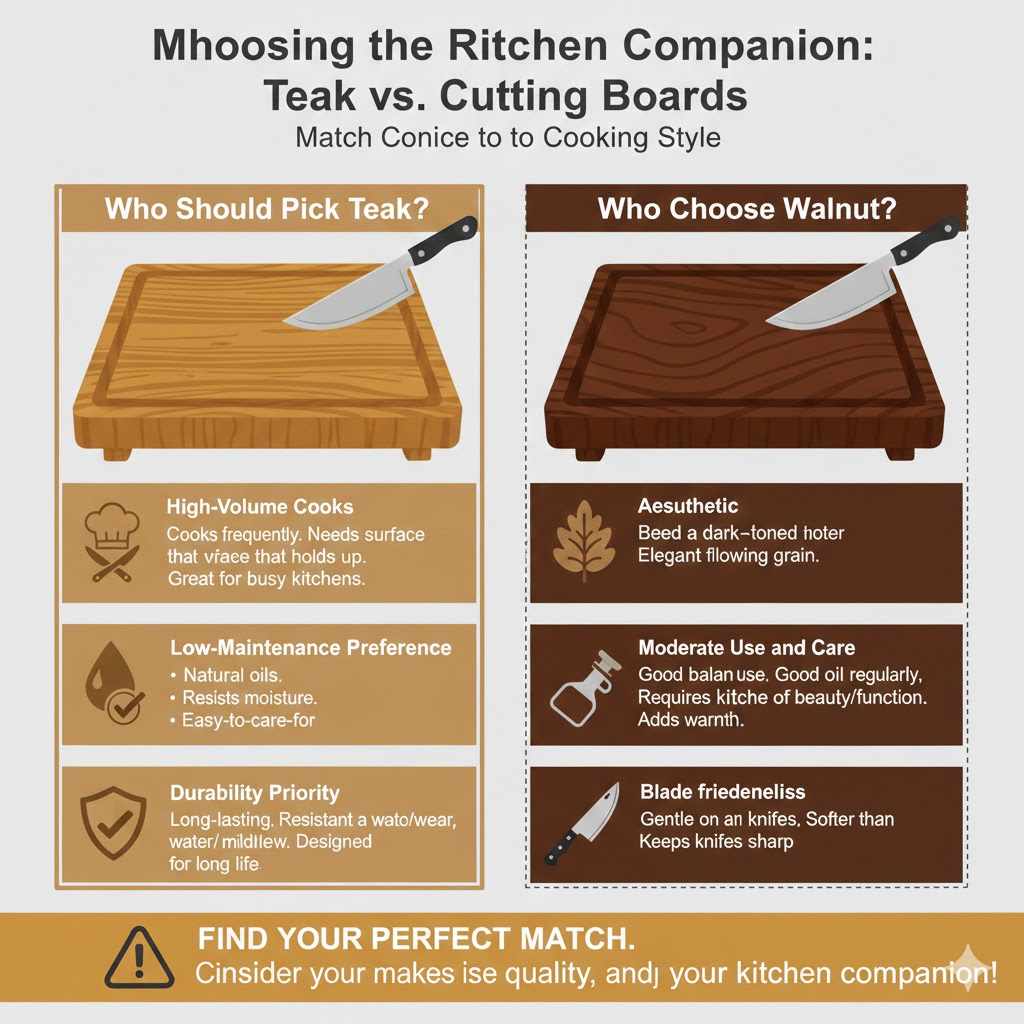
Who Should Pick Teak?
Teak is a great pick if you want a long-lasting, low-maintenance cutting board. It’s perfect for those who cook frequently and need a surface that will hold up. Consider teak if you value water resistance. Its natural oils protect it from moisture, making it ideal for wet or humid kitchens. Finally, if you want something that matches your other wooden items, teak has a nice, warm color.
High-Volume Cooks: For anyone who cooks often, teak is an excellent choice. It is capable of handling the rigors of regular kitchen tasks.
Its hardness and water resistance mean it is not easily damaged. This makes it a great pick for busy cooks who prepare lots of meals.
Low-Maintenance Preference: Teak requires less maintenance because of its natural oils. If you like an easy-to-care-for option, teak is a smart pick.
A simple wash and occasional oiling are all it needs to stay looking and performing its best.
Durability Priority: If you value long life, teak’s resistance to water and wear makes it a smart choice. It is designed to last a long time.
Teak is designed to handle consistent use. It’s a smart pick for a durable kitchen tool.
Who Should Choose Walnut?
Walnut is perfect if you like beauty and sophistication in your kitchen. If you love the dark, rich tones of walnut and value the aesthetics, it’s a good choice. It is also good for you if you’re happy with some maintenance and enjoy the process of oiling the wood. You’ll love walnut if you want a surface that feels good under your knife.
Aesthetic Enthusiasts: If you value a beautiful, dark-toned board, walnut is a great choice. It adds an elegant touch to any kitchen.
The wood’s rich color and grain can elevate your kitchen decor. It is a stylish addition that brings warmth and sophistication.
Moderate Use and Care: If you’re willing to oil the board regularly, walnut offers a good balance of beauty and function.
It takes a bit of care to maintain, but the results are worth it, which keeps the board looking good.
Blade Friendliness: Walnut is a good choice if you like a surface that treats your knives gently. It is softer than teak, and protects your blades.
It’s perfect if you want to keep your knives sharp. The softer surface ensures your knives stay in good shape.
Frequently Asked Questions
Question: Is teak better than walnut for cutting boards?
Answer: Teak is often favored for its superior water resistance and long-lasting durability, making it an excellent option. Walnut offers great looks and is often more knife-friendly.
Question: How do I clean a teak cutting board?
Answer: Rinse the board with warm, soapy water after each use and wipe it dry. Occasionally, you can apply food-safe mineral oil to preserve its quality and shine.
Question: What’s the best way to maintain a walnut cutting board?
Answer: Wash the walnut cutting board with warm, soapy water. Dry it promptly. Apply food-safe mineral oil regularly to protect the wood and keep it from cracking or drying out.
Question: Can I put a wooden cutting board in the dishwasher?
Answer: It’s best to avoid the dishwasher because the high heat and moisture can cause warping or cracking. Hand-washing is recommended for both teak and walnut boards.
Question: How often should I oil my cutting board?
Answer: Oil your cutting board every few weeks, or whenever the wood looks or feels dry. It prevents the wood from drying out and cracking, ensuring its longevity.
Final Thoughts
Choosing between a Teak vs Walnut Cutting Board: Best Choice Compared depends on your individual needs and preferences. Teak stands out for its amazing durability and natural water resistance, making it perfect for active kitchens. Walnut delivers beauty with its elegant look and knife-friendly nature, perfect for those who appreciate aesthetics and are okay with a little extra care.
Both woods provide unique qualities that can improve your cooking experience, so think about how often you cook, your style in the kitchen, and how much effort you’re willing to put into maintenance. Ultimately, the best cutting board is the one that best matches your lifestyle, helping you enjoy every step of the cooking process. So explore the options, compare their benefits, and select the cutting board that best suits your needs, ensuring you’ll have a reliable kitchen helper for years to come!