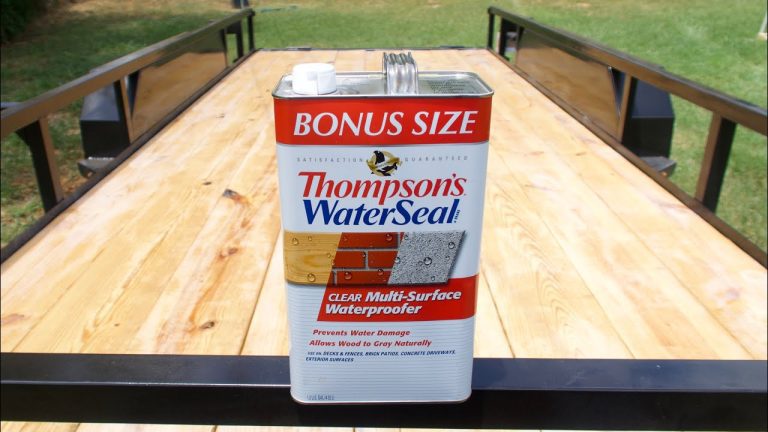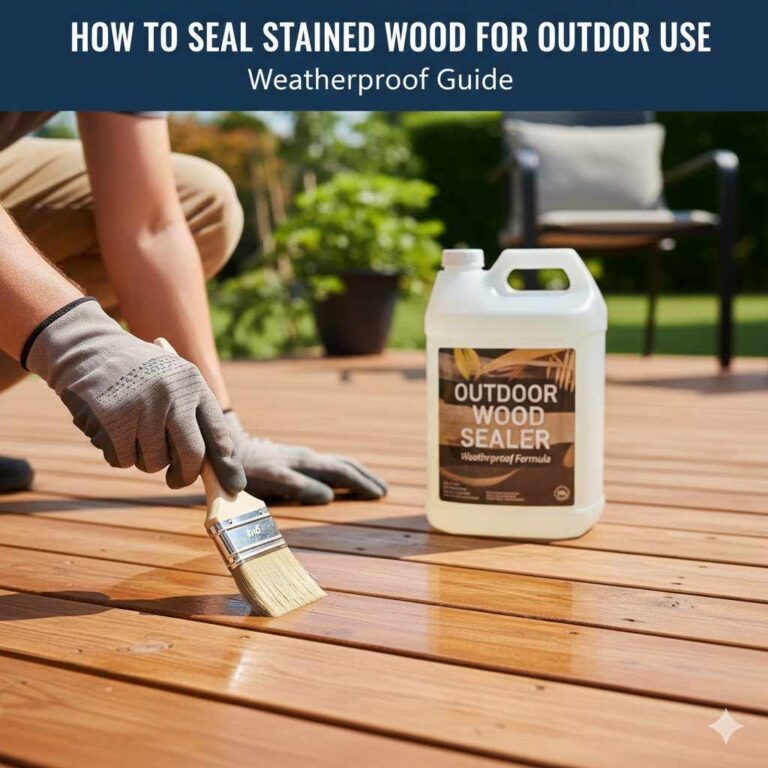
Thompson’s WaterSeal Not Drying? Causes and How to Fix a Tacky Finish
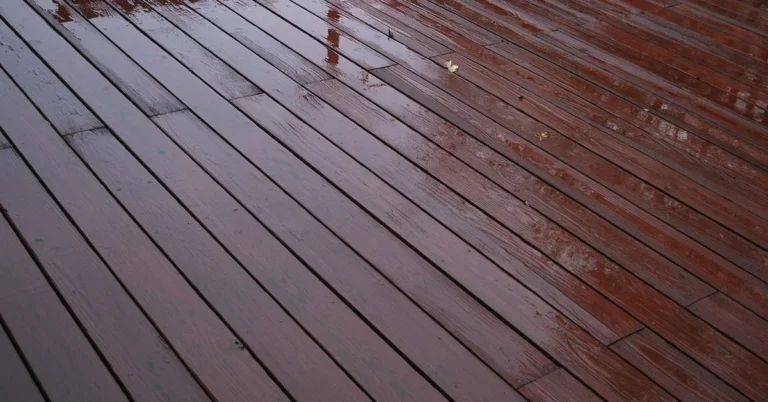
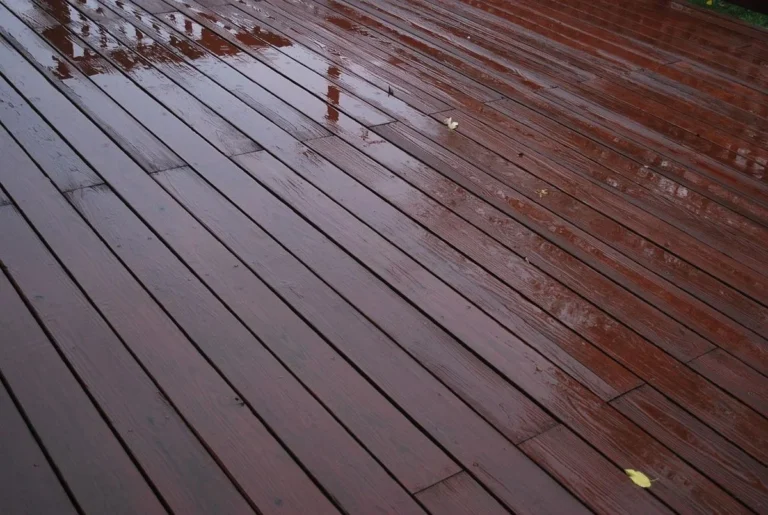
Thompson’s WaterSeal almost always stays tacky for one of four reasons: too thick a coat, application below 50°F, rain within 48 hours, or a second coat going onto wood that’s already sealed and has nowhere to soak in. A gummy deck picks up dirt, leaves footprints, and can stay sticky for weeks if you ignore it. This guide covers each cause, the fix that matches it, and how to tell when the wood is actually cured.
Quick Answer
If Thompson’s WaterSeal is fresh and tacky, wipe the excess off with a rag soaked in warm soapy water before it sets. If it’s been tacky for more than a few days, let it sit a full week, then scrub with a concentrated degreaser or TSP substitute. Reapply only after the surface passes a dry, non-tacky touch test.
Why Isn’t It Drying? The 4 Real Causes
Best for Checking If It’s Actually Dry

General Tools MMD4E Moisture Meter for Wood
Gives you an actual moisture percentage instead of guessing from a fingertip test.
- Best for: confirming a deck is under 15% moisture before recoating or judging a job “done”
- Why we picked it: pin-type readings are more reliable on sealed wood than pinless meters
- Main drawback: leaves tiny pin marks, so test in a low-visibility spot
Compare more tacky-sealant fix supplies
 Option 1 ALLWAY Heavy-Duty Deck Brush, 12″
|
 Option 2 Simple Green Oxy Solve Deck & Fence Cleaner
|
 Option 3 Klean-Strip Odorless Mineral Spirits, 1 Gal
|
As an Amazon Associate we earn from qualifying purchases.
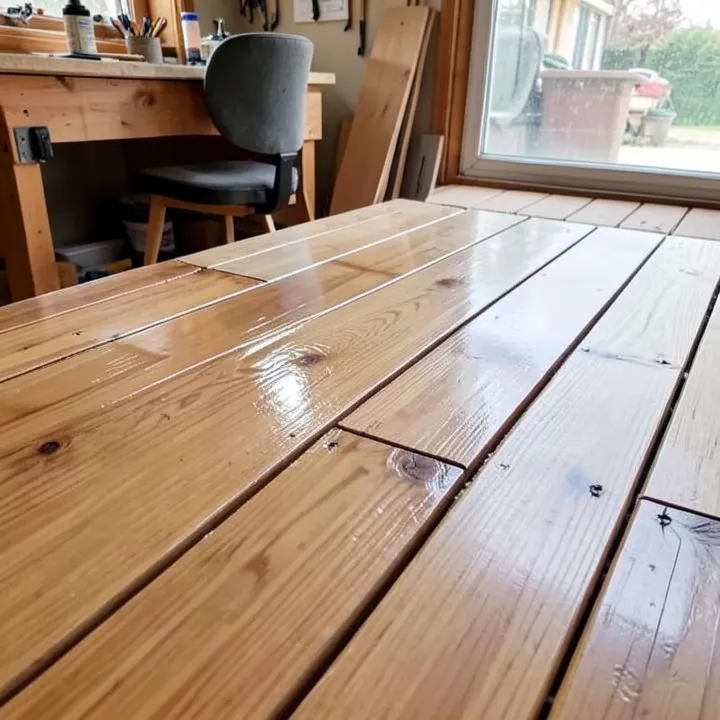
You Applied Too Thick a Coat
Overapplication is the single most common reason Thompson’s WaterSeal doesn’t dry. A heavy coat traps solvent underneath the surface skin, so the top looks finished while the layer underneath stays wet for days. Thompson’s own product literature calls this out directly:
“Oiliness and tackiness will result if over-applied, applied to wet or damp surface, or if overnight temperature falls below 50°F within 48 hours of application.”
If your brush or roller is leaving visible wet streaks or puddled sealant in the wood grain, you’ve put down too much. Back off and spread it thinner on the next section instead of trying to fix it after the fact.
The Temperature Was Below 50°F
📊 Surface and air temperature must stay above 50°F during application and for a full 48 hours afterward — a single cold night in that window is enough to cause a tacky finish. — Source: Thompson’s WaterSeal application instructions
This is why so many spring and fall sealing jobs go tacky — the daytime temperature is fine for applying, but an overnight drop below 50°F stalls the cure before it’s finished. Check the overnight low, not just the forecast at application time.
It Rained or the Humidity Was Too High Within 48 Hours
High humidity slows solvent evaporation the same way cold does — the sealant can more than double its normal drying time in muggy conditions. Rain within the first two days can wash the coat out entirely or leave it permanently hazy and tacky where water sat on the surface before it finished curing.
You Recoated Wood That Was Already Sealed
In our experience, this is the number one call behind a “faulty” can of sealant. Wood only absorbs sealant into open pores — once a coat has already soaked in and cured, the wood’s surface is largely closed off. A second coat applied too soon, or applied to wood that never lost its old finish, has nowhere to go and just sits on top, staying tacky indefinitely. Strip old, worn sealant with a degreaser (see the fix section below) before recoating, and don’t reapply within 24 hours of the first coat.
Surface-Dry vs. Fully Cured: How Long It Actually Takes
Thompson’s WaterSeal is dry to the touch, meaning it no longer transfers to a fingertip, within about 24 hours under good conditions. That’s not the same as fully cured. Manufacturer instructions specify at least 48 hours before the surface should handle rain or foot traffic, and the company is explicit that “drying time will vary depending on the substrate, temperature, and humidity” — in practice, a shaded deck in a cool, damp climate can take up to a week to fully cure even when it looks dry after a day.
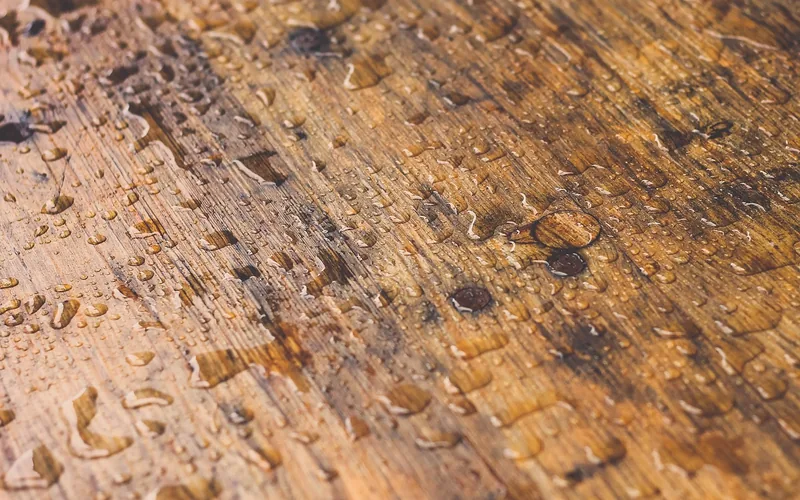
The most reliable way to check is a simple splash test: pour a small cup of water on the surface. If it beads up and rolls off, the coat is cured. If it soaks in and darkens the wood, give it more time before judging the job a failure — and before applying a second coat, painting over it, or letting foot traffic back on.
How to Fix a Tacky Thompson’s WaterSeal Finish
- Test the surface first: Press a fingertip on the tackiest spot, or check it with a wood moisture meter — a reading under 15% means it’s likely dry enough to leave alone.
- Wipe off fresh tackiness: Soak a rag in warm water with a few drops of dish soap and wipe the surface down while the sealant is still soft, working with the wood grain.
- Let older tackiness set, then degrease: If it’s already been sticky for several days, wait a full week, then scrub with a concentrated degreaser or TSP substitute and rinse clean.
- Absorb any residual oiliness: Sprinkle sawdust, kitty litter, or baking soda over stubborn tacky spots, leave it for 24 hours, then sweep it off.
- Keep airflow moving during the cure: Open up the area, point a fan at it if it’s enclosed, and keep it out of direct afternoon sun for the first 48 hours.
- Strip and start over if it’s still gummy: Wipe the whole surface with mineral spirits, let it dry completely, then reapply in thin, even coats.
Most of these fixes call for the same handful of supplies — a stiff-bristle deck brush for scrubbing, a real degreaser instead of dish soap alone for set-in residue, and a moisture meter if you want a number instead of a guess:
How to Prevent It From Happening Again
Once the surface is clean and genuinely dry, proper prep and application technique are what keep the next coat from going tacky. This is standard surface prep, not optional:
- Clean the surface thoroughly first — a pressure washer or stiff brush to remove dirt, mildew, and any loose old coating.
- Repair cracks or damaged boards before sealing; a filled, sanded surface takes sealant evenly.
- Sand old painted or varnished wood so bare grain is exposed — sealant can’t penetrate through an existing film.
- Confirm the surface is fully dry (48 hours with no rain is the manufacturer’s minimum) before applying anything.
- Stir the sealant thoroughly before use so it applies consistently coat to coat.
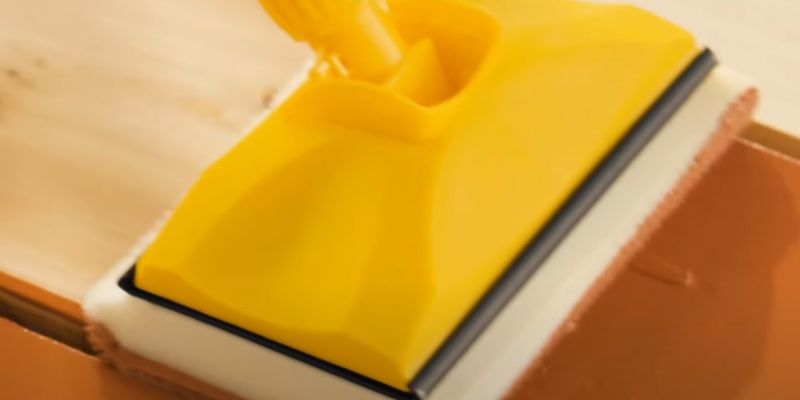
- Apply in thin, even strokes along the wood grain — a thin coat that fully penetrates beats a thick one that sits on top.
- Skip direct sun or extreme heat during application; sealant that dries too fast on the surface can trap solvent underneath.
- Let the first coat fully cure — not just surface-dry — before deciding whether a second coat is even needed.
If you’re still deciding which sealer to use in the first place, our guide to the best wood sealer for different projects breaks down when Thompson’s makes sense versus an oil-based or penetrating alternative, and our Olympic WaterGuard vs. Thompson’s WaterSeal comparison covers how the two actually differ in cure time and durability. For a hardwood species with tighter grain, see our notes on sealing ipe decking, which dries very differently than a softwood deck.
Frequently Asked Questions
How long does Thompson’s WaterSeal take to dry?
Thompson’s WaterSeal is dry to the touch in about 24 to 48 hours under ideal conditions (50–95°F, low humidity, no rain). Full cure — the point where the surface can handle regular foot traffic and rain — can take up to a week in cooler or more humid climates.
Why is my Thompson’s WaterSeal still sticky after a week?
A week of tackiness almost always means the sealant was applied too thick, the surface was still damp underneath, or the temperature dropped below 50°F during the first 48 hours. Scrub the surface with a concentrated degreaser or TSP substitute to remove the excess, then let it dry fully before deciding whether it needs to be reapplied.
Can I fix a tacky Thompson’s WaterSeal finish without stripping it?
Yes, in most cases. Fresh tackiness wipes off with a rag and warm soapy water. Older, set-in tackiness usually responds to a scrub with a concentrated degreaser and a stiff-bristle deck brush. Full stripping with mineral spirits is only necessary if the surface stays gummy after degreasing.
What temperature is too cold to apply Thompson’s WaterSeal?
Below 50°F, both during application and for 48 hours afterward. Thompson’s own instructions state that overnight temperatures under 50°F within that window will cause oiliness and tackiness, even if the daytime temperature was warm enough to apply.
Does Thompson’s WaterSeal need to be reapplied every year?
Manufacturer guidance recommends an annual splash test — pour a small amount of water on the surface, and if it soaks in instead of beading up, it’s time to reseal. Most decks need reapplication every 1 to 2 years depending on sun exposure and foot traffic.
Conclusion
A tacky Thompson’s WaterSeal finish almost never means the product failed outright — it’s usually a thick coat, a cold night, rain, or wood that was already sealed. Match the fix to the actual cause, confirm it’s cured with a splash test before judging the job, and apply thinner coats with better airflow next time to avoid a repeat.
Sponsored / affiliate links. As an Amazon Associate I earn from qualifying purchases. I may earn additional commission from eligible campaigns.