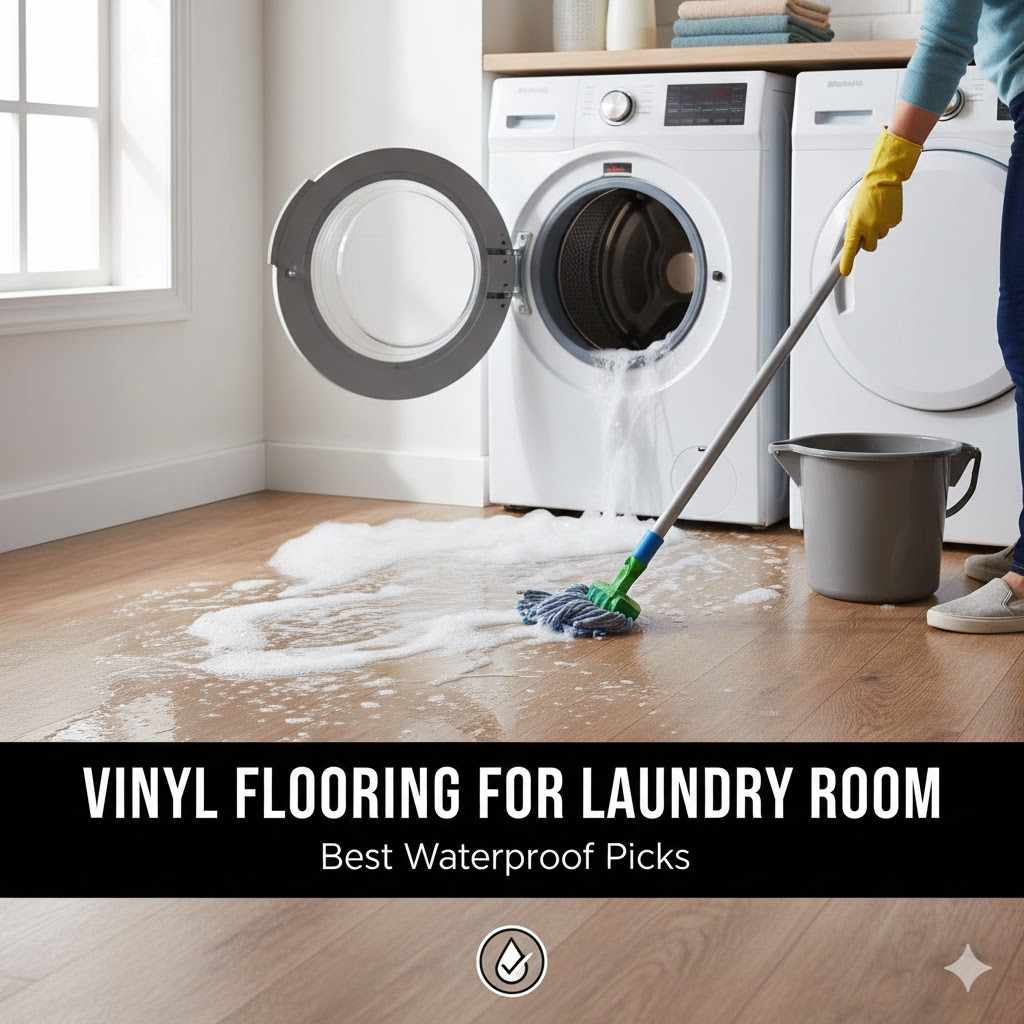
Vinyl Flooring for Laundry Room: Best Waterproof Picks
Choosing the right floor for your laundry room can feel tricky, especially if you’re new to home projects. Water spills and dampness are common in these spaces, so you need something tough and waterproof. This can make picking the best Vinyl Flooring for Laundry Room: Best Waterproof Picks a little confusing.
But don’t worry! We’re here to make it super simple. We’ll walk you through everything, step by step.
Let’s get your laundry room floor sorted out easily.
Finding the Best Vinyl Flooring for Laundry Room
Selecting the right flooring for a laundry room is key because this area sees a lot of activity and potential moisture. Water can splash from the washing machine, leaks can happen, and humidity is often higher. This means regular flooring might not hold up well, leading to damage and costly repairs.
The goal is to find a material that is both durable and looks good, standing up to the demands of a busy household. This section explores why vinyl is a top choice and what makes it stand out for such a functional space.
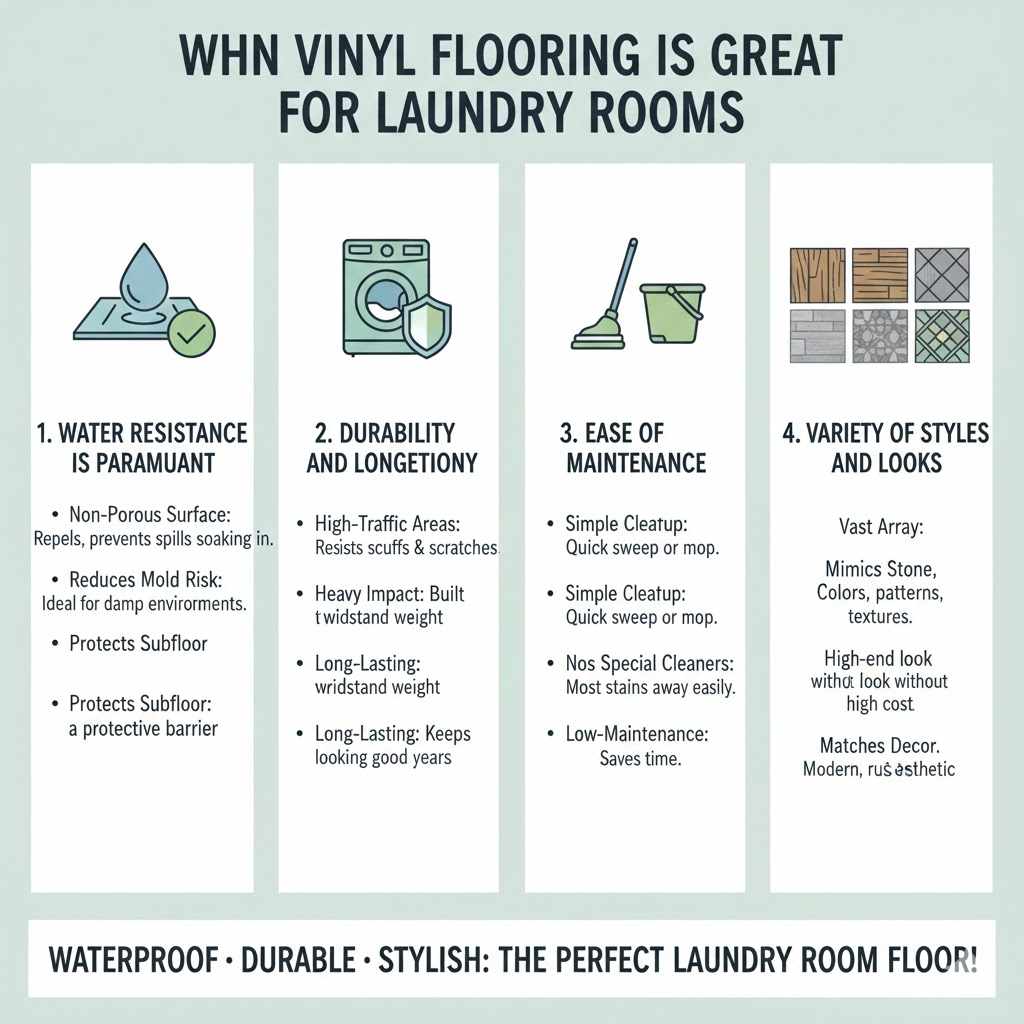
Why Vinyl Flooring is Great for Laundry Rooms
Vinyl flooring has become a favorite for many homeowners, and for good reason, especially when it comes to water-prone areas like laundry rooms. Its main appeal is its excellent water resistance. Unlike wood or laminate, vinyl doesn’t swell or warp when exposed to moisture, making it ideal for environments where spills are a regular occurrence.
This makes the process of choosing Vinyl Flooring for Laundry Room: Best Waterproof Picks much simpler.
- Water Resistance is Paramount
One of the biggest reasons vinyl shines in laundry rooms is its inherent ability to repel water. Unlike porous materials like carpet or even some hardwoods, vinyl has a non-porous surface. This means that water, soap suds, or cleaning liquids will sit on top rather than soaking into the material.
This drastically reduces the risk of mold and mildew growth, which are common problems in damp environments. Proper installation, including sealing seams, further enhances this waterproof quality, creating a protective barrier for your subfloor. This feature alone makes it a standout choice for anyone seeking a worry-free laundry room floor.
- Durability and Longevity
Laundry rooms are high-traffic areas. Washing machines can be heavy, and people are constantly moving in and out. Vinyl flooring is known for its toughness.
It can resist scuffs, scratches, and heavy impacts, meaning it will look good for many years. This durability means you won’t have to
- Ease of Maintenance
Cleaning up spills and messes in the laundry room is simple with vinyl floors. A quick sweep or mop is usually all that’s needed to keep them looking fresh. You don’t need special cleaners, and most stains wipe away easily.
This low-maintenance aspect is a huge plus for busy households. It means less time spent on chores and more time for other things. The smooth, non-porous surface prevents dirt and grime from getting embedded, making cleaning efficient and straightforward.
- Variety of Styles and Looks
Vinyl flooring isn’t just practical; it’s also stylish. It comes in a vast array of colors, patterns, and textures. You can find vinyl that mimics the look of natural stone, wood, or tile, giving your laundry room a high-end appearance without the high cost.
This flexibility allows you to match your new floor to your home’s existing decor. Whether you prefer a modern, minimalist look or something more rustic, there’s a vinyl option that will fit your aesthetic preferences perfectly.
Understanding Waterproof Vinyl Types
When people talk about waterproof vinyl flooring, they usually mean materials that can withstand submersion or heavy moisture without damage. For laundry rooms, this is non-negotiable. There are a few key types of vinyl flooring that offer superior water protection, each with slightly different characteristics.
Understanding these differences will help you pick the best fit for your needs and budget. This is a critical step in narrowing down your options for Vinyl Flooring for Laundry Room: Best Waterproof Picks.
Luxury Vinyl Tile (LVT)
Luxury Vinyl Tile, or LVT, is a popular choice because it looks like real tile or stone but offers better water resistance and comfort underfoot. It’s made in multiple layers, with a durable wear layer on top and a printed design layer that mimics natural materials. The core is often made of solid vinyl, which makes it inherently waterproof.
LVT comes in tiles or planks and can be installed using a click-lock system or adhesive. Its thickness and wear layer are key indicators of its durability. A thicker wear layer means it can handle more foot traffic and resist scratches better.
For laundry rooms, LVT offers both aesthetic appeal and practical, waterproof performance.
Luxury Vinyl Plank (LVP)
Similar to LVT, Luxury Vinyl Plank, or LVP, mimics the look of hardwood planks. It’s constructed with multiple layers, including a tough wear layer and a realistic wood-grain design. The primary difference is its form factor—it comes in planks rather than tiles.
LVP is also inherently waterproof due to its vinyl composition. It’s often installed using a click-lock system, which makes DIY installation more accessible. The thickness of the planks and the wear layer are important considerations for longevity and resistance to moisture and wear.
LVP provides the warm look of wood without the moisture-related concerns, making it an excellent option for laundry rooms.
Sheet Vinyl
Sheet vinyl is a more traditional type of vinyl flooring that comes in large rolls. It’s highly effective at preventing water from seeping through because it often covers the entire floor in one or a few large pieces, minimizing seams. Fewer seams mean fewer potential entry points for water.
Sheet vinyl is generally more budget-friendly than LVT or LVP. While it might not offer the same high-end aesthetic as LVT or LVP, its excellent water resistance and ease of installation make it a very practical choice for laundry rooms, especially for those on a tighter budget.
Key Features to Look For
When you’re shopping for vinyl flooring specifically for your laundry room, there are certain features that will ensure you get the best performance. These features go beyond just the type of vinyl and help you select a product built for demanding environments. Focusing on these details will help you make a smart investment for your home.
This is where you’ll refine your search for the perfect Vinyl Flooring for Laundry Room: Best Waterproof Picks.
Wear Layer Thickness
The wear layer is the transparent top coating on vinyl flooring that protects the decorative layer from scratches, scuffs, and stains. It’s typically measured in mils (thousandths of an inch). For a laundry room, where there might be dragging of laundry baskets or occasional dropped items, a thicker wear layer is essential for durability.
- 6-12 mil: Suitable for light residential use.
This range is generally considered adequate for areas that don’t experience heavy foot traffic or significant wear and tear. For a laundry room, this might be acceptable if the room is used infrequently or if heavy items are rarely moved. However, it’s on the lower end of what’s recommended for a space prone to moisture and potential impacts.
It might not offer the long-term resilience needed for a busy household’s laundry space.
- 12-20 mil: Recommended for moderate to heavy residential use.
This is a much better range for laundry rooms. A 12-20 mil wear layer provides excellent resistance to scratches, dents, and stains. It can handle the rigors of daily use, including the movement of appliances or heavy laundry baskets.
This thickness ensures that the flooring will maintain its appearance and structural integrity over time, making it a sound investment for a high-use area like the laundry room.
- 20+ mil: Ideal for commercial or extreme residential use.
Flooring with a wear layer of 20 mil or more is built to last in very demanding environments. If your laundry room sees exceptionally heavy use, or if you want the absolute longest-lasting and most robust option available, this thickness is the way to go. It offers superior protection against all forms of damage, ensuring your floor remains pristine even under extreme conditions.
Waterproof Core Construction
While most vinyl flooring is water-resistant on the surface, the core construction is what truly makes it waterproof. Look for products specifically advertised as having a 100% waterproof core. This typically means the core is made from solid vinyl or has a dense, composite material that does not absorb water.
- Solid Vinyl Core (SVC)
This type of core is made entirely of vinyl. It’s dense, heavy, and completely impervious to water. SVC flooring is very stable and doesn’t expand or contract significantly with changes in temperature or humidity.
This makes it an exceptional choice for areas prone to moisture, as water has no way to penetrate the core and cause damage or swelling.
- Stone Plastic Composite (SPC)
SPC flooring has a core made from a mixture of stone powder and plastic. This composition creates an extremely rigid and dense core that is completely waterproof and highly durable. SPC is known for its superior stability, resistance to dents, and ability to withstand heavy traffic.
It’s an excellent option for laundry rooms due to its robust, waterproof nature.
- Wood Plastic Composite (WPC)
WPC flooring features a core made from a blend of wood flour and plastic. While it is highly water-resistant, it might not be as completely “waterproof” in the strictest sense as SPC or solid vinyl, depending on the specific formulation and manufacturing process. However, most WPC products are designed for excellent performance in wet environments.
They are stable, comfortable underfoot, and generally a good choice for laundry rooms.
Installation Method
The way vinyl flooring is installed can also affect its waterproof capabilities. For laundry rooms, minimizing seams is crucial.
- Click-Lock Systems
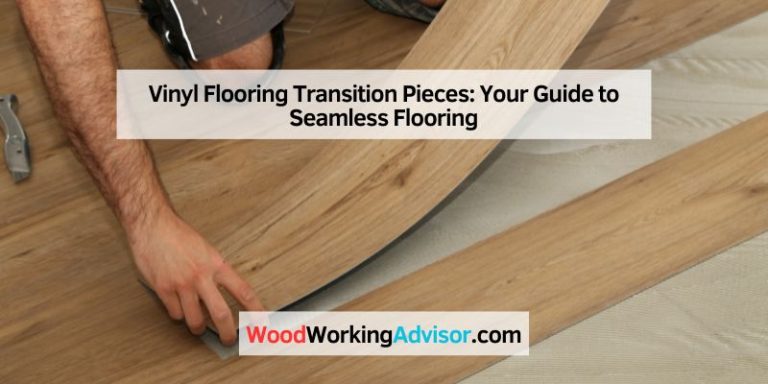
Many LVT and LVP products use a click-lock installation method. This involves planks or tiles that interlock with each other. While convenient, the seams between the pieces can be a potential weak point if not properly sealed.
Some high-quality click-lock systems are designed with tight-fitting joints that offer excellent water resistance, but it’s important to check product specifications.
- Glue-Down Installation
Glue-down vinyl flooring is attached directly to the subfloor with a strong adhesive. This method creates a very secure and watertight seal, as there are no gaps for water to penetrate. For a laundry room where maximum water protection is desired, glue-down vinyl can be an excellent, albeit more labor-intensive, option.
Floating floors are not attached to the subfloor; they lie on top and are held in place by their own weight and the interlocking system. While convenient, they can sometimes allow water to seep underneath if spills are not cleaned up quickly. However, with a good waterproof core and tight seams, they can still perform well in laundry rooms.
Top Waterproof Vinyl Flooring Picks for Laundry Rooms
Based on the features we’ve discussed, certain types and brands of vinyl flooring consistently stand out for their performance in laundry rooms. When you’re looking for the best Vinyl Flooring for Laundry Room: Best Waterproof Picks, consider these highly recommended options. They offer the perfect blend of durability, water resistance, and style.
Luxury Vinyl Plank (LVP) Brands
LVP is a favorite for laundry rooms due to its wood-like appearance and robust waterproof qualities. Many brands offer excellent LVP lines perfect for this space.
- Shaw Floorte
Shaw’s Floorte collection is renowned for its 100% waterproof construction and durable wear layers, often exceeding 20 mil. It features a rigid core that provides exceptional stability and resistance to dents and scratches. The designs are highly realistic, mimicking natural wood with impressive detail.
Floorte is a premium choice that offers peace of mind for laundry room installations, ensuring long-lasting beauty and performance against spills and heavy use.
- Coretec Plus
Coretec Plus is a pioneer in luxury vinyl flooring and is known for its rigid core technology that is completely waterproof. It features a thick wear layer and a durable attached cork underlayment for added comfort and sound dampening. The SPC core makes it very stable and resistant to temperature fluctuations.
Coretec Plus offers a wide range of styles that are perfect for recreating the look of hardwood in a practical, waterproof format ideal for moisture-prone areas.
- Mohawk SolidTech
Mohawk’s SolidTech line offers 100% waterproof LVP with a rigid core construction. It boasts impressive wear layers, often in the 20 mil range, making it highly resistant to scratches and dents. SolidTech floors are also easy to clean and maintain, perfect for busy households.
The realistic wood visuals provide an attractive finish that can elevate the look of any laundry room while providing the necessary protection against moisture.
Luxury Vinyl Tile (LVT) Brands
For those who prefer a tile look or a different format, LVT offers similar benefits with a distinct aesthetic.
- Armstrong Luxe Plank
Armstrong’s Luxe Plank collection offers a wide variety of LVT options, many of which are 100% waterproof. They feature strong wear layers and durable cores, making them suitable for high-traffic areas like laundry rooms. The designs range from realistic stone and tile looks to various wood patterns.
Luxe Plank is known for its ease of installation and its ability to withstand the demands of a busy home environment.
- Mannington Adura
The Adura line from Mannington provides high-quality LVT and LVP options that are waterproof and built for durability. They offer enhanced scratch resistance and are designed to mimic natural materials with exceptional realism. Mannington’s commitment to quality means their Adura floors can handle spills and moisture with ease, making them a reliable choice for laundry rooms where performance is critical.
Sheet Vinyl Recommendations
If budget is a primary concern or you want to minimize seams further, sheet vinyl is a fantastic option.
- Congoleum Sheet Vinyl
Congoleum offers a broad range of sheet vinyl flooring known for its excellent water resistance and affordability. Their products are designed to be durable and easy to clean, making them a practical choice for laundry rooms. With fewer seams compared to tile or plank options, sheet vinyl provides a robust barrier against moisture, ensuring your subfloor remains protected.
Installation Considerations for Waterproof Vinyl
Proper installation is just as important as choosing the right waterproof vinyl flooring. Even the best materials can fail if installed incorrectly, especially in a moisture-prone area like a laundry room. Taking the time to ensure a correct installation will maximize the longevity and performance of your new floor.
This is a crucial step in getting the best results from your Vinyl Flooring for Laundry Room: Best Waterproof Picks.
Subfloor Preparation
Before laying any vinyl flooring, the subfloor must be clean, dry, and level. Any bumps, cracks, or debris can affect the final look and the integrity of the floor. For glue-down installations, a perfectly smooth surface is essential.
For click-lock systems, a level subfloor prevents stress on the locking mechanisms.
- Cleaning the Subfloor
Thoroughly sweep and vacuum the subfloor to remove all dust and loose particles. Any remaining dirt can hinder adhesive bond or create unevenness.
- Repairing Imperfections
Fill any cracks or holes with a suitable patching compound. Sand down any high spots to ensure a smooth, even surface across the entire area.
- Ensuring Dryness
Moisture in the subfloor can lead to mold and mildew issues, even with waterproof flooring. If you suspect moisture problems, use a moisture meter to check levels and address any dampness before proceeding with installation.
Sealing Seams and Edges
While the vinyl itself is waterproof, the seams where planks or tiles meet can be entry points for water if not properly sealed. For click-lock systems, ensure the joints are tight and consider using a seam sealer designed for vinyl flooring.
- Using Seam Sealer
Specialized seam sealers are available that create a flexible, waterproof barrier over the joints of click-lock vinyl. This is an extra layer of protection for laundry rooms, ensuring that any spills don’t seep through the seams and into the subfloor.
- Proper Adhesive Application (Glue-Down)
For glue-down vinyl, using the correct type and amount of adhesive is critical. Follow the manufacturer’s instructions precisely to ensure a strong, watertight bond across the entire surface.
Around Appliances and Fixtures
Pay special attention to areas around washing machines, dryers, and utility sinks. These are prime spots for leaks and spills. Ensure the vinyl is cut precisely to fit and sealed properly at the edges where it meets walls or cabinets.
- Cutting and Fitting
Accurate cuts are important to minimize gaps. For appliances, leave a small expansion gap around the perimeter, but make sure it is properly sealed.
- Using Trim and Caulking
After installation, use waterproof caulk to seal any remaining gaps between the flooring and baseboards or walls, especially around plumbing fixtures. This creates a complete waterproof barrier.
Maintenance and Care for Your Laundry Room Floor
Even the most durable and waterproof flooring needs proper care to maintain its appearance and function. Regular cleaning and prompt attention to spills will ensure your vinyl floor looks great and performs well for years to come. This ongoing care is key to enjoying your Vinyl Flooring for Laundry Room: Best Waterproof Picks.
- Daily Cleaning
Sweep or vacuum your vinyl floor regularly to remove dust, dirt, and debris. This prevents scratching from grit that can be tracked in. Use a vacuum with a soft brush attachment to avoid damaging the surface.
Wiping Up Spills
Clean up any spills immediately. Even though the vinyl is waterproof, prolonged exposure to certain liquids (like harsh chemicals) can sometimes affect the finish over time. A damp cloth or mop is usually sufficient.
- Deep Cleaning
For deeper cleaning, use a pH-neutral cleaner specifically designed for vinyl flooring or a mild dish soap diluted in water. Avoid abrasive cleaners or harsh chemicals, as they can dull the finish or damage the wear layer.
Case Studies and Real-Life Examples
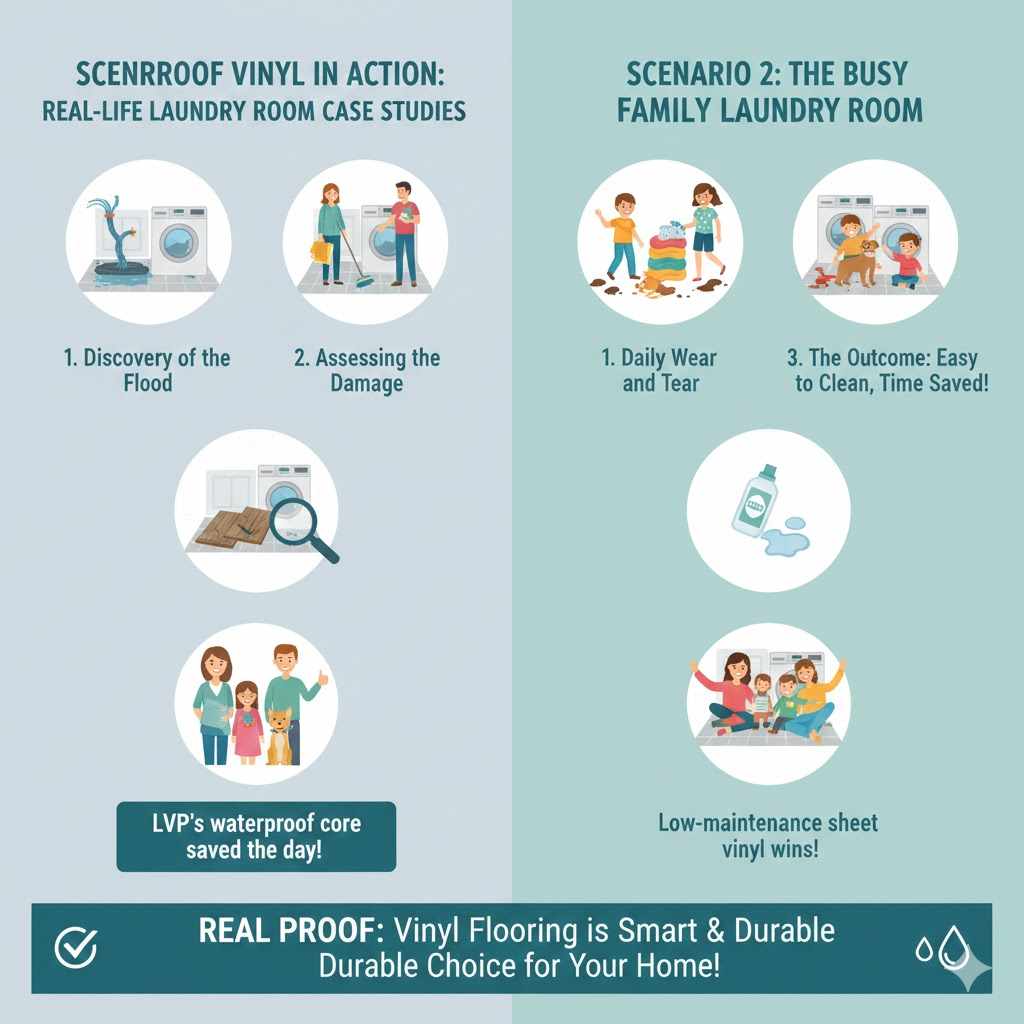
Seeing how vinyl flooring performs in real homes can be very helpful when making your decision. These examples illustrate the benefits of choosing waterproof vinyl for laundry rooms and the practical outcomes users have experienced. They provide tangible proof of why this is a smart choice for your home.
Scenario 1: The Accidental Flood
The Miller family has a basement laundry room with LVP flooring. One night, their washing machine hose burst, flooding the room with several inches of water. They were worried about extensive damage to their subfloor and the flooring itself.
- Discovery of the Flood
The family woke up to the sound of rushing water. Upon investigation, they found water pooling around the washing machine.
- Assessing the Damage
They immediately shut off the water and began the cleanup. To their surprise, after drying everything off, the LVP flooring showed no signs of swelling or warping.
- The Outcome
Because their LVP had a waterproof core and was installed with tight seams, the water did not penetrate the planks. They were able to dry the floor completely, and it looked as good as new, saving them from costly repairs and replacements. This reinforced their confidence in their choice of waterproof flooring.
Scenario 2: The Busy Family Laundry Room
The Chen family has a busy household with three children and a dog. Their laundry room is located on the main floor and is used daily. They recently installed a durable sheet vinyl floor.
- Daily Wear and Tear
- With constant foot traffic, laundry baskets being dragged, and occasional dropped detergent bottles, the vinyl floor faces daily challenges.
- Spills and Messes
- Kids sometimes track mud into the laundry room, and spills from the washing machine are common. The dog also occasionally has accidents.
- The Result
- The sheet vinyl has held up exceptionally well. It’s easy to clean, resistant to scratches, and the waterproof nature means any spills are quickly wiped away without causing damage. The family appreciates how low-maintenance the floor is, allowing them more time for other activities.
Frequently Asked Questions
Question: Is all vinyl flooring waterproof?
Answer: Not all vinyl flooring is completely waterproof. While many vinyl products are water-resistant on the surface, look for options specifically labeled as “100% waterproof” with a waterproof core for laundry room use.
Question: What is the best type of waterproof vinyl for a laundry room?
Answer: Luxury Vinyl Plank (LVP) and Luxury Vinyl Tile (LVT) with a rigid core (SPC or WPC) and a thick wear layer (12 mil or higher) are excellent choices. Sheet vinyl also offers great waterproof protection and is often more budget-friendly.
Question: Do I need to seal the seams on waterproof vinyl flooring?
Answer: For maximum protection in a laundry room, it’s highly recommended to seal the seams, especially with click-lock LVP or LVT. This provides an extra barrier against moisture seeping into the subfloor.
Question: Can I install waterproof vinyl flooring myself?
Answer: Yes, many waterproof vinyl options, particularly click-lock LVP and LVT, are designed for DIY installation. However, proper subfloor preparation is crucial for a successful and waterproof outcome.
Question: How thick should the wear layer be for laundry room vinyl?
Answer: For a laundry room, a wear layer of at least 12 mil is recommended for good durability. For heavy use, 16-20 mil or higher is ideal to resist scratches and scuffs.
Summary
Choosing waterproof vinyl flooring for your laundry room is a smart move. By focusing on LVP, LVT, or sheet vinyl with a waterproof core and a good wear layer, you ensure durability and protection. Proper installation, including sealing seams, is key.
Enjoy a beautiful, easy-to-clean, and worry-free laundry space.