What Nails to Use for Sawtooth Hangers (Frame vs Wall Nails)
A sawtooth hanger uses two different nails: small flat-headed hanger nails to fasten it to the back of a wood frame, and a headed nail or picture hook in the wall to hold the frame. A brad or finish nail in the wall is the classic failure, since the teeth need a head to catch. This guide covers both nail sizes, wall types, weight limits, and the mistakes that drop frames.
Which Nails Do Sawtooth Hangers Use?
Best Sawtooth Hanger Nails Pick | |
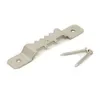 |
Honbay 50-Pack Double-Hole Sawtooth Hangers with 100 Nails Zinc-plated steel hangers about 1.8 inches (46 mm) long, packed with 100 matching hanger nails about 9/16 inch (14 mm) long, so the frame-side fasteners are already sized to the hanger.
|
As an Amazon Associate we earn from qualifying purchases. | |
Most confusion about this topic comes from one word doing two jobs. A sawtooth hanger has two fasteners in play, and they are not interchangeable.
| Job | What to use | Why it matters |
|---|---|---|
| 1. Attach the hanger to the frame | The small flat-headed nails packed with the hanger (often about 9/16 inch long), or short wood screws | Sized to the hanger holes, and short enough not to poke through the frame face |
| 2. Hold the frame on the wall | A headed nail or small picture hook, set at 10 to 20 degrees upward with about 1/8 inch of head showing | The head is what the sawtooth notches catch. A headless brad gives them nothing to grip |
If you are still deciding whether a sawtooth hanger is the right hardware at all, our guide on how a sawtooth hanger works and when to use one covers the hanger itself. This page is only about the nails.
Nails for Attaching the Hanger to the Frame
Use the nails or screws that came with the hanger. They are matched to the hole size and length, which is why loose hardware-store nails often go wrong: a nail that is too fat splits the frame rail, and one that is too long can come out the front face of a thin frame.
Flat-Headed Hanger Nails
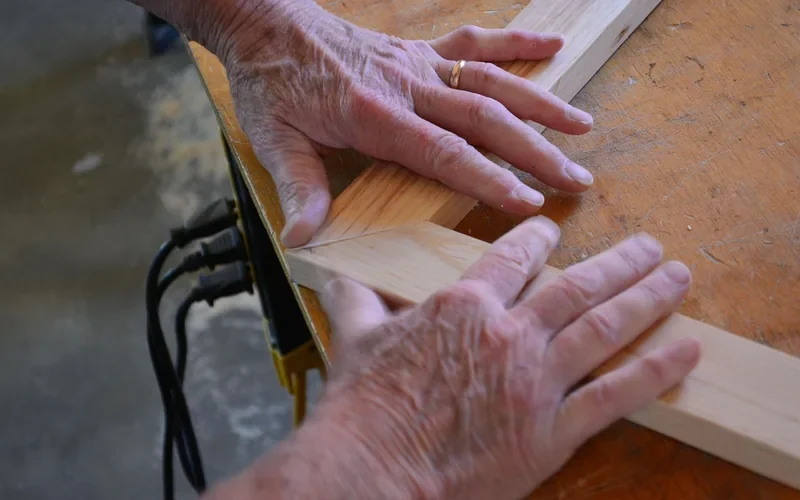
These are the standard choice for softwood and most painted wood frames. The flat head sits flush against the hanger ear and pins it down. Hanger nails on common double-hole hangers run around 9/16 inch (14 mm) long, so they suit a back rail that is at least about 3/4 inch thick. On a thinner rail, measure first, because the nail must stay inside the wood.
Short Wood Screws
Switch to screws for oak, maple, or other hardwood frames, and for any large hanger. Hammering a nail into dense hardwood bends it or splits the rail. Drill a pilot hole slightly narrower than the screw shank, then drive the screw until the hanger sits flat without crushing the wood. Screws also let you back a hanger out and re-center it if you get it wrong.
Nailless Hangers
Nailless sawtooth hangers have two sharp prongs that you tap into the wood with a hammer, and they suit lightweight frames only. They need solid wood to bite into, so they are a poor match for hollow or composite frames. Because the prongs are all that holds the hanger, stay on the light side of the rating.
Nails for the Wall: Match the Fastener to the Wall
The wall nail carries the whole load, so this is where the wrong choice does real damage. According to Picture Hang Solutions, a headed nail is safer than a brad because the head acts as a stopper that keeps the frame from lifting off. Set it at 10 to 20 degrees upward and leave about 1/8 inch of the head exposed.
| Wall type | Best fastener | Notes |
|---|---|---|
| Drywall, light frame | Headed picture nail or small picture hook | Fine without a stud for a light frame; the hook angles the load into the board |
| Drywall, heavier frame | Picture hook rated well above the frame weight, or a screw in a drywall anchor | Ratings are per hook; do not stack hooks to add capacity |
| Wood stud | Wood screw or nail driven into the stud | Strongest hold; pre-drill screws and avoid over-tightening |
| Plaster | Picture hook with a masking-tape X to limit cracking, or a screw into a stud | Plaster crumbles under a bare nail, so go slowly |
| Brick or concrete | Masonry anchor or masonry screw | Needs a drill and a masonry bit; a regular nail will not hold |
If a frame is too heavy for a single nail or hook, stop stacking hardware and change the system. A wood French cleat screwed into studs spreads the load along the full width of the frame.
How Much Weight Can a Sawtooth Hanger Hold?
Weight ratings depend on the hanger size and the manufacturer, so treat these as ballpark ranges from published product listings and check your own packaging.
| Hanger size | Typical rating | Use it for |
|---|---|---|
| Small (about 1-5/8 inch) | Up to about 7 lb | Small prints and photo frames |
| Standard (about 1-7/8 inch) | About 10 to 15 lb | Mid-size frames and canvases |
| Heavy-duty | Up to about 25 lb | Larger frames with glass |
Two rules matter more than the numbers. First, ratings are not cumulative, so using two small hangers does not double the rating of one. Second, for frames wider than about 24 inches, use two hangers to keep the frame from swinging and tilting. Weigh the frame with the glass and matting in it, and stay well under the rating.
How to Attach a Sawtooth Hanger and Hang the Frame
- Find the center: Measure the width of the top back rail and mark the center with a pencil.
- Hold the hanger in place: Center it on the mark with the teeth facing up, and use a strip of tape to keep it from sliding.
- Fasten it: Drive the supplied hanger nails or short screws through both ear holes, pre-drilling first in hardwood.
- Set the wall nail: Mark the wall, then drive a headed nail or hook in at 10 to 20 degrees upward, leaving about 1/8 inch of head showing.
- Hang and level: Seat the center tooth over the nail and check the frame with a level. Shift to a neighboring tooth to fine-tune.
If you build your own frames, the rail thickness you pick sets your nail length, so decide on hardware before you cut. Our picture frame building guide covers rabbet and rail sizing.
Common Sawtooth Hanger Nail Mistakes
- Using a brad or finish nail in the wall. With no head, the teeth slide over it. Always use a headed nail or a hook.
- Fastening the hanger to the backing paper or cardboard. It rips out. The hanger must go into the frame wood itself.
- Driving the wall nail straight in. A nail set at a slight upward angle locks the frame in, while a level nail lets it lift off.
- Nails that are too long for a thin frame. They pop out of the front face. Measure the rail thickness first.
- Ignoring the weight rating. A hanger is only as strong as its weakest link, and that is often the wall fastener in drywall.
- Off-center hangers. An off-center hanger tilts the frame every time, no matter how level your nail is.
Frequently Asked Questions About Sawtooth Hanger Nails
What nails do you use for sawtooth hangers?
Use the small flat-headed hanger nails packed with the hanger to attach it to a wood frame, and a headed nail or picture hook in the wall to hang the frame. Never use a brad or finish nail in the wall, because it has no head to keep the teeth from slipping off.
Can you use a brad or finish nail with a sawtooth hanger?
Not in the wall. A brad or finish nail has no real head, so the hanger teeth can slide right over it. On the frame side, a brad is a weak substitute for the supplied hanger nails. Use a headed nail in the wall and the supplied nails or short screws on the frame.
What size nail do you hang a sawtooth hanger on?
Use a headed nail or small picture hook sized for your frame weight. Drive it in at a slight upward angle of 10 to 20 degrees and leave about 1/8 inch of the head exposed so the tooth can catch it. For heavier frames, use a picture hook rated well above the frame weight.
Do sawtooth hangers need screws instead of nails?
Not usually. Most sawtooth hangers ship with small nails that work fine in softwood frames. Switch to short screws when the frame is hardwood, the rail is thin enough to split, or the hanger is a large heavy-duty size. Drill a small pilot hole first in hardwood.
How much weight can a sawtooth hanger hold?
It depends on the size. Small hangers are often rated near 7 lb, standard hangers around 10 to 15 lb, and heavy-duty versions up to about 25 lb. Ratings are not cumulative, so check the packaging and hang heavier frames with D-rings and wire or a French cleat.
The Short Version
Use the small hanger nails or short screws to fasten the hanger to the frame, and a headed nail or picture hook, angled upward, in the wall. Match the wall fastener to the wall type, stay under the hanger’s weight rating, and move to a French cleat when a frame gets heavy.
Sponsored / affiliate links. As an Amazon Associate I earn from qualifying purchases. I may earn additional commission from eligible campaigns.