What Size Miter Saw Cuts a 6×6? (12-Inch Depth Explained)
A 6×6 post actually measures 5.5 by 5.5 inches, and only a 12-inch sliding compound miter saw has enough blade depth to cut through it in a single pass — a 10-inch saw maxes out around 3.5 inches. Use the wrong saw and you’re stuck flipping the stock for a second cut that rarely lines up perfectly. This guide covers exact blade-depth numbers by saw size, the flip-cut method, and non-miter-saw alternatives.
How Big Is a 6×6 Post, Really?
Best 6×6 Post Miter Saw Pick
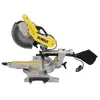
DEWALT DWS779 12-Inch Sliding Compound Miter Saw
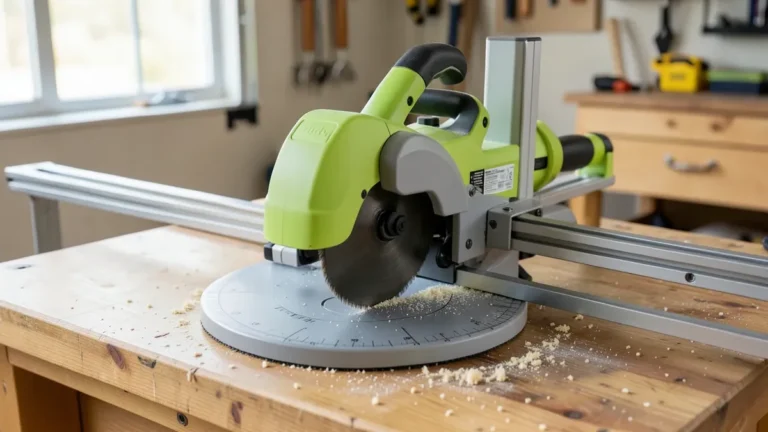
A sliding rail extends the 12-inch blade’s reach to roughly 6.75 inches deep — enough to clear a 5.5-inch 6×6 without flipping the stock.
- Best for: Single-pass cuts through 6×6 posts and deck beams
- Why we picked it: 12-inch sliding compound design reaches roughly 6.75 inches of vertical depth, enough for a 5.5-inch-thick 6×6
- Main drawback: Bulkier footprint than a non-sliding saw, so it needs more bench or table space
Compare more 6×6 post miter saw options
 Option 1 DEWALT DWS715 12″ Compound Miter Saw
|
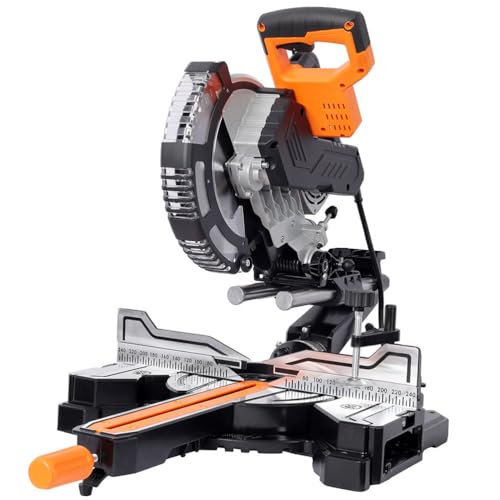
 Option 2 VEVOR 12″ Sliding Compound Miter Saw
|
 Option 3 SKIL 10″ Dual Bevel Sliding Miter Saw
|
As an Amazon Associate we earn from qualifying purchases.
A “6×6” is a nominal size, not the actual measurement. Under the American Softwood Lumber Standard (PS 20), a nominal 6×6 is milled down to 5.5 by 5.5 inches once it’s surfaced and dried — the same nominal-vs-actual gap that shrinks a “2×4” to 1.5 by 3.5 inches. That 5.5-inch actual thickness is the number that matters when you’re checking whether a saw can clear the post in one pass, not the “6” on the lumber tag.
This is also why so many woodworkers get surprised mid-cut: a saw spec sheet that says “6-1/2 inch capacity” sounds like plenty for a 6×6, but that number is usually measured against a true 6-inch block, not a real-world 5.5-inch post. Always check a saw’s rated depth against 5.5 inches, not 6.

Miter Saw Blade Depth by Size
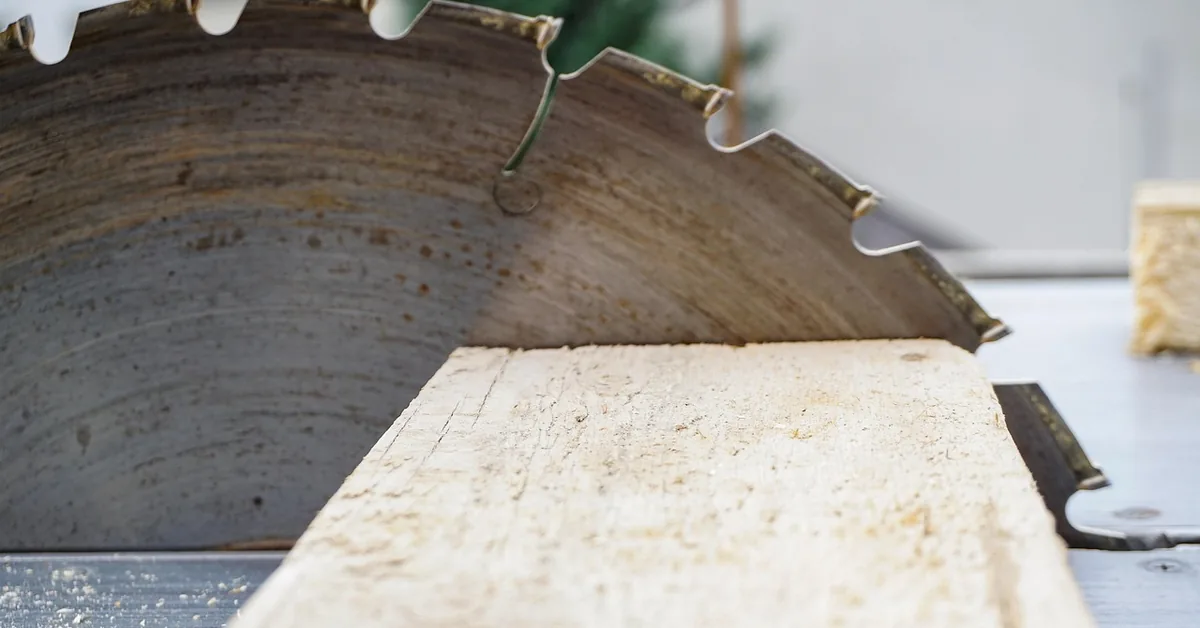
Blade depth — not blade diameter alone — decides whether a miter saw clears a 6×6 in one pass. A sliding compound saw’s rail lets the blade travel forward through the stock, adding real depth that a fixed-head saw of the same blade size doesn’t have.
| Saw Type | Rated Vertical Depth | Clears a 6×6 (5.5″) in One Pass? | Best For |
|---|---|---|---|
| 10″ non-sliding compound | ~3.5″ | No — needs flip cut | Trim, 2x lumber |
| 12″ non-sliding compound | ~4″–4.5″ | No — needs flip cut | 4×4 posts, thick 2x stock |
| 10″ sliding compound | ~4.5″–5″ | Borderline — usually still needs a flip | Crown molding, wide boards |
| 12″ sliding compound | ~5.5″–6.75″ | Yes — single pass | 6×6 posts, deck beams |
If you’re deciding between a 10-inch and 12-inch saw for reasons beyond just 6×6 posts, our full 10-inch vs. 12-inch sliding miter saw comparison breaks down crosscut capacity, price, and portability side by side.
How to Cut a 6×6 with a Miter Saw (Flip-Cut Method)
If your saw doesn’t reach 5.5 inches deep — which covers every 10-inch saw and most non-sliding 12-inch saws — you’ll need to cut from both sides and meet in the middle. Here’s how to do it without ending up with a stepped or offset joint.
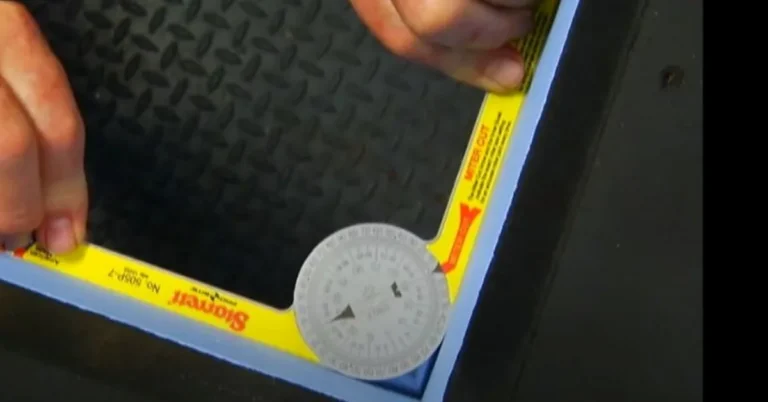
- Mark all four faces: Square a line around all four faces of the post at the cut point with a speed square, so the lines match up exactly when you flip it.
- Set the saw and clamp the post: Set the miter saw to 0 degrees for a square cut (or your target angle), and clamp the post firmly against the fence.
- Make the first cut: Lower the blade through the near face, cutting only as deep as the blade reaches — about 3.5 to 4.5 inches depending on your saw.
- Flip the post 180 degrees: Rotate the post using the marked lines as your guide, keeping the same reference face against the fence so the angle stays consistent.
- Complete the cut: Lower the blade through the remaining thickness, following the marked line exactly so both cut faces stay flush.
- Clean up the joint: Check where the two cuts meet for a step or ridge, and knock down any high spot with a sanding block or hand plane.
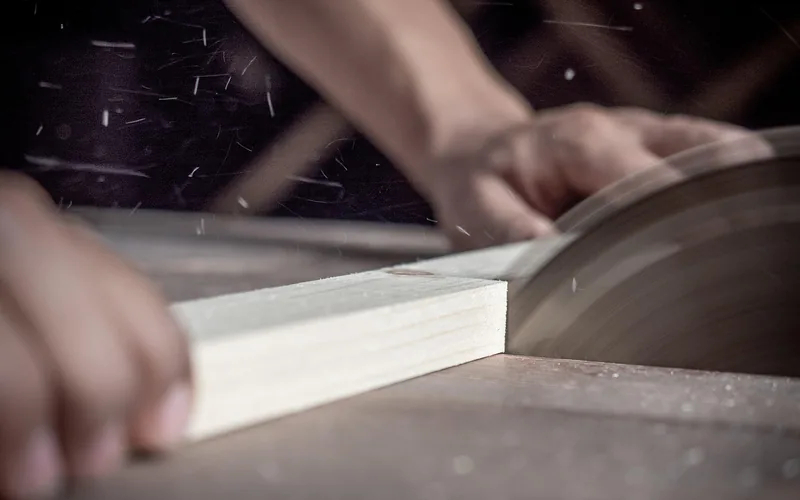
In our shop, the two flip-cut mistakes that ruin a 6×6 joint are skipping the four-face reference line and rotating the post the wrong direction — both leave a visible step where the cuts don’t quite meet. Take the extra thirty seconds to mark all four faces before the first cut. — Our team
Cutting a 6×6 at a 45-Degree Angle
Mitered 45-degree cuts on a 6×6 — for a post cap, a pergola corner, or a decorative fence post top — follow the same flip-cut logic, but the marked line runs at an angle instead of straight across. Set the saw’s miter angle to 45 degrees, mark the angled line on all four faces using a combination square, and cut from one face, flip on the reference line, then finish from the opposite face. Because the cut is angled, double-check that the marked lines actually meet at the same point on all four faces before you cut — a line that’s off by even 1/8 inch on one face throws the whole miter out of square.
Can You Cut a 6×6 Post with a Circular Saw Instead?
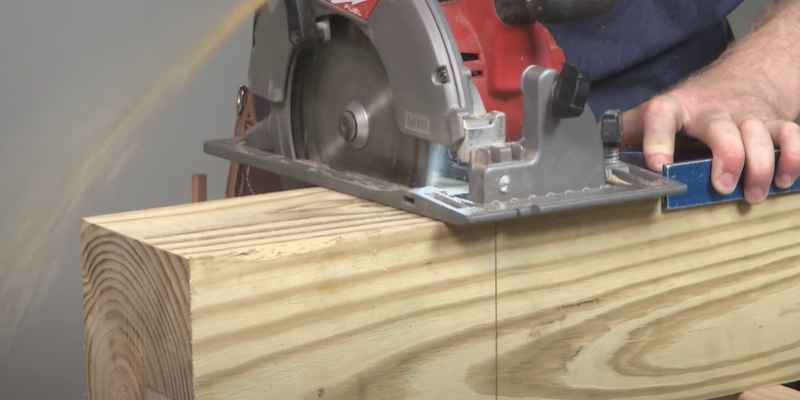
Yes — a circular saw is a common alternative for 6×6 posts, especially in-place fence and deck posts where a miter saw can’t be brought to the cut. A standard 7-1/4-inch circular saw cuts about 2.5 inches deep, so you’ll score all four faces of the post and meet in the middle, keeping the saw’s base plate flush against each face so the four cuts line up. It takes longer than a single miter saw pass and the joint is harder to keep perfectly flush, but it’s the practical choice when the post is already set in concrete or too long to fit under a miter saw.
Common Mistakes When Cutting a 6×6 Post
- Using a low-tooth-count blade: A framing blade with 24-32 teeth tears pressure-treated 6×6 stock instead of slicing it. Switch to a 60-80 tooth combination or fine-crosscut blade for a clean, splinter-free face.
- Trusting the “6-inch” label: Measure the actual post before assuming a saw’s rated capacity clears it — see the blade-depth table above.
- Not supporting both ends of the post: An unsupported post can rock or bind against the blade mid-cut, which is how kickback happens. Support both sides at the saw’s table height before you start.
- Skipping the reference mark before flipping: Without a squared line on all four faces, the two halves of a flip cut almost never line up flush.
Frequently Asked Questions
Can a 10-inch miter saw cut a 6×6?
Yes, but not in a single pass. A 10-inch miter saw’s blade only reaches about 3.5 inches deep, well short of a 6×6’s actual 5.5-inch thickness. You’ll need to cut partway through, flip the post 180 degrees using a squared reference mark, and finish the cut from the other side.
How deep does a 12-inch miter saw cut?
A standard non-sliding 12-inch miter saw cuts about 4 to 4.5 inches deep — still short of a 6×6’s 5.5-inch actual thickness. Only a 12-inch sliding compound miter saw, which reaches roughly 5.5 to 6.75 inches deep, can get through a 6×6 in one pass.
What is the actual size of a 6×6 post?
A nominal 6×6 measures 5.5 by 5.5 inches after milling and drying, per the American Softwood Lumber Standard (PS 20). The “6×6” label refers to the rough-cut size before the wood is surfaced smooth on all four sides.
Can you cut a 6×6 post with a circular saw?
Yes. A 7-1/4-inch circular saw cuts about 2.5 inches deep, so you’ll score all four faces of the post and meet in the middle, keeping the saw’s base plate flush against each face so the four cuts line up.
Do you need a sliding miter saw to cut a 6×6 in one pass?
Yes. A non-sliding 12-inch miter saw’s fixed pivot only reaches 4 to 4.5 inches deep. The sliding mechanism lets the blade travel forward through the stock, adding roughly 1.5 to 2 inches of extra depth — enough to close the gap to a 6×6’s 5.5-inch thickness.
Conclusion
For a single clean pass through a 6×6 post, a 12-inch sliding compound miter saw is the only size that reliably clears the actual 5.5-inch thickness. A 10-inch or non-sliding 12-inch saw can still do the job with the flip-cut method — just mark all four faces first so the two halves meet flush. If you’re weighing a broader saw purchase beyond this one cut, our guide to choosing the right miter saw size and our blade tooth-count comparison cover the rest of the decision.
Dealing with a cracked or damaged 6×6 post instead of cutting a fresh one? See our guide on whether 6×6 post cracks are normal and when to worry.
Browse our full miter saw hub for more sizing, blade, and buying guides.
Sponsored / affiliate links. As an Amazon Associate I earn from qualifying purchases. I may earn additional commission from eligible campaigns.




![Chicago Electric vs Admiral Miter Saw: [Know Before You Choose]](https://cdn.woodworkingadvisor.com/2022/11/Chicago-Electric-vs-Admiral-Miter-Saw-_Know-Before-You-Choose_-768x384.webp)