Ash Wood: Properties, Types & Uses (White vs. Swamp Ash)
Ash wood rates about 1,320 lbf on the Janka scale — strong and shock-resistant, yet flexible enough to bend without breaking, unlike denser oak. But white ash (dense, upland-grown) and swamp ash (lighter, wetland-grown) behave very differently, and using the wrong one wastes money on a guitar body or a workbench. This guide covers ash wood’s properties, white vs. swamp ash, joinery, staining, and the ash dieback crisis reshaping UK supply. (For the hands-on side of cutting, sanding, and finishing ash, see our ash workability guide.)
Quick Answer
Ash is a pale, straight-grained hardwood (Janka 1,320 lbf) valued for strength, flexibility, and easy joinery. White ash — grown in normal, well-drained soil — is denser and goes into tool handles, flooring, and bats. Swamp ash, cut from ash trees grown in wet lowland ground, is lighter and prized for electric guitar bodies. Ash takes stain well, but it is not naturally rot-resistant outdoors.
What Is Ash Wood?
Best Ash Wood Stain Pick
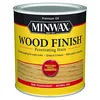
Minwax Wood Finish, Natural, 1 Quart – $13.19
An oil-based penetrating stain that enhances ash’s natural grain rather than masking it — matches the light-toned finish most ash furniture and flooring projects call for.
- Best for: Keeping ash’s pale color while still enhancing the grain
- Why we picked it: Penetrates evenly once conditioner is applied, matching the exact steps above
- Main drawback: Won’t hide blotching if you skip the conditioner step
Compare more ash-staining options
 Option 1 Varathane Pre-Stain Wood Conditioner – $18.29
|
 Option 2 Minwax Gel Stain, Coffee – $19.99
|
 Option 3 Minwax Polyurethane, Clear Satin – $8.99
|
As an Amazon Associate we earn from qualifying purchases.
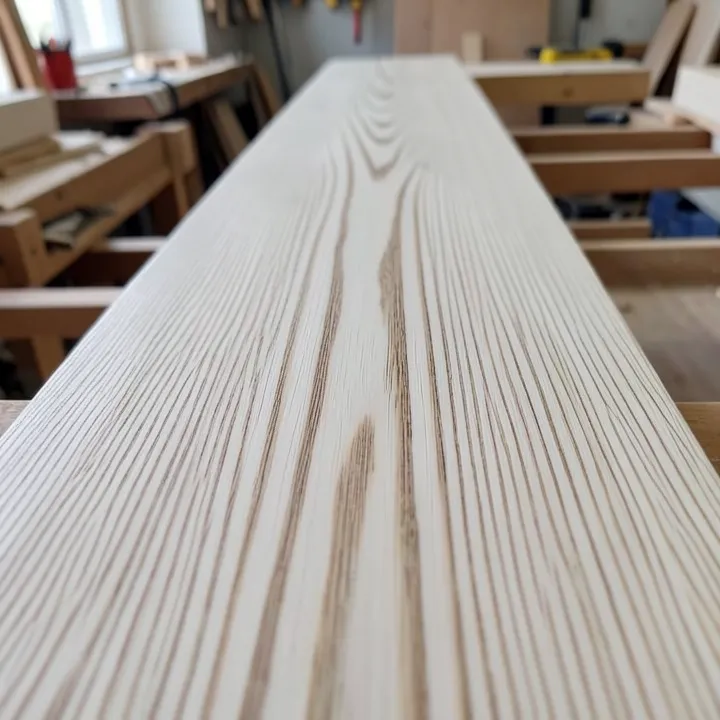
Ash is a North American and European hardwood from the genus Fraxinus. White ash (Fraxinus americana) is the species most commonly sold as lumber — a tall, fast-growing tree valued for a rare combination most hardwoods don’t offer: it is both hard and springy at the same time. Green ash and black ash are close relatives used in similar ways, though slightly softer.
“Swamp ash” is not a separate species. It is wood cut from ash trees (usually white or green ash) that grew in wet, poorly drained bottomland instead of normal upland soil. Waterlogged roots slow growth and trap air pockets in the wood, producing a lighter, more porous board with the same straight grain. That difference matters enough that it gets its own section below.
Properties of Ash Wood
Hardness and Janka Rating
White ash scores 1,320 lbf on the Janka hardness test, the industry-standard measure of how much force it takes to embed a steel ball halfway into a wood sample. That puts it close to red oak (1,290 lbf) and just under white oak (1,360 lbf) and hard maple (1,450 lbf) — hard enough for flooring and heavy furniture, but still workable with standard shop tools rather than fighting you at every cut.
| Wood | Janka Hardness (lbf) | Best For |
|---|---|---|
| Swamp Ash | ~900–1,000 (varies by lot) | Guitar bodies, lightweight panels |
| White Ash | 1,320 | Tool handles, bats, flooring |
| Red Oak | 1,290 | Cabinetry, furniture |
| White Oak | 1,360 | Outdoor furniture, flooring |
| Hard Maple | 1,450 | Butcher blocks, high-wear flooring |
Strength, Weight and Shock Resistance
Ash’s real specialty is shock resistance — its ability to absorb a sudden sharp impact without splintering. That single property is why it was the standard baseball bat wood for most of the 20th century and is still the default for axe, hammer, and shovel handles. White ash weighs roughly 41 lbs per cubic foot when dry (specific gravity ~0.65), noticeably heavier than swamp ash from the same species. For the full breakdown by species (white, green, and black ash) plus how moisture content changes these numbers, see our ash wood density guide.
Grain, Color and Appearance
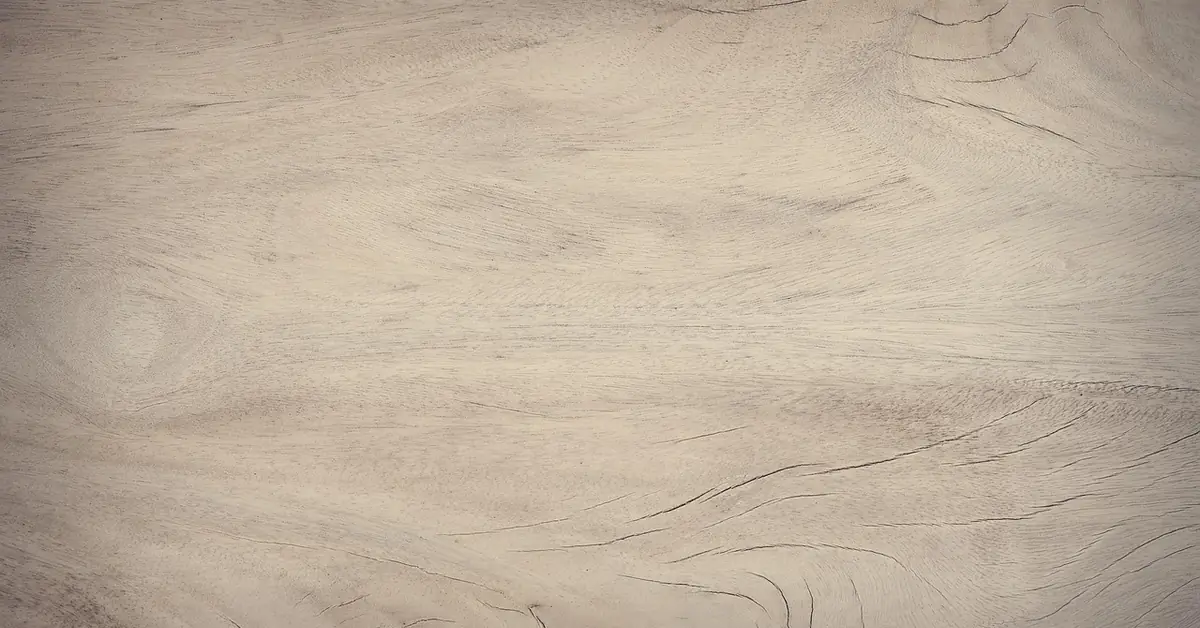
Ash heartwood runs pale cream to light brown, often with a faint pink or olive cast; the grain is coarse, straight, and strongly ring-porous — the same open-pore structure that lets it take stain deeply but unevenly without prep (more on that below).
Is Ash Wood Rot-Resistant? (Correcting a Common Claim)
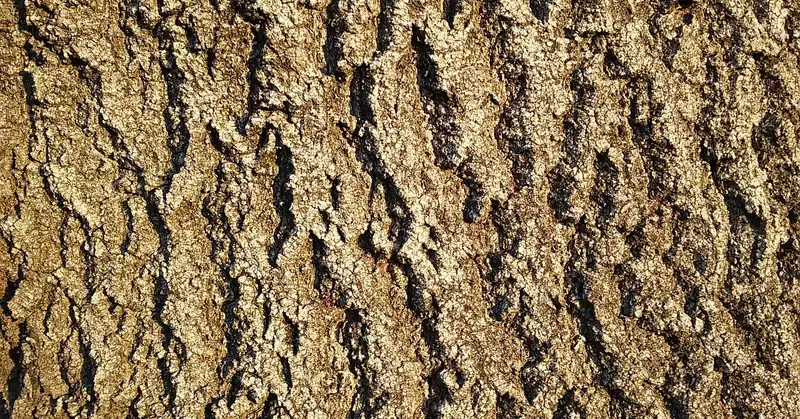
Several older ash-wood guides claim it resists decay outdoors — that’s not accurate. Ash heartwood is rated non-durable to only slightly durable against fungal decay and insect attack, in the same tier as soft maple, not anywhere near true rot-resistant species like white oak, black locust, or cedar. Ash used outdoors or in ground contact needs a sealant or preservative treatment; it will not hold up on its own the way the older claim implies.
White Ash vs. Swamp Ash: What’s the Difference?
White ash and swamp ash can come from the exact same species — the difference is where the tree grew, not its genetics. A white ash grown in normal, well-drained upland soil packs on dense, tight growth rings. The same species grown with its roots sitting in swamp water for years grows faster and lighter, with wider pores and noticeably less weight per board foot.
| Property | White Ash (Upland) | Swamp Ash (Wetland) |
|---|---|---|
| Weight | Heavier, ~41 lbs/ft³ | Lighter, often 30–35 lbs/ft³ |
| Hardness | 1,320 lbf | Lower, more variable by log |
| Grain | Tight, dense growth rings | Wider, more open pores |
| Tone/Resonance | Less relevant for instruments | Bright, resonant — prized by luthiers |
| Typical Use | Tool handles, bats, flooring, furniture | Electric guitar/bass bodies, lightweight panels |
| Availability | Common, stable pricing | Increasingly scarce and pricier |
Swamp ash became the classic Fender Telecaster and Stratocaster body wood in the 1950s because its light weight and open cell structure produce a bright, resonant tone without the heft of a dense hardwood. It has gotten harder to source in recent years — ash dieback and the emerald ash borer (more on both below) are killing swamp-grown ash trees before they reach harvestable size, and wetland logging restrictions limit access to what remains.
Ash Wood Joinery and Workability
Ash is one of the easier hardwoods to join. It holds screws, nails, and glue securely thanks to its density, machines cleanly with sharp blades, and bends well when steamed — the same trait that makes it a classic choice for tool handles and curved furniture parts like chair backs.
Best Joint Types for Ash
- Mortise-and-tenon: Ash’s density gives these joints excellent long-term holding power for chairs and tables.
- Dowel joints: Work well for cabinet carcasses; pre-drill near board ends to avoid splitting the straight grain.
- Pocket screws: Fast and strong for face-frame work, though ash’s hardness means pilot holes are non-negotiable.
Steps for Clean, Strong Joints
- Select straight-grain stock: Avoid boards with grain runout near joint locations — ash splits along the grain more readily than diffuse-porous woods like maple.
- Confirm moisture content first: Joint ash at or below 8–10% moisture content. Wood that hasn’t finished seasoning will shrink after glue-up and loosen the joint.
- Use sharp blades and bits: Dull edges tear ash’s open grain instead of slicing it, leaving a rough surface that weakens glue bonds.
- Dry-fit before glue-up: Check every joint under clamp pressure with no glue first; ash is hard enough that correcting a bad fit after glue sets is difficult.
- Glue, clamp, and sand progressively: Work from 120 to 220 grit after the glue cures fully.
Can You Stain Ash Wood?
Yes — ash’s open, ring-porous grain absorbs stain readily, but that same openness causes blotching if you skip conditioner. Done right, ash takes oil-based and gel stains evenly and shows off its grain pattern better than tighter-grained woods like maple.
Tools and Materials Needed
| Tool/Material | Purpose |
|---|---|
| Sandpaper (120 and 220 grit) | Smoothing the surface before staining |
| Tack cloth | Removing sanding dust |
| Pre-stain wood conditioner | Prevents blotching on ash’s open grain |
| Oil-based or gel stain | Coloring the wood |
| Brush or lint-free cloth | Applying stain and conditioner |
| Clear polyurethane or poly-acrylic | Sealing and protecting the finish |
Steps to Stain Ash Wood
- Sand progressively: Start at 120 grit, finish at 220, then wipe with a tack cloth.
- Apply wood conditioner: Brush it on evenly and let it sit per the label — this is the step that prevents the blotchy patches ash is prone to.
- Apply stain in thin coats: Work with the grain, wait 5–15 minutes, then wipe off excess. Longer dwell time deepens the color.
- Let it dry fully: Oil-based stains typically need several hours; check the can for exact times.
- Add a second coat if needed: Repeat the same process for a darker, richer tone.
- Seal with polyurethane: Apply a thin, even coat once the stain is fully dry to protect the finish and, for any piece used outdoors, to compensate for ash’s weak natural decay resistance.
Common Mistakes When Staining Ash
- Skipping conditioner: The single most common cause of blotchy ash finishes.
- Applying too much stain at once: Causes dark, uneven patches — thin coats build color more reliably.
- Rushing dry time between coats: Trapped moisture under a second coat can cause peeling later.
- Skipping the sealant on outdoor pieces: Given ash’s weak natural decay resistance (see above), this is the step that actually protects the wood, not just the color.
How Many Ash Trees Are in the UK? (Ash Dieback and Why It Matters for Woodworkers)
📊 The UK has an estimated 150 million ash trees — Source: Forest Research, UK Government, 2026. Ash dieback disease is projected to kill a large share of that population within the next few decades.
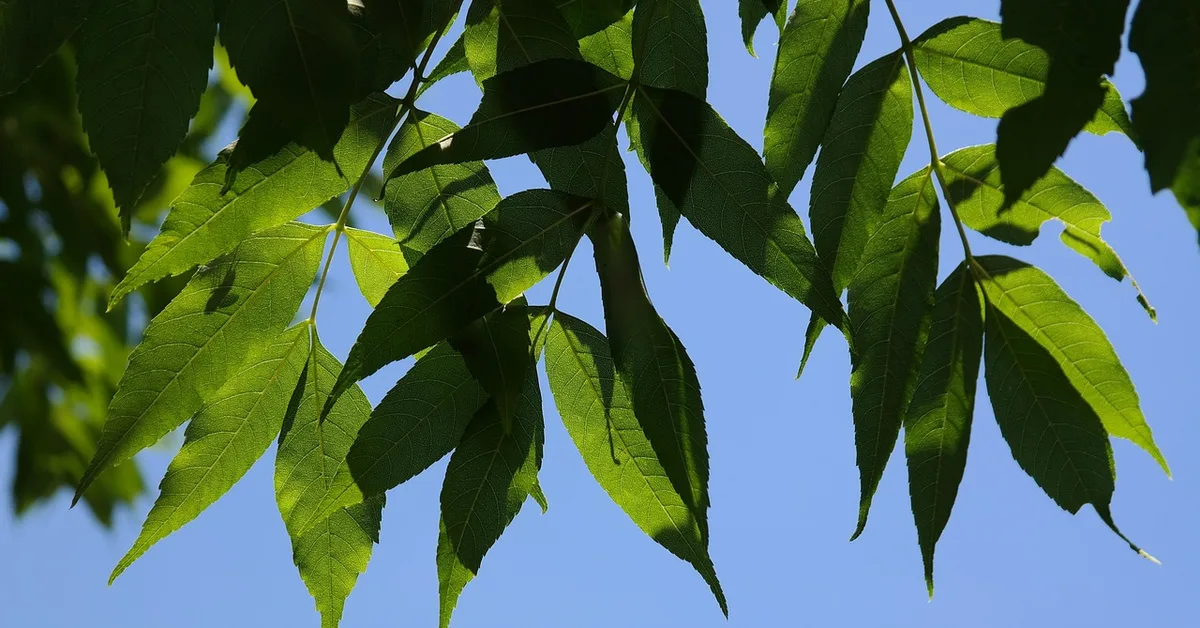
Ash trees are the UK’s third most common broadleaf tree, but ash dieback — caused by the fungus Hymenoscyphus fraxineus, first confirmed in the UK in 2012 — is projected to kill a majority of that population, with some woodlands expected to lose up to 70–80% of their ash trees. The fungus blocks water transport in the tree, causing leaf loss, crown dieback, and eventually structural failure that makes standing dead ash trees a real safety hazard near paths and roads.
The UK isn’t alone in facing an ash die-off. The United States had an estimated 8 billion ash trees before the emerald ash borer, an invasive beetle, arrived in 2002 — it has since killed hundreds of millions of trees across the Midwest and Northeast. The two crises have different causes (a fungus in the UK, a beetle in the US) but the same result: less standing ash, and a growing supply of disease-killed timber that gets salvage-milled rather than left to rot. Checking whether a tree is infected and knowing how to slow the spread matters for anyone with ash on their property, not just woodworkers.
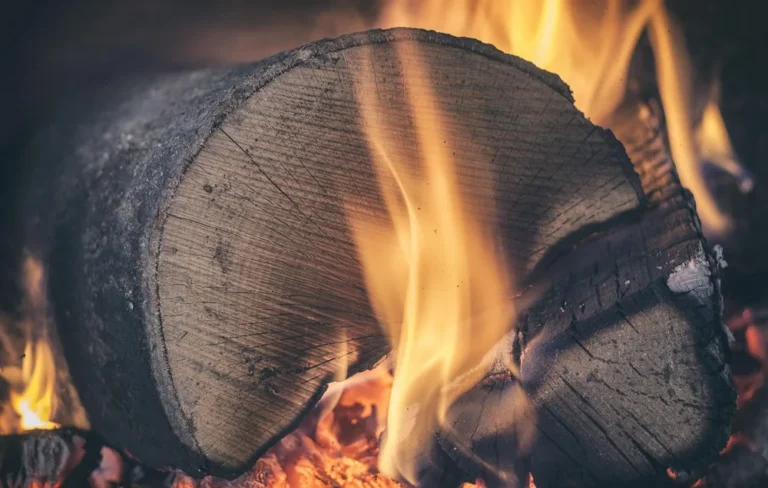
For woodworkers, this has a practical upside: salvage-milled ash from dieback- and borer-killed trees is an increasingly common, often cheaper source of lumber in both countries, though it needs to be kiln-dried and checked carefully for the boring-insect damage and staining that dead standing timber develops. Wood too far gone for furniture still has value — ash is one of the best firewoods available and burns well even at a somewhat higher moisture content than most species.
Frequently Asked Questions
What Is Ash Wood Used For?
Ash wood is used for furniture, flooring, tool handles, baseball bats, hockey sticks, and electric guitar bodies (specifically swamp ash). Its combination of hardness and shock resistance makes it a top pick anywhere a wood needs to absorb impact without splintering.
What Is the Janka Hardness of Ash Wood?
White ash rates 1,320 lbf on the Janka scale, close to red oak (1,290 lbf) and just under white oak (1,360 lbf). Swamp ash from the same species tests lower and more variably, often in the 900–1,000 lbf range, because of its lighter, more porous structure.
What’s the Difference Between White Ash and Swamp Ash?
White ash and swamp ash can be the same species — the difference is growing conditions, not genetics. Upland-grown white ash is denser and heavier; ash grown in wet, swampy ground produces lighter, more porous wood prized by guitar builders for its resonance and reduced weight.
Can You Stain Ash Wood?
Yes. Ash’s open, ring-porous grain takes oil-based and gel stains well once conditioned with a pre-stain wood conditioner. Skipping the conditioner is the most common cause of blotchy, uneven color on ash projects.
Is Ash Wood Resistant to Rot Outdoors?
No, not on its own. Ash heartwood is rated non-durable to only slightly durable against fungal decay, unlike true rot-resistant species such as white oak or cedar. Ash used outdoors needs a sealant or preservative treatment to hold up long-term.
How Many Ash Trees Are in the UK, and Are They at Risk?
The UK has an estimated 150 million ash trees, per Forest Research figures. Ash dieback disease, caused by an invasive fungus first confirmed in the UK in 2012, is projected to kill a majority of that population, with some woodlands expected to lose 70–80% of their ash trees over the coming decades.
Is Ash Wood Good for Furniture Joinery?
Yes. Ash holds screws, nails, and glue securely, machines cleanly with sharp tools, and bends well when steamed, making it a reliable choice for mortise-and-tenon joints, dowel joints, and curved furniture parts like chair backs.
Conclusion
Ash wood earns its place in the workshop through a rare combination of hardness and flexibility — strong enough for flooring and tool handles, springy enough for bent furniture parts and guitar bodies. Match the type to the job: white ash for strength-first projects, swamp ash where light weight and resonance matter more. Condition it before staining, seal it before using it outdoors, and keep an eye on where your lumber is coming from — with ash dieback and the emerald ash borer both reshaping supply, salvage-milled ash is becoming a bigger part of the market on both sides of the Atlantic.
Sponsored / affiliate links. As an Amazon Associate I earn from qualifying purchases. I may earn additional commission from eligible campaigns.