Wooden Hand Screw Clamp: Sizes, Grip Technique & When to Use One
A wooden hand screw clamp uses two parallel hardwood jaws and two independent steel spindles to apply strong, even, non-marring pressure — unlike a steel bar clamp, it won’t dent or bruise bare wood. Over-tightening or gripping it wrong is the single most common reason beginners end up with misaligned glue-ups. This guide covers sizing from 6" to 12", the two-hand grip experienced woodworkers use, and when a hand screw clamp beats a bar clamp or C-clamp.
Quick Answer
A wooden hand screw clamp is best for glue-ups and delicate parts where a metal clamp would mark the wood. Pick an 8" or 10" clamp for most shop work, grip the top handle with your off hand and tighten with the back spindle, and stop as soon as the joint closes — extra torque just crushes wood fibers without adding hold.
What Is a Wooden Hand Screw Clamp?
Best All-Around Hand Screw Clamp Pick
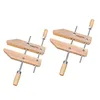
POWERTEC 71524 10-Inch Wooden Handscrew Clamp, 2-Pack
A 10" hand screw clamp splits the difference between reach and control — the size most woodworkers reach for first.
- Best for: general glue-ups, edge joints, and jig work up to 6" capacity
- Why we picked it: the 6" clamping capacity covers most panel and cabinet-parts work without the bulk of a 12" clamp
- Main drawback: too large for very small or delicate parts — pair with a 6" for detail work
Compare more hand screw clamp sizes
 Option 1 — 6" POWERTEC 71522 6-Inch Wooden Handscrew Clamp, 2-Pack
|
 Option 2 — 8" POWERTEC 71523 8-Inch Wooden Handscrew Clamp, 2-Pack
|
 Option 3 — 12" POWERTEC 71839 12-Inch Wooden Handscrew Clamp, 2-Pack
|
As an Amazon Associate we earn from qualifying purchases.
A wooden hand screw clamp is a clamp that uses two hardwood jaws — usually maple or beech — connected by two independently adjustable steel spindles. Turning each spindle lets the jaws open parallel, angle to grip a tapered piece, or offset to reach around an obstruction. That independent adjustment is what separates it from a bar clamp or C-clamp, which only close on a single axis.
Because the jaw faces are wood, not steel, they spread pressure over a wider surface and won’t leave a crescent-shaped dent the way a C-clamp’s swivel pad can on soft or finished wood. That makes them the default choice for glue-ups, veneer work, and any workpiece you don’t want to mark.
Wooden Hand Screw Clamp vs. Bar Clamp vs. C-Clamp
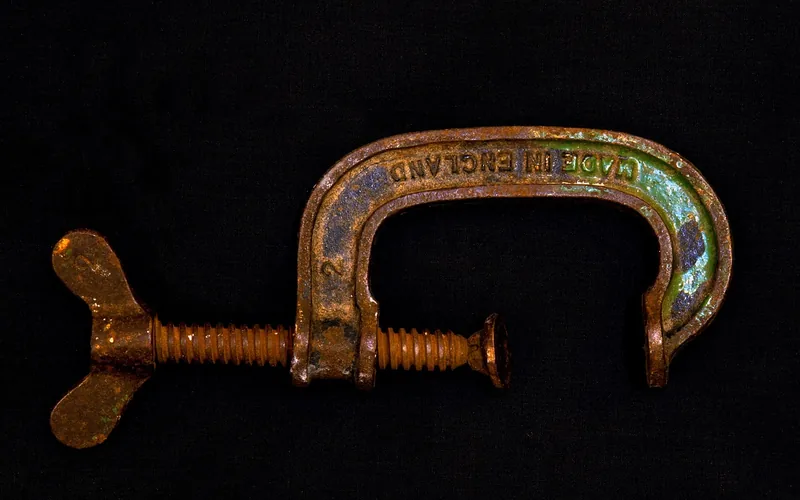
All three hold wood while glue dries, but they aren’t interchangeable. A hand screw clamp’s wood jaws and dual-spindle adjustment make it the only one of the three that can grip a tapered or irregular part without a scrap-wood caul.
| Clamp Type | Jaw Material | Best For |
|---|---|---|
| Wooden hand screw | Hardwood (maple/beech) | Glue-ups, tapered/angled parts, finished surfaces |
| Bar/pipe clamp | Steel jaws, often plastic pads | Long panel glue-ups, wide reach |
| C-clamp | Steel, swivel pad | Quick, high-force holds where marring doesn’t matter |
What Size Wooden Hand Screw Clamp Do You Need?
Wooden hand screw clamps are sold by jaw length — 6", 8", 10", and 12" are the standard sizes — and jaw length does not equal clamping capacity. A 12" clamp opens roughly 8" wide, not 12". Buy for the thickest stock you’ll actually clamp, not the biggest number on the shelf.
| Jaw Length | Clamping Capacity | Throat Depth | Best For |
|---|---|---|---|
| 6" | 3" | 3" | Small parts, jigs, dowels |
| 8" | 4" | 4" | Everyday shop clamping, joinery |
| 10" | 6" | 5" | General-purpose, most-bought size |
| 12" | 8" | 6" | Large panel and carcass glue-ups |
📊 Clamping capacity is roughly two-thirds of jaw length across the standard 6-12" sizing range — Source: POWERTEC wooden handscrew clamp spec sheet
Most woodworkers end up buying two sizes: an 8" or 10" pair for everyday joinery, plus a 6" pair for small parts and jig work the larger clamps can’t reach into.
How to Use a Wooden Hand Screw Clamp
Positioning the Workpiece
- Back off both spindles until the jaws open wider than your stock, keeping the front (workpiece-facing) edge slightly closer than the back.
- Slide the workpiece between the jaws, centered so the clamping pressure lands evenly across the joint.
- Check that the jaws sit parallel to the surface before applying any pressure — angled jaws concentrate force on one edge.
The Two-Hand Grip That Keeps Jaws Parallel
Hold the front handle in one hand and the back handle in the other, then spin the whole clamp around the front spindle to open or close it roughly to size — this keeps both jaws moving together instead of racking out of parallel. Do the final tightening with the back spindle only, since that’s where the leverage is; the front spindle just holds position. Practicing this two-handed motion consistently builds the muscle memory to open and close a hand screw clamp without checking jaw alignment every time.
Tightening the Clamp
- Snug the front spindle until the jaws just touch the workpiece on both sides.
- Tighten the back spindle gradually, checking that the joint line is closing evenly rather than gapping on one side.
- Stop as soon as the joint closes and a thin, even glue line squeezes out — that’s full clamping pressure. More torque past that point only crushes wood fibers.
Common Mistakes to Avoid When Using a Wooden Hand Screw Clamp
Over-Tightening
A wooden hand screw clamp can generate enough force to crush or split wood fibers if you keep cranking past the point of a closed joint. Tighten gradually and stop the moment the joint line closes and glue squeeze-out appears evenly along the seam — that’s the clamp doing its job, not a sign to add another quarter-turn.
Misalignment
Uneven jaw pressure is the most common cause of a glue-up that dries out of square. Keep the jaws parallel to the workpiece’s edges and perpendicular to its face before you start tightening, and re-check after the first turn of the back spindle — it’s much easier to correct alignment before the glue sets than after.
Edge Gluing and Irregular Shapes
Edge gluing multiple wooden boards into a panel is the most common use for a wooden hand screw clamp — the wide, flat jaws distribute pressure evenly along the seam so the boards dry flush instead of stepped. Pair the right wood glue with even clamp pressure and the joint line all but disappears once sanded.
Because each spindle adjusts independently, the jaws can also angle to grip a tapered leg or an odd-shaped offcut that a parallel-jaw bar clamp can’t hold securely — useful for curved chair parts or any joint that isn’t a flat right angle.
| Technique | What the Independent Spindles Give You |
|---|---|
| Edge gluing | Even pressure along the full seam for flush, gap-free panel joints |
| Irregular/tapered shapes | Angled jaw grip that holds non-parallel surfaces without a caul |
Frequently Asked Questions About Wooden Hand Screw Clamps
How does a wooden hand screw clamp work?
It works by turning two independent steel spindles that draw two hardwood jaws together. Because each spindle adjusts separately, the jaws can close parallel for flat stock or angle to grip a tapered or irregular workpiece, applying even pressure without a metal clamp’s risk of marring the wood.
What size wooden hand screw clamp should I buy first?
An 8" or 10" clamp covers most everyday shop work, with roughly 4-6" of clamping capacity. Add a 6" pair later for small parts and jig work once you know which sizes you reach for most.
Can you use a wooden hand screw clamp on metal or plastic?
Yes, for light-duty holding — the wood jaws won’t scratch a finished metal or plastic surface the way steel jaws can. They’re not rated for heavy metalworking clamping force, so stick to bar or machinist’s clamps for structural metal work.
Why is my hand screw clamp jaw closing crooked?
Crooked closing almost always means the front and back spindles were turned unevenly. Reopen both jaws fully, reposition the workpiece centered between them, and tighten the back spindle only after the front spindle has the jaws sitting parallel.
What wood are hand screw clamp jaws made from?
Maple and beech are the most common choices because they’re dense hardwoods that resist compression and wear from repeated clamping without flexing or splitting at the spindle holes.
Conclusion
A wooden hand screw clamp earns its spot in the shop wherever a metal clamp would mark the wood or fail to grip an angled part — edge glue-ups, tapered legs, and delicate finished surfaces. Match the size to your stock thickness rather than buying the biggest clamp on the shelf, use the two-hand grip to keep the jaws parallel, and stop tightening the moment the joint closes. If you’d rather build your own set from a hardware kit, see our guide on how to make your own wooden handscrew clamps.
Sponsored / affiliate links. As an Amazon Associate I earn from qualifying purchases. I may earn additional commission from eligible campaigns.