Worm Gear Table Saw: The Truth Behind the Label
Search “worm gear table saw” and you will find a stack of articles describing a whole category of saw that, in reality, no tool manufacturer sells. Worm gears genuinely do show up on some table saws — just not for the reason, or in the place, most of those articles claim. Here is the accurate version: what a worm gear actually is, where it really lives on a table saw, and why “worm drive” is a circular saw term that got attached to the wrong tool.
What a Worm Gear Actually Is
Budget Jobsite Pick
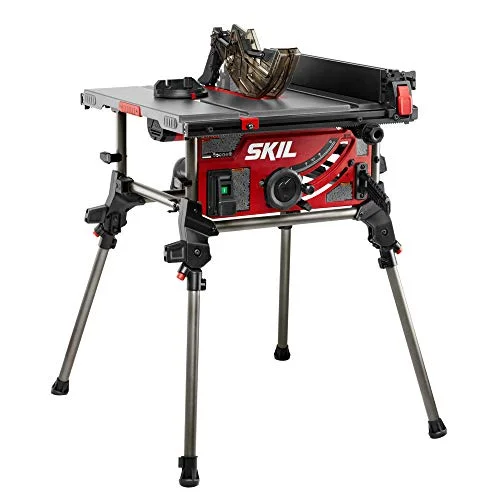 |
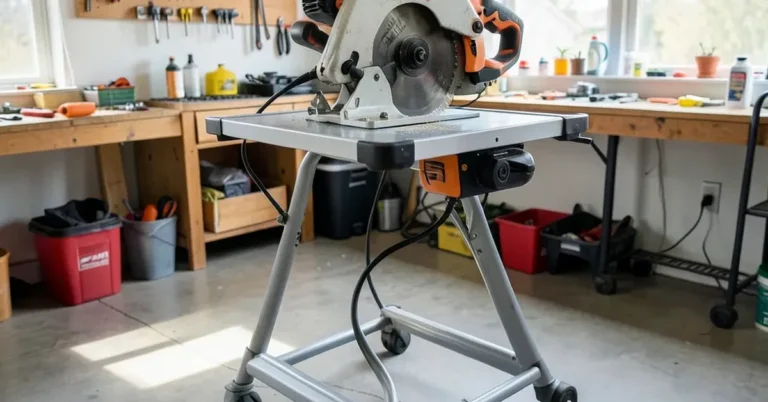
SKIL 15 Amp 10-Inch Jobsite Table Saw – $302.68 A real, currently-listed table saw that shows the same category of precision-adjustment hardware this guide is about — not a “worm gear” branded saw, because that category doesn’t exist.
|
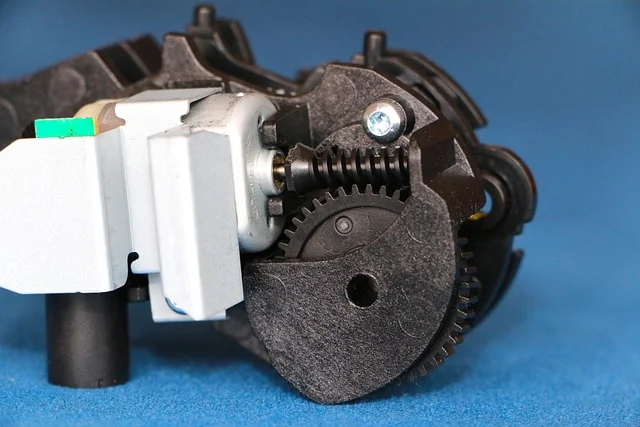
A worm gear is a screw-shaped gear (the “worm”) that meshes with a toothed wheel (the “worm wheel”) set at a right angle to it. One full turn of the worm advances the wheel by only a tooth or two, so the pairing does two useful things at once: it multiplies torque through a large gear reduction, and it is self-locking — the wheel cannot easily back-drive the worm. That second property is why worm gears show up anywhere a machine needs a hand-cranked adjustment that will not creep or drift on its own, from piano tuning pegs to garage door openers to, yes, parts of some table saws.
Do Table Saws Actually Have Worm Gears? Where They Really Show Up
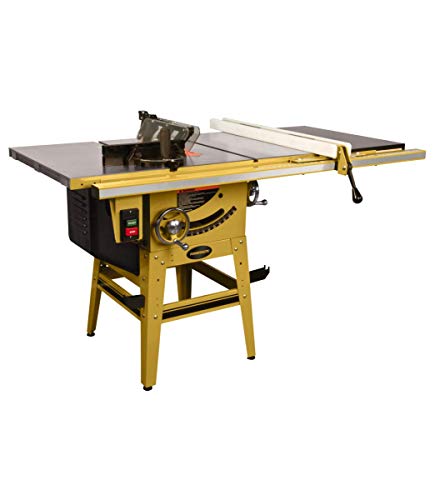
Yes, on many cabinet and contractor-style table saws, but not where the blade gets its cutting power. Inside the trunnion assembly — the cradle that holds the arbor, motor, and blade under the table — the height hand wheel and bevel hand wheel often turn a worm gear. That worm gear drives an arc-shaped toothed rack that raises, lowers, or tilts the whole assembly. It is a slow, geared-down motion on purpose: you get fine control over blade height and bevel angle, and because a worm gear is self-locking, the blade stays exactly where you set it instead of sagging under vibration.
That is the entire role of a worm gear on a table saw: precise, stay-put adjustment of height and angle. It has nothing to do with how fast or how hard the blade spins, which is a common point of confusion worth clearing up next.
Worm Drive vs. Worm Gear: Why the Two Get Mixed Up
“Worm drive” is a specific circular saw design, not a table saw feature. On a worm-drive circular saw (the format SKILSAW built its reputation on), the motor is mounted in line behind the blade instead of beside it. A worm gear then turns that motor’s power 90 degrees to spin the blade spindle, trading some top-end RPM for noticeably more torque — useful for ripping wet framing lumber or cutting through nail-embedded material without bogging down. That is a genuinely different saw category from a “sidewinder” circular saw, where the motor sits directly beside the blade.
Table saws do not use that layout at all. A table saw’s motor drives the arbor directly or through a belt and pulley system, spinning underneath a fixed table rather than through a right-angle worm-gear handoff. So when an article calls something a “worm gear table saw” and describes it powering the blade, it is really describing a worm-drive circular saw and mislabeling it as a table saw. If you actually came here comparing circular saw motor layouts, Sidewinder vs. Worm Drive Saw and SKILSAW vs. Circular Saw cover that comparison directly.
What Actually Determines a Table Saw’s Cutting Power and Precision
Since the worm gear (where one exists) is only doing adjustment duty, the things that actually determine how well a table saw cuts are elsewhere:
- Motor size and drive type: belt-driven cabinet saws generally deliver smoother power and less vibration at the blade than direct-drive benchtop saws, independent of any worm gear.
- Arbor and bearing quality: a stiff, well-supported arbor keeps the blade running true under load, which affects cut quality far more than the hand-wheel mechanism.
- Fence accuracy: a fence that stays parallel to the blade under pressure is usually the single biggest factor in clean, consistent rip cuts.
- Blade choice: tooth count and grind matter more for cut quality than the saw’s internal gearing ever will.
How to Check Which Mechanism Your Own Saw Actually Has
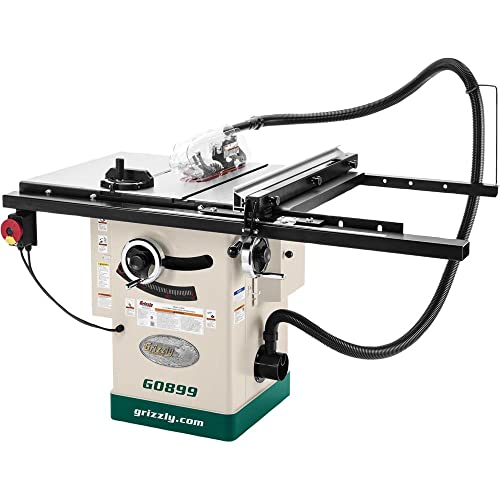
You do not need to pull the saw apart to find out. Start with the owner’s manual or the manufacturer’s spec sheet for your exact model — search the model number plus “parts diagram,” and most brands have a PDF showing the trunnion assembly by name. If you can see the underside of the table with the blade guard and throat plate removed, look at the height and bevel hand wheels: a worm-gear trunnion usually has a visible worm screw (a long, ridged shaft) engaging a curved toothed arc, while a rack-and-pinion setup looks more like a straight toothed bar with a small gear riding along it. As a rule of thumb, full-size cabinet saws and many contractor saws (SawStop, Grizzly, and most Delta Unisaw-style cabinet saws, for example) lean toward worm-gear trunnions, while compact benchtop and folding jobsite saws, including budget picks like the one below, more often use a simpler rack-and-pinion height crank because it is cheaper to manufacture and lighter overall.
Checking and Maintaining the Elevation/Bevel Mechanism
If your table saw does use a worm-gear trunnion, it needs very little upkeep, but a couple of habits keep it accurate for years. Wipe sawdust out of the trunnion area regularly, since packed dust turns the hand wheel gritty and can eventually wear the worm teeth. A light coat of dry PTFE lubricant (not a heavy grease that grabs dust) on the worm and rack keeps the motion smooth. If the height or bevel wheel starts to feel loose or the blade drifts from a set angle, that is usually worn or misaligned trunnion gearing, not something you can fix by tightening the wheel — check your saw’s manual for the trunnion adjustment bolts before assuming the whole assembly needs replacing.
One more practical note: because a worm gear is self-locking, a bevel or height wheel that suddenly spins loose with no resistance is a red flag, not normal wear. That usually means the worm has slipped out of mesh with the arc gear or a retaining screw has backed out, and it is worth addressing before you use the saw again — a blade that can drift downward or sideways mid-cut is a real safety issue, not just an accuracy annoyance.
Frequently Asked Questions
Is there such a thing as a “worm gear table saw”?
No. No tool manufacturer sells a product marketed as a “worm gear table saw.” The phrase mixes up two unrelated things: worm drive, which is a circular saw motor layout, and worm gear, a type of gear that does appear inside some table saws, just not for spinning the blade.
Where is the worm gear on a table saw?
On table saws that have one, it is inside the trunnion assembly, the part that raises, lowers, and tilts the arbor. Turning the height or bevel hand wheel rotates a worm gear that moves a toothed gear or arc, which is why the adjustment feels smooth and holds its position without slipping.
What is the difference between worm drive and worm gear?
Worm drive describes a circular saw design, popularized by SKILSAW, where the motor sits in line behind the blade and a worm gear turns the spindle 90 degrees, trading some RPM for extra torque. Worm gear is the general mechanical part itself, which shows up in worm-drive circular saws and, separately, in the height/bevel adjustment of many cabinet and contractor table saws.
Do all table saws have a worm gear?
No. Many benchtop and jobsite table saws use a simpler rack-and-pinion or lead-screw mechanism to raise, lower, and tilt the blade instead of a worm gear. Worm-gear trunnions are more common on heavier cabinet and contractor-style saws.
Bottom Line
There is no dedicated “worm gear table saw” product on the market. Worm drive belongs to circular saws; worm gears, where they appear on a table saw, are quietly doing height and bevel adjustment inside the trunnion, not driving the blade. Shop for a table saw based on motor and drive type, fence accuracy, arbor rigidity, and blade quality — the worm gear, if your saw even has one, is a nice-to-have precision detail, not the headline feature.
Sponsored / affiliate links. As an Amazon Associate I earn from qualifying purchases. I may earn additional commission from eligible campaigns.