14-Inch Cut-Off Saw Blades: Carbide vs Abrasive (RPM Guide)
14-inch cut-off saw blades come in two very different types — carbide-tipped blades rated to roughly 1,450 RPM, and abrasive cut-off wheels rated up to around 3,900 RPM — and running a carbide blade at abrasive-wheel speeds can cause it to shatter. Mixing up the two is the most common (and most dangerous) mistake buyers make when replacing a 14-inch blade. This guide covers how to tell them apart, what each is actually for, and how to pick the right one for your saw and material.
Insert your Affiliate Disclosure reusable block here.
Carbide-Tipped vs. Abrasive: Two Different 14-Inch Blade Types
Best Carbide-Tipped 14″ Blade Pick
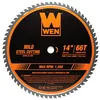
WEN BL1466 14″ 66-Tooth Carbide-Tipped Metal Blade – $50.27
Rated to 1,450 RPM (confirmed on the manufacturer listing) — exactly the carbide-tipped category this guide’s speed table covers, for dry-cutting mild steel, pipe, and angle iron.
- Best for: dry-cutting mild steel, pipe, tube, and angle iron on a dedicated metal chop saw
- Why we picked it: thin 1/10″ kerf and 66 carbide teeth for clean, efficient general-purpose steel cuts
- Main drawback: rated to 1,450 RPM only — not for high-speed abrasive-wheel chop saws
As an Amazon Associate we earn from qualifying purchases.
“14-inch cut-off saw blade” actually covers two distinct products built for different saws and different maximum speeds. Confusing them isn’t just a performance issue — running a blade above its rated RPM is a real safety hazard.
| Blade Type | Typical Max RPM | Best For | Example |
|---|---|---|---|
| Carbide-tipped (toothed) | ~1,450 RPM | Dry-cutting mild steel, pipe, angle iron on a dedicated metal chop saw | WEN BL1466, 66-tooth |
| Abrasive cut-off wheel | ~3,600–3,900 RPM | High-speed grinding-style cuts on standard abrasive chop saws | Norton 14″ abrasive wheel |
Always check the max RPM printed on the blade itself against your saw’s no-load speed before mounting it — never assume, and never use a blade rated below your saw’s operating speed.
Choosing a Blade for Your Material
Material compatibility is the second thing to check after RPM rating — a blade built for one material will wear fast or cut poorly on another.
- Mild steel, pipe, angle iron: carbide-tipped ferrous-metal blade, 60–80 teeth for a clean, low-burr cut.
- Aluminum and non-ferrous metal: a blade specifically rated for non-ferrous metal — a ferrous-only blade will gum up and load with aluminum.
- Masonry or concrete board: a diamond or abrasive masonry blade rated for that material, not a metal-cutting blade.
- Wood framing on a cut-off saw: a wood-rated triple-chip blade designed for the higher speed of a wood-cutting saw.
Maintaining Your Blade
- Clean regularly: resin and metal debris buildup on the teeth reduces cutting efficiency and generates extra heat.
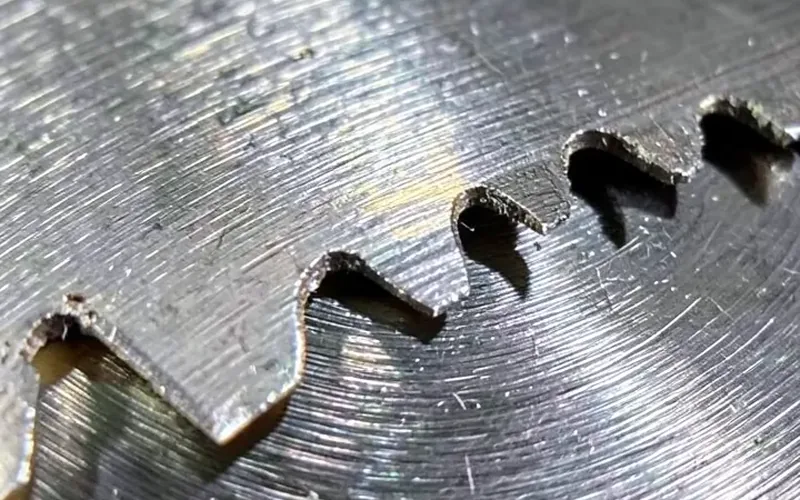
- Inspect before every use: check for missing or damaged carbide tips, cracks, or a warped body before mounting the blade.
- Store flat and dry: hanging or stacking blades incorrectly can warp them over time, and moisture promotes rust on the body.
- Match speed and feed rate to the material — forcing the cut or running too fast accelerates wear and increases the chance of a kickback.
Safety Measures When Using Cut-Off Saw Blades
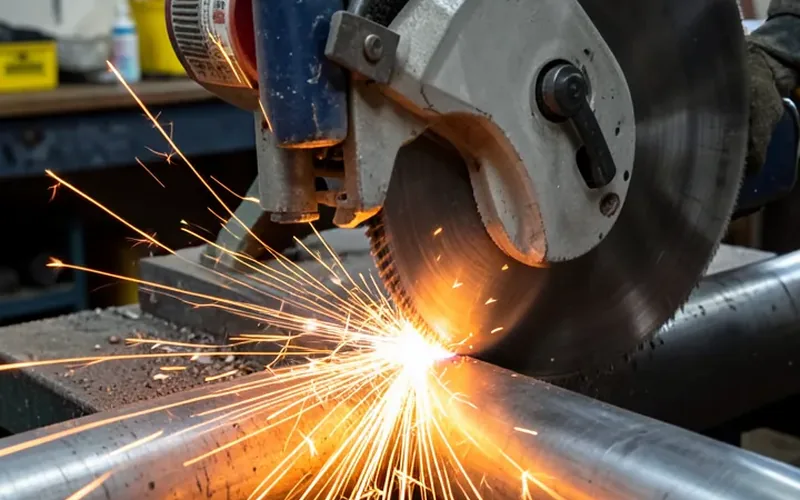
Cut-off saw blades run at high speed against hard material, so proper protective gear and workshop practices matter more here than on most other saw blade types.
- Eye protection: safety goggles or a face shield against flying sparks, debris, or metal filings.
- Hearing protection: earplugs or earmuffs — both blade types are loud, and abrasive wheels especially so.
- Gloves rated for the task: protect against sharp edges and hot metal filings, but keep hands clear of the blade path.
- Respiratory protection: a dust mask or respirator when cutting materials that produce fine dust or metal fume.
- Secure the workpiece: clamp material down so it can’t shift or bind the blade mid-cut.
- Never exceed the blade’s rated RPM — this is the single most common cause of blade failure and the most preventable one.
Frequently Asked Questions
What Is the Recommended RPM for a 14-Inch Cut-Off Saw Blade?
It depends on the blade type. Carbide-tipped metal-cutting blades are typically rated to around 1,450 RPM. Abrasive cut-off wheels run much faster, typically 3,600–3,900 RPM. Always use the RPM printed on your specific blade, not a generic number — exceeding it risks the blade shattering.
Can a 14-Inch Cut-Off Saw Blade Cut Through Metal?
Yes — that’s what most 14-inch cut-off blades are built for, whether carbide-tipped for dry-cutting steel or abrasive for grinding-style cuts. Match the blade to the specific metal (ferrous vs. non-ferrous) for the cleanest results and longest blade life.
How Long Does a 14-Inch Cut-Off Saw Blade Last?
A well-maintained carbide-tipped blade typically holds up for 30 to 60 hours of cutting time, depending on the material and how often it’s run above its ideal feed rate. Regular cleaning and inspection extend that lifespan; forcing cuts or ignoring chipped teeth shortens it.
Can I Use an Abrasive Wheel on a Saw Rated for a Carbide Blade?
Only if the wheel’s rated RPM matches or exceeds your saw’s actual speed — check both numbers before swapping blade types. A saw built for a high-RPM abrasive wheel will over-speed a carbide blade rated for a much lower RPM, which is unsafe.
Conclusion
The right 14-inch cut-off saw blade depends on two things first: the blade type your saw actually needs (carbide-tipped or abrasive) and the material you’re cutting. Match the RPM rating on the blade to your saw’s speed before anything else, then pick teeth count and material rating for the job.
Sponsored / affiliate links. As an Amazon Associate I earn from qualifying purchases. I may earn additional commission from eligible campaigns.