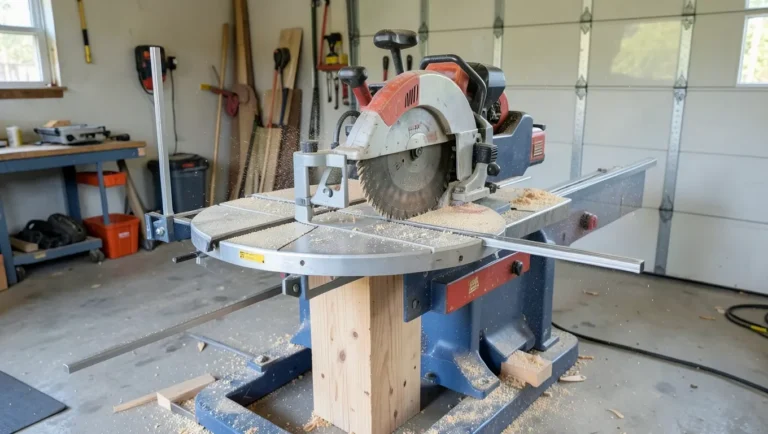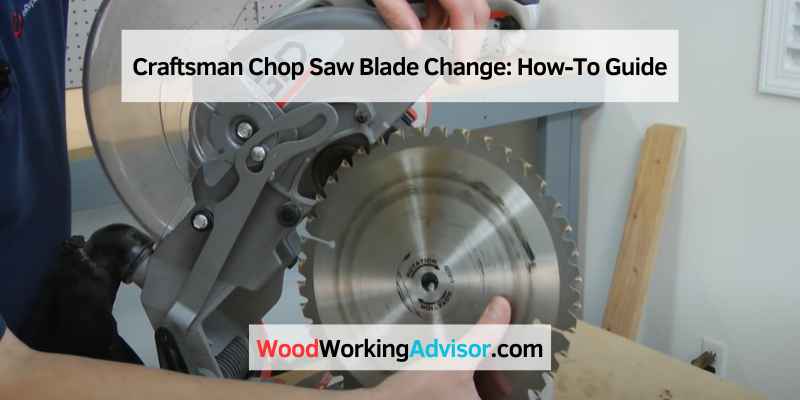
Craftsman Chop Saw Blade Change: Which Way the Bolt Turns
Craftsman chop saw blades use a reverse-threaded arbor bolt — turn it clockwise to loosen, not counterclockwise, or you will fight the wrong direction for several frustrated minutes. Mixing up that direction is the number one reason DIYers think the bolt is seized. This guide covers the correct removal and installation steps, how to use the spindle lock safely, and what blade size and tooth count to buy for clean crosscuts.
Quick Answer
To change a Craftsman chop saw blade: unplug the saw, remove the blade guard screw, press the spindle lock, and turn the arbor bolt clockwise to loosen it — it is reverse-threaded. Swap in the new blade with teeth facing down at the front, reinstall the washer and bolt, then turn counterclockwise to tighten while holding the spindle lock.
Tools You’ll Need
Best Replacement Blade Pick
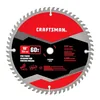
CRAFTSMAN 10 in 60-Tooth Miter Saw Blade (CMAS21060)
A same-brand 5/8-inch arbor blade sized to drop straight into most 10-inch Craftsman chop and miter saws with no adapter.
- Best for: fine-finish crosscuts in trim and framing lumber
- Why we picked it: matches the 5/8-inch arbor most Craftsman 10-inch saws use, so it fits without an arbor adapter
- Main drawback: 60-tooth blades cut slower than a 40-tooth combination blade on thick, rough stock
Compare more replacement blade options
 Option 1 WEN BL1060 10 in 60-Tooth Blade
|
 Option 2 DEWALT DWA11060 10 in 60-Tooth Blade
|
 Option 3 Diablo 10 in 60-Tooth Fine Finish Blade
|
As an Amazon Associate we earn from qualifying purchases.
Gather these before you start — stopping mid-change to hunt for a tool is when parts get lost or the blade gets set down somewhere unsafe.
- Hex/Allen wrench or the saw’s included blade wrench — check your model’s arbor bolt size, usually 6mm on compact Craftsman chop saws
- Replacement blade matching your saw’s arbor size (most 10-inch Craftsman chop saws use a 5/8-inch arbor) and rated at or above the saw’s max RPM
- Safety glasses and work gloves
- A drop of light machine oil for the blade washers
- A block of wood or rag, if your saw has no spindle lock button and you need to brace the blade by hand
Step-by-Step: How to Change the Blade
Work through these steps in order — skipping the spindle lock or guessing the bolt direction is how most blade changes go wrong.
- Unplug the saw. Pull the cord fully from the outlet and squeeze the trigger once to confirm it’s dead before you touch the blade.
- Raise the blade guard. Remove the small screw holding the spindle/blade guard cover in place and pivot the guard up and out of the way.
- Engage the spindle lock. Press and hold the spindle lock button. If it won’t fully catch, turn the blade slightly by hand while holding the button until it clicks into a locked notch.
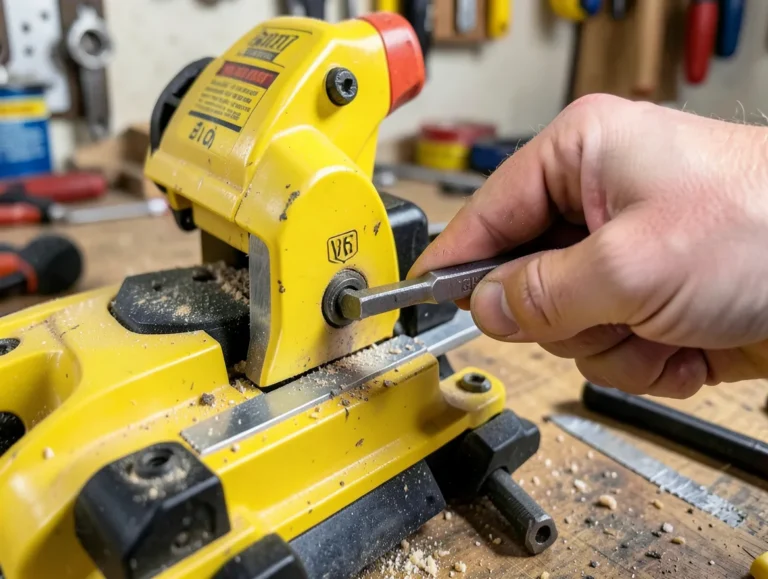
- Loosen the arbor bolt clockwise. This is the step people get backwards: the arbor bolt on most Craftsman chop and miter saws is reverse-threaded, the same idea used on some lawn mower blade bolts. Turn the wrench clockwise (to the right) to loosen it. Turning it counterclockwise — the intuitive “lefty-loosey” direction — only tightens it further.
- Remove the outer washer and old blade. Set both aside somewhere they won’t roll off the bench.
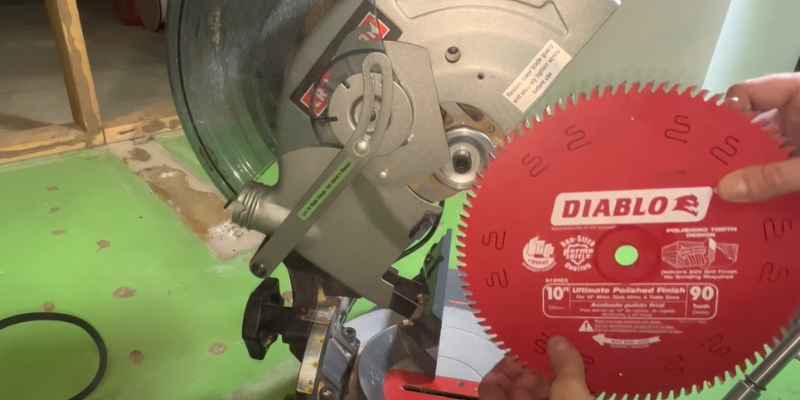
- Install the new blade. Slide it onto the arbor with the teeth pointing down at the front of the saw, matching the rotation arrow printed on the blade against the arrow on the upper guard. Wipe a drop of light oil on the inner washer face first.
- Reinstall the washer and bolt, then tighten counterclockwise. Hold the spindle lock and turn the bolt firmly snug — hand-tight plus a firm quarter-turn with the wrench is enough; overtightening can crack the blade’s arbor hole.
- Lower the guard and replace the screw. Confirm the guard moves freely and springs back over the blade on its own.
- Spin-test by hand before plugging back in. The blade should rotate freely with no wobble, rubbing, or contact with the guard.
Which Way Do You Turn the Bolt to Loosen a Chop Saw Blade?
Turn it clockwise to loosen. A miter or chop saw’s arbor bolt is deliberately cut with a left-hand (reverse) thread — the opposite of a standard screw. The reason is mechanical, not arbitrary: the blade spins in the direction that would naturally tighten a normal right-hand bolt during use, so manufacturers reverse the thread to keep the running blade from loosening its own retaining bolt mid-cut. That means the direction that feels wrong (clockwise to loosen, counterclockwise to tighten) is actually the correct one on this tool, even though it’s backwards from nearly everything else in the shop.
If you own a different brand, don’t assume the same direction applies without checking — we cover the process on a DEWALT miter saw and a Craftsman circular saw separately, since bolt direction and guard design vary by tool and model.
Testing the New Blade
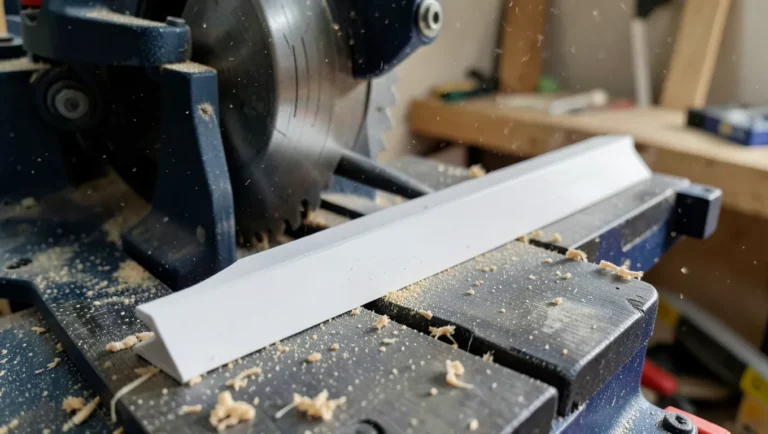
Before making a real cut, confirm the blade guard moves and springs back freely, no tools were left on the saw table, and the blade is fully tightened. Then make one test cut on scrap material at your normal cutting angle. The cut edge should be clean and straight with no burning, chipping, or excess vibration — any of those point to a loose blade, wrong tooth count for the material, or a blade that isn’t seated flush against the inner washer.
Blade Bolt Stuck? What to Do
If the arbor bolt won’t budge even turning clockwise, it’s almost always rust, resin buildup, or a bolt that was overtightened last time — not a broken spindle lock. Work through these in order:
- Confirm the spindle lock is fully engaged before applying real force — a half-caught lock lets the blade spin instead of the bolt turning.
- Apply penetrating oil to the bolt threads and let it sit 10–15 minutes before trying again.
- Add leverage with a longer wrench or a length of pipe slipped over the handle — steady pressure works better than sudden force.
- Tap the wrench with a mallet while holding it against the bolt to break a rusted or resin-locked bond.
- Brace the blade with a wood block wedged against the teeth if your saw has no spindle lock, so the blade can’t spin while you turn the bolt.
Common Mistakes to Avoid
- Turning the bolt the intuitive way. Forcing it counterclockwise to “loosen” only tightens it further and can strip the hex socket.
- Skipping the spindle lock. Trying to hold the blade steady by hand while wrenching the bolt is how fingers get cut.
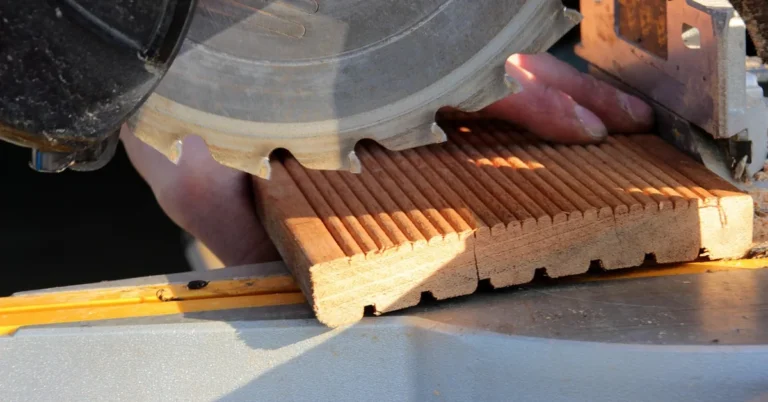
- Installing the blade backwards. Teeth must point down at the front of the saw; a backwards blade will bind, burn the cut, and can kick the material back at you.
- Overtightening the arbor bolt. Hand-tight plus a firm quarter-turn is enough — cranking it down with full force can crack the blade’s arbor hole.
- Buying the wrong arbor size. A blade with the wrong center hole won’t seat flush even if it physically fits over the bolt.
Frequently Asked Questions
Which way do you turn the bolt to loosen a Craftsman chop saw blade?
Clockwise. The arbor bolt is reverse (left-hand) threaded, so it loosens by turning it to the right and tightens by turning it to the left — the opposite of a standard bolt.
What tools do I need to change a Craftsman chop saw blade?
An Allen or hex wrench sized to your saw’s arbor bolt (often included with the saw), a replacement blade matching your arbor size, and safety glasses and gloves. Follow the manufacturer’s instructions in your user manual for model-specific torque guidance.
Are there any safety precautions I should take during the blade change?
Yes. Unplug the saw and confirm the blade has fully stopped before touching it, wear safety glasses and gloves, engage the spindle lock rather than holding the blade by hand, and spin-test the new blade by hand before plugging the saw back in.
Why is my chop saw blade bolt stuck even when I turn it the right way?
Rust, resin buildup, or a bolt that was overtightened during the last change are the usual causes — not a broken saw. Apply penetrating oil, let it sit 10–15 minutes, and use a longer wrench for leverage while the spindle lock is fully engaged.
What size blade does a 10-inch Craftsman chop saw use?
Most 10-inch Craftsman chop and miter saws use a 10-inch blade with a 5/8-inch arbor hole. Check your saw’s manual before buying, since some compact models use a smaller diameter or a different arbor size.
Conclusion
Changing the blade on a Craftsman chop saw is a five-minute job once you know the arbor bolt turns backwards from what feels natural — clockwise to loosen, counterclockwise to tighten. Use the spindle lock instead of holding the blade by hand, match the teeth direction to the guard’s rotation arrow, and avoid overtightening. For related saw setup and calibration, see our guide to adjusting and calibrating a miter saw or browse the full miter saw section for angle charts, bevel comparisons, and more how-to guides.
Sponsored / affiliate links. As an Amazon Associate I earn from qualifying purchases. I may earn additional commission from eligible campaigns.