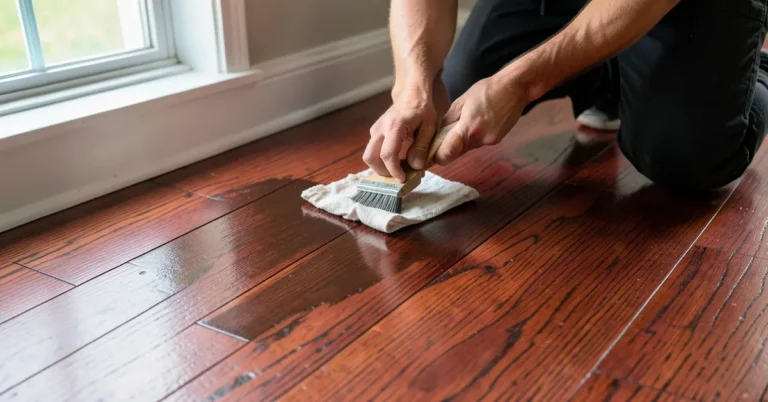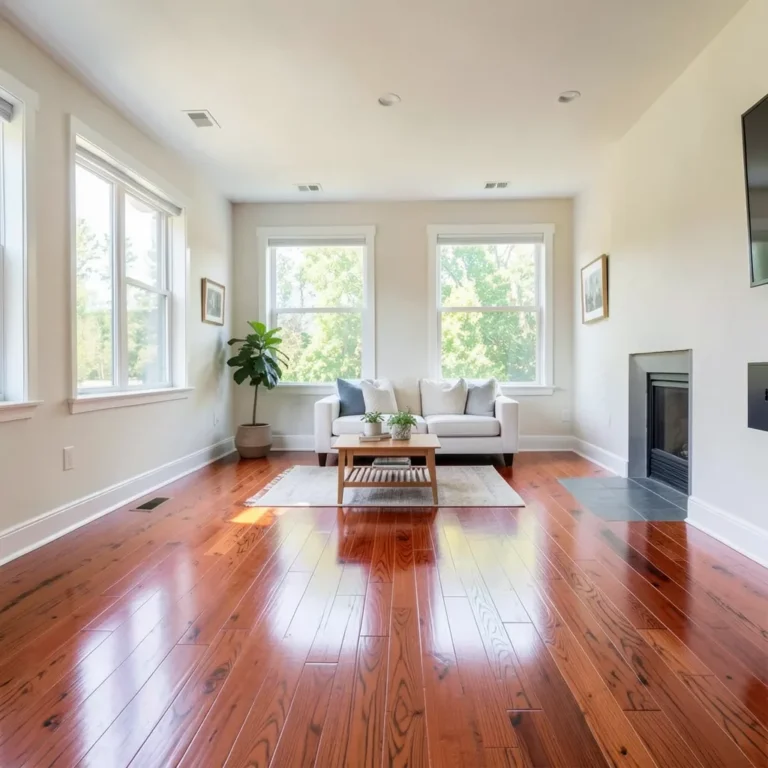
White Oak Flooring Ideas: 6 Styles, Costs & Cut Types (2026)
White oak flooring rates 1,360 lbf on the Janka hardness scale, about 5% harder than red oak, with a tighter grain that resists moisture better – the reason NWFA pros rank it the top domestic species for 2026. Installed cost runs $8 to $18 per square foot, but the wrong cut or finish clashes with a room in ways photos never show. This guide covers six real styles, the three cut types, and honest cost ranges.
Quick Answer
The six best white oak flooring styles are modern minimalist, rustic farmhouse, contemporary herringbone, wire-brushed rustic, whitewashed Nordic, and wide-plank matte natural. Pick based on room light: darker or north-facing rooms suit lighter matte finishes, while sunny rooms can carry any tone or cut.
Types of White Oak Flooring
Best Hardwood Floor Care Kit Pick

Bona Hardwood Floor Premium Spray Mop
A complete spray-mop and pH-neutral cleaner combo built specifically for finished hardwood, including white oak.
- Best for: weekly maintenance cleaning of finished white oak floors
- Why we picked it: the dual-zone spray design avoids the standing water that damages polyurethane finishes over time
- Main drawback: refill concentrate costs more per ounce than a standalone spray bottle
Compare more white oak floor care options
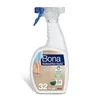 Option 1 – Budget Bona Hardwood Floor Cleaner Spray, 32oz
|
 Option 2 – Alternative brand Swiffer WetJet Wood Spray Mop Starter Kit
|
 Option 3 – Best value Bona Hardwood Floor Cleaner Refill, 128oz
|
As an Amazon Associate we earn from qualifying purchases.
White oak flooring offers various options to suit different aesthetics and preferences. The type of cut used in the manufacturing process significantly affects the appearance and characteristics of the flooring. If you are still comparing species entirely, start with our wood flooring guide. Otherwise, here is how the cuts differ:
Plain/Flat Sawn White Oak Flooring
Plain/flat sawn white oak flooring is the most common type, featuring a traditional appearance with prominent grain patterns and cathedrals. This cut is cost-effective and showcases a classic look for any space.
Rift Sawn and Quarter Sawn White Oak Flooring
Rift sawn and quarter sawn white oak flooring offers a unique and upscale appeal. Rift sawn boards have a straight grain pattern, while quarter sawn boards exhibit a distinctive fleck pattern. These cuts provide exceptional stability and resistance to moisture.
Plank Width: Narrow, Standard, or Wide?
Oak flooring planks fall into three width tiers: narrow/strip boards run 2.25 to 3.25 inches, standard planks run 3 to 5 inches, and wide planks run 5 to 7 inches, with extra-wide runs reaching 7 to 10 inches or more. According to 2026 flooring trend coverage, 7 to 9 inch widths have become the mainstream default rather than a premium upgrade, especially paired with the wire-brushed and matte finishes below. See our wide-plank white oak floors guide for the install tradeoffs at each width. For the classic 2 1/4 inch strip width specifically — costs, best rooms, and how it compares to wider planks — see our 2 1/4 inch oak hardwood flooring guide.
White Oak vs Red Oak: What’s Actually Different
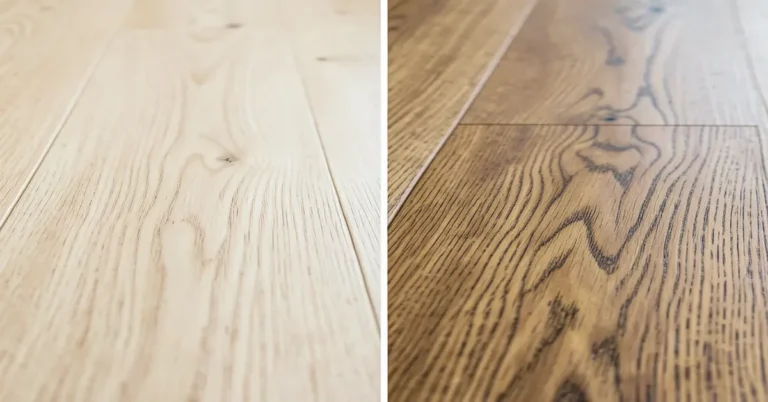
White oak and red oak look similar from across a room but differ up close. White oak’s grain is tighter and more closed, giving a calmer, smoother appearance, while red oak’s grain is more open with visible pink-toned flecks and rays. According to Sheoga Hardwood Flooring, white oak leans warm beige-brown while red oak carries a salmon-pink undertone that can clash with cooler wall colors. According to The Wood Database, white oak also rates 1,360 lbf on the Janka hardness scale versus 1,290 lbf for red oak, and its closed grain gives it better moisture and rot resistance – it’s the reason white oak was historically used for wine barrels and boat building.
| Feature | White Oak | Red Oak |
|---|---|---|
| Janka hardness | 1,360 lbf | 1,290 lbf |
| Grain pattern | Tight, closed | Open, visible flecks |
| Color undertone | Warm beige-brown | Pink/salmon |
| Moisture resistance | Better (closed grain) | More porous |
| Best for | Busy rooms, water-adjacent areas | Traditional/rustic looks |
If you already have red oak and want the white oak look without tearing anything out, see how a weathered-oak stain on red oak floors compares first.
6 White Oak Flooring Styles to Fit Your Room
Whether you favor a modern minimalist design, rustic farmhouse style, or a contemporary herringbone pattern, white oak pairs with nearly any wall color you choose.
Modern Minimalist White Oak Flooring
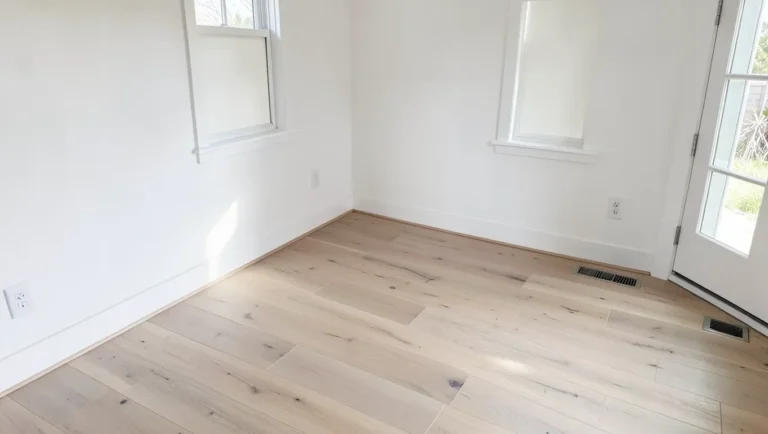
A modern minimalist white oak floor uses clean lines and light hues that complement minimalist interiors, creating a sense of openness and modernity.
Rustic Farmhouse White Oak Flooring
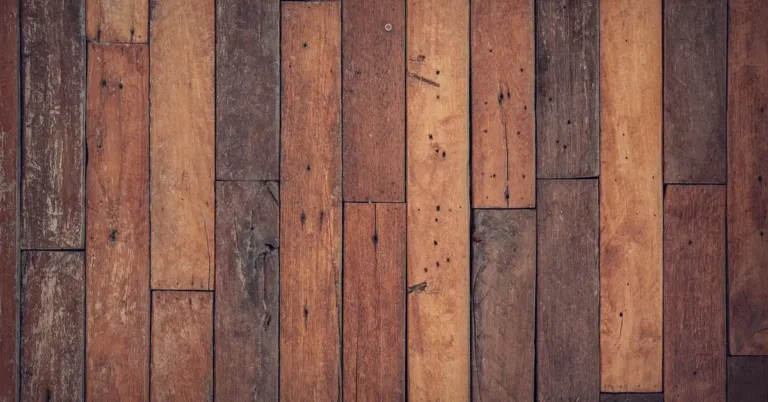
A rustic farmhouse white oak floor leans on natural grain patterns and warm tones for a charming, cozy ambiance in farmhouse-inspired spaces.
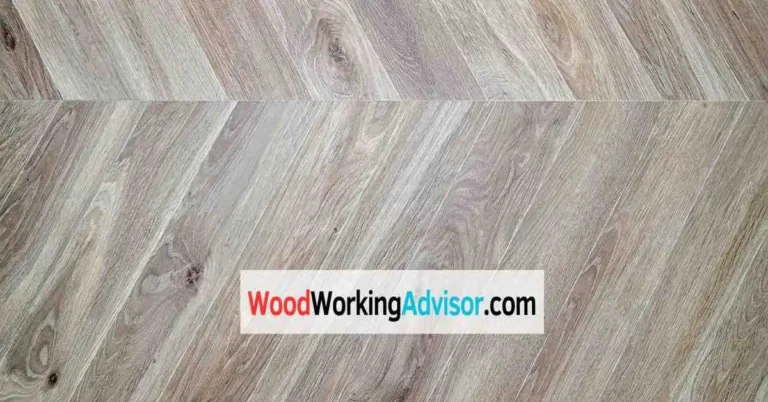
Contemporary Herringbone White Oak Flooring
A herringbone layout adds a dynamic visual element to white oak floors, combining classic charm with a modern twist. For an even more custom look, some homeowners add decorative borders – see our inlay hardwood flooring guide for that variation.
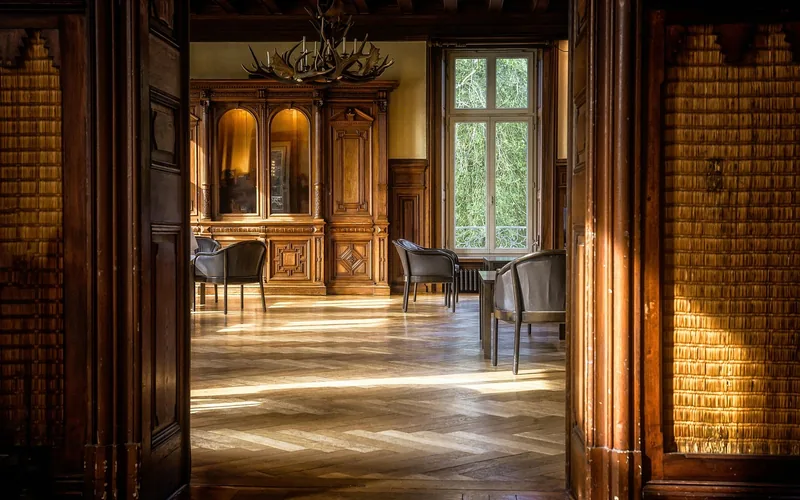
Wire-Brushed Rustic White Oak
Wire-brushing lightly opens the surface grain for a textured, tactile finish that reads rustic without looking rough – a popular 2025-2026 trend pick according to hardwood flooring trend coverage.
Whitewashed (Limed) Nordic White Oak
A whitewashed or limed finish pushes white oak toward a pale, ashy grey-beige tone for a Scandinavian-style, minimalist room.
Wide-Plank Matte Natural White Oak
A matte, low-sheen finish on 7 to 9 inch wide planks emphasizes the raw wood texture and hides footprints and smudges better than a high-gloss finish.
Cut and Finish Decision Matrix
Competitor guides usually cover cuts and styles as separate topics. Here is how they line up together:
| Cut | Stability | Cost vs. Plain-Sawn | Best Style Match | Best Room |
|---|---|---|---|---|
| Plain/Flat Sawn | Standard | Baseline (most economical) | Rustic farmhouse, wire-brushed | High-traffic living/family rooms |
| Rift Sawn | High (less seasonal movement) | Moderate premium | Modern minimalist, matte natural | Kitchens, entryways |
| Quarter Sawn | Highest (most moisture-stable) | Highest premium | Whitewashed Nordic, contemporary | Basements, radiant-heat floors |
“White oak continues to be a dominant domestic selection for 63 percent of members.”
White Oak Flooring Installation
Installation success depends more on subfloor prep and acclimation than on the cut or finish you pick. If you plan to buy it already finished, our prefinished oak flooring guide covers what to check before it ships.
Preparation for Installation
Before installing wide plank white oak flooring, it’s crucial to ensure that the subfloor is clean, dry, and level. All debris, adhesives, and protruding nails must be removed, and any uneven areas should be sanded down to create a smooth surface. Additionally, acclimate the white oak planks to the room’s temperature and humidity levels for at least 72 hours to prevent warping or shrinking post-installation.
Tips for Installing Wide Plank White Oak Flooring
- Start with meticulous measurements and layout planning to minimize cutting and waste.
- Choose the appropriate installation method – nail-down, glue-down, or floating – to suit the environment and subfloor conditions.
- Allow for expansion gaps around the perimeter of the room to accommodate seasonal movement.
- Always use the recommended adhesive or nails for secure and durable fixation.
- Use tapping blocks and spacers to maintain correct plank alignment during installation.
White Oak Flooring Cost Breakdown (2026)
White oak flooring costs $5 to $14 per square foot for solid material and $4 to $12 per square foot for engineered material, according to 2026 pricing data from Angi and Homewyse. Fully installed with labor, expect $8 to $18 per square foot for solid white oak, and roughly $7 to $10 per square foot for engineered white oak from brands like Shaw, Mohawk, and Bruce.
- Material cost: price varies by grade and width; higher-grade white oak generally costs more.
- Installation cost: varies with room size, layout complexity, and local labor rates.
- Maintenance cost: regular upkeep is minimal compared to other flooring options.
- Longevity: solid white oak’s durability makes it cost-effective over the long run.
- Resale value: white oak flooring can support a home’s resale value.
Maintaining White Oak Floors
Keep indoor relative humidity between 30% and 50% year-round, per NWFA installation guidelines, to prevent gapping, cupping, or crowning as the wood expands and contracts with the seasons. Solid white oak can be sanded and refinished 5 to 10 times over a service life of 100+ years; engineered white oak with a 4 to 6mm wear layer supports 2 to 3 refinishes and typically lasts 30 to 50 years.
- Regularly sweep or vacuum the floors to remove dirt, dust, and debris.
- Use a damp mop with a mild, pH-neutral cleanser designed for hardwood floors to clean stains or spills.
- Wipe up spills immediately to prevent damage to the wood.
- Place doormats at entryways to minimize the dirt and grit tracked onto the floors.
- Avoid harsh cleaning chemicals or abrasive tools that can scratch or damage the finish.

Frequently Asked Questions About White Oak Flooring
Are White Oak Floors Expensive?
White oak floors can be expensive due to their durability and premium quality, but prices vary and are often considered a worthwhile investment.
Is White Oak a Good Choice for Flooring?
White oak flooring is a great choice due to its durability, versatile stains, and style flexibility. If you prefer a more consistent grain pattern, consider maple as an alternative.
Is White Oak Still in Style?
White oak is still in style. It’s gaining popularity among homeowners for its durability, stain options, and timeless appeal.
What Are the Three Types of White Oak Hardwood Floors?
White oak hardwood floors come in three types: plain/flat sawn, rift sawn, and quarter sawn. Plain/flat sawn is the most common and offers durability for high-traffic areas. Rift sawn and quarter sawn have unique grain patterns and are also durable options.
Is White Oak Flooring Worth It?
Yes, for most homes. White oak’s 1,360 Janka hardness, closed grain, and resale appeal justify the $8 to $18 installed cost per square foot for buyers planning to stay 10+ years. It’s a weaker case for a quick flip, where cheaper engineered options recoup less.
Does White Oak Flooring Scratch Easily?
No more than other common hardwoods. White oak’s above-average 1,360 lbf Janka rating resists dents and scratches better than softer woods like pine, but it isn’t scratch-proof. Felt pads under furniture and regular pet-nail trims still matter.
Can White Oak Flooring Go in a Kitchen or Bathroom?
White oak works in kitchens with prompt spill cleanup, thanks to its closed, rot-resistant grain, but bathrooms and other standing-moisture areas call for engineered white oak with a stable core – no oak floor, solid or engineered, is fully waterproof.
Conclusion
White oak flooring offers a rare combination: a Janka hardness that beats red oak, a closed grain that resists moisture, and a style range from modern minimalist to whitewashed Nordic. Whether you prioritize durability or a specific look, matching the cut and finish to your room matters more than picking a single “best” style.
Sponsored / affiliate links. As an Amazon Associate I earn from qualifying purchases. I may earn additional commission from eligible campaigns.