Can I Stay in My House While Floors Are Refinished? (VOC Facts)
You can usually stay home during floor refinishing with water-based polyurethane after 24 to 48 hours clear of the room, but oil-based polyurethane’s stronger fumes push most pros to recommend 3 to 7 days elsewhere. This matters: the EPA has measured indoor VOC levels spike 1,000 times outdoor background during finishing work – a real risk for pregnant women, infants, and asthma sufferers. This guide covers exact timelines by finish type, sanding dust and lead-paint risk, and safe ventilation.
Water-Based vs. Oil-Based Polyurethane: How Long You Need to Stay Away
The finish your contractor (or you) chooses is the single biggest factor in whether staying home is realistic. Water-based polyurethane is a meaningful step down in fume intensity from oil-based formulas, dries faster, and clears odor in roughly one to three weeks. Oil-based polyurethane produces heavier, longer-lasting solvent fumes and can take 30 to 45 days for the smell to fully clear, even though the floor is safe to walk on much sooner than that.
| Factor | Water-Based Polyurethane | Oil-Based Polyurethane |
|---|---|---|
| VOC/fume intensity | Low odor, much lower solvent content | Strong, distinctive solvent odor |
| Minimum time away from the room | 24-48 hours | At least 24 hours minimum; 3-7 days is common professional guidance |
| Odor fully gone | About 1-3 weeks | 30-45 days in some cases |
| Full molecular cure (NWFA) | 7-14 days | About 30 days |
| Best for | Households that need to stay home, sensitive individuals, pets | Empty homes, maximum durability projects, no timeline pressure |
Best Water-Based Floor Finish Pick
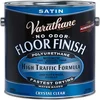 |
Varathane Diamond Water-Based Floor Polyurethane, Satin – $79.79 The low-odor, water-based finish this guide points to when staying home matters – it dries fast enough for same-day recoats and clears odor in roughly 1-3 weeks instead of the 30-45 days oil-based finishes can take.
|
As an Amazon Associate we earn from qualifying purchases.
What Happens During Each Phase of Floor Refinishing
Refinishing has three phases, and each one changes what “staying home” actually means. Sanding comes first and produces fine wood dust that irritates the lungs and eyes – if your home was built before 1978, sanding through old finish can also disturb lead-based paint, which is why the EPA’s Renovation, Repair and Painting Rule requires certified contractors to use dust-containment practices on pre-1978 homes. If you’re doing the sanding and staining yourself, our full step-by-step guide to refinishing hardwood floors walks through the grits and equipment.
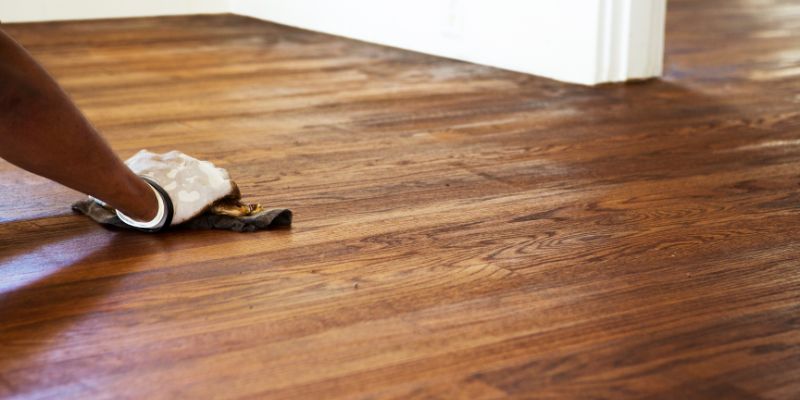
Staining (if the floor is being re-colored, not just re-coated) adds its own solvent smell but clears faster than polyurethane. The finish coats are what actually determine your timeline – most jobs use 2 to 4 coats, with 2 to 4 hours of dry time between coats for water-based poly versus 8 to 24 hours for oil-based, which is also why oil-based jobs simply take longer calendar-wise even before you count fume clearance.
Job length also depends on square footage, not just finish type. A single bedroom typically finishes sanding and coating in 1 to 2 days; a whole-floor job can run 3 to 5 days before the last coat even goes down, and that timeline stacks on top of the cure and off-gassing periods already covered above. Many professional crews now use dustless sanding systems connected to a HEPA vacuum that capture up to 95% of sanding dust at the source – a real improvement over older belt sanders, though some fine dust still settles in adjoining rooms with open doorways.
Who Should Leave the House Regardless of Finish Type
Finish type sets the general timeline, but some households should treat any refinishing job – even water-based – as a full-house event and plan to be elsewhere for at least the first 24 to 48 hours: pregnant women, infants and young children, anyone with asthma, COPD, or another respiratory condition, older adults, and pets, whose noses are far more sensitive to solvent fumes than ours.
📊 Indoor VOC levels can run 2 to 5 times higher than outdoors on a normal day, and up to 1,000 times higher during and right after activities like paint stripping or floor finishing. – Source: US EPA, Indoor Air Quality (IAQ)
If anyone in the home falls into one of these groups, ask the contractor which product they’re using and pull its safety data sheet – off-gassing profiles vary by manufacturer, and the data sheet is the most accurate answer for that specific can, not a general rule of thumb.
How to Ventilate and Speed Up Safe Reoccupancy
Whichever finish is used, the same ventilation habits shorten how long fumes linger indoors.
- Open windows on opposite sides of the room: cross-ventilation clears fumes far faster than a single cracked window.
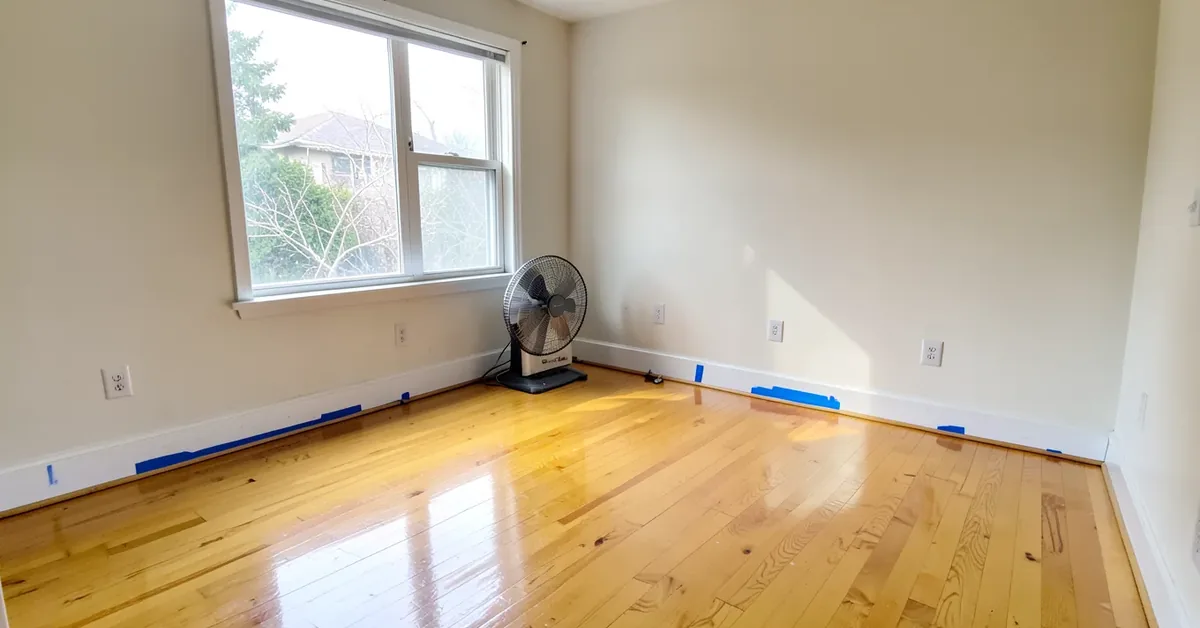
- Point a box fan out an open window: exhausting air outward (rather than just circulating it) pulls fumes with it instead of pushing them into the rest of the house.
- Seal the work area off from the rest of the home: close interior doors and use a taped plastic sheet over doorways if the finished room shares an open floor plan.
- Turn off central HVAC while coats are drying: a running air handler can pull fumes through the ductwork into bedrooms far from the work.
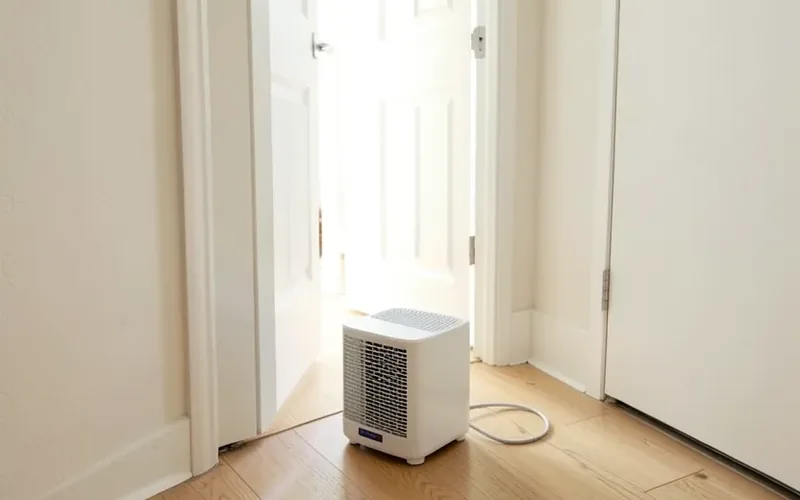
- Run a portable air purifier with an activated carbon filter in the hallway outside the sealed room – carbon filters capture VOCs that a HEPA-only filter will pass right through.
- Wait for full cure, not just dry-to-touch, before rugs or furniture: a floor can feel dry after 24 hours and still dent or imprint for another 1 to 4 weeks depending on the finish.
“A floor can feel completely dry 24 hours after the final coat and still be soft enough to dent with a furniture leg or imprint with a rug backing – that damage is permanent. Full cure takes about 7-14 days for water-based polyurethane and about 30 days for oil-based.”
Frequently Asked Questions
Can you stay in the house while floors are being refinished?
Yes, in most cases – especially with a water-based finish, where 24 to 48 hours clear of the room is often enough. With an oil-based finish, plan on 3 to 7 days away, and longer if anyone in the home is pregnant, an infant, elderly, or has a respiratory condition.
How long do I have to stay out of the house after floor refinishing?
For water-based polyurethane, 24 to 48 hours away from the finished room is typical. For oil-based polyurethane, most professionals recommend 3 to 7 days, since the fumes are stronger and linger longer. Either way, avoid rugs and furniture on the floor until it fully cures – 7 to 14 days for water-based, about 30 days for oil-based.
Are floor refinishing fumes dangerous?
They can be. Polyurethane fumes contain volatile organic compounds that the EPA has measured at up to 1,000 times normal outdoor levels during and right after finishing work, and can cause headaches, nausea, and airway irritation. The risk is highest for oil-based finishes and for pregnant women, infants, and people with asthma or other respiratory conditions.
Can I sleep in my house after refinishing hardwood floors?
Sometimes, if the finished room is sealed off, your sleeping area is genuinely separate, and windows or fans are actively pulling fumes outside. If the smell is still noticeable near where you sleep, or if kids, pregnancy, or asthma are involved, it’s safer to spend at least the first night or two elsewhere.
Do I still need to leave the house if the contractor uses water-based polyurethane?
Not necessarily for the whole household, but most homeowners still stay clear of the actual room for at least 24 to 48 hours. Water-based poly has far lower VOCs than oil-based, but it isn’t fume-free – check the product’s safety data sheet if anyone in the home is especially sensitive.
Conclusion
Water-based polyurethane is what makes staying home realistic for most households – low odor, a 24 to 48 hour clearance window, and full cure in under two weeks. Oil-based polyurethane still has its place for maximum durability, but it comes with a longer wait, stronger fumes, and less flexibility if anyone in the house is sensitive to them. Whichever finish you choose, ask for the safety data sheet, ventilate aggressively, and give the floor real cure time before furniture and rugs go back down. If your main question is specifically whether it is safe to sleep there tonight rather than the whole-house refinishing timeline, see can you sleep in the house after polyurethane for the by-type wait times. For the sanding and application steps themselves, see our full guide to refinishing hardwood floors, and for the bigger picture on flooring choices, our wood flooring guide covers species, costs, and care. If you’re wondering whether your floor can even take another refinish, see how many times you can refinish wood floors before the veneer runs out.
Sponsored / affiliate links. As an Amazon Associate I earn from qualifying purchases. I may earn additional commission from eligible campaigns.