Can You Cut PVC With a Miter Saw? Yes, With the Right Blade
Yes, a miter saw can cut PVC pipe and PVC trim cleanly – but the standard wood-cutting blade that came with your saw is the wrong tool for the job. PVC is a thermoplastic, and a coarse-tooth wood blade spinning at full speed generates enough friction heat to melt the plastic instead of slicing through it, leaving a rough, gummy edge instead of a clean one.
Swap in a fine-tooth blade built for plastics, slow the feed rate, and support the pipe properly, and a miter saw will out-cut a hacksaw or a handheld PVC pipe cutter every time – especially on angled cuts for fittings, fascia, or trim. Here’s exactly what changes when the material in front of the blade is PVC instead of wood.
Why a Regular Wood Blade Struggles With PVC
A standard wood-cutting blade usually has somewhere between 24 and 40 large, aggressively-shaped teeth. That geometry is designed to rip through wood fibers quickly, and on lumber that works fine. On PVC, those same big teeth take huge, fast bites out of the plastic. Because PVC is a thermoplastic, it softens well before it burns – a coarse blade spinning at full RPM builds up enough localized friction heat at the cut line to melt the plastic rather than shear it.
The result is a cut edge that looks torn or gummy, with strings of re-hardened plastic clinging to the kerf, plus a real risk of the blade grabbing and chipping the pipe wall instead of cutting through it cleanly. The fix isn’t a different saw – it’s a different blade.
BEST FINE-TOOTH BLADE FOR PVC
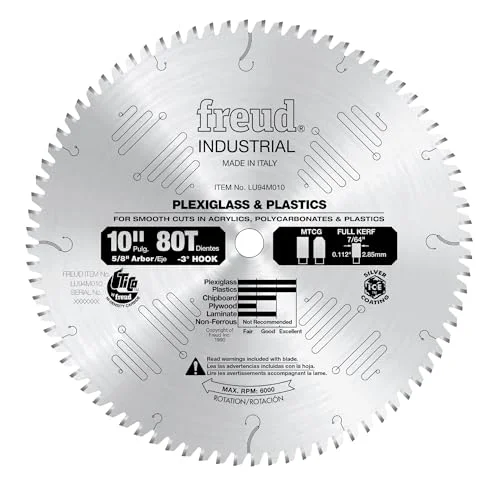 |
Freud LU94M010 10" 80-Tooth Plastic Blade – $110 The MTCG tooth grind and negative hook angle referenced above are exactly what this blade is built around, so PVC stays cool and doesn’t melt mid-cut.
|
The Right Blade for Cutting PVC
Look for a blade with a high tooth count and a shallow, negative hook angle – roughly -3° to -5°. That negative angle makes the blade scrape through the material instead of aggressively shearing it the way a wood blade does, which is exactly what keeps PVC from grabbing or chipping.
- Tooth count: 80 to 100 teeth on a 10-inch blade (or the equivalent density on a 12-inch blade) gives each tooth a much smaller bite, which keeps heat buildup down.
- Tooth design: a triple chip grind (TCG) or modified triple chip grind (MTCG) is purpose-built for plastics and non-ferrous material – the alternating flat and beveled teeth score and scrape the cut instead of tearing it, which is what actually prevents melting.
- Carbide tips: a carbide-tipped blade holds an edge far longer against PVC’s abrasive filler content than a plain steel blade.
A dedicated plastics blade like the Freud LU94M010 (10-inch, 80-tooth, MTCG grind) is built specifically around these specs and is the blade referenced in the pick below. You don’t need to buy a separate blade for every project – one good plastics blade will handle PVC pipe, PVC trim, acrylic, and laminate for years.
How to Cut PVC With a Miter Saw, Step by Step
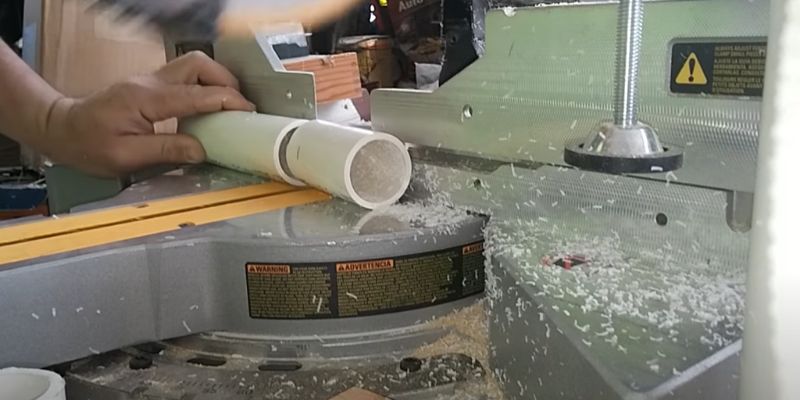
Once the right blade is mounted, the technique itself is straightforward, but a couple of details matter more with PVC than with lumber:
- Support the pipe on both sides of the cut. Round stock rolls and shifts far more than flat lumber does on a saw table, so use the fence plus an extra support block or a V-notch jig to keep the pipe from rotating as the blade contacts it. An uneven cut on PVC almost always traces back to the pipe shifting mid-cut.
- Clamp it down. Don’t rely on hand pressure alone for anything past a quick trim cut – a clamp or the saw’s built-in material clamp keeps the pipe from spinning into the blade.
- Use a slow, steady feed rate. Let the blade come up to full speed before it contacts the pipe, then lower it in one smooth, unhurried motion. Feeding too fast is the single most common cause of melted, gummy edges – the blade needs time to scrape through each tooth’s worth of material rather than being forced through it.
- Mark your angle carefully before cutting. PVC fittings are less forgiving of a slightly-off miter angle than a wood joint that can be caulked or sanded to fit – dry-fit the pipe and fitting first if the cut needs to be exact.
Dust and Fume Safety When Cutting PVC
It’s worth being precise here, because the two real hazards involved – cutting dust and burning fumes – are not the same thing, and conflating them either overstates or understates the actual risk.
A clean saw cut at the correct blade and feed rate does not combust PVC. The genuinely toxic hazard with PVC is hydrogen chloride (HCl) gas released when the material actually burns or is heated to the point of decomposition – that’s a real risk with a torch, a hot-knife, or an overheated blade that’s allowed to sit and melt through the material rather than cut it. A correctly-bladed, properly-fed miter saw cut isn’t generating that kind of heat.
What a miter saw cut does generate is fine plastic dust and small chips – particulate, not combustion byproducts. That dust isn’t something you want to breathe deeply or repeatedly either; it’s a respiratory irritant like most fine plastic or wood dust. A basic dust mask (N95 or better) and cutting in a ventilated space or with a vacuum/dust collection attachment on the saw is a sensible, proportionate precaution – you don’t need a respirator rated for chemical fumes, but you also shouldn’t cut a stack of PVC pipe indoors with no airflow and no mask.
Common Mistakes That Ruin a PVC Cut
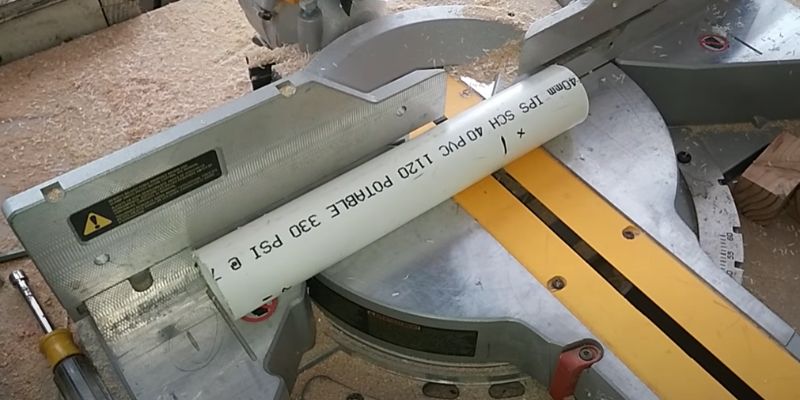
- Using the wood blade that’s already on the saw. This is the single biggest cause of melted, chipped, or torn PVC cuts – swap blades before you start.
- Feeding too fast. Forcing the cut generates more friction heat and gives the blade less time to scrape cleanly through the material.
- Not supporting round stock. Letting the pipe rest unsupported past the fence lets it flex and roll mid-cut, which shows up as an uneven or angled edge.
- Skipping eye and dust protection. PVC throws fine chips and dust at the cut line just like any other material on a spinning blade.
Miter Saw vs Other Tools for Cutting PVC
A miter saw isn’t the only way to cut PVC, and it isn’t always the right choice:
- Handheld PVC pipe cutter (ratchet-style): faster for quick, straight cuts on smaller-diameter pipe out in the field, but it can’t do angled or miter cuts and struggles on larger-diameter pipe.
- Hacksaw: cheap and portable, but slow, and it’s easy to cut out of square by hand without a miter box.
- Miter saw with the right blade: the best option when you need a precise angle, a clean square cut on larger pipe or PVC trim boards, or you’re already set up at a bench with the saw running.
For plumbing work done entirely in the field, a pipe cutter is often more practical. For trim work, fabrication, or any cut where the angle matters, the miter saw is the more accurate tool once it’s wearing the correct blade.
Frequently Asked Questions About Cutting PVC With a Miter Saw
Can you cut PVC with a miter saw?
Yes. Use a fine-tooth blade built for plastics (80–100 teeth, triple chip or MTCG grind), feed slowly, and support the pipe on both sides of the cut. A standard coarse wood blade will melt or chip the material instead of cutting it cleanly.
Will cutting PVC with a miter saw release toxic fumes?
No, not from a normal cut. A correctly-bladed cut at a proper feed rate produces fine plastic dust and chips, not the hydrogen chloride gas released when PVC actually burns or is overheated to the point of melting through. Wear a basic dust mask and cut with reasonable ventilation as you would for any fine plastic dust.
What blade should I use to cut PVC on a miter saw?
A dedicated plastics blade with 80 to 100 teeth, a triple chip or modified triple chip grind (MTCG), carbide tips, and a negative hook angle around -3° to -5°. This tooth geometry scrapes through the material instead of tearing it, which is what keeps the cut from melting or chipping.
Conclusion
A miter saw can absolutely handle PVC, and for angled or precision cuts it’s a better tool than a hacksaw or handheld pipe cutter. The whole difference between a clean cut and a melted, chipped mess comes down to three things: a fine-tooth plastics blade instead of the wood blade already on the saw, a slow and steady feed rate, and proper support for round stock. Get those right and PVC cuts as predictably as any hardwood.
Sponsored / affiliate links. As an Amazon Associate I earn from qualifying purchases. I may earn additional commission from eligible campaigns.