Can You Cut Tile With a Miter Saw? (Diamond Blade & Dust Safety)
A miter saw can cut tile only with a diamond blade rated for its RPM — a standard wood-cutting blade will bind, shatter, or send tile fragments through the guard. Dry-cutting also throws fine crystalline silica dust that OSHA links to silicosis, so a respirator or wet-cutting is required. This guide covers blade selection, safe technique, and why a wet tile saw is often the better tool.
This post contains affiliate links. As an Amazon Associate we earn from qualifying purchases.
Quick Answer
Yes — but only with a diamond blade matched to your miter saw’s arbor size and RPM rating (commonly 5/8-inch arbor, rated up to 6,000–8,700 RPM depending on blade diameter). Never mount a standard steel wood-cutting blade on tile: it can shatter or bind and send fragments through the blade guard. Dry-cutting also releases fine crystalline silica dust, so wear a NIOSH-rated N95 respirator or cut with water. For frequent or large tile jobs, a dedicated wet tile saw is the safer, more precise choice.
Why a Standard Wood Blade Can’t Cut Tile Safely
Best Tile-Cutting Blade Pick

DEWALT 10-Inch Diamond Blade for Ceramic Tile, Wet Cutting (DW4761)
A 10-inch continuous rim diamond blade built for wet-cutting ceramic and porcelain, sized for most standard miter saws.
- Best for: Swapping out a miter saw’s wood blade before cutting ceramic or porcelain tile.
- Why we picked it: Continuous rim gives the cleanest edge and matches the 10-inch size most miter saws use.
- Main drawback: Rated for wet cutting — still needs a respirator and dust plan if used dry.
Compare more tile-cutting safety options
 Option 1 3M 8210 N95 Particulate Respirator, NIOSH Approved, 20-Pack
|
 Option 2 DEWALT 10-Inch Wet Tile Saw with Stand (D24000S)
|
 Option 3 DEWALT 7-Inch Diamond Blade for Masonry (DW4712B)
|
As an Amazon Associate we earn from qualifying purchases.
A miter saw’s stock blade is a steel, toothed blade engineered to shear wood fiber — it is not hard enough or shaped correctly to grind through ceramic, porcelain, or stone. Forcing tile through a wood blade can chip or crack the tile unpredictably, dull or fracture the blade teeth, and in worse cases cause the blade to bind and kick back or shatter. Because the miter saw’s guard is designed to stop wood chips, not high-speed ceramic or steel fragments, a blade failure on tile is a genuine injury risk, not just a ruined cut.
A diamond blade is a cutting disc with industrial diamond grit bonded to its rim that grinds through hard, brittle materials instead of shearing them like a toothed blade does. It is the only blade type rated for tile, porcelain, and stone on a miter saw. Match the blade’s arbor size (commonly 5/8 inch) and its printed maximum RPM to your saw’s specifications — a diamond blade sized wrong for your miter saw can wear unevenly or fail well before a properly matched one would.
Selecting the Right Blade for Tile
Choosing the right miter saw blade determines whether your cuts come out clean or chipped. The main tile-rated options are:
- Continuous rim diamond blades — smooth edge, best for clean cuts on ceramic and porcelain with minimal chipping.
- Turbo rim diamond blades — serrated segments for faster cutting, used mainly on stone and thicker material.
- Segmented/abrasive blades — faster but rougher edges, better suited to rough-cut masonry than finish tile work.
Always confirm the blade’s arbor size, diameter, and maximum RPM against your specific miter saw model before installing it, and choose a wet-rated blade if your saw or setup can supply water to the cut — dry-rated blades work but generate more dust and heat.
Typical Uses of a Miter Saw
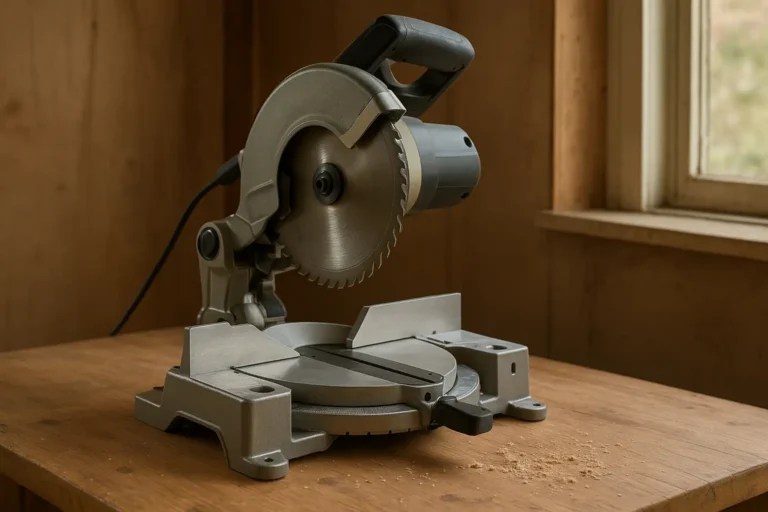
A miter saw is built for making precise angle cuts in wood — picture frames, crown molding, and trim carpentry are its bread and butter. Its stock blade is sharp, fine-toothed, and made specifically to shear wood fiber, which is exactly why that same blade is the wrong tool for tile.

The Silica Dust Risk Most Guides Skip
Ceramic tile, porcelain, and natural stone all contain crystalline silica. Dry-cutting any of them — on a miter saw or otherwise — grinds that silica into a fine, respirable dust that lodges deep in the lungs. Repeated exposure is linked to silicosis, a progressive and irreversible lung disease that OSHA has regulated under a dedicated construction standard since 2017.
📊 Dry-cutting tile has been measured releasing 40–440 micrograms of respirable crystalline silica per cubic meter of air — several times OSHA’s permissible exposure limit of 50 µg/m³ (action level 25 µg/m³) for an 8-hour shift. — Source: OSHA Respirable Crystalline Silica Standard for Construction, 2017
“Workers exposed to respirable crystalline silica are at increased risk of developing silicosis, an incurable lung disease, as well as lung cancer, chronic obstructive pulmonary disease, and kidney disease.”
To cut tile safely: wear a NIOSH-approved N95 (or higher) respirator rated for particulates, work in a ventilated area, and whenever possible cut wet — a steady stream of water suppresses dust at the point of contact instead of letting it become airborne. A shop vacuum with a HEPA filter attached to the saw’s dust port helps further, but water suppression and respiratory protection are the two controls that matter most.
| Tool | Dust / Safety | Precision | Best For |
|---|---|---|---|
| Miter saw + diamond blade | High silica dust if cut dry; needs respirator or added water | Good for straight and simple angled cuts only | Occasional cuts when you already own the saw |
| Wet tile saw | Water suppresses dust at the blade continuously | Best precision, handles bevels and porcelain cleanly | Full tiling jobs, porcelain, stone, large format tile |
| Manual tile cutter (snap cutter) | No dust generated — scores and snaps rather than grinding | Straight cuts only, no angles or curves | Small jobs with softer ceramic tile |
How to Cut Tile With a Miter Saw Safely
Once the saw is fitted with a properly rated diamond blade, follow these steps:
- Put on protection: safety goggles, hearing protection, and a NIOSH-rated N95 respirator before the saw is switched on.
- Mark the cut line: measure and mark the tile with a pencil or scribe, double-checking the measurement.
- Set the angle: adjust the miter saw’s angle and bevel and lock it securely in place.
- Secure the tile: clamp the tile firmly to the saw table so it cannot shift during the cut.
- Add water if possible: a slow drip or spray bottle aimed at the cutting line keeps silica dust down and the blade cooler.
- Cut slowly: lower the spinning blade into the tile with steady, light pressure — never force it.
- Clear debris: once the cut is complete, switch off the saw before removing the tile piece.
Common Mistakes to Avoid
- Using the saw’s original wood blade “just for one cut” — the shatter risk is not worth it.
- Cutting dry indoors without a respirator or dust collection.
- Forcing the tile through the blade, which causes chipping and blade overheating.
- Skipping the manufacturer’s RPM rating when buying a diamond blade.
Precision Techniques for Cleaner Cuts
Use a straightedge and a sharp scribe to mark the cutting line, then make a light test pass on a scrap tile before cutting the real piece — this confirms the blade angle and bevel are correct. For small or fragile tiles, a bullnose blade or tile nipper for fine trims reduces breakage, and running a strip of masking tape along the cut line helps prevent chip-out on brittle glazed tile.

Finishing and Saw Maintenance
Smooth any rough cut edges with a diamond hand pad or tile file so there are no sharp edges left to handle. Afterward, clear all tile debris from the saw table, guard, and blade with a brush or compressed air, inspect the miter saw blade for wear, and reinstall a wood blade before returning the saw to woodworking use — never leave a diamond blade mounted for general carpentry.
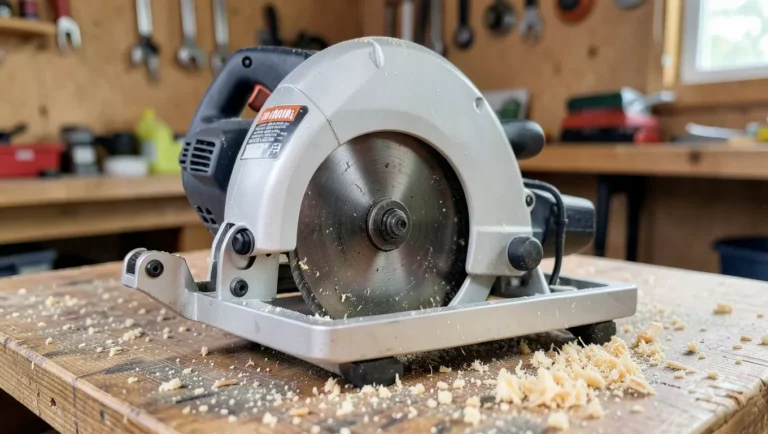
If tile cutting on a miter saw still feels risky for your project, a circular saw with a tile-rated blade is another option worth comparing for straight cuts, though a dedicated wet tile saw remains the safer choice for anything beyond a handful of cuts.
Frequently Asked Questions
Can a Miter Saw Cut Tile?
Yes, but only with a diamond blade rated for tile and matched to your saw’s arbor size and RPM. A standard wood-cutting blade should never be used on tile — it can shatter, bind, or send fragments through the guard.
Can You Use a Regular Wood Blade on a Miter Saw to Cut Tile?
No. A standard steel, toothed wood blade is not hard enough to grind through ceramic, porcelain, or stone. Forcing tile through it risks chipping the tile, damaging the blade, and dangerous blade shatter or kickback.
Do You Need a Respirator to Cut Tile With a Miter Saw?
Yes, for any dry cut. Cutting tile releases fine crystalline silica dust that OSHA links to silicosis. Wear a NIOSH-approved N95 respirator, work in a ventilated area, and add water to the cut whenever possible to suppress dust.
What Kind of Blade Do I Need to Cut Tile With a Miter Saw?
A diamond blade sized to your miter saw’s arbor and rated for its RPM. Continuous rim diamond blades give the cleanest edge on ceramic and porcelain; turbo rim blades cut faster but leave a rougher edge, best for stone.
Is a Wet Tile Saw Better Than a Miter Saw for Cutting Tile?
For most tile work, yes. A wet tile saw continuously cools and rinses the blade with water, which controls dust and heat far more effectively than a miter saw with an occasional water spray, and it handles porcelain, bevels, and large-format tile more precisely.
Conclusion
A miter saw can cut tile, but only when it is fitted with a diamond blade rated for your saw’s RPM and arbor size — never the wood-cutting blade it ships with. Treat the silica dust as seriously as the blade choice: wear a respirator, add water when you can, and reach for a dedicated wet tile saw once a job grows beyond a few occasional cuts.
Silica exposure data and standards referenced above: OSHA – Crystalline Silica Overview and OSHA Respirable Crystalline Silica Standard for Construction (OSHA 3681).
Sponsored / affiliate links. As an Amazon Associate I earn from qualifying purchases. I may earn additional commission from eligible campaigns.