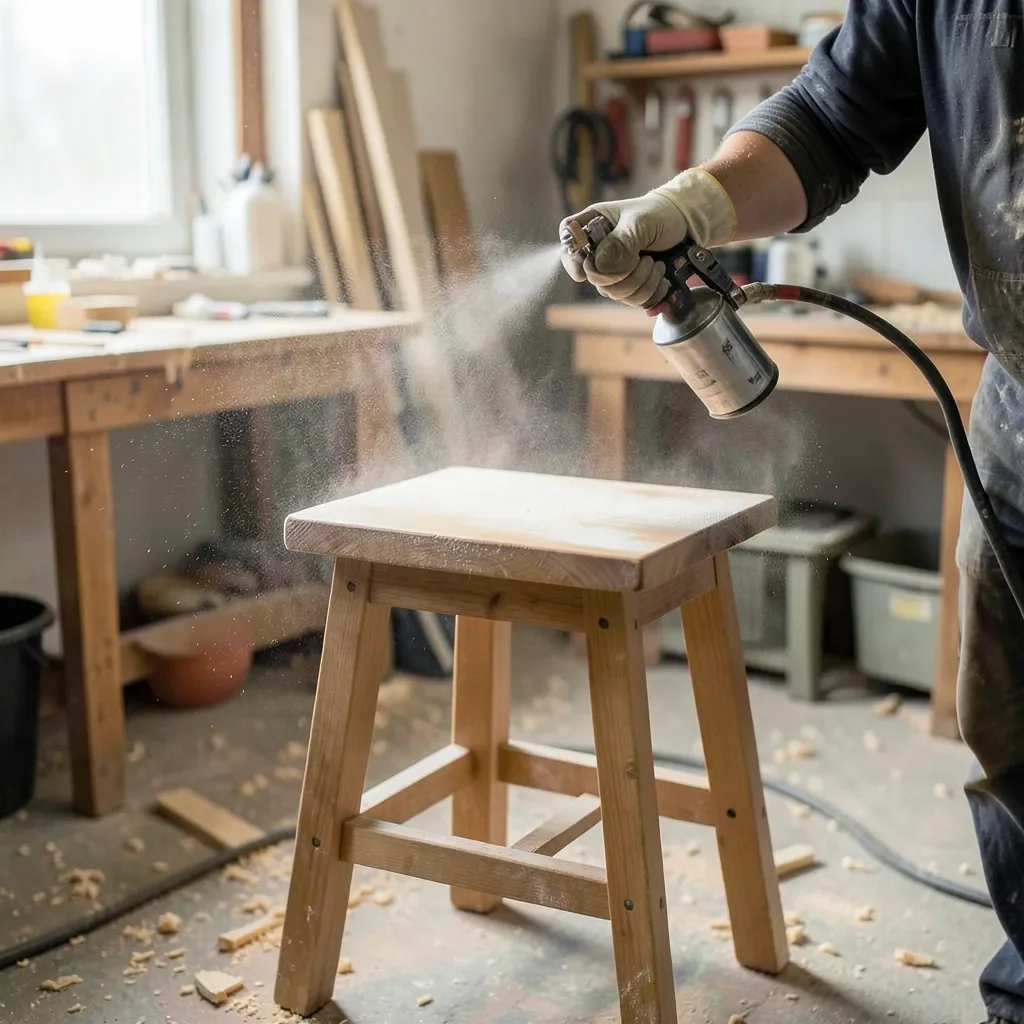
Can You Spray Lacquer Over Latex Paint? Use a Barrier Coat
Spraying lacquer straight over latex paint is not safe — its solvents (toluene, xylene, acetone) can lift, wrinkle, or blister the water-based paint film within minutes, except on paint that has cured 30+ days and passes a spot test. Skipping this step means redoing the whole paint job, and lacquer fumes are flammable in an unventilated room. This guide covers why the reaction happens, the shellac barrier-coat method that makes it safe, spot-testing, and step-by-step application.
Why Lacquer Can Lift or Wrinkle Latex Paint
Best Barrier-Coat Pick
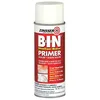
Zinsser B-I-N Shellac-Base Primer/Sealer Spray, 13 oz
$19.35 at Home Depot — a fast-drying shellac primer in an aerosol can, sized for small furniture and trim projects.
- Best for: small pieces, spot repairs, and quick barrier coats before spraying lacquer
- Why we picked it: aerosol format needs no brush or thinning — one light pass isolates the latex in minutes
- Main drawback: a 13 oz can only covers a few square feet of barrier coat before it runs out
Compare more barrier-coat and lacquer options
 Option 1 Zinsser Bulls Eye SealCoat Sanding Sealer, 1 qt
|
 Option 2 ProLuxe Gloss Clear Spray Lacquer, 12.25 oz
|
 Option 3 3M OV/P95 Paint Spray Respirator, Medium
|
As an Amazon Associate we earn from qualifying purchases.
Latex paint is a water-based coating — acrylic or vinyl resin suspended in water, with pigment. Once it dries, the film stays somewhat flexible and slightly permeable. Lacquer is the opposite: it’s a solvent-based finish that dries by fast solvent evaporation, leaving a hard, brittle, non-permeable shell.
When you spray solvent lacquer over latex, the lacquer thinner (toluene, xylene, acetone, or similar aromatic solvents) can partially re-dissolve or soften the latex binder underneath before the lacquer skins over. That reaction is what causes wrinkling, bubbling, or a “melted” texture in the paint film — it’s not a defect in either product, it’s a straightforward solvent-compatibility mismatch. Sheen level matters too: gloss and semi-gloss latex have a denser, more cross-linked surface than flat latex, so they resist the initial solvent hit slightly longer, but neither is fully immune.
📊 Interior latex paint does not reach full cure for 21–30 days after it looks dry to the touch — that’s the window where a solvent topcoat is most likely to attack the film. Source: Sherwin-Williams Paint FAQ, 2026
The Safe Way: Seal First With a Shellac Barrier Coat
The fix isn’t a different lacquer — it’s an isolation layer. A coat of dewaxed shellac (Zinsser B-I-N or Zinsser SealCoat) creates a barrier the lacquer solvents can’t penetrate, because shellac dries by alcohol evaporation and forms a chemically inert film once cured. This is the same technique cabinetmakers use for using shellac on wood as a universal sealer between incompatible finish layers.
Spot-Test Before You Commit
Even fully cured latex paint can react unpredictably depending on the exact resin and additives used. Before treating a whole piece, spray a light test coat — lacquer directly, or lacquer over a small patch of shellac barrier — on a hidden area such as the underside of a shelf or the back of a drawer. Wait a full 30 minutes and inspect closely for wrinkling, bubbling, or a tacky surface. If the test patch stays smooth, the rest of the piece is very likely to behave the same way.
Step-by-Step: Spraying Lacquer Over Latex Paint Safely
- Confirm cure time: Wait at least 21–30 days after the latex paint was applied before proceeding.
- Spot-test: Spray a light test coat on a hidden area and check after 30 minutes for wrinkling or lifting.
- Apply the barrier coat: Brush or spray one thin, even coat of dewaxed shellac (Zinsser B-I-N or SealCoat) over the latex paint and let it dry about 45 minutes.
- Scuff-sand: Once the shellac is dry and hard, lightly sand with 220-grit paper to give the lacquer some tooth for adhesion.
- Spray the lacquer: Apply 2–3 light, even coats of lacquer, 10–15 minutes apart, in a well-ventilated area away from open flame or sparks.
- Inspect between coats: Check the first coat for wrinkling before continuing; if the surface stays smooth, finish coating as needed.
Ventilation and Fire Safety When Spraying Lacquer
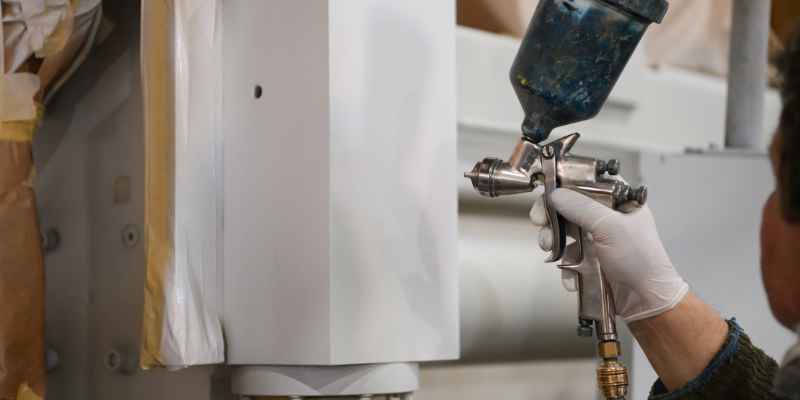
Lacquer solvents are flammable and the vapors can build up quickly in a closed room, so spray in a space with real cross-ventilation — an open garage door with a fan, not just a cracked window — and keep the area away from pilot lights, space heaters, or anything that sparks.
“All spraying areas shall be provided with mechanical ventilation adequate to remove flammable vapors, mists, or powders to a safe location, and to confine and control combustible residues so that life is not endangered.”
A cartridge respirator rated for organic vapors (not just a dust mask) is worth the cost if you’re spraying indoors or without a dedicated booth — a paper dust mask does nothing against solvent fumes.
Tips for a Smooth Finish
Keep Coats Thin and Consistent
Heavy, wet coats are the single biggest cause of runs and of solvent pooling long enough to attack the layer underneath. Several thin passes beat one thick one.
Hold the Can 10–12 Inches Away
Keep the can moving in overlapping horizontal passes at a consistent distance. Stopping mid-pass is what causes drips and runs.
Clean the Sprayer or Nozzle Immediately
Lacquer dries fast, and dried residue in a nozzle or a spray gun fed by an air compressor will clog it before the next use. Invert an aerosol can and clear the nozzle after every session.

Sand and Wipe Down Between Coats
Once dust-free, wipe the surface with a tack cloth (or a lint-free rag lightly dampened with the correct paint thinner for your lacquer type) before the final coat so dust doesn’t get trapped in the finish.
If you’d rather avoid the solvent-compatibility question entirely, a sprayed water-based polyurethane clear coat goes directly over cured latex paint with no barrier coat needed, though it won’t have quite the same glass-hard gloss as lacquer. For surfaces already finished in a satin clear coat or where you’re deciding between finishes, see our guide on whether you can apply lacquer over polyurethane, and check what kind of paint to use on wood if you’re starting the project from scratch.
Frequently Asked Questions
Can I spray lacquer over water-based (latex) paint?
Not directly. Lacquer’s solvents can lift or wrinkle the latex film. Seal the latex first with a dewaxed shellac barrier coat (Zinsser B-I-N or SealCoat), or use a water-based lacquer instead of a solvent-based one.
Can I put a clear coat over latex paint?
Yes — a water-based polyurethane or polyacrylic clear coat goes directly over cured latex paint with no barrier needed. A solvent-based clear coat like lacquer still needs the shellac barrier step first.
How long should latex paint cure before I lacquer over it?
At least 21–30 days, per paint-manufacturer cure guidance. Even paint that’s cured that long can still react, so always spot-test a hidden area before committing to the whole piece.
What happens when you spray lacquer over enamel paint?
Fully cured oil-based enamel is generally compatible with solvent lacquer, since both are solvent-based and bond similarly — unlike latex, which is water-based. Test a hidden area first, since some enamel additives can still cause a reaction.
What can I use instead of lacquer over latex paint?
A water-based polyurethane or polyacrylic topcoat avoids the solvent-lift risk entirely and goes directly over cured latex paint, though the final sheen is softer than a true lacquer finish.
Conclusion
Lacquer and latex paint aren’t directly compatible — the solvents in lacquer can lift, wrinkle, or blister a latex film, even after it’s fully cured. A thin dewaxed shellac barrier coat, a hidden-area spot test, and real ventilation turn a risky combination into a safe, repeatable process.
Sponsored / affiliate links. As an Amazon Associate I earn from qualifying purchases. I may earn additional commission from eligible campaigns.