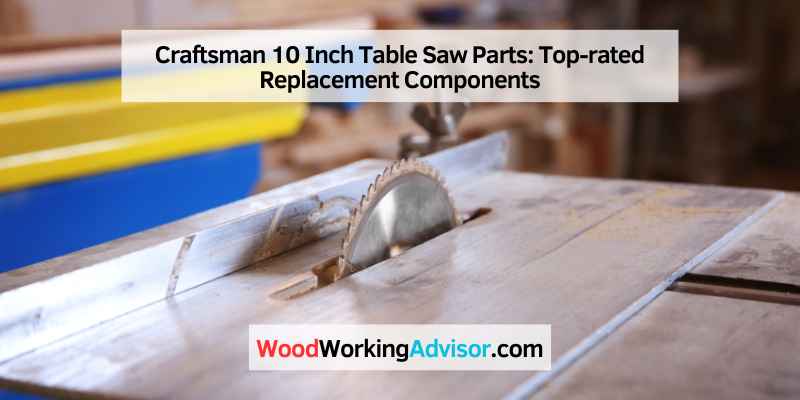
Craftsman 10 Inch Table Saw Parts: Top-Rated Replacement Components
Craftsman 10-inch table saw parts are cross-referenced by the model number on the saw’s data plate, not by the “Craftsman” name alone — the brand covers decades of saws built by different manufacturers, so the right blade, belt, or fence rail depends on which one you actually own.
Craftsman stopped being a Sears-exclusive brand in 2017, when Stanley Black & Decker bought it. That matters for parts sourcing: an older Sears-era Craftsman saw (model numbers usually starting with “113.” or “137.”) sources parts differently than a newer Stanley Black & Decker-made Craftsman saw (model numbers usually starting with “CMXETA”). Check your saw’s data plate, usually on the back of the cabinet or under the tabletop, before ordering anything.
Finding Your Exact Model Number First
Best 10-Inch Blade Pick
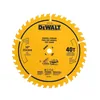 |
DEWALT 10″ 40-Tooth Table Saw Blade (DWA11040) – $22.97 Nearly every 10-inch Craftsman table saw — contractor or benchtop — uses the same 5/8-inch arbor, so a standard 40-tooth combination blade like this one is the most common replacement search that actually applies across the whole model line.
|
As an Amazon Associate we earn from qualifying purchases.
Every part search should start with the full model number, not just “Craftsman 10 inch table saw.” The data plate typically lists a model number and, on newer saws, a serial number used to pin down the exact production run — useful because Craftsman has changed fence and blade-guard designs multiple times on saws that look nearly identical from the front.
The Parts That Actually Wear Out
On a 10-inch contractor or benchtop table saw, a handful of parts account for most replacements:
| Part | Typical Sign of Wear | Fit Note |
|---|---|---|
| Blade | Burning, tear-out, or dull cuts after months of use | 10-inch blades almost universally use a 5/8″ arbor — check yours before assuming |
| Throat/insert plate | Cracked plastic or a widened blade slot | Model-specific — the slot width and mounting tabs vary between Craftsman generations |
| Drive belt | Squealing, slipping, or a blade that bogs down under load | Sold by belt profile/length, not by saw brand — measure the old one |
| Blade guard / riving knife assembly | Missing anti-kickback pawls or a guard that won’t stay down | Model-specific; this is the part most often discontinued on older Sears-era saws |
| Rip fence rail | Play or drift when locking the fence | Fits are saw-generation specific — a newer CMXETA fence rail will not bolt onto an older 113./137. saw |
Where to Source Genuine and Compatible Parts
For Newer (Stanley Black & Decker-Era) Saws
Parts for CMXETA-series saws are sold through CraftsmanPartsDirect and authorized Stanley Black & Decker retailers, searchable by the model number from the data plate.
For Older (Sears-Era) Saws
Sears no longer manufactures these parts, so genuine replacements increasingly come from third-party parts suppliers like eReplacementParts and PartSelect, which stock cross-referenced parts by the original Sears model number. For a discontinued blade guard or fence casting, a compatible aftermarket part is often the only realistic option left.
Universal Wear Parts
Blades and drive belts are not model-specific the way a fence rail or blade guard is — a properly sized blade (5/8″ arbor, correct diameter) or belt (matched by profile and length) from any table saw parts retailer, hardware store, or Amazon will work regardless of where the saw itself came from.
OEM vs. Aftermarket: What Actually Changes
For a blade or belt, OEM vs. aftermarket mostly comes down to price and brand reputation — a correctly sized aftermarket blade cuts the same wood the same way. For a fitted part like a throat plate, blade guard, or fence casting, aftermarket compatibility is less certain: dimensions have to match tab-for-tab, and a loose-fitting insert plate is a real safety issue near a spinning blade.
| Part Type | OEM Needed? | Why |
|---|---|---|
| Blade | No | Standardized arbor and diameter make any correctly sized blade a drop-in fit |
| Drive belt | No | Sold by profile and length, not by saw brand |
| Throat/insert plate | Usually | Mounting tabs and slot width are saw-specific; a loose plate is a safety risk |
| Blade guard / riving knife | Usually | Has to match the saw’s specific arbor and trunnion geometry to sit correctly |
| Rip fence rail | Yes | Bolt pattern and rail length are specific to the saw generation |
Maintenance That Reduces How Often You Need Parts
- Clean sawdust off the trunnion and blade-height mechanism after heavy use — packed sawdust is what usually wears out the height and bevel adjustment gears early.
- Check belt tension if you notice the blade slowing under load before assuming the motor is failing — a slipping belt is a far more common (and cheaper) cause.
- Store the saw covered in a dry space. Rust on the tabletop and fence rails is one of the most common reasons a saw that’s otherwise mechanically fine gets parted out.
- Replace anti-kickback pawls if they’re bent or missing rather than removing the whole blade guard assembly — the pawls are usually the only genuinely worn component in that assembly.
Frequently Asked Questions
What are the key parts of a Craftsman 10 inch table saw?
The parts that most often need replacing are the blade, throat/insert plate, drive belt, blade guard and riving knife assembly, and rip fence rail. The arbor, trunnions, and motor housing rarely fail under normal use.
How do I know which parts fit my specific saw?
Check the model number on the data plate, usually on the back of the cabinet or under the tabletop. Older Sears-era saws (model numbers starting with “113.” or “137.”) and newer Stanley Black & Decker saws (model numbers starting with “CMXETA”) use different fence, guard, and insert-plate designs even when the saw looks similar from the front.
Where can I find replacement parts for a Craftsman 10 inch table saw?
Newer saws are supported through CraftsmanPartsDirect and authorized Stanley Black & Decker retailers. Older, discontinued Sears-era parts are more often found through third-party suppliers like eReplacementParts and PartSelect, cross-referenced by the original model number.
Do I need OEM parts, or will aftermarket work?
For a blade or drive belt, a correctly sized aftermarket part works exactly as well as OEM. For a fitted part like a throat plate, blade guard, or fence rail, OEM or a verified exact-fit aftermarket part matters more, since a loose-fitting part near the blade is a safety concern, not just a performance one.
Conclusion
The fastest way to the right part is starting from your saw’s actual model number rather than searching “Craftsman 10 inch table saw parts” and hoping for a universal fit. Blades and belts are close to universal by size; guards, insert plates, and fence rails are not, and matching the exact model prevents an install that doesn’t sit right on a tool spinning at several thousand RPM.
Sponsored / affiliate links. As an Amazon Associate I earn from qualifying purchases. I may earn additional commission from eligible campaigns.