Replacement Blades for Stanley Planes: Sizing and Where to Buy
A Stanley plane’s number determines its iron width — a No. 4 takes a 2″ blade, a No. 6 takes 2-3/8″ — but width alone won’t guarantee a good fit. Original Stanley irons run thin (about 1/16″-5/64″), while Hock and Lie-Nielsen replacements are ground up to 11/64″ thick and can jam in an old plane’s narrow mouth. This guide covers exact width charts for every Bailey bench and block plane, how Stanley OEM compares to Hock, Lie-Nielsen, and Veritas blades, and how to install one without filing your mouth opening.
Quick Answer
Match your plane’s number to the width chart below (a No. 4 needs a 2″ iron, a No. 5-1/2 needs 2-1/4″), then pick a brand based on thickness: Stanley OEM (thin, cheapest), Hock (3/32″, moderate cost), or Lie-Nielsen (up to 11/64″, thickest, priciest). On planes made before the 1970s, dry-fit a thicker blade before sharpening it — the mouth opening may need filing.
Stanley Bench Plane Blade Width Chart (By Model Number)
Best Stanley Plane Blade Pick
Jorgensen No.4 & No.5 Wood Planer Blade
Pre-ground to the correct 2″ OEM width for Stanley No.4 and No.5 bench planes — the two most common sizes in a home shop.
- Best for: standard No.4/No.5 smoothing and jack planes
- Why we picked it: correct 2″ width drops in without filing the mouth
- Main drawback: sized only for No.4/No.5 — won’t fit No.6/No.7/No.8 jointers
Compare more replacement blade options
 Option 1 TorSor 2-Pack 2″ Bench Plane Blade
|
 Option 2 Jorgensen No.60-1/2 Block Plane Blade
|
 Option 3 ATLIN Honing Guide
|
As an Amazon Associate we earn from qualifying purchases.
The blade width is fixed to the plane’s model number, not its age or finish. Find your number stamped on the frog or toe casting and match it below — these are the factory-original iron widths for the full Bailey bench plane line, No. 1 through No. 8. If the casting is unmarked or worn smooth, our guide to identifying antique Stanley hand planes can help you pin down the model first.
| Model Number | Iron Width | Plane Length |
|---|---|---|
| No. 1 | 1-1/4″ | 5-1/2″ |
| No. 2 | 1-5/8″ | 7″ |
| No. 3 | 1-3/4″ | 8″ |
| No. 4 | 2″ | 9″ |
| No. 4-1/2 | 2-3/8″ | 10″ |
| No. 5 | 2″ | 14″ |
| No. 5-1/4 | 1-3/4″ | 11-1/2″ |
| No. 5-1/2 | 2-1/4″ | 15″ |
| No. 6 | 2-3/8″ | 18″ |
| No. 7 | 2-3/8″ | 22″ |
| No. 8 | 2-5/8″ | 24″ |
The No. 4 and No. 5 share a 2″ iron, which is why they’re the two most common replacement blades sold. If your plane has a “1/2” after the number (4-1/2, 5-1/2), it takes a wider iron than the base model — always check for that suffix on the casting before ordering.
Stanley Block Plane Blade Width Chart
Block planes split into two families that are easy to mix up: standard-angle (9-1/2 pattern, 1-5/8″ iron) and low-angle (60-1/2 pattern, 1-3/8″ iron). Ordering the wrong family’s blade is the single most common return reason cited by aftermarket blade sellers.
| Model | Iron Width | Plane Length |
|---|---|---|
| 9-1/2 (standard angle) | 1-5/8″ | 6″ |
| 60-1/2 (low angle) | 1-3/8″ | 6″ |
| 65 (low angle) | 1-5/8″ | 7″ |
| 100 (mini) | 1″ | 3-1/2″ |
| 110 | 1-5/8″ | 7″ |
| 140 (rabbet block) | 1-3/4″ | 7″ |
Stanley OEM vs. Hock vs. Lie-Nielsen vs. Veritas: Which Blade Material?
Width gets the blade in the plane. Thickness and steel determine how it performs once it’s there. The four common options differ more than most buying guides let on:
| Brand | Thickness | Steel | Best For |
|---|---|---|---|
| Stanley OEM (vintage) | ~1/16″-5/64″ | High-carbon steel | Budget replacements, original-spec restorations |
| Stanley 12-313 (current) | 0.094″ (3/32″) | High-carbon steel | No.4/No.5 owners who want a factory-fit spare |
| Hock Tools | 3/32″ (0.094″) | High-carbon or A2 | Noticeably less chatter than thin OEM irons, moderate price |
| Lie-Nielsen | 1/8″-11/64″ | A2 steel | Maximum stiffness and edge life, premium price |
| Veritas (PM-V11) | ~1/8″ | PM-V11 powdered metal | Long edge retention with easier sharpening than A2 |
A thin original iron flexes under cutting pressure, which is what causes the fine chatter marks some woodworkers blame on the plane itself. Stepping up to a 3/32″ Hock iron is usually enough to eliminate it; the thicker Lie-Nielsen and Veritas irons go further, but cost two to three times as much and are more likely to need the mouth opening filed on a pre-1970s plane.
Will a Thicker Blade Fit Without Filing the Mouth?
Not always, and this is the step most buying guides skip. Planes made before the late 1960s were cast with a mouth opening sized for the original thin iron plus chip breaker stack. Drop in a 1/8″ Lie-Nielsen iron and the extra thickness can jam against the frog, bind the chip breaker screw, or stop the frog’s forward adjustment from closing the mouth all the way.
- Dry-fit the new blade and cap iron before sharpening — if it won’t seat flush against the frog, don’t sharpen it yet.
- If the chip breaker screw won’t tighten fully, the stack is too thick for the frog’s adjustment range.
- Hock and Stanley 12-313 irons (3/32″) fit most bench planes without modification.
- Lie-Nielsen’s thickest irons (11/64″) are the most likely to need the mouth opening widened slightly with a fine file.
Installing Your Replacement Blade
Gather a screwdriver, the new iron, and a clear, secure bench before starting — the whole swap takes about five minutes once the blade is confirmed to fit.
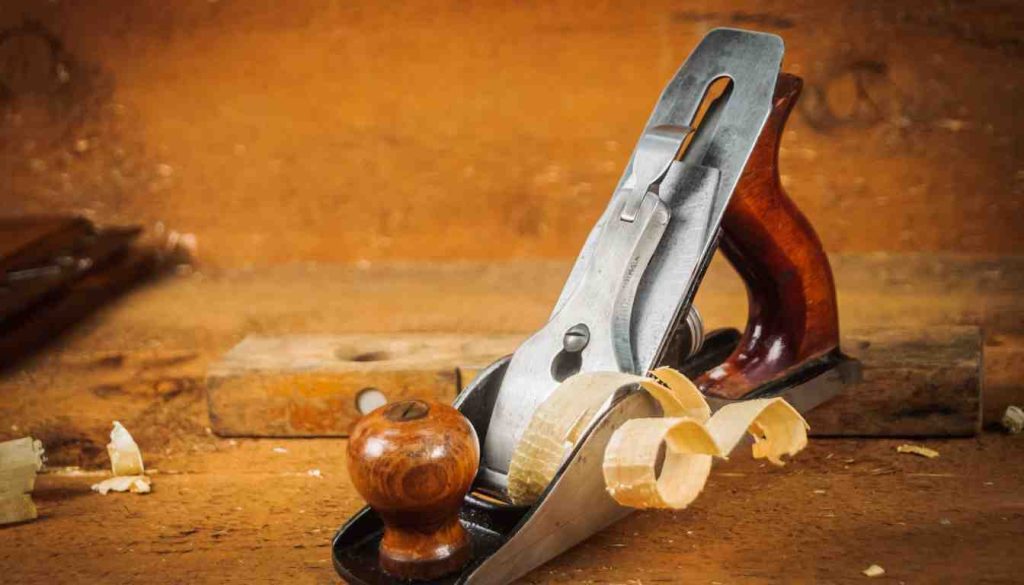
- Retract the blade fully with the depth adjustment knob, then loosen the lever cap and lift out the old iron and chip breaker as one assembly.
- Separate the chip breaker from the old iron by loosening its single screw, then reattach it to the new blade with the breaker’s edge set back about 1/32″ from the cutting edge.
- Seat the new iron-and-breaker assembly onto the frog, engaging the depth adjustment yoke into the slot on the chip breaker.
- Replace the lever cap and snap the lever down — it should take firm hand pressure, not force.
- Advance the blade with the depth knob until it just protrudes past the sole, then take a test pass on scrap wood and fine-tune the depth and lateral adjustment lever until the shaving comes off even across the full width.
Maintaining and Sharpening Your Blade
Hone the primary bevel at 25 degrees, working through progressively finer stones to remove nicks and raise a burr, then finish on your finest grit. Most woodworkers add a small 30-degree micro-bevel at the very tip — it takes seconds to refresh on a strop and means you rarely need to re-flatten the full 25-degree bevel.
- Wipe the blade dry and lightly oil it after each session — rust pitting is the #1 cause of a “new” blade that won’t hold an edge.
- Store loose blades edge-protected (a strip of cardboard or a magnetic strip) so the honed edge doesn’t chip against other tools.
- Re-strop after roughly every 20-30 minutes of planing softwood, sooner in resinous or figured hardwood.
Fixing Chatter and Knowing When to Replace vs. Sharpen
Most chatter is a dull edge, not a bad blade — a blunt iron skips and vibrates instead of slicing. Before buying a replacement, back the blade off completely and advance it in small increments until it just takes a fine, translucent shaving; if chatter persists at a proper depth, set the chip breaker closer to the edge (about 1/32″) and try a 30-degree micro-bevel instead of 25.
A genuine case for replacement: if repeated sharpenings have shortened the iron to less than about 2″ of usable steel from the slot, the remaining metal is often past the hardened zone and won’t hold an edge no matter how carefully you hone it. That’s the point to retire the iron rather than keep fighting it.
Specialty Blade Profiles
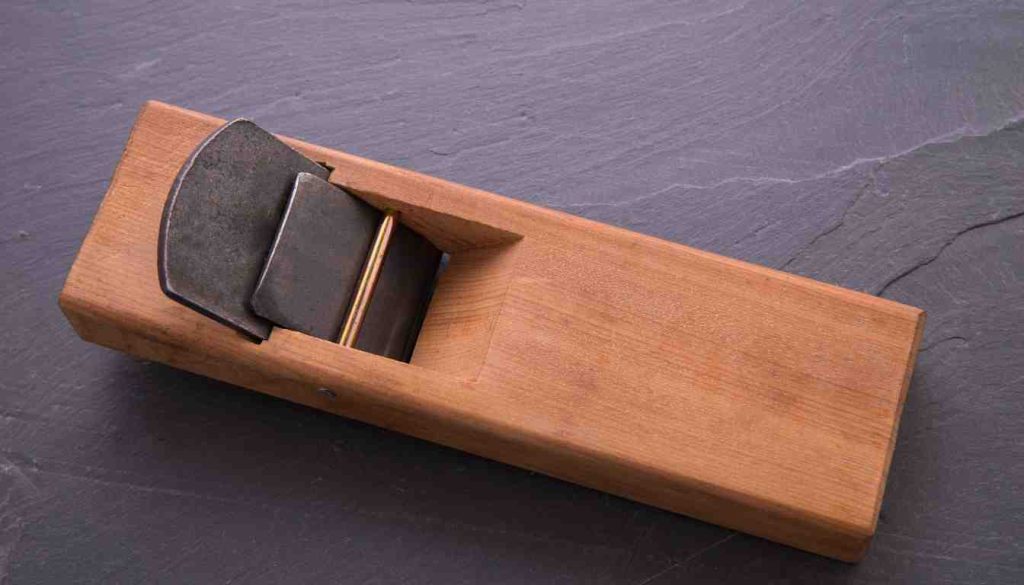
Beyond straight bench and block irons, a few specialty grinds solve specific problems. If you’re restoring an older wooden-bodied plane rather than a metal Bailey pattern, the fitting rules differ — see our guide on building and fitting traditional wooden hand planes. For long-grain smoothing work specifically, a jointer plane (No. 7 or No. 8) uses the same width logic covered above, just at the longer end of the Bailey lineup.
| Specialty Blade | Application |
|---|---|
| Chipbreaker blades | Reduce tear-out on figured or reversing-grain wood |
| Bevel-up blades | Higher effective cutting angle for end grain and hard, dense species |
| Rabbet blades | Full-width iron for cutting rabbets and grooves flush to an edge |
A travisher blade is a related but distinct tool — a curved-sole spokeshave-style blade for hollowing chair seats, not a drop-in replacement for a bench plane iron.
Frequently Asked Questions on Replacement Blades for Stanley Planes
How thick are Stanley plane blades?
Original vintage Stanley irons run thin, roughly 1/16″ to 5/64″ (0.06-0.08 in) depending on era and model. Current Stanley replacement irons like the 12-313 are ground thicker at 0.094 in (3/32″) to match today’s aftermarket standard — so “Stanley thickness” depends on whether you mean the original 1900s-era iron or the modern spare part.
How do you sharpen a Stanley plane blade?
Hone the bevel at 25 degrees on a coarse stone to remove nicks, then progress through medium and fine grits, finishing with a strop. Most woodworkers add a 30-degree micro-bevel at the very tip — it’s faster to maintain and holds an edge longer than re-honing the full 25-degree bevel every time.
What sizes do Stanley block planes come in?
Stanley block planes use either a 1-3/8 inch iron (low-angle models like the 60-1/2 and 65) or a 1-5/8 inch iron (standard-angle models like the 9-1/2 and 110). Measure your existing iron or check the model number stamped on the plane body before ordering a replacement.
What is the blade width of a Stanley No. 4 plane?
A Stanley No. 4 smoothing plane takes a 2 inch wide iron, the same width used on the No. 5 jack plane. The No. 4-1/2 takes a wider 2-3/8 inch iron, so check for the “1/2” suffix on the casting before ordering.
Will a thicker aftermarket blade fit my old Stanley plane without modification?
Often, but not always. Many pre-1970s Stanley planes have a mouth opening sized for the original thin iron, and a 1/8 inch or thicker replacement can jam against the frog or keep the chip breaker screw from tightening fully. Dry-fit the new blade before sharpening it, and be prepared to file the mouth opening slightly wider on an older plane.
What’s the real difference between Hock, Lie-Nielsen, and Stanley OEM blades?
Stanley OEM irons are the thinnest and least expensive, and can chatter until you learn to back off the cutting depth. Hock blades (3/32 inch) add stiffness and hold an edge longer for a moderate price increase. Lie-Nielsen irons (1/8 to 11/64 inch) are the thickest and most chatter-resistant, but cost the most and are the most likely to need mouth-filing on an older plane.
Conclusion
Get the width right first — match your plane’s stamped number to the chart above — then choose thickness based on budget and how much chatter you’re willing to tune out. A Stanley or Hock iron drops into almost any bench plane without modification; a Lie-Nielsen or Veritas iron performs best but is worth dry-fitting before you sharpen it, especially on a plane made before the 1970s.
Sponsored / affiliate links. As an Amazon Associate I earn from qualifying purchases. I may earn additional commission from eligible campaigns.
 Hanpex Hacksaw Replacement Blades (10 Pack) High Speed 18 TPI - 12" Length Hack Saw Blade - High Carbon Steel (HCS) Cutting Blades
 LEONTOOL 12 Inch Mini Hacksaw Blades Replacement for Metal Cutting, Hack Saw Assortment Hand Tools Replacement for Cutting Wood, PVC, Copper Tube, Iron Pipe, Stainless Steel, 10 Pack