Craftsman 80-Inch Band Saw Blades: Sizing Guide & Best Picks
Craftsman 12-inch band saws — including the 22432, 9HT2433N, and 9HT23331N — run on an 80-inch blade, but Craftsman itself hasn’t made a replacement blade in years. Ordering the wrong width is the single most common return: a 1/2-inch blade won’t track on a saw set up for 1/4-inch curve work. This guide covers exact blade length by model, which width and TPI fits your cut, and five tested-spec replacement blades from POWERTEC, FOXBC, and Timber Wolf.
Quick Answer
Craftsman 12″ band saws take an 80-inch blade. Use 1/8″–1/4″ wide, 10–14 TPI for tight scroll curves; 3/8″ wide, 4–6 TPI for general resawing and ripping; or 1/2″ wide, 3–6 TPI for straight rip cuts and resaw work. Craftsman no longer sells its own blades — POWERTEC, FOXBC, and Timber Wolf make the fit-for-Craftsman replacements sold today.
What Length Blade Does a Craftsman Band Saw Use?
Best Value Pick — 3-Width Assortment
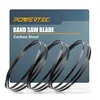
POWERTEC 80-Inch Bandsaw Blade Assortment, 3-Pack (13602)
One 1/4″ x 6 TPI, one 1/8″ x 14 TPI, and one 3/8″ x 4 TPI blade — sized for the 80″ loop on Craftsman 12″ saws, so you can switch between curve work and resawing without buying three separate blades.
- Best for: owners who cut both curves and straight resaws on the same saw
- Why we picked it: covers all three common Craftsman 12″ widths in one order, at a lower per-blade cost than buying singly
- Main drawback: carbon steel, not bi-metal — expect a shorter blade life than Timber Wolf under heavy use
Compare more Craftsman-fit 80-inch blade options
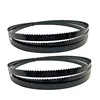 Best for Resawing FOXBC 80″ x 1/2″ x 6 TPI, 2-Pack
|
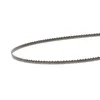 Best Premium Curve Blade Timber Wolf 80″ x 1/4″ x 6 TPI
|
 Best for Metal Cutting POWERTEC 80″ x 1/2″ x 14 TPI Bi-Metal
|
As an Amazon Associate we earn from qualifying purchases.
Every Craftsman 12-inch band saw sold since the 1990s — the 22432, 9HT2433N, 9HT23331N, and the older Sears-era 113.243311 — is built around an 80-inch blade loop. That length is set by the distance between the saw’s upper and lower wheels, so it doesn’t change with blade width or tooth count. A handful of older 12″ frames (mostly pre-1985 Sears/Craftsman castings) use a longer 89-1/2″ or 91″ loop instead — check your owner’s manual or measure the old blade before ordering if your saw predates the 22432/9HT series.
| Craftsman Model | Blade Length | Width Range Supported |
|---|---|---|
| 22432 | 80″ | 1/8″ – 1/2″ |
| 9HT2433N | 80″ | 1/8″ – 1/2″ |
| 9HT23331N | 80″ | 1/8″ – 1/2″ |
| 113.243311 (older Sears) | 80″ | 1/8″ – 3/8″ |
| Pre-1985 12″ frames | 89-1/2″ or 91″ (verify) | 1/8″ – 1/2″ |
Why Craftsman Doesn’t Make Its Own Band Saw Blades
Craftsman sold its power-tool blade lines off years before Stanley Black & Decker took over the brand name in 2017, and the company never brought consumable blades back into its own catalog. That’s why searching for a “genuine Craftsman” 80-inch blade turns up nothing current — the replacement market is now run by dedicated blade manufacturers who cut stock to fit the exact 80″ loop length Sears/Craftsman standardized decades ago. Lenox and Timber Wolf built their reputations on bi-metal and silicon-steel blades that outlast the carbon-steel blades most saws originally shipped with; POWERTEC and FOXBC compete on price with carbon-steel blades sized specifically for Craftsman, Rikon, and similar 12″ saws.
Choosing the Right Width and TPI
Blade width controls how tight a curve you can cut without the blade twisting or binding; tooth count (TPI) controls cut speed versus finish quality. Get either one wrong and the saw will still run — it just won’t cut the way you need it to.
Width by Cut Type
- 1/8″: tight scroll-style curves and fretwork, minimum radius under 1/4″
- 1/4″: general curve cutting, minimum radius around 5/8″ — the most common all-purpose width for a Craftsman 12″
- 3/8″: gentler curves plus straighter resawing, minimum radius around 1-1/2″
- 1/2″: straight rip cuts and resawing only — the widest a Craftsman 12″ wheel will accept without excessive flex
TPI by Material and Thickness
Lower TPI (teeth per inch) clears sawdust faster and cuts thick stock quicker but leaves a rougher edge; higher TPI cuts slower and smoother, and is better on thin material where a coarse blade would grab and tear.
| Material / Task | Recommended TPI | Best For |
|---|---|---|
| Thick hardwood resawing (2″+) | 3–4 TPI | Fast stock removal, less clogging |
| General woodworking, 3/4″–2″ stock | 6 TPI | Balance of speed and clean edge |
| Thin stock, plywood, veneer | 10–14 TPI | Smooth cuts, no tear-out |
| Non-ferrous metal (aluminum, copper) | 14 TPI bi-metal | Slow, controlled metal cuts without stripping teeth |
Craftsman saws set up for metal cutting are a narrower use case — if that’s the main job, our bandsaw blades for metal comparison covers blade grade and cutting speed in more depth than makes sense to repeat here.
📊 80-inch bandsaw blades typically run $10–$35 depending on width, TPI, and steel type — carbon-steel single blades sit near the bottom of that range, silicon-steel and bi-metal blades near the top. Source: Amazon US listings, August 2026.
How to Measure Your Blade Before Ordering
If your saw is a 22432, 9HT2433N, or 9HT23331N, you can order 80″ directly. If you’re not sure which model you have, or the saw is old enough that the badge is gone, measure the old blade instead of guessing:
- Remove the old blade: release tension with the tensioning knob at the top of the saw, then lift the blade off both wheels.
- Lay it flat in a loop: let the blade relax into its natural circle on the floor or a bench — don’t stretch it straight, which will read short.
- Measure the outside circumference: run a flexible tape around the full loop. An 80″ blade will read close to 80″ around; if it reads closer to 89-1/2″ or 91″, your saw is one of the older, longer-wheelbase 12″ frames.
- Double-check against your model badge: the model number is usually stamped on a plate near the lower wheel housing — cross-reference it against the table above before ordering.
For measuring techniques that apply beyond Craftsman saws — width gauges, thickness calipers, and tooth-pitch tools — see our full guide to measuring band saw blades.
Common Mistakes When Buying a Replacement Blade
The most common mistake we see with first-time Craftsman 12″ owners: buying a 1/8″ scroll blade because it’s the cheapest option, then wondering why the saw wanders off a straight line on a simple rip cut. A narrow blade has almost no lateral stiffness — it’s built to follow tight curves, not hold a straight path. If most of your cutting is straight resawing with the occasional gentle curve, a 1/4″ or 3/8″ blade will track far better than the narrowest option on the shelf.
- Ordering by price instead of width: the cheapest blade is often the narrowest, which is the wrong tool for straight cuts.
- Ignoring TPI on thin stock: a coarse 3-4 TPI blade will grab and tear plywood or thin veneer instead of cutting cleanly.
- Skipping the tension check: a blade that measures correctly but isn’t tensioned to spec will drift and cut crooked regardless of width.
- Forgetting the frame exception: ordering 80″ for an older 89-1/2″ or 91″ frame without measuring first.
Frequently Asked Questions
Does Craftsman still make its own band saw blades?
No. Craftsman exited the consumable blade business years before Stanley Black & Decker acquired the brand in 2017, and no current Craftsman-branded 80-inch band saw blade is sold. Replacement blades sized for Craftsman 12″ saws now come from third-party manufacturers like POWERTEC, FOXBC, and Timber Wolf.
What size blade does a Craftsman 12-inch band saw use?
Most Craftsman 12″ models — the 22432, 9HT2433N, and 9HT23331N — use an 80-inch blade in widths from 1/8″ to 1/2″. A small number of older, pre-1985 12″ frames use a longer 89-1/2″ or 91″ blade instead, so measure your old blade if the model badge is missing.
Can I use a wider blade than 1/4-inch for curve cutting on a Craftsman band saw?
Yes, but the curve radius gets larger as the blade gets wider. A 1/4″ blade can typically follow a curve down to about a 5/8″ radius; a 3/8″ blade needs roughly a 1-1/2″ radius or gentler. For tight scroll-style cuts under 1/4″ radius, drop down to a 1/8″ blade instead.
How many teeth per inch (TPI) is best for cutting 2-inch thick oak?
3-4 TPI is the right range for resawing hardwood 2 inches thick or more. Coarser teeth clear sawdust from the deep cut faster and reduce the risk of the blade binding or overheating in thick stock; a fine 10+ TPI blade will clog and burn on a cut this deep.
Will a bi-metal blade cut both wood and metal on the same Craftsman saw?
A bi-metal blade like the POWERTEC 1/2″ x 14 TPI can cut wood, but it’s a slower, less efficient choice for everyday wood-only work than a standard carbon-steel wood blade. It earns its cost if you occasionally need to cut aluminum or other non-ferrous metal on the same saw and don’t want to keep swapping blades for every material change.
Conclusion
Confirm your Craftsman is an 80-inch-blade model (22432, 9HT2433N, or 9HT23331N are the common ones), then pick width and TPI by what you actually cut — narrow and fine for curves, wide and coarse for straight resawing. Craftsman won’t sell you the replacement, but POWERTEC, FOXBC, and Timber Wolf all cut stock specifically to that 80″ loop length. For a broader buying guide across brands and saw sizes, see our best bandsaw blades for woodworking comparison, or check how to store spare blades so the ones you’re not using don’t rust before their next job.
Sponsored / affiliate links. As an Amazon Associate I earn from qualifying purchases. I may earn additional commission from eligible campaigns.