Delta Sawbuck for Sale: Price Guide & Buying Checklist (33-055)
A Delta Sawbuck for sale today usually means a used Model 33-055, 33-060, or 33-150 frame-and-trim saw on eBay or Facebook Marketplace, priced anywhere from $45 to $500 depending on condition — Delta stopped making them once sliding compound miter saws took over the trim-carpentry market. This guide covers what the saw actually is, what a fair price looks like, and what to inspect before you hand over cash for a decades-old machine.
What Is a Delta Sawbuck?
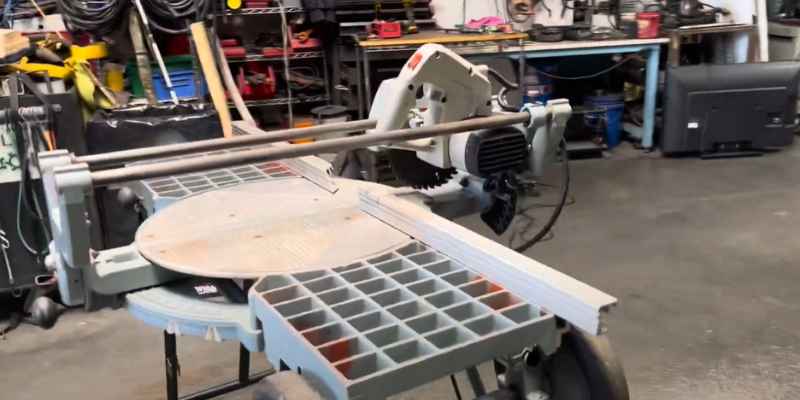
The Delta Sawbuck is a frame-and-trim saw — essentially a cross between a radial-arm saw and an early compound miter saw — built on a collapsible, wheeled stand so contractors could roll it in and out of a truck. It first appeared in the 1970s, with an updated “new” Sawbuck released in 1986, and it was popular with siding installers, roofers, and trim carpenters because it could crosscut, miter, bevel, and cut compound angles in stock up to 2x12s. The one cut it can’t make is a rip cut.
The saw table itself is molded from a glass-reinforced polyester resin (SMC), not steel, and includes a tilting bevel scale, a rotating miter table, an electric blade brake, and a built-in arbor lock. Specs vary slightly by model. Here’s what Delta’s own instruction manual lists for the 33-055 Deluxe Sawbuck:
| Spec | Delta 33-055 Deluxe Sawbuck |
|---|---|
| Motor | 15-amp, 115V AC, with electric automatic brake |
| Blade diameter | 8 inches (crosscut blade) |
| Cut-off capacity at 90° | 16 inches |
| Cutting table diameter | 28 inches |
| Power cord | 6 feet |
| Included | Leg set, blade guard, blade wrench, instruction manual |
Note on blade size: some Sawbuck listings advertise a 10-inch blade — that’s a different model or a swapped-in aftermarket blade, not the stock spec on the 33-055. Confirm the arbor size before you buy replacement blades.
📊 The Delta 33-055’s instruction manual (25 pages) is still available as a free PDF — Source: ManualsLib, Delta 33-055 Owner’s Manual (link omitted — the host’s bot-protection blocked automated verification of the page loading correctly, so it is cited by name only rather than hyperlinked unverified). Worth downloading before you buy a used unit so you can check part numbers against what the seller is showing you.
How Much Does a Delta Sawbuck Cost?
Used Delta Sawbucks generally sell for $120 to $350, with rougher units going for as little as $45 at auction and clean, complete examples occasionally listed near $500. Long-time owners on woodworking forums note that prices have crept up over the years — a Sawbuck that would have been a $50–$75 steal a decade ago now typically starts around $150. Price depends heavily on whether the blade brake still works, the table isn’t cracked, and the original stand and guard are present.
|
Best Replacement Blade Pick
|
As an Amazon Associate we earn from qualifying purchases.
Where to Find a Delta Sawbuck for Sale
Since Delta discontinued the Sawbuck, it’s a used-market-only tool — you won’t find a new one at Home Depot or Lowe’s. The most reliable sources are eBay (search “Delta Sawbuck” and sort by ending soonest to see real closing prices), Facebook Marketplace for local pickup, and specialty sites like vintagemachinery.org’s classifieds, which cater specifically to old iron and tend to have sellers who know what they have. Estate sales and contractor liquidation auctions turn up Sawbucks too, usually at the lowest prices because most bidders don’t recognize what they’re looking at.
What to Check Before You Buy a Used Delta Sawbuck
A 40-plus-year-old tool is only a good deal if it still works. Before paying for a Delta Sawbuck, check these items in person or ask the seller for close-up photos:
- Blade brake function: the electric brake should stop the blade almost instantly when you release the trigger. A brake that lets the blade coast for several seconds is a safety issue and a sign of a worn motor or switch.
- Table condition: the SMC (fiberglass-reinforced resin) table cracks with age and rough handling. Check around the miter pivot and blade slot for hairline cracks — a cracked table affects cut accuracy and can’t be easily replaced since Delta no longer makes parts.
- Rust on the arm and frame: surface rust on the collapsible stand is cosmetic and fixable; rust that’s pitted the arm’s sliding rails will make cuts sloppy no matter how sharp the blade is.
- Original guard and wrench: a missing blade guard is a real safety problem, not just a completeness issue, and replacement guards are hard to source since parts supply dried up after discontinuation.
- Cord and switch: a cracked 6-foot cord or a sticky trigger switch is an easy, cheap fix but still worth using to negotiate the price down.
Delta Sawbuck vs. Modern Compound Miter Saws
If you’re deciding between hunting down a used Sawbuck or just buying a new sliding compound miter saw, the honest comparison comes down to budget versus features, not “better” versus “worse”:
| Factor | Delta Sawbuck (used) | New SCMS |
|---|---|---|
| Typical price | $45–$500 | $150–$600+ new |
| Rip cuts | Not possible | Not possible on either type |
| Crosscut capacity | 16″ at 90° (33-055) | Often wider with slide rails |
| Digital features | None | Laser guides, digital angle readouts on many models |
| Parts availability | Discontinued — scavenge or fabricate | Full manufacturer support |
| Portability | Heavy, but rolls on its own stand | Lighter, usually needs a separate stand |
Where the Sawbuck still earns its keep: you can mount a dado head on it, which most modern SCMS units won’t accept, so it can double for cutting dadoes and half-laps in trim stock — a genuine capability gap in its favor. If you already own a dual-bevel miter saw for everyday cuts, a Sawbuck mostly makes sense as a cheap dedicated dado/half-lap setup rather than a primary saw.
A Brief History of the Delta Sawbuck
Delta introduced the original Sawbuck in the 1970s, then released an updated “new” version in 1986 with the SMC table and current guard design. It was one of the first compound sliding miter-box-style saws on the market and one of the few that could cut crown molding laid across its flats and handle wide trim stock — a genuine advantage over the fixed miter boxes and early chop saws it competed against at the time.
Delta eventually discontinued the Sawbuck once dual-slide compound miter saws became mainstream. According to longtime users discussing the tool on woodworking forums, sales volume had dropped low enough that Delta’s motor and table suppliers no longer wanted to keep tooling for such a small production run without raising component costs significantly — and once SCMS units covered the same jobs with more accuracy, the Sawbuck became a backup tool rather than a primary purchase for most contractors.
Restoring a Vintage Delta Sawbuck
If you land a rough but structurally sound Sawbuck, restoration is a realistic weekend project. Start by assessing the frame and table for cracks or missing hardware — if the SMC table itself is cracked through, that’s usually the point where repair stops being worthwhile, since Delta no longer sells replacement tables. If the frame is just surface-rusted, a wire brush or light sandblasting will remove rust from the painted metal before you repaint it.
Move to the saw head next: unscrew and remove the blade, then check the arm and handle for rust or play in the pivot. Clean threaded hardware with a wire brush, replace any stripped or missing nuts and bolts with standard hardware-store equivalents, and lubricate the pivot points and blade-brake linkage before reassembly. Since Delta parts are no longer manufactured, a second, parts-only Sawbuck (often sold cheap specifically because it’s incomplete) is frequently the most realistic source for a hard-to-find bracket or knob.
Frequently Asked Questions
Is the Delta Sawbuck a good saw?
For its era, yes — owners who used the Sawbuck for siding and trim work consistently describe it as solid and accurate, and it’s still capable of clean crosscuts and miters today. It won’t match a modern sliding compound miter saw’s accuracy or digital features, but it can outlast most tools in categories like dado-head compatibility.
What size blade does a Delta Sawbuck use?
The Delta 33-055 Deluxe Sawbuck’s own instruction manual specifies an 8-inch crosscut blade. Other Sawbuck models and aftermarket setups sometimes run a different size, so confirm the arbor and blade diameter on your specific unit before ordering a replacement.
When was the Delta Sawbuck discontinued?
Delta doesn’t publish an exact discontinuation date, but the Sawbuck was phased out after dual-slide compound miter saws became widely available and covered the same jobs with better accuracy, making the declining-volume Sawbuck no longer worth Delta’s component and tooling costs.
Can you still get parts for a Delta Sawbuck?
Not from Delta. Replacement parts — tables, guards, brackets — only turn up secondhand on eBay or from parting out a second, damaged Sawbuck. Common wear items like blades and hardware can be sourced generically as long as you match the arbor size and thread specs.
Is a Delta Sawbuck worth buying today?
It’s worth buying if the price is low (roughly $150 or less), the table is uncracked, and the blade brake still works — especially if you want dado-head capability a modern SCMS won’t give you. If you need a primary saw with full parts support and better accuracy, a new sliding compound miter saw is the safer buy.
Conclusion
A Delta Sawbuck for sale is a real, useful vintage tool — not a modern product you’ll find at a big-box store — and a fair used price runs $120 to $350 for a complete, working unit. Check the blade brake, the table for cracks, and the guard before you buy, confirm the blade size against your specific model, and you’ll end up with a saw that still earns its keep for trim, siding, and dado work decades after Delta stopped making it.
Sponsored / affiliate links. As an Amazon Associate I earn from qualifying purchases. I may earn additional commission from eligible campaigns.