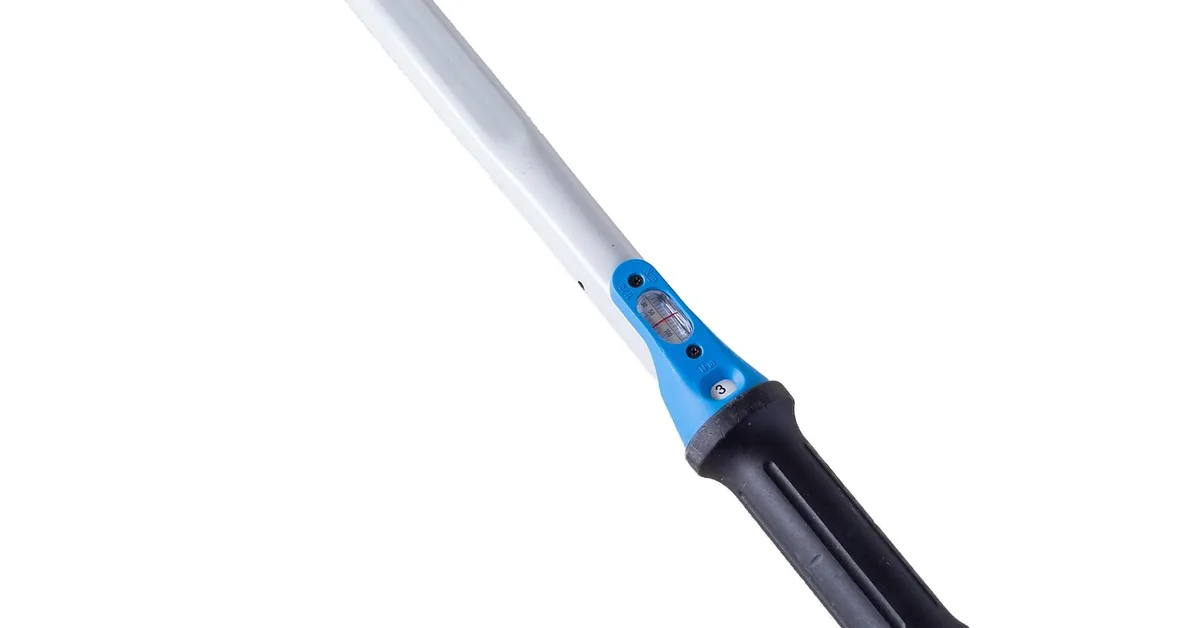
DeWalt DWMT17060 1/2″ Torque Wrench: Specs & Review (2026)
If you searched for a “DeWalt 12V torque wrench,” there’s a mix-up worth clearing up first: DeWalt doesn’t make a battery-powered, cordless torque wrench. What it does make is the DWMT17060, a manual 1/2-inch drive digital torque wrench that uses two small batteries only to power its backlit LED readout – not to turn the fastener. You still supply the muscle; the electronics just tell you exactly when to stop. Below is what this tool actually does, its real torque range, how it compares to DeWalt’s 3/8-inch sibling model, and what to check before you buy one.
DeWalt DWMT17060 at a Glance
This is the specific model most “DeWalt 1/2 torque wrench” searches are actually looking for – a 1/2-inch square drive tool built for automotive and mechanical fastening jobs in the 50-250 ft-lb range.
Top 1/2″ Drive Digital Pick
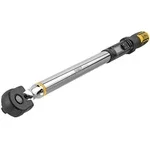 |
DeWalt DWMT17060 Digital Torque Wrench – $249 The exact 1/2-inch drive model this article covers, with a 50-250 ft-lb range and a backlit digital readout.
|
Real DWMT17060 Specs
The older version of this page mixed in specs that belong to DeWalt’s cordless impact wrenches (RPM settings, an “auto shutdown” trigger) – that’s a different tool category entirely. Here’s what the DWMT17060 itself actually has, based on DeWalt’s own product listing and its Amazon listing:
| Spec | DWMT17060 |
|---|---|
| Drive size | 1/2-inch square drive |
| Torque range | 50-250 ft-lb (roughly 600-3,000 in-lb / 68-339 Nm) |
| Display | Backlit LED digital readout |
| Unit conversion | Switches between ft-lb, in-lb, and Nm with a button press |
| Handle length | Approx. 25.75 inches |
| Head | Protective rubber bumper |
| Grip | Bi-material handle |
| Included | Hard carrying case, instruction manual, display batteries |
| Warranty | 1-year limited |
Two things stand out compared to a cheap mechanical click wrench: the digital readout gives you an exact number instead of a scribed line you have to eyeball, and the unit conversion means you don’t need a separate wrench (or a conversion chart) when a spec sheet lists Nm instead of ft-lb.
Why Getting Torque Right Actually Matters
It’s tempting to treat a torque spec as a suggestion and just “snug it up good.” In practice, both directions of error cause real failures. Under-torque a bolt and it can back out under vibration – a wheel lug nut or a suspension bolt that loosens over a few hundred miles is a genuine safety issue, not just an inconvenience. Over-torque the same bolt and you can stretch it past its yield point, which permanently weakens it even if it doesn’t snap right away; on aluminum threads (common on engine components) over-torquing can strip the threads outright, turning a five-minute job into a repair.
Torque specs also assume a specific thread condition – usually clean and dry, or lightly oiled, depending on what the manufacturer states. A bolt torqued to spec while still covered in old anti-seize or thread locker will actually clamp tighter than the number on the wrench suggests, because friction is doing less of the work than the spec assumed. That’s a detail a lot of buying guides skip, and it’s a real reason a “close enough” torque wrench (or skipping the wrench entirely) can produce inconsistent results even when someone is trying to do it right.
1/2-Inch vs 3/8-Inch: Which One Do You Actually Need
DeWalt sells this digital torque wrench in two drive sizes, and picking the wrong one is the most common mistake buyers make. The 1/2-inch DWMT17060 covers 50-250 ft-lb – that’s the range for lug nuts, suspension components, and most automotive work. DeWalt’s 3/8-inch version covers a lower 20-100 ft-lb range, which fits smaller fasteners like motorcycle, small-engine, and light equipment work where 250 ft-lb of clamping force would be overkill (or would strip smaller threads).
If most of what you torque is lug nuts, control arm bolts, or anything in a full-size truck or car’s service manual, get the 1/2-inch. If you mostly work on smaller equipment with fasteners rated under 100 ft-lb, the 3/8-inch version will be lighter and easier to maneuver in tight spots for no real loss of capability.
How to Use the DWMT17060 Correctly
A digital torque wrench works on the same basic principle as a mechanical one – you preset a target torque, then apply steady force until the tool tells you to stop – but the feedback is electronic instead of a felt “click.”
- Power on the display and select your unit (ft-lb, in-lb, or Nm) using the mode button.
- Set the target torque value specified by your manufacturer’s service manual – not a number you’re estimating.
- Seat the correct socket fully onto the square drive so it can’t slip under load.
- Apply slow, steady pressure to the handle. Jerky or fast pulls make it easy to overshoot the target before the wrench can register it.
- Stop the instant the wrench beeps and/or the LED signals you’ve hit the set value – don’t keep pulling “to be sure.”
- Release pressure and back the wrench off the fastener before moving to the next one.
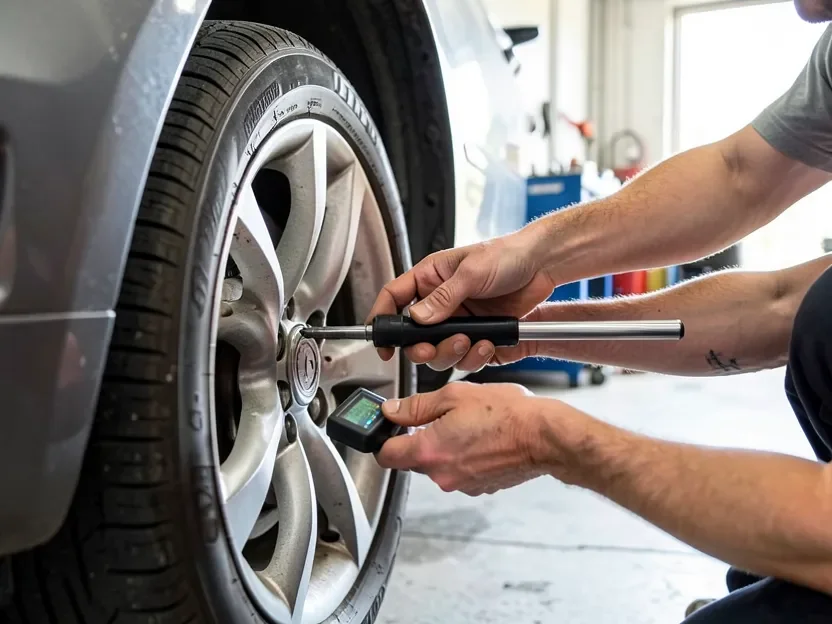
One habit worth building: work fasteners in the tightening sequence your manual specifies (often a star or crisscross pattern on wheels and multi-bolt flanges), and go around twice at a lower torque before the final full-torque pass. It’s a small extra step that prevents uneven clamping.
Accuracy, Calibration and Care
A torque wrench is a measuring instrument, not just a hand tool, and it drifts out of spec with rough use like any other one. A few habits keep it reliable:
- Store it in the case it ships with, not tossed loose in a toolbox drawer with other metal tools banging into it.
- Don’t use it as a breaker bar to loosen stuck or over-torqued bolts – that kind of shock load is the single most common way these tools get knocked out of calibration.
- Replace the display batteries at the first sign of a dim or flickering readout rather than trusting a fading display.
- If you drop it, or it’s had heavy daily use for a year or more, have it checked against a calibrated reference before you trust it on anything critical.
Buying Guide: What Actually Matters
Skip the marketing copy and check these first:
- Torque range fits your work. Match the range to the fasteners you actually torque, not the widest number on the box – a 50-250 ft-lb wrench used mostly at the bottom of its range is less precise than one sized closer to your typical target.
- Drive size matches your sockets. 1/2-inch and 3/8-inch sockets aren’t interchangeable without an adapter, and adapters can affect accuracy.
- Digital vs. mechanical click. Digital gives you an exact number and unit conversion; a mechanical clicker is cheaper, needs no batteries, and is arguably more rugged for daily shop use. Neither is “wrong” – it’s a trade-off.
- Case and storage. A hard case that holds calibration settings (by keeping the tool from banging around) is worth more long-term than a slightly lower price without one.
- Warranty length. DeWalt covers the DWMT17060 for one year – check that against how the tool will actually be used before assuming it’s “professional grade” coverage.
Frequently Asked Questions
Is a 1/2-inch or 3/8-inch torque wrench better?
Neither is universally “better” – a 3/8-inch drive suits lower-torque fasteners (roughly 20-100 ft-lb), while a 1/2-inch drive like the DWMT17060 handles higher-torque automotive and mechanical work (50-250 ft-lb). Match the drive to the torque range your fasteners actually call for.
What’s the difference between a 1/2-inch and 1/4-inch torque wrench?
Drive size determines how much torque the wrench can safely and accurately apply. A 1/2-inch drive is built for higher-torque work, while a 1/4-inch drive is meant for small fasteners at the low end of the torque scale, like electronics or small-engine assembly.
Do you need to double-click a torque wrench?
No. Once the wrench signals you’ve hit the set torque – a click on a mechanical wrench, or a beep/LED signal on a digital one like the DWMT17060 – the fastener is at spec. Continuing to apply force past that point risks over-tightening.
What torque range does the DeWalt DWMT17060 cover, and what does it cost?
The DWMT17060 covers 50-250 ft-lb on a 1/2-inch drive, with a backlit digital display and ft-lb/in-lb/Nm conversion. It’s priced around $249 at major retailers as of this writing, backed by a 1-year limited warranty.
Conclusion
The DWMT17060 isn’t a cordless “12V” tool – it’s a manual 1/2-inch drive digital torque wrench with a 50-250 ft-lb range, built for automotive and mechanical fastening jobs where an exact, verified number matters more than speed. If your work runs lower-torque, DeWalt’s 3/8-inch sibling (20-100 ft-lb) is the better fit. Either way, treat it like the measuring instrument it is: store it properly, never use it as a breaker bar, and it’ll keep giving you numbers you can trust.
If you’re weighing a manual torque wrench against a powered option for a job, see our hammer drill vs. impact wrench comparison for how control and precision differ between powered and hand tools.
Sponsored / affiliate links. As an Amazon Associate I earn from qualifying purchases. I may earn additional commission from eligible campaigns.