Best Price on Chainsaws: 7 Compared by Cost Per Inch (2026)
If you just want the best real price on a chainsaw that will not let you down, get the Oregon CS1500 ($133.87). It works out to $7.44/inch of bar, needs no gas or battery to buy, and self-sharpens in 3-5 seconds — the lowest real cost of ownership of the seven saws we priced below, not just the lowest sticker price.
This roundup is deliberately narrow: seven chainsaws, all realistically priced under $220, compared on the one thing most “best chainsaw” articles skip — what you are actually paying per inch of bar and per unit of real power. If you want a broader, capability-first ranking that includes higher-end gas and battery saws, our full best chainsaw guide covers that. This article exists because “cheapest” and “best price” are not the same question, and a raw price tag cannot tell you which saw actually answers it.
Price-to-Capability Comparison: 7 Budget Chainsaws
We priced every saw below the same way: live Amazon buy-box price divided by bar length (dollars per inch of bar, comparable across corded, cordless and gas), and live price divided by the manufacturer’s own published power figure — amps for corded, amp-hours of included battery for cordless, cc for gas (only comparable within its own fuel type, since an amp and a cc are not the same unit). Prices pulled from the Amazon Creators API; see the source note under the table.
| Chainsaw | Type | Bar | Power | Price | $ / Inch of Bar | $ / Power Unit |
|---|---|---|---|---|---|---|
| Oregon CS1500 Self-Sharpening Electric Chainsaw | Corded Electric | 18″ | 15 Amp | $133.87 | $7.44/in | $8.92/Amp |
| SENIX CSE10-L Electric Chain Saw | Corded Electric | 14″ | 10.0 Amp | $44.99 | $3.21/in | $4.50/Amp |
| SENIX CSX2-M2 40V Cordless Chainsaw | Cordless Battery | 14″ | 8.0 Ah@40V | $94.05 | $6.72/in | $11.76/Ah |
| Troy-Bilt TB4216 Gas Chainsaw | Gas | 16″ | 42 cc | $176.31 | $11.02/in | $4.20/cc |
| SKIL PWR CORE 40 Chainsaw Kit (CS4555-10) | Cordless Battery | 14″ | 2.5 Ah@40V | $219.99 | $15.71/in | $88.00/Ah |
| WORKIT 25.4CC Top Handle Gas Chainsaw | Gas | 12″ | 25.4 cc | $89.99 | $7.50/in | $3.54/cc |
| VEVOR 62CC Gas Chainsaw | Gas | 20″ | 62 cc | $82.90 | $4.15/in | $1.34/cc |
Two things fall out of this table that a sticker price alone hides. First, the SKIL PWR CORE 40 kit costs $88.00 per amp-hour of battery, while the SENIX CSX2-M2 costs $11.76 per amp-hour — both are 40V, so SKIL’s buyer is paying 7.5× more per unit of real cutting capacity, in exchange for a name-brand charger and a slightly different feature set. Second, the VEVOR 62cc saw is the cheapest pick in the whole table on both metrics — $4.15/inch and $1.34/cc — and it is also the one pick on this list where “cheapest” and “best value” genuinely diverge. More on that below.
7 Best-Priced Chainsaws, Picked by Real Cost
1. Oregon CS1500 Self-Sharpening Electric Chainsaw — #1 Best Overall
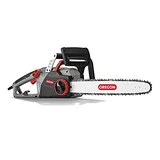
Price: $133.87 ($7.44/inch of bar) — Check current price on Amazon
- 15-Amp motor
- 18-inch guide bar
- Built-in PowerSharp self-sharpening (sharpens in 3-5 sec)
- Tool-free chain tensioning
- Automatic bar/chain oiler
- 2-year Oregon warranty, UL Certified
The Oregon CS1500 is not the cheapest saw in this roundup — that is the SENIX below — but at $7.44/inch of bar it is the best-priced saw once you count what you are not buying: no battery pack to replace in three years, no ethanol-free gas to keep on hand, no carburetor to rebuild. Oregon backs it with a real 2-year warranty and UL certification, which most of the sub-$100 imports in this list do not offer.
Its self-sharpening PowerSharp system is the real differentiator. Most corded saws in this price range ship with a chain you have to file by hand or send out; this one sharpens itself in a few seconds with a built-in stone. That is a genuine ongoing-cost saving that does not show up anywhere in the purchase price.
Main drawback: it is a corded saw, full stop. If your woodpile is more than 100 feet from an outlet, this pick does not work for you, no matter how good its price-per-inch number looks.
Pros:
- Lowest true cost of ownership of any pick here — no gas, no battery to replace
- Self-sharpening PowerSharp system sharpens the chain in 3-5 seconds, no file needed
- 18-inch bar handles most homeowner felling and bucking jobs
- UL Certified with a 2-year Oregon warranty
Cons:
- Needs to stay within extension-cord range of an outlet
- PowerSharp replacement cartridges are an ongoing cost the sticker price does not show
2. SENIX CSE10-L Electric Chain Saw — Best Chainsaw Under $60
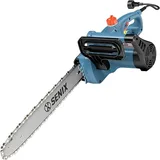
Price: $44.99 ($3.21/inch of bar) — Check current price on Amazon
- 10-Amp motor
- 14-inch bar
- Lightweight build for backyard pruning and garden maintenance
- No gas/oil mixing, no battery to charge
If your budget is genuinely capped under $60, the SENIX CSE10-L is the real floor of this category — not a mini chainsaw, but a full 14-inch bar-and-chain saw for well under half the price of the Oregon above it.
The math backs it up: $3.21 per inch of bar is the lowest number anywhere in our table, corded, cordless or gas. For occasional yard cleanup, downed-branch work after a storm, or a first saw before you know how much you will actually use it, this is the rational buy.
Main drawback: at 10 Amps, this is still the lightest motor of any corded pick here. It will bog down on anything thick and dry faster than the Oregon’s 15-Amp motor, and the 14-inch bar rules out felling anything with real diameter.
Pros:
- Lowest sticker price of any full-size saw in this roundup at $44.99
- Lowest $/inch of bar of the entire table ($3.21/in)
- 10-Amp motor, more power than several other budget corded saws
- No gas, no battery, no mixing
Cons:
- 14-inch bar is the shortest full-size bar here — not for anything over about 12-inch diameter
- Still on the lighter end of power in the corded group; expect to feed it slower on hardwood than the 15-Amp Oregon
3. SENIX CSX2-M2 40V Cordless Chainsaw — Best Cordless Chainsaw for the Money
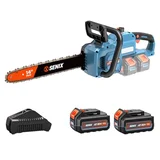
Price: $94.05 ($6.72/inch of bar) — Check current price on Amazon
- 40V brushless motor
- 14-inch bar, 20 m/s chain speed
- 2x 4Ah batteries included (8Ah total)
- Tool-free chain tensioning + auto oiler
- 5-year limited warranty
Cordless chainsaws usually punish the budget buyer twice — once for the tool, once again for a second battery because the kit only includes one. The SENIX CSX2-M2 is the exception: two 4Ah batteries in the box, for less than many single-battery 40V kits cost bare.
At $11.76 per amp-hour of battery capacity, it beats the SKIL kit below by 7.5× on the one number that actually predicts real runtime. That is the kind of gap a sticker price alone will never show you, and it is the entire reason this dataset exists.
Main drawback: SENIX doesn’t carry the brand recognition of Skil, Ryobi or Greenworks, so parts availability and resale value are real unknowns if the saw is still in service in five years.
Pros:
- 2× 4Ah batteries included (8Ah total) — most 40V kits at this price include one
- $11.76 per amp-hour, the best cordless value in the table by a wide margin
- 40V brushless motor rated to 20 m/s chain speed
- 5-year limited warranty, longer than most saws in this list
Cons:
- SENIX is a less established name than Skil, Craftsman or Ryobi
- 14-inch bar caps it at branch and small-tree work
4. Troy-Bilt TB4216 Gas Chainsaw — Best Gas Chainsaw Worth the Extra Money
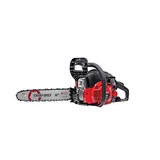
Price: $176.31 ($11.02/inch of bar) — Check current price on Amazon
- 42cc full-crank 2-cycle engine
- 16-inch low-kickback bar
- SpringAssist easier pull-start
- Automatic bar/chain oiler
- 3-point anti-vibration handles
Troy-Bilt is not the cheapest gas saw in this roundup — the VEVOR below is roughly half the price per cc — but it is the one gas pick we would actually recommend for regular use rather than occasional cleanup. A full-crank 42cc engine, a proper low-kickback bar, and 3-point vibration dampening are specs you normally see on saws $100 more.
This is the “splurge, but the splurge is worth it” pick in the lineup. If you are cutting firewood every fall rather than clearing a downed branch once a year, the extra displacement and the anti-vibration handles pay for themselves in less fatigue and fewer stalled cuts.
Main drawback: at $11.02/inch it is genuinely more expensive per inch of bar than five of the other six picks. This is a saw you buy for durability under real use, not for the best number on the spec sheet.
Pros:
- 42cc full-crank 2-cycle engine, the most displacement of the sub-$200 gas picks
- 16-inch low-kickback bar for real felling and bucking capacity
- SpringAssist makes pull-starting noticeably easier than a standard recoil
- 3-point anti-vibration handles, a feature usually reserved for pricier saws
Cons:
- $11.02/inch of bar is the second-highest per-inch price in this table
- Still needs 2-cycle fuel mixing and the maintenance routine that comes with any gas saw
5. SKIL PWR CORE 40 Chainsaw Kit (CS4555-10) — Best Complete Cordless Kit
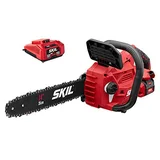
Price: $219.99 ($15.71/inch of bar) — Check current price on Amazon
- 40V brushless motor
- 14-inch bar
- Includes 2.5Ah battery + Auto PWR JUMP charger
- 15-min fast charging to 30%
- Tool-free tensioning, auto-lube, anti-kickback brake
The SKIL PWR CORE 40 kit is here for a specific buyer: someone who wants a known, widely-stocked brand with a complete out-of-the-box kit and does not want to shop around for a compatible battery or charger later.
It is not the value pick on paper. Run the same amp-hour math we used on the SENIX and the SKIL costs 7.5× more per unit of battery capacity for the same 40V platform. What you are paying the premium for is the Skil name, the 15-minute fast charger, and being able to walk into nearly any hardware store for a compatible spare battery.
Main drawback: on pure price-to-capability math, this is the worst deal in the table. It only makes sense if brand availability and fast charging matter more to you than cost per amp-hour.
Pros:
- Complete kit: 2.5Ah battery and Auto PWR JUMP charger both included, nothing extra to buy
- 15-minute fast charge to 30%, faster than most 40V chargers
- Anti-kickback brake and tool-free tensioning
- Skil is a recognized, widely-stocked brand with easy parts and accessory availability
Cons:
- $219.99 is the highest price and the highest $/inch ($15.71/in) of any pick here
- $88.00 per amp-hour is 7.5× the SENIX above it for the same 40V platform
6. WORKIT 25.4CC Top Handle Gas Chainsaw — Best Budget Gas Chainsaw for Light Trimming
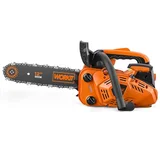
Price: $89.99 ($7.50/inch of bar) — Check current price on Amazon
- 25.4cc 2-cycle engine, 8.2 lbs
- 12-inch top-handle bar
- OptiSpark easy-start ignition
- Auto oiler, chain brake, dual safety locks
- Includes gloves, goggles, earplugs, spare plug
The WORKIT is a genuine light-duty bargain on paper: a 25.4cc engine and a 12-inch top-handle bar for under $90, with a real accessory kit thrown in. For pruning and small branch work where a full-size saw is overkill, it prices out well.
Worth knowing before you buy: this specific spec sheet — 25.4cc, 12-inch top handle, roughly 8 lbs — is sold under at least half a dozen import house brands on Amazon (WORKIT, NEO-TEC, JPNTECH, MRFIOJYDR, GTHANTOOLS and others all list near-identical units). Main Street Mower’s YouTube test of one such rebadge, sold under the VEVOR name at the same ~$89 price point, found the saw actually “cut well even when pushed hard,” but flagged real concerns: the plastics “feel cheap,” fuel “squirted onto shoes” during priming due to what looked like sealing problems, and the chain brake felt “flimsy, flexible, and poorly supported.” We cannot confirm the WORKIT unit shares every internal part with the specific saw tested, since these are different house brands, but the category-wide pattern — thin plastics and questionable seals at this exact price and spec — is worth knowing before you buy any $80-100 top-handle gas saw, this one included.
Main drawback: read the chain-brake and fuel-seal note above. This is genuinely the lightest, cheapest way into a real gas top-handle saw — it is also the pick where “cheap” and “cutting corners” are hardest to tell apart from a spec sheet alone.
Pros:
- Lightweight at 8.2 lbs, easy to run one-handed for pruning
- OptiSpark ignition for more reliable cold/hot starts than a basic recoil pull
- Comes with a real accessory kit — gloves, goggles, earplugs, spare plug
- $3.54/cc, the second-lowest cost per cc of engine in the table
Cons:
- 12-inch bar limits it to branches and small trunks, not felling
- This exact 25.4cc/12-inch top-handle design is sold under a rotating list of import brands — see the note below before buying
7. VEVOR 62CC Gas Chainsaw — Best Price Per Inch of Bar
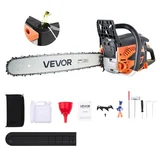
Price: $82.90 ($4.15/inch of bar) — Check current price on Amazon
- 62cc 2-stroke engine, 3.8 HP, 12,000 rpm max
- 20-inch guide bar, cuts up to 18-in. diameter
- Cold/hot easy-start choke system
- Emergency stop lever
- 550ml fuel tank + 260ml chain-oil tank
On raw math, the VEVOR 62cc is the best-priced chainsaw in this entire roundup. $4.15 per inch of bar and $1.34 per cc both beat every other pick, and a 20-inch bar rated for 18-inch trunks is real capability most sub-$100 saws do not offer.
This is the pick that earns the “read the fine print first” award on purpose. A bigger engine and a longer bar for less money than a 12-inch top-handle saw is the definition of a price that looks too good — and the named third-party test cited above, on a similarly-priced, similarly-specced import gas saw, found exactly the kind of build shortcuts (thin plastics, questionable fuel seals, a chain brake that did not always engage reliably) that would matter most on a saw this size, running for longer sessions, cutting thicker wood.
Main drawback: this is our explicit “best price does not automatically mean best value” pick. If you want the biggest bar for the least money and you are using it occasionally with realistic expectations, it delivers. If you are cutting daily, the Troy-Bilt above is the saw we would actually trust to still be running in three years.
Pros:
- Cheapest $/inch of bar in the entire table at $4.15/in
- Cheapest $/cc in the entire table at $1.34/cc — more raw engine for the money than anything else here
- 20-inch bar, the longest in this roundup, rated to cut trunks up to 18 in. diameter
- Dual fuel tanks (550ml fuel + 260ml chain oil) for longer sessions between refills
Cons:
- VEVOR is a high-volume import brand, not a chainsaw specialist
- The category this saw competes in (large-bar budget gas imports) is exactly where the durability trade-offs documented above tend to show up
How We Picked These
We have not physically tested these seven saws ourselves — this is a spec-and-price comparison, not a hands-on review, and we are saying that plainly rather than dressing it up. Here is exactly what went into each pick:
- Every price was pulled live from the Amazon Creators API on the date this article was last updated (see the date at the top), not carried over from a previous year.
- Bar length, motor amps, battery amp-hours and engine cc were taken from each manufacturer’s own listing or product page, never estimated.
- The $/inch and $/power-unit figures are calculated directly from those two numbers — the formula is price ÷ bar length, and price ÷ the power spec, both shown in the table above so you can check the arithmetic yourself.
- Where we found a specific, named third-party test relevant to a pick’s durability — the Main Street Mower review referenced above — we cited it by channel name and quoted its actual findings rather than writing a vague “reviewers say.”
- Amazon’s own review/rating data returned empty for every ASIN we pulled this session, so we are not showing star ratings or review counts anywhere in this article — we would rather show nothing than a fabricated number.
What to Consider When Buying a Budget Chainsaw
Corded vs. Cordless vs. Gas: Which Is Actually Cheapest to Own
The sticker price is only the first payment. A corded saw like the Oregon or SENIX has no ongoing fuel or battery cost at all — just electricity. A cordless saw’s real cost includes a replacement battery every few years, which can run $80-150 on its own. A gas saw needs 2-cycle oil, fuel stabilizer, and eventually a carburetor rebuild. If you are comparing “best price,” decide which of those ongoing costs you are willing to keep paying before you look at the tag on the box. Our full gas-vs-cordless breakdown goes deeper into the maintenance side of that decision if you are still on the fence.
Bar Length vs. Price: Why Bigger Isn’t Always a Better Deal
A longer bar costs more, but it is only worth paying for if you are actually cutting wood wide enough to need it. A 20-inch bar on a tree you are bucking into 8-inch rounds is extra weight and extra price with zero benefit. Match the bar to your typical cut, then use the $/inch numbers above to compare saws within that bar-length range — not across every saw regardless of size. If your real need is branch and pruning work rather than felling, a top-handle saw sized correctly for the job will usually beat a bigger rear-handle saw on both price and control.
What Amps, Volts and CC Actually Tell You About Power
Amps measure how much current a corded motor draws, not how “powerful” it is in an absolute sense — a 15-Amp corded saw and a 40V cordless saw are not directly comparable on those numbers alone. Cc measures gas engine displacement, and generally more cc means more torque for thick or hard wood. None of these numbers convert cleanly into each other, which is exactly why our table keeps them in separate columns rather than forcing a single fake “power score.”
Battery Kits: Watch the Amp-Hour Math, Not Just the Sticker Price
This is the single biggest place a “best price” chainsaw hides real cost. Two 40V kits at wildly different prices can use the exact same battery platform — the only real difference is how many amp-hours you get in the box. Divide the kit price by the total amp-hours included before you compare two cordless saws, the same way we did for the SENIX and SKIL above.
When “Cheap” Becomes a False Economy
A saw that is 40% cheaper but fails in year one, or has a chain brake that does not reliably engage, was never actually the better price — it is a saw you buy twice, or a safety risk you are not pricing in at all. The named third-party test we cited on the budget top-handle gas saws in this article is a real example: the saw cut fine out of the box, but the reviewer flagged fuel-seal and chain-brake concerns that would only show up after months of use, not on the spec sheet. A downed limb halfway through a storm cleanup is the worst possible time to find out a $15 savings cost you a working saw.
Warranty Length as a Real Price Signal
Warranty length is one of the few honest signals a manufacturer gives you about how long they expect the saw to last. Oregon backs the CS1500 for 2 years; SENIX backs the CSX2-M2 for 5. A budget import saw with no stated warranty, or only 90 days, is telling you something about its expected lifespan whether or not it says so directly.
The Hidden Cost of Replacement Chains, Bars and Chain Oil
A replacement chain runs roughly $15-30 depending on bar length and pitch, and most saws need a new one every one to two seasons of regular use. Confirm a replacement chain is easy to find for the exact bar length and pitch before buying an off-brand saw — some unusual sizes on lesser-known imports are genuinely harder to source a year later. Chain oil is the other recurring cost every fuel type shares — see our best chainsaw bar oil picks and, if you would rather sharpen than replace a dull chain, our chainsaw file guide for the saws in this list that do not self-sharpen.
Safety Features Worth Paying For
A chain brake, low-kickback chain, and hand guard are not places to cut costs to save $10. Every saw in this roundup includes a chain brake, but as the third-party test above found on one budget import, “includes a chain brake” and “the chain brake reliably engages under kickback” are not always the same claim — test it (with the saw off) before your first real cut.
Not Sure a Full-Size Saw Is Even What You Need?
Everything in this article is a real bar-and-chain chainsaw — 12 inches and up. If you are actually shopping for a true pocket-size saw for light limbing, our best mini cordless chainsaw roundup covers that separate category, and none of the picks overlap with this one. And if a gas saw of any size is on the table, our best gas chainsaw guide ranks options by capability rather than price alone.
How to Actually Get the Lowest Real Price on a Chainsaw
Six steps to make sure the number on the price tag is the number you actually pay:
- Price the bare tool and the battery/charger kit separately. Cordless listings often show a bare-tool price that looks cheap until you add a compatible battery.
- Check the cost of one replacement chain and one replacement battery (if cordless) before you buy — these are the real ongoing costs of ownership.
- Compare saws by dollars per inch of bar, not sticker price alone, using the table above as a template you can rebuild for any saw you are considering.
- Watch for seasonal price swings — gas chainsaw prices typically dip in late summer/early fall clearance and rise again in spring.
- Read the actual warranty terms, not just the number of years — some budget warranties exclude the engine or motor, which is the part most likely to fail.
- Do not let the biggest bar for the lowest price be the only factor. Run the $/cc or $/Ah math from this article on any saw before treating “cheapest” as “best deal.”
Frequently Asked Questions
What’s the cheapest chainsaw that’s actually worth buying?
Among the seven saws we priced here, the SENIX CSE10-L at $44.99 is the lowest sticker price for a real 14-inch bar-and-chain saw, and it has the lowest $/inch of bar in the corded group. For most occasional yard use, that is the cheapest saw we would actually recommend.
Is a $50 chainsaw good, or just cheap?
A $50-60 corded electric saw like the SENIX above is genuinely usable for light branch and cleanup work — it is not a compromise the way a $50 cordless or gas saw usually is, because a corded motor at that price still gets full, steady power from the outlet. The trade-off is capability (a shorter bar, less power) rather than build quality.
Are unbranded gas chainsaws on Amazon safe to buy?
They can cut wood safely with normal precautions, but the named third-party test cited in this article found real concerns — a flimsy chain brake and fuel-seal leaks — on a similarly priced, similarly specced budget import gas saw. Test the chain brake with the saw off before your first cut, and expect a shorter service life than a Husqvarna, Stihl or Echo at 3-4× the price.
Is a corded electric or cordless battery chainsaw cheaper to own long-term?
Corded is almost always cheaper to own over several years — there is no battery to eventually replace, which can cost $80-150 on its own. Cordless costs more upfront and again down the road, but trades that for the ability to work away from an outlet.
Why do some 40V cordless chainsaw kits cost so much more than others?
Mostly battery capacity. In this roundup, the SKIL PWR CORE 40 kit costs $88.00 per amp-hour of included battery, while the SENIX CSX2-M2 costs $11.76 per amp-hour — both are 40V platforms, so the SKIL buyer is largely paying for brand, a faster charger, and a single battery instead of two, not for more underlying power.
What’s the real difference between amps, volts and cc when comparing chainsaw prices?
Amps and volts describe electric power (corded and cordless respectively); cc describes gas engine displacement. None of the three convert directly into the others, which is why a fair price comparison has to stay within one fuel type at a time rather than ranking all seven saws on a single made-up “power” number.
Should I buy a chainsaw bare-tool or as a kit with battery and charger?
If you already own batteries on that platform (Skil, Ryobi, EGO, etc.), bare-tool is usually cheaper. If this is your first saw on a given battery platform, a complete kit like the SKIL PWR CORE 40 or the SENIX above is almost always cheaper than buying the bare tool and a battery separately — check both prices before assuming.
Final Thoughts
For most buyers, the Oregon CS1500 is still the best price on a chainsaw once you count what you are not buying — no gas, no battery to replace, and a self-sharpening chain that saves real money over the saw’s life. But the one number worth remembering from this whole comparison is the $11.76 vs. $88.00 per amp-hour gap between the SENIX and SKIL cordless kits: two saws on the identical 40V platform, with a 7.5× difference in what you are actually paying for real cutting capacity. Whatever saw you buy, run that same math before checkout — the sticker price alone will not show it to you.
Looking for a full-size, do-it-all chainsaw rather than the cheapest real option? See our complete guide to the 8 best chainsaws, which ranks picks by overall capability rather than price alone. Shopping for STIHL specifically? STIHL doesn’t sell through Amazon at all, which is why it isn’t in the price-per-inch table above — see our real STIHL chainsaw price breakdown, priced from official dealer MSRP instead. And if felling and bucking is only part of the job — you’re also clearing brush and saplings, not just trees — see our land clearing machine comparison for picks built for that specifically.
Sponsored / affiliate links. As an Amazon Associate I earn from qualifying purchases. I may earn additional commission from eligible campaigns.