DeWalt vs Festool Track Saw: DCS520 vs TS 55 Real Comparison
The DeWalt DCS520 and Festool TSC 55 run incompatible blade sizes — DeWalt uses 165mm (6-1/2″) while Festool uses 160mm (6-1/4″), and the blades are not interchangeable. The price gap is real: a DeWalt kit runs $400-507 versus $850-1,000 for a Festool kit. This guide covers blade and track compatibility, the DeWalt parallel-plunge vs Festool pivot mechanism, dust-collection performance, and a clear verdict on which saw fits your shop.
Quick Answer
The DeWalt DCS520 or DWS520K delivers comparable cutting accuracy at $400-507 — roughly half the cost of a Festool TSC 55 or TS 55 REQ kit. Festool justifies its price only if you need top-tier dust extraction, already use the Festool Systainer system, or do precision cabinet work daily. For most woodworkers and contractors, DeWalt wins on value.
DeWalt vs Festool Track Saw: Key Specs at a Glance
Best Track Saw Pick
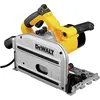
DEWALT TrackSaw Kit DWS520K
Corded 12A track saw with DeWalt’s unique parallel-plunge mechanism — the most accurate and durable entry into the DeWalt track system.
- Best for: Shop and job-site use requiring corded reliability
- Why we picked it: Parallel-plunge mechanism, 12A motor, 165mm standard blade — accurate rip cuts in hardwood and plywood
- Main drawback: Corded only; the DCS520T1 was the cordless upgrade (now discontinued — see our updated review for the current replacement)
Compare more track saw options
 Option 1 Makita SP6000J 6-1/2″ Plunge Saw
|
 Option 2 WEN CT1065 6.5-Inch Track Saw
|
 Option 3 Kreg 20V Ionic Drive Track Saw
|
As an Amazon Associate we earn from qualifying purchases.
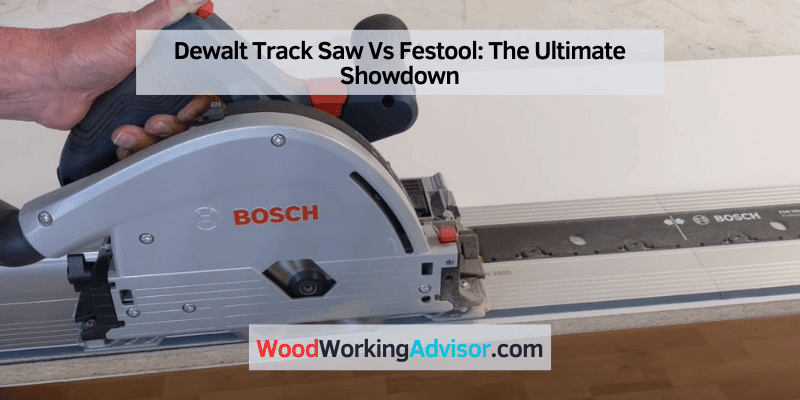
Before diving into the details, here is a side-by-side look at the most commonly compared models — the DeWalt DWS520K (corded) and the Festool TS 55 REQ (corded), the two saws most often placed head-to-head in professional woodworking shops.
| Specification | DeWalt DWS520K (Corded) | Festool TS 55 REQ (Corded) |
|---|---|---|
| Motor Power | 12A / 1,300W | 1,200W |
| Blade Size | 165mm (6-1/2″) — standard | 160mm (6-1/4″) — proprietary |
| No-Load Speed | 2,000 – 5,800 RPM | 2,000 – 5,200 RPM |
| Max Cut Depth at 90 deg | 54mm (2-1/8″) | 55mm (2-3/16″) |
| Bevel Capacity | 47 degrees | 45 degrees |
| Plunge Mechanism | Parallel plunge (unique to DeWalt) | Pivot plunge (standard) |
| Narrowest Track Cut | 3-3/4″ from material edge | 5-1/4″ from material edge |
| Price (kit) | $400 – $507 | $700 – $850 (no track included) |
Blade Size: 165mm vs 160mm (Not Interchangeable)
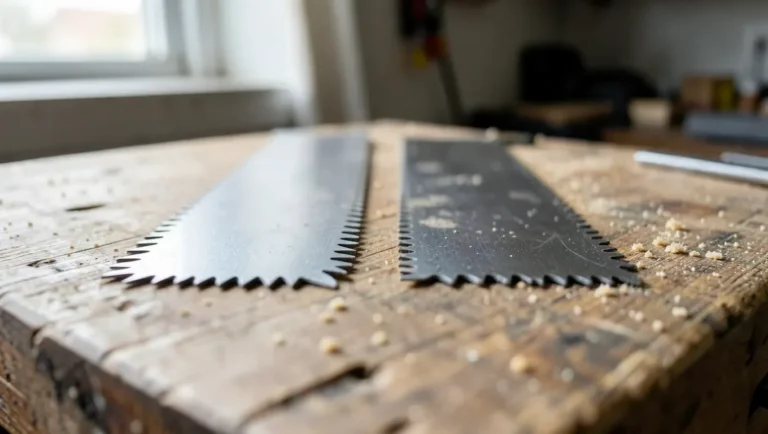
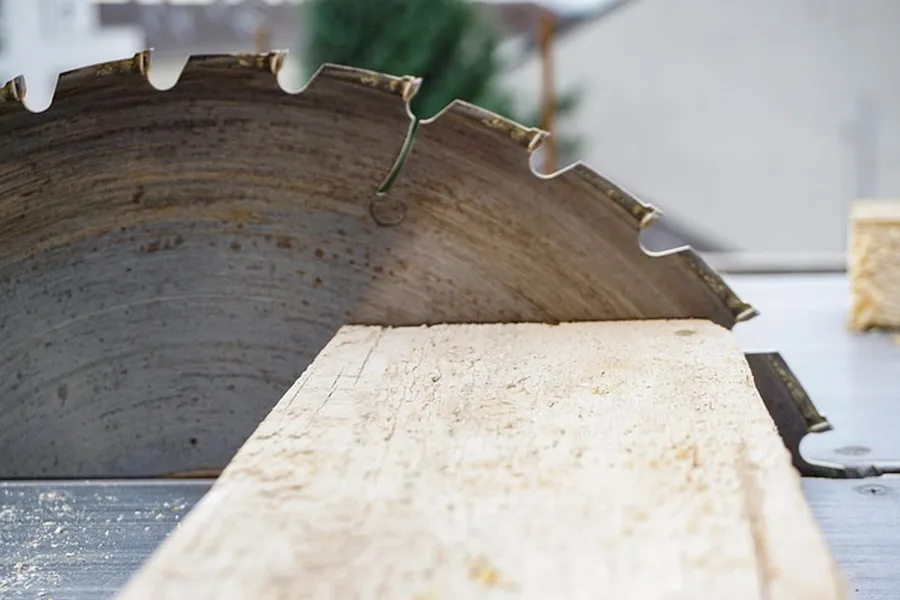
This is the most important compatibility fact in the DeWalt vs Festool debate — and the one most comparison articles miss. Every track saw on the market except the Festool TS 55 uses a 165mm (6-1/2″) blade — DeWalt, Makita, Bosch, Kreg, and WEN all use the 165mm standard. Festool uses a 160mm (6-1/4″) blade that is proprietary to their plunge saw models.
The 5mm difference means Festool blades will not mount on a DeWalt saw, and DeWalt blades will not fit the Festool TS 55 or TSC 55. When you invest in one platform, you commit to its blade ecosystem. Festool blades cost roughly $40-80 each and are sold through specialty dealers. DeWalt 165mm blades cost $20-50 and are available at virtually every hardware store and online retailer.
Blade Compatibility Fact: The Festool TS 55 uses a 160mm (6-1/4″) blade. Every other major track saw brand — DeWalt, Makita, Bosch, Kreg — uses the 165mm (6-1/2″) standard. These are not interchangeable between platforms. Source: Festool and DeWalt published product specifications.
If you already own a supply of 165mm blades or work in a shop where multiple saws share the same blade size, the DeWalt is the natural fit for blade inventory compatibility. If you are starting fresh and prioritize Festool’s dust integration, factor in the ongoing cost of sourcing 160mm blades from specialty dealers.

Track Compatibility: Can You Use a DeWalt Saw on a Festool Track?
Track saw rails are not universally interchangeable, and the DeWalt-Festool pairing is among the least compatible. Here is exactly what works and what does not:
- DeWalt saw on Festool track: Does not work properly. DeWalt uses a 3-channel rail design; Festool uses a single-channel rail. The saw will not seat correctly on Festool’s rail, causing imprecise cuts and safety risk.
- Festool saw on DeWalt track: Will not function. The Festool TS 55 requires the single-channel Festool rail profile.
- Festool and Makita tracks: These ARE interchangeable. Both brands use a nearly identical single-channel rail profile, so a Makita plunge saw runs accurately on a Festool track and vice versa.
- DeWalt’s narrower minimum cut: Because of DeWalt’s 3-channel rail and narrower track profile, you can make clamped cuts as close as 3-3/4″ from the material edge. Festool’s single-channel rail requires at least 5-1/4″ — a real limitation on narrow rips.
If you have a significant investment in Festool rails — particularly longer 1,400mm or 3,000mm sections — that represents a real switching cost when evaluating DeWalt. If you are starting fresh, DeWalt’s track ecosystem costs less and covers all standard sheet-goods work. For more on how plunge saws work with guide rails and when the track matters most, see our full breakdown.
DeWalt’s Parallel-Plunge Mechanism vs Festool’s Pivot Design
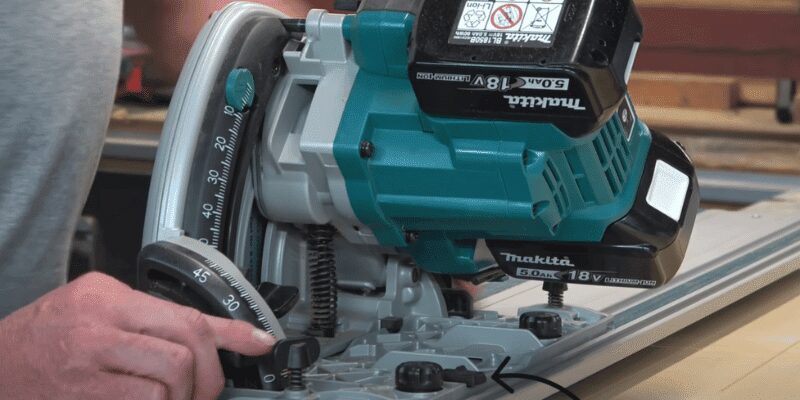
DeWalt’s parallel-plunge mechanism is unique among track saws, and it is one of the most underappreciated differences in this comparison. Most track saws — including Festool — use a pivot mechanism: the blade rotates down into the cut on an arc. DeWalt’s design drops the entire saw base straight down in a parallel motion.
The practical effect: with DeWalt’s parallel plunge, your hand stays at the same height throughout the full plunge stroke. With Festool’s pivot, your hand rises as the blade drops into the cut. On long ripping cuts through full 4×8 sheets of plywood or MDF, the parallel motion gives more consistent hand pressure and reduces fatigue — particularly when operating at the far end of a 59-inch or 102-inch track.
“The DeWalt’s parallel plunge is noticeably more natural for long ripping cuts — your hand level never changes during the stroke, which reduces drift on 8-foot panels compared to pivot-style saws.”
Festool counters with an extremely precise depth-stop system and a splinterguard that are genuinely superior for finish panel work. Neither mechanism is objectively better — the right choice depends on what your cutting primarily involves.
Dust Collection: Where Festool Has the Real Advantage
Both saws extract far more dust than a standard circular saw — but Festool’s dust extraction is in a different category when paired with a Festool CT (Cleantec) extractor. The combination achieves near-dustless cutting, which matters enormously for finish carpentry in occupied spaces, hardwood flooring over finished subfloors, or any job where cleanup time is billable.
DeWalt’s dust port accepts any standard 35mm vacuum hose. The extraction is good for a job site but noticeably less complete than Festool’s integrated system. Without a dedicated extractor, DeWalt leaves a measurable dust residue on the cut surface and surrounding area. If you already own a Festool CT Midi or CT 26, the TSC 55 plugs in via the Systainer Autostart connector — the saw automatically powers the extractor on and off as you cut.
- DeWalt extraction: Compatible with 35mm standard vac hoses; no Autostart; adequate for shop and site work
- Festool extraction: Integrates with CT extractors via Autostart; near-dustless results on interior finish work; proprietary connection adds cost if starting from scratch
- Verdict: For outdoor, ventilated shop, or rough carpentry, DeWalt’s extraction is fine. For interior finish work in occupied spaces, Festool’s system justifies a significant part of the price premium.
Price Comparison: DeWalt vs Festool Track Saws
The price gap between DeWalt and Festool is consistent across both corded and cordless versions. These are current real-world prices, not suggested retail:
- DeWalt DWS520K (corded kit with 46″ track): $400 – $507
- DeWalt DCS520T1 (60V FlexVolt cordless kit, battery included): $467 – $579
- DeWalt DCS520ST1 (cordless kit with 59″ track): $499 – $600
- Festool TS 55 REQ (corded, no track): $699 – $750
- Festool TSC 55 K (cordless kit, no track): $850 – $999
- Festool 55″ guide rail (if purchased separately): add $80 – $120
DeWalt kits bundle a track; Festool kits usually do not. Total cost to get started with Festool’s corded TS 55 plus a 55″ rail is close to $800-870, versus $400-507 for the DeWalt DWS520K kit. That is a $350-450 gap at the entry point — enough to buy a full set of premium blades, a second track section, or a quality shop vacuum for the DeWalt setup.
For more context on why track saws cost more than circular saws in general, see our breakdown of why track saws are so expensive.
Which Track Saw Should You Buy?
After working with both platforms across cabinet builds, flooring installs, and site framing, the honest answer is that DeWalt is the right saw for most woodworkers — and Festool earns its price in specific, defined situations.
Choose the DeWalt DWS520K or DCS520 if you:
- Need a track saw that cuts accurately without a $900+ commitment
- Work on job sites where tools take real abuse
- Already own DeWalt FlexVolt 60V batteries — the DCS520 cordless is genuinely powerful
- Cut primarily plywood, sheet goods, and framing lumber
- Want 165mm blade compatibility across your circular saws and track saw
- Need cuts closer than 5-1/4″ from the material edge (DeWalt’s 3-3/4″ minimum beats Festool here)
Choose the Festool TS 55 REQ or TSC 55 if you:
- Do fine interior finish work where near-zero dust output is essential
- Already own a Festool CT extractor and other Festool Systainer tools
- Are a professional cabinetmaker cutting premium sheet goods daily
- Already own Festool rail sections and want a perfectly matched saw
- Value Festool’s precision depth-stop and integrated splinterguard for repeated exact depths
If you are still deciding whether a track saw is worth it at all versus a standard circular saw, our track saw vs. circular saw comparison covers when the precision and splinter-free cuts justify the cost. For a full look at whether Festool as a brand is worth the premium investment, see our Is Festool worth it? analysis.
Frequently Asked Questions About DeWalt vs Festool Track Saws
Are DeWalt and Festool track saw tracks interchangeable?
No. DeWalt tracks use a 3-channel rail profile that is incompatible with Festool’s single-channel rail. A DeWalt saw will not seat correctly on a Festool track, and the Festool TS 55 will not run on a DeWalt track. Festool and Makita tracks are interchangeable with each other but neither is compatible with DeWalt’s saw or rail system.
Does DeWalt use the same blades as Festool?
No. DeWalt track saws use 165mm (6-1/2″) blades, which is the industry standard shared by Makita, Bosch, Kreg, and most other track saw brands. Festool uses a proprietary 160mm (6-1/4″) blade. The 5mm difference means the blades are not interchangeable between platforms. Festool blades are sourced from specialty dealers; DeWalt 165mm blades are widely available at hardware stores.
Can you join DeWalt track saw tracks together?
Yes. DeWalt sells the DWS5025 track connector that joins two track sections end-to-end for longer cuts. Both the 46-inch DWS5020 and 59-inch DWS5022 tracks support connectors, allowing combined lengths of 102 inches or more. The connector maintains alignment across the joint for continuous cuts on full panel rips.
Is the Festool TSC 55 worth the price over the DeWalt DCS520?
For most users, no. The DeWalt DCS520T1 cordless kit costs $400-500 less than the Festool TSC 55 kit and delivers comparable cut accuracy on plywood and solid wood. Festool’s TSC 55 earns its premium if you already use a Festool CT extractor (Autostart dust integration is genuinely superior), do repetitive precision cabinet work where the depth-stop saves time, or already own significant Festool rail inventory that locks you into that ecosystem.
What is the difference between the DeWalt DCS520 and DWS520?
The DCS520 is the cordless 60V MAX FlexVolt version; the DWS520 is the corded 120V version. Both use the same 165mm blade, the same parallel-plunge mechanism, and the same DeWalt track system. The DCS520T1 kit includes a 60V 6Ah FlexVolt battery and charger. The DWS520K kit includes the saw with a 46-inch track. For shop use with an available outlet, the corded DWS520K is a reliable, lower-cost entry. For job-site and portable use, the DCS520 removes the cord without sacrificing cutting power.
Conclusion
The DeWalt vs Festool track saw decision comes down to a clear tradeoff: the DeWalt DWS520K or DCS520 at $400-507 handles 90% of track saw work accurately and durably, at roughly half the price of a Festool entry kit. Festool’s TSC 55 or TS 55 REQ earns its $850-1,000 price tag specifically for interior finish work in occupied spaces, daily cabinet production, or when you are already invested in the Festool CT extractor and Systainer ecosystem. The blade incompatibility (165mm vs 160mm), track incompatibility, and $400+ price gap are the three facts that should drive your decision — not marketing claims about which brand sounds more professional.
Sponsored / affiliate links. As an Amazon Associate I earn from qualifying purchases. I may earn additional commission from eligible campaigns.