Types of Particle Board: ANSI Grades, MR Ratings & Uses
Particle board comes in four everyday types: standard, moisture-resistant, fire-retardant and melamine-faced. The US standard, ANSI A208.1-2016, grades every panel by density (H, M, LD) and strength, with a separate stamp for moisture resistance. Color tells you nothing; the stamp does. This guide covers each type, how to read the grade stamp, and which panel fits shelves, cabinets, floors or doors.
What Is Particle Board?
Best Edge Banding Pick
 |
ZYJT Pre-Glued Edge Banding, 3/4 in x 50 ft, White – $13.88 Every type of particle board has the same weak spot: the raw cut edge, where chips show and moisture gets in. This iron-on roll covers that edge on a 3/4 inch shelf or cabinet panel.
|
As an Amazon Associate we earn from qualifying purchases.
Particle board (spelled particleboard in the standard, and called chipboard in the UK) is an engineered panel made by bonding wood particles, meaning sawdust, shavings and small chips, with resin under heat and pressure. ANSI A208.1 covers panels made primarily from cellulosic material, usually wood. “Particle wood” and “pressed wood” are informal names for the same family; our guide to pressboard versus particle board untangles the labels and holds the full strength-by-grade table.
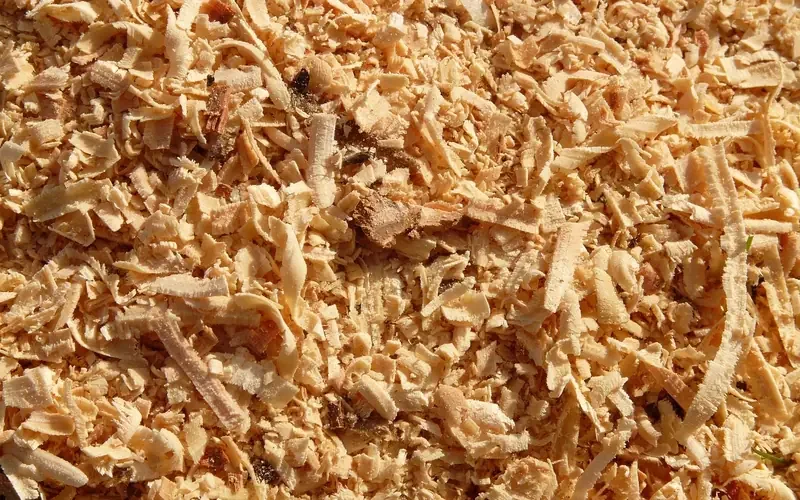
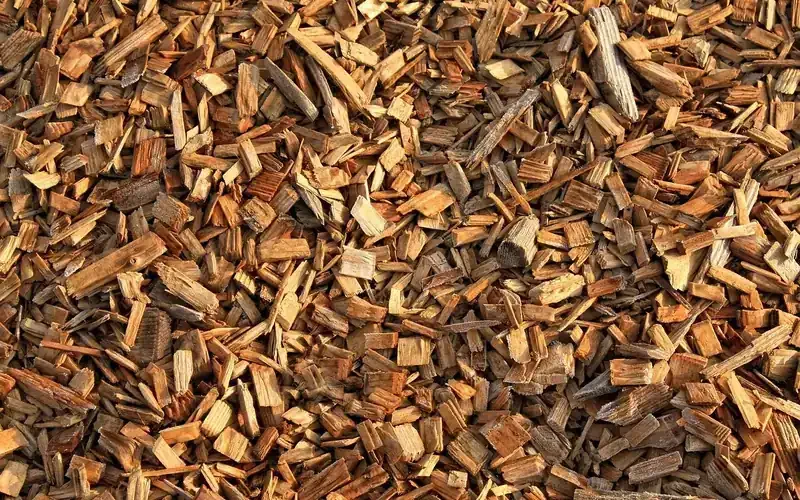
Fine particles, like the sawdust and shavings in the photo below, form the smooth faces of a panel. Coarser chips go in the core, which is why the type section below starts with how a panel is built.
Density is the first thing the standard sorts by. Medium-density particle board, the class sold for most furniture and cabinets, generally weighs 40 to 50 lb per cubic foot (640 to 800 kg per cubic meter); high density runs above 50 and low density below 40. The trade-off is a low price and a flat sheet against weak edges and swelling when wet, which is why screwing into particle board near an edge and sealing the edges both matter.
Types of Particle Board
Particle board is classified three ways at once: how the panel is built, what is added or applied to it, and the ANSI grade stamped on it. Most confusing spec sheets mix the three. The four types below are the ones buyers meet most; the grade chart after them decodes the stamp.
Single-Layer, Three-Layer and Graded-Density Panels
Single-layer panels use particles of one size throughout. Three-layer panels sandwich a coarse-particle core between two fine-particle layers that carry more resin, which gives a smoother face for paint, veneer or laminate. Graded-density panels change particle size gradually through the thickness instead of in distinct layers. Extruded particle board is a separate, less common process: particles are pushed through a heated die and end up aligned perpendicular to the faces, so it behaves differently from pressed panels.
1. Standard Particle Board
Standard particle board is the untreated base product: wood particles and synthetic resin pressed flat. In the US it is sold in medium-density M grades. M-2 and M-3i are the industrial grades used for furniture and cabinet cores that need a good surface and strength, while M-0, M-1 and M-S are commercial grades for less demanding work (ANSI A208.1-2016, Annex B).
Best for: interior shelving, furniture cores and cabinet interiors away from sinks. Watch out for: any damp location, and screws driven into the edge.
2. Moisture-Resistant (MR, Often Sold as HMR) Particle Board
Under ANSI A208.1-2016, moisture resistance is a stamped designation, not a color or a brand name. MR10 means the panel meets a thickness-swell limit of 5.5 percent after 24 hours of submersion. MR30 means it keeps at least 50 percent of its bending strength after accelerated aging, the bond-durability test. MR50 means it meets both. The standard describes these panels for interior use with high humidity or intermittent wetting.
“HMR” (high moisture resistant) is a trade label used by mills and retailers, so ask which test the panel passed. A green core is a common marker, but the standard does not require any color, so never rely on it. Best for: sink bases, vanities and laundry cabinets with every edge sealed. It is not waterproof and not for standing water.
3. Fire-Retardant Particle Board
Fire-retardant (FR) particle board has a fire-retardant additive mixed in during manufacture; the standard lists fire retardance among the purposes of additives. Performance is judged by the ASTM E84 surface-burning test, where Class A means a flame spread index of 25 or less and a smoke-developed index of 450 or less. Untreated particle board generally lands in Class C.
Best for: commercial casework and interiors where the building code asks for a Class A finish. A rating belongs to the tested product and thickness, so get the manufacturer’s E84 report rather than trusting the letters “FR” on a label.
4. Melamine-Faced Particle Board
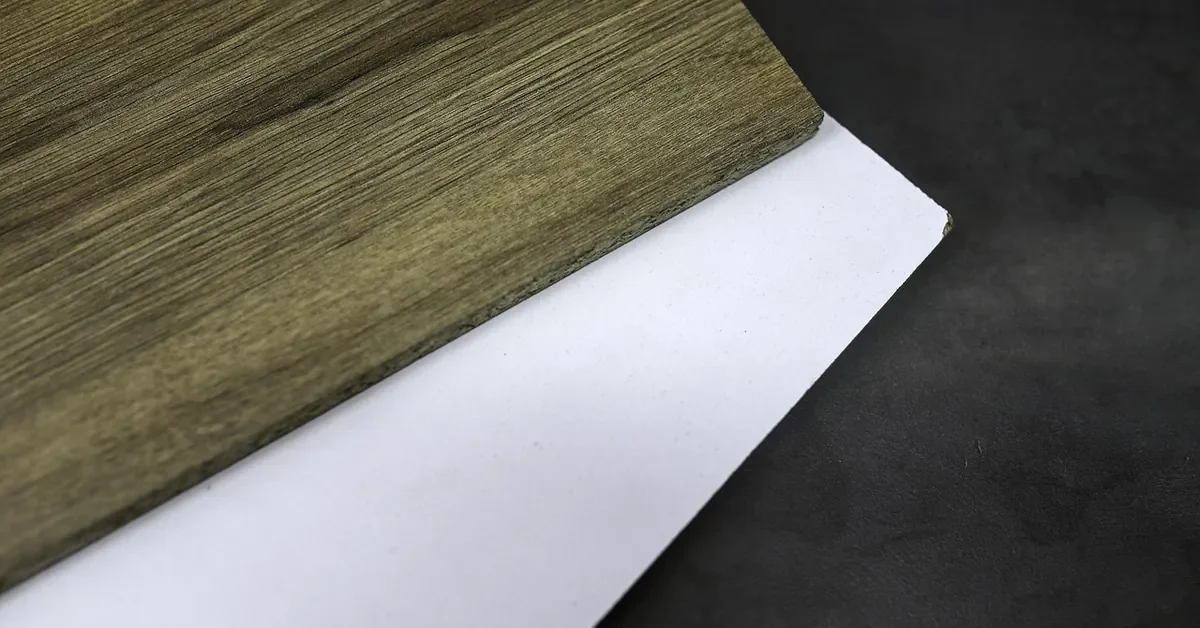
Melamine-faced particle board, also sold as thermally fused laminate (TFL) or thermally fused melamine (TFM), has decorative paper saturated with melamine resin fused to one or both faces under heat and pressure, so there is no separate glue layer. The core is usually standard particle board. The face is hard and wipe-clean, but every cut edge is raw core and needs edge banding or sealing.
Best for: cabinet boxes, wardrobe carcasses, closet shelves and office furniture. The face is a thin laminate, so it cannot be refinished like wood; if you want a painted finish on plain panels instead, see can particle board be painted.
5. Underlayment and Manufactured Home Decking (PBU, D-2, D-3)
Two grade families are defined by the job rather than the density. PBU is underlayment, a non-structural layer under flooring; the standard requires a 5-panel average bending strength of 1,595 psi, an internal bond of 58 psi and a maximum average thickness swell of 0.063 inch. D-2 and D-3 are manufactured home decking: they must support a 600 lb concentrated load while deflecting no more than 1/8 inch at 200 lb, and they ship at 6 to 9 percent moisture content.
Particle Board Grades Chart
ANSI A208.1-2016 names grades by letter: H for high density (generally above 50 lb per cubic foot), M for medium (40 to 50), LD for low density (below 40), D for manufactured home decking and PBU for underlayment. This chart matches each family to the use the standard assigns it. For minimum bending strength, internal bond and screw-holding by grade, use the table in the pressboard guide linked above instead of repeating it here.
| Grade | Density class | Use category in the standard | What it means in practice |
|---|---|---|---|
| M-0, M-1, M-S | Medium | Commercial | Lighter-duty panel work with modest loads |
| M-2, M-3i | Medium | Industrial | Furniture and cabinet cores that need a better surface and strength |
| H-1, H-2, H-3 | High | High-density industrial | Heavy-duty parts that need higher-than-normal strength |
| LD-1, LD-2 | Low | Door core | Cores for interior doors, usually 1-1/8 inch or thicker |
| M-3 (building-code grade) | Medium | Interior stair tread | Not the same as M-3i; the “i” marks the industrial grade |
| PBU | Set by function | Underlayment | Non-structural layer under finished flooring |
| D-2, D-3 | Set by function | Manufactured home decking | Passes a 600 lb concentrated load test |
How to Read a Particle Board Grade Stamp
A full designation chains the pieces together, for example M-2-F09-MR10. Here is what each part tells you:
| Stamp part | What it means |
|---|---|
| M-2 | Medium density, grade 2 (industrial) |
| F09 | Formaldehyde emissions limited to 0.09 ppm |
| MR10 / MR30 / MR50 | Moisture-resistance designation, as described under type 2 |
| Exterior Glue | Bond keeps at least 50 percent of its bending strength after accelerated aging |
The standard requires the manufacturer’s name or trademark, “ANSI A208.1-2016”, the grade, and a lot number or production date. For Table A grades (the M, H and LD families) that information may be stamped on each panel or given on the unit label or invoice; Table B grades (PBU, D and M-3) must be stamped on every panel. A bare sheet from a lumber yard can therefore be legitimate without a stamp, so ask for the unit label or spec sheet.
Particleboard formaldehyde emissions may not exceed 0.09 ppm, the limit written into the standard. Source: ANSI A208.1-2016, Composite Panel Association
US federal rules under TSCA Title VI use the same 0.09 ppm limit for particleboard. Panels certified as no-added-formaldehyde (NAF) or ultra-low-emitting (ULEF) are exempt from the routine emission testing, but they must hold a CARB Executive Order and sit under an EPA-approved third-party program, according to the EPA’s compliance FAQ. Meeting the limit means low emission, not zero.
“The mechanical property requirements are not engineering design values.”
In other words, the grade numbers are minimum pass marks for acceptance testing, not figures to size a shelf span or a structural load from.
Which Type of Particle Board Should You Buy?
| Project | Ask for | Why |
|---|---|---|
| Closet and bookshelf shelves | Melamine-faced M-grade panel | Factory-finished face; band every cut edge |
| Kitchen sink base or vanity | MR10 or MR50 panel, edges sealed | Limits thickness swell from intermittent wetting; not for standing water |
| Under finished flooring | PBU underlayment | Graded for exactly that job |
| Commercial interior with a Class A rule | FR particle board with an E84 report | The rating belongs to the tested product |
| Interior door core | LD-1 or LD-2 | Low-density core grade |
| Painted cabinet doors | Consider MDF instead | Smoother face for paint; see the pros and cons in our MDF guide |
Common Mix-Ups About Particle Board Types
- “HMR means waterproof.” No. The standard describes moisture-resistant panels for interior humidity or intermittent wetting, and even MR10 allows up to 5.5 percent thickness swell in the 24-hour submersion test.
- “A green core means moisture resistant.” Color is the maker’s choice. The standard defines moisture resistance by test and stamp, so check the stamp.
- “The density grades are L, M and H.” The low class is LD, and it is the door-core family, not a general-purpose grade.
Particle Board vs MDF vs Plywood
Particle board is the cheapest of the three panels, but it is not always the right pick. For a full side-by-side, see the particle board vs MDF vs plywood comparison.
- Choose particle board when cost matters and moisture exposure is low: cabinet boxes, shelving and furniture frames.
- Choose MDF when you need a smooth paintable face: cabinet doors, trim and painted furniture.
- Choose plywood when screw-holding, structural strength or moisture tolerance is critical: subfloors, sheathing and damp areas.
Frequently Asked Questions For Different Types Of Particle Board
How Many Types Of Particle Board Are There?
Four types cover most purchases: standard, moisture-resistant, fire-retardant and melamine-faced. Underneath those, the US standard ANSI A208.1-2016 sorts panels into grade families by density (H high, M medium, LD low) plus PBU underlayment and D manufactured home decking. The stamped grade, not the type name, tells you what the panel is rated for.
Are There Different Grades Of Particleboard?
Yes. ANSI A208.1-2016 lists H-1, H-2 and H-3 (high density), M-0, M-1, M-S, M-2 and M-3 (medium), LD-1 and LD-2 (low density door core), PBU underlayment and D-2 and D-3 manufactured home decking. Moisture resistance is added as an MR10, MR30 or MR50 suffix, and formaldehyde compliance as F09.
Which Is Better Particle Board Or MDF?
It depends on the face you need. MDF is denser and smoother, so it paints and routes better for cabinet doors and trim. Particle board costs less per sheet and works well for shelves and cabinet boxes when the edges are banded or sealed. Neither suits wet areas unless it carries a moisture-resistance rating.
Is HMR Particle Board Better Than MDF?
In a humid room, a moisture-rated panel beats a standard one of either material. HMR is a trade label, so ask which test the panel passed, for example an MR10 or MR50 stamp. MDF still gives the smoother painted face, while MR-rated particle board is usually cheaper. Neither is waterproof.
Is Particle Board Waterproof?
No. Standard particle board swells and loses strength when it gets wet. Even the ANSI moisture-resistance grades are written for interior use with high humidity or intermittent wetting, and MR10 only limits thickness swell to 5.5 percent after 24 hours submerged. For standing water, use exterior-grade plywood or marine plywood.
What Is Particle Board Called?
Particle board is also written particleboard, and in the UK it is called chipboard. Informal names include particle wood and pressed wood, though pressboard can also mean thin hardboard or electrical insulation board. Our guide to pressboard versus particle board sorts out which name means what.
Which Particle Board Grade Is Used For Cabinets?
Cabinet and furniture cores are normally medium-density industrial grades, M-2 or M-3i under ANSI A208.1-2016, often with a melamine face. For a sink base or vanity, ask for a panel with an MR10 or MR50 designation and seal every cut edge.
Conclusion
Particle board is only as good as the match between its type and the job. Standard M-grade suits dry interior shelves and cabinet boxes, an MR-stamped panel with sealed edges suits sinks and vanities, fire-retardant panels are for code-driven commercial interiors, and melamine-faced panels give a finished face when the edges are banded. Read the stamp, ask for the spec sheet, and treat color and trade labels as hints, not ratings. For the wider picture, see our types of wood guide.
Sponsored / affiliate links. As an Amazon Associate I earn from qualifying purchases. I may earn additional commission from eligible campaigns.