Do MDF Cabinet Doors Warp? Yes — The Real Cause Explained
MDF cabinet doors do warp — but almost always from one unsealed edge letting moisture into the core faster than it can escape, not from the material itself. A door left with a bare back panel or an un-primed drilled hinge pocket can cup within months near a sink or dishwasher, and once MDF warps it rarely flattens back out on its own. This guide covers why the warp actually happens, how MDF compares to solid wood and plywood-core doors, and the sealing steps that stop it.
Quick Answer
MDF cabinet doors do warp, but the core doesn’t absorb moisture unevenly on its own — warping happens when one face or a raw edge (usually an unsealed back panel or hinge pocket) takes on more moisture than the opposite face. Seal every surface including the edges, and keep shop or kitchen humidity between 35–50% RH to prevent it.
Why MDF Cabinet Doors Actually Warp
Best MDF Sealer Pick
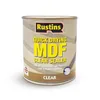
Rustins Quick Drying MDF Clear Sealer
A clear sealer formulated specifically for raw MDF edges and faces, made to soak into and close off the fiber before priming or painting.
- Best for: sealing raw MDF edges and hinge pockets before hanging
- Why we picked it: built for MDF specifically, not a generic wall primer stretched to cover it
- Main drawback: small container size means multiple bottles for a full kitchen’s worth of doors
Compare more MDF sealer & primer options
 Option 1 Zinsser Bulls Eye 1-2-3 Primer & Sealer
|
 Option 2 Zinsser Bulls Eye 1-2-3 Gray Primer-Sealer
|
 Option 3 Zinsser Smart Prime Water-Based Primer
|
As an Amazon Associate we earn from qualifying purchases.
MDF has no grain, so unlike solid wood it doesn’t cup or twist just from seasonal humidity swings — the fibers are pressed in random orientation, which is part of why MDF is often marketed as more dimensionally stable than solid lumber. For the general moisture behavior of MDF board and sheet stock (not doors specifically), see our full breakdown of whether MDF warps. Warping in an MDF cabinet door happens when the two faces absorb moisture at different rates: paint or veneer seals one side, while the back, an edge, or a hinge pocket is left bare. That bare spot swells faster than the sealed face, and the door bows toward the drier side.
This is why warping shows up almost exclusively on doors near sinks, dishwashers, and ranges — not on doors in a dry hallway cabinet. It’s also why “MDF resists warping” and “MDF warps easily” are both technically true statements about the same door: a fully sealed MDF door is genuinely more stable than solid wood, while a partially sealed one is more vulnerable, because its swelling is concentrated in one spot instead of spread evenly through a grain structure.
📊 Keep kitchens and shops in the 35–50% relative humidity range and 60–90°F for at least a week before and after hanging new MDF doors — this is the practical stability band cabinetmakers use to let panels acclimate and to stop uneven moisture uptake. Source: cabinetmaking field guidance, Buildshow Network.
MDF vs. Solid Wood vs. Plywood-Core Doors: Which Warps Least?
Fully sealed MDF, plywood-core, and solid wood doors all resist warping reasonably well — the real differences show up once a door is only partly sealed or exposed to real kitchen humidity.
| Door Core | Warp Risk If Unsealed | Best For |
|---|---|---|
| MDF | High at the unsealed spot only — swells and rarely returns flat | Painted, flat-panel or shaker doors on a budget |
| Solid wood | Moderate, spread across the grain — often relaxes somewhat when moisture drops | Stained, natural-wood-grain doors |
| Plywood core | Low — cross-laminated layers resist cupping better than either MDF or solid wood | Large, flat, humidity-exposed doors (near sinks/dishwashers) |
If you’re deciding between materials for a kitchen build rather than troubleshooting existing doors, our guide on whether MDF doors are a good choice covers the durability and cost trade-offs in more depth.
How to Prevent Warping in MDF Cabinet Doors
Prevention is entirely about eliminating the bare spot that causes uneven moisture uptake — not about avoiding MDF altogether.
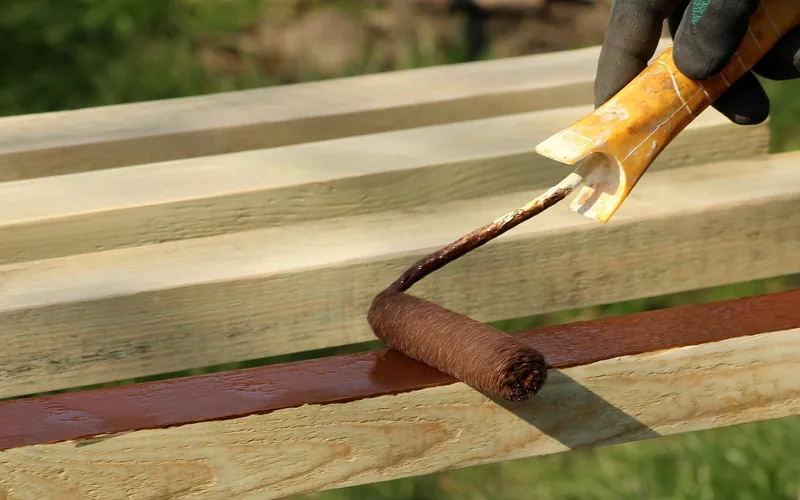
- Seal every face and edge before hanging: prime or seal the front, back, all four edges, and the inside of any drilled hinge pocket — not just the visible front face.
- Choose a purpose-built MDF sealer or a high-build primer: a shellac-based or dedicated MDF sealer soaks into the fibers and closes them off better than a thin single coat of wall paint.
- Sand between coats: MDF edges raise a fine fuzz after the first coat — knock it back with 220-grit before the second coat so the seal is continuous, not pinholed.
- Keep sink- and dishwasher-adjacent doors extra dry: add a second sealer coat on the bottom edge of any door within a few inches of a water source.
- Hold humidity steady: run a kitchen exhaust fan during dishwasher cycles and avoid letting indoor RH swing far outside the 35–50% band above.
Choosing the right product for step 2 makes the biggest difference — our MDF primer comparison breaks down which formulas actually seal the fiber instead of just coating over it.
Can a Warped MDF Cabinet Door Be Fixed?
Mostly no — once MDF absorbs moisture unevenly and cups, the compressed fibers on the swollen side don’t fully spring back, even after the door dries out. That’s different from solid wood, which can sometimes relax partway when humidity returns to normal.
Two DIY attempts are worth trying before replacing the door: clamping it flat under even weight for several days in a dry room, or gently warming the concave face with a heat gun while applying light, even pressure. Neither works reliably on a door that’s been warped for more than a few weeks, and neither should be attempted on a door that’s already painted with a moisture-trapped laminate — the heat can blister the finish.
“Even when the moisture content returns to the original value, the warp does not disappear” — that’s the consistent finding cabinetmakers report for MDF panels once they’ve cupped, which is why sealing the door before it warps matters more than fixing it after.
If a door is warped badly enough that it no longer sits flush in the frame, replacement is usually faster and cheaper than repeated repair attempts — see our guide on how MDF holds up in humid or exterior-adjacent spaces if the warping is coming from a laundry room, mudroom, or exterior wall rather than a kitchen sink.
Frequently Asked Questions
Do MDF cabinet doors warp?
Yes, but only where a face or edge is left unsealed. A fully primed and painted MDF door, sealed on all six sides including the hinge pockets, resists warping about as well as a plywood-core door. Warping happens when moisture gets into bare fiber on one side faster than it can leave.
How can I prevent warping of MDF cabinet doors?
Seal every face and edge, including the drilled hinge pocket, with a dedicated MDF sealer or high-build primer before painting. Sand lightly between coats so the seal has no pinholes, and add an extra coat on any edge within a few inches of a sink or dishwasher.
Can warped MDF cabinet doors be repaired?
Rarely, and only if caught early. Clamping the door flat under weight in a dry room, or careful heat-gun warming with even pressure, sometimes reduces mild warp within the first few weeks. Once cupped for longer than that, the fibers stay compressed and the door needs to be replaced.
Does painted MDF still warp?
It can, if the paint only covers the visible front face. Paint that stops at the edge and skips the back panel or hinge pocket leaves exactly the kind of bare spot that causes uneven swelling — the door still needs every surface sealed, not just the side you see.
How long does it take for MDF cabinet doors to warp?
An unsealed door next to a sink or dishwasher can show visible cupping in as little as a few months of daily moisture exposure. A fully sealed door in normal kitchen humidity (35–50% RH) can last for years without warping, since there’s no bare spot for moisture to concentrate in.
The short version: MDF cabinet doors warp from an unsealed spot letting moisture in unevenly, not from the material being inherently unstable. Seal every face and edge before hanging, keep humidity in the 35–50% RH range, and a well-finished MDF door will hold flat for years. If you’re weighing paint options too, see our guide to painting MDF cabinets for the full finishing process.
Sponsored / affiliate links. As an Amazon Associate I earn from qualifying purchases. I may earn additional commission from eligible campaigns.