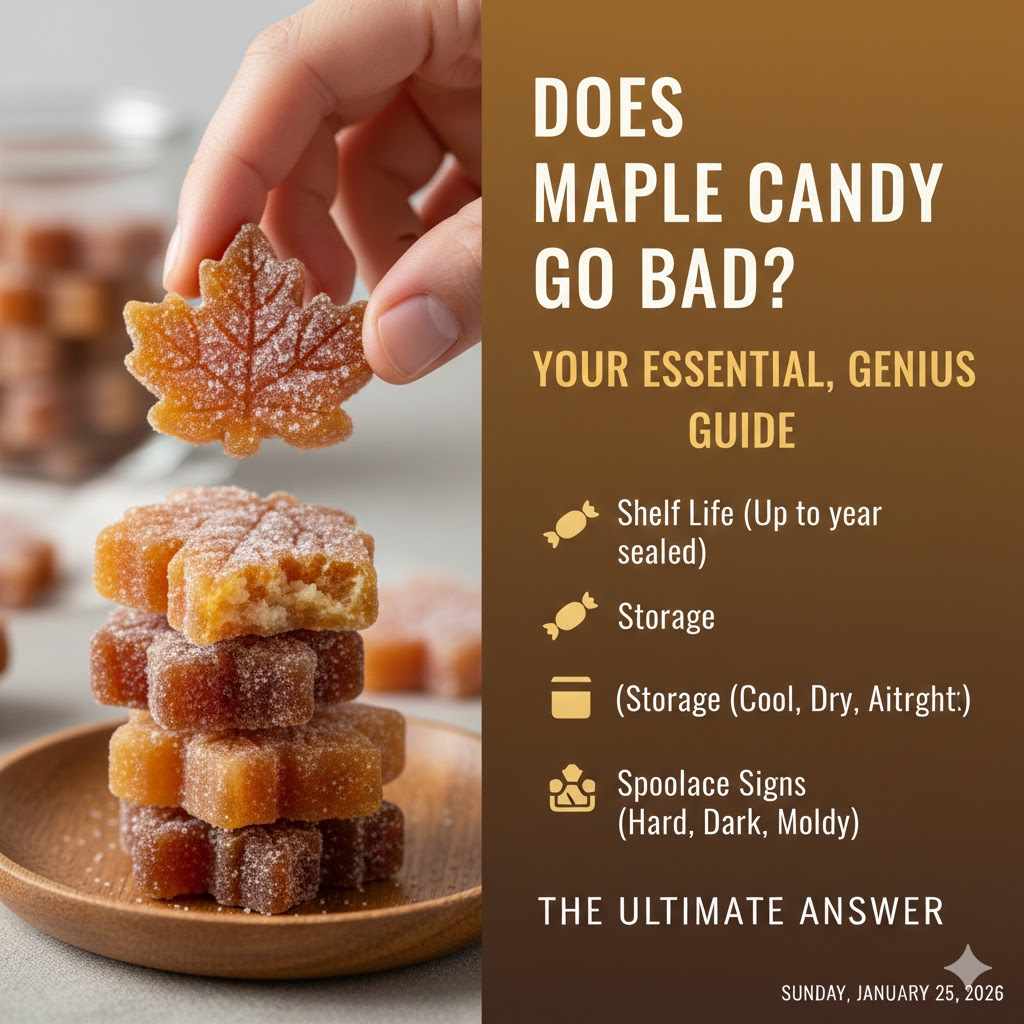
Does Maple Candy Go Bad? Your Essential, Genius Guide
Maple candy doesn’t “go bad” or spoil in a way that makes it unsafe to eat. Its high sugar content prevents bacteria from growing. However, its quality can decline over time—it may become hard, grainy, or sticky. Proper storage is key to keeping it fresh and delicious for months.
Hello friends! Md Meraj here. In my workshop, I spend most of my days with maple wood—feeling its grain, appreciating its strength, and crafting it into something beautiful. But my love for the maple tree doesn’t stop at the sawdust. I have a real sweet spot for its most famous creation: pure maple candy.
I get asked a lot about how to care for wooden projects, but recently, a friend brought a common kitchen question to my workshop: “Does maple candy go bad?” It’s a great question! You get this beautiful, natural treat and you want to savor it. You don’t want to find it’s turned into a sticky rock a week later. Don’t worry, I’m here to help. We’re going to break down everything you need to know about keeping your candy perfect, just like we would with a piece of fine maple wood.
What Exactly Is Maple Candy? A Sweet Lesson from the Workshop
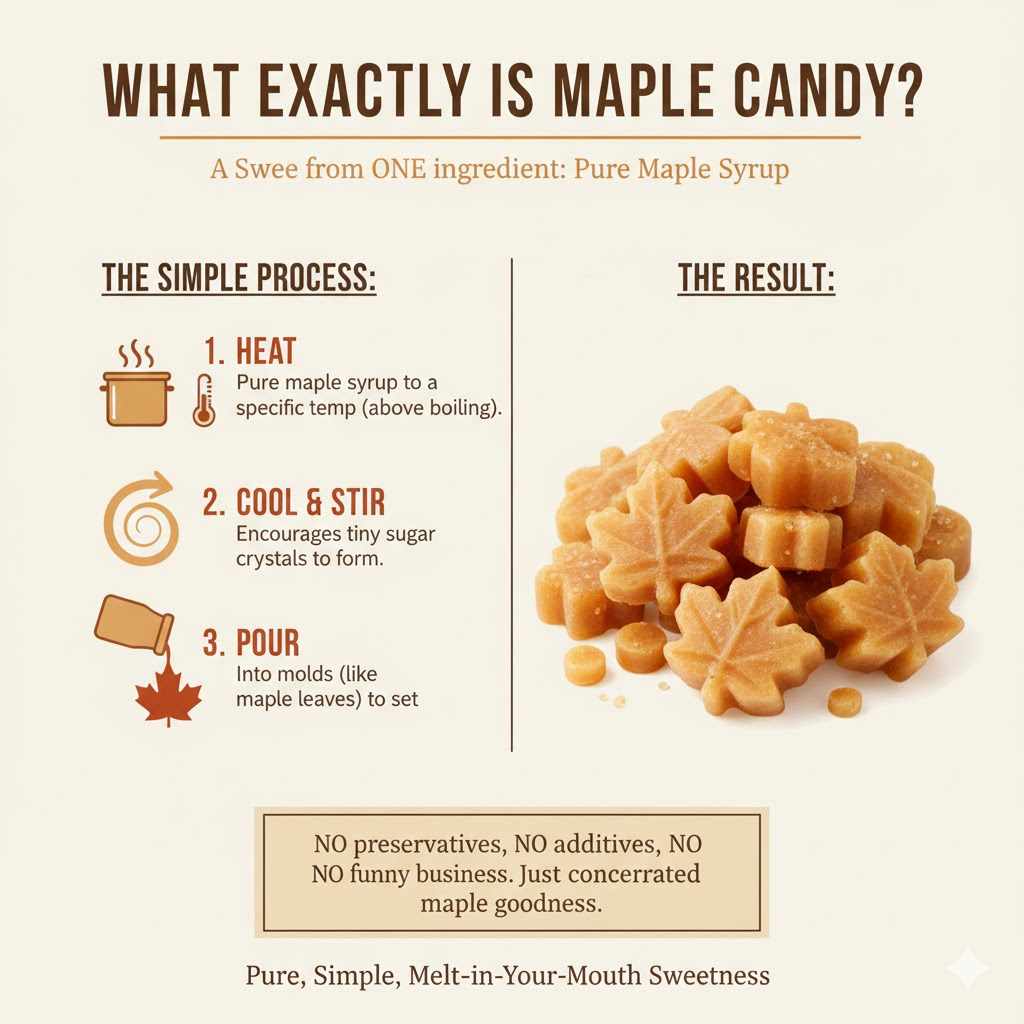
Before we talk about how to store it, let’s appreciate what we’re working with. True maple candy is one of the purest treats you can find. Think of it as a solid piece of a beautiful maple tree’s hard work. It’s made from just one ingredient: pure maple syrup.
The process is simple, much like a good woodworking project relies on a simple, strong joint:
- Pure maple syrup is heated to a specific temperature, usually well above the boiling point of water.
- This process removes most of the water, concentrating the sugar.
- The thickened syrup is then cooled carefully while being stirred.
- This stirring encourages tiny sugar crystals to form, creating that wonderful, melt-in-your-mouth texture.
- Finally, it’s poured into molds (often shaped like little maple leaves) to set.
There are no preservatives, no additives, no funny business. It’s just concentrated maple goodness. This simplicity is what makes it so delicious, but it’s also why its texture can change over time.
The Big Question: Does Maple Candy Truly Go Bad?
Let’s get straight to the point. When we ask if something has “gone bad,” we’re usually worried about safety. Will it make me sick? The good news is, maple candy is incredibly safe. Because it’s almost pure sugar, it doesn’t spoil like meat, dairy, or bread.
Sugar is a natural preservative. It works by drawing water out of any microorganisms, like bacteria or mold, that might land on it. Without water, these tiny invaders can’t grow or multiply. This process is called osmosis, and it’s why things like honey and pure maple syrup can last for an incredibly long time. For a deep dive into how this works, you can check out this resource from Michigan State University Extension on how sugar preserves food.
So, you can eat a piece of maple candy that’s a year old without worrying about food poisoning. The real question isn’t about safety, but about quality. While it won’t spoil, maple candy’s taste and texture can certainly change, and not always for the better.
Signs Your Maple Candy Has Seen Better Days (But Isn’t Spoiled)
Think of maple candy like a fine piece of wood. If left out in the sun and rain, the wood won’t rot away overnight, but it will start to warp, fade, and lose its beautiful finish. Your maple candy experiences something similar. Here’s what to look for:
- It’s Rock-Hard: The most common change is that the candy loses moisture and becomes extremely hard. Instead of a creamy, soft bite, you get a hard crunch that takes forever to dissolve.
- It’s Grainy or Chalky: Sometimes, the tiny sugar crystals inside the candy can grow larger over time. This changes the texture from smooth and velvety to sandy or chalky. It’s still sweet, but the satisfying mouthfeel is gone.
- A White, Frosty Coating Appears: Have you ever seen a white film on old chocolate? Maple candy can get something similar called “sugar bloom.” This happens when the candy is exposed to changes in temperature or humidity, causing sugar crystals to form on the surface. It looks a little strange, but it’s completely harmless and safe to eat.
- It’s Sticky or Weepy: If the candy is exposed to high humidity, it can do the opposite of drying out. Sugar loves to attract water from the air. This can make the candy’s surface sticky, wet, or “weepy.” It might even start to dissolve into a bit of a gooey mess.
- The Flavor Fades: A fresh piece of maple candy has a vibrant, complex maple flavor. Over time, as it’s exposed to air, this flavor can become dull and less intense. It will still taste sweet, but it loses that special character.
The Real Enemy of Maple Candy: How Quality Degrades
To protect your candy, you need to know what you’re fighting against. Just like in my workshop where I protect wood from moisture and pests, you need to protect your maple candy from its natural enemies. There are three main culprits.
1. Humidity (Moisture)
This is Public Enemy No. 1. Sugar is hygroscopic, which is a fancy way of saying it loves to absorb moisture from the air. In a humid environment, your candy will draw in water, making it sticky and soft. In a very dry environment, it will lose its own moisture and become hard as a rock.
2. Air (Oxygen)
Constant exposure to air leads to oxidation, which can dull the flavor. More importantly, it dries the candy out, leading to that hard, brittle texture that nobody enjoys. An airtight seal is your best friend.
3. Heat and Light
Storing your candy in a warm spot (like near a stove or in a sunny window) can soften it and accelerate the growth of sugar crystals, making it grainy faster. Direct sunlight can also cause the delicate flavor to degrade over time.
Here’s a simple table to help you remember the threats:
| The Enemy | Its Effect on Maple Candy | Your Best Defense |
|---|---|---|
| Humidity (Moisture) | Makes candy sticky and weepy, or hard and dry depending on the level. | An airtight container. |
| Air (Oxygen) | Dries out the candy, makes it brittle, and dulls the flavor. | A well-sealed container or bag. |
| Heat & Sunlight | Softens the candy, speeds up graininess, and degrades flavor. | A cool, dark storage spot like a pantry. |
How to Store Maple Candy Like a Pro: My Tried-and-True Method
Alright, let’s get to the practical part. Keeping your maple candy fresh is easy if you follow a few simple steps. This is the method I use, and it works every time.
Step 1: Choose the Right Container
The single most important thing you can do is store your candy in an airtight container. This protects it from both air and humidity. Your options include:
- Glass Jars with Sealing Lids: Mason jars or clamp-top jars are perfect. They provide an excellent seal and don’t hold onto odors.
- Airtight Plastic Containers: Look for ones with a rubber or silicone gasket around the lid for the best seal.
- Resealable Freezer Bags: If you don’t have a container, a heavy-duty resealable bag is a good alternative. Try to squeeze out as much air as possible before sealing it.
Avoid leaving the candy in its original cardboard gift box or a simple candy dish on the counter. Those are for serving, not for long-term storage.
Step 2: Keep It Cool and Dry
Find the right home for your container. You want a location that is consistently cool, dark, and dry. For most people, a kitchen pantry or a cupboard is the ideal spot. The goal is to avoid temperature fluctuations.
Good places:
- Pantry or larder
- Kitchen cabinet (away from the oven and stove)
- A cool closet
Bad places:
- On top of the refrigerator (it gives off heat)
- Next to a window
- Near the dishwasher or stove
Step 3: Separate the Pieces (Optional but Recommended)
If you have a lot of candy and live in a humid place, the pieces can sometimes stick together over time. To prevent this, you can place a small piece of waxed paper or parchment paper between the layers of candy. It’s a little extra work, but it ensures every piece comes out perfectly.
Maple Candy Shelf Life: A Handy Guide
So, how long can you expect your candy to stay in peak condition? Here is a simple guide based on proper storage. Remember, these are estimates for the best quality. The candy will remain safe to eat for much longer.
| Storage Method | Estimated Time for Best Quality | Helpful Notes |
|---|---|---|
| Pantry (Unopened, sealed package) | 6 – 12 months | The manufacturer’s packaging is designed for this. Leave it sealed until you’re ready to enjoy. |
| Pantry (Opened, in airtight container) | 2 – 4 months | The clock starts ticking once air hits it. A good airtight container is essential here. |
| Refrigerator | 3 – 6 months | Not usually recommended due to humidity. Only use if your home is very hot and humid. See notes below. |
| Freezer | 12+ months | The best option for very long-term storage. Quality can be maintained for over a year if done correctly. |
Can You Refrigerate or Freeze Maple Candy?
This is a common question, and the answer is: “Yes, but be careful.” Both methods can extend the life of your candy, but they come with risks if not done right.
Refrigerating Maple Candy
I generally advise against refrigerating maple candy. Why? Because a refrigerator is a high-humidity environment. When you take the cool candy out into warmer room-temperature air, condensation (little water droplets) will form on its surface. This moisture will make the candy sticky.
The only time to consider the fridge is if you live somewhere extremely hot and humid with no air conditioning, and you’re worried about the candy melting into a puddle on your counter. If you must refrigerate, make sure it’s in a truly excellent airtight container.
Freezing Maple Candy
Freezing is a much better option for long-term storage! If you bought a large batch of candy or want to save some for a special occasion many months from now, the freezer is your friend. It locks the candy in time, preventing it from drying out or getting grainy.
Here’s how to freeze it correctly:
- Wrap it Well: First, wrap the candy tightly in plastic wrap. If you have a vacuum sealer, that’s even better. The goal is to protect it from direct contact with the cold, dry air of the freezer, which can cause freezer burn.
- Use an Airtight Container: Place the wrapped candy inside an airtight freezer-safe container or a heavy-duty freezer bag. This adds a second layer of protection against air and odors from other foods.
- Label and Date: Always label the container with the contents and the date so you know how long it’s been in there.
- Thaw it Properly: This is the most critical step! To avoid that sticky condensation, you need to thaw it slowly. Move the container from the freezer to the refrigerator and let it sit for several hours or overnight. Then, move it from the refrigerator to the counter and let it come to room temperature for another hour before you open the container. This slow process prevents moisture from forming on the candy.
Reviving Old Maple Candy: Don’t Throw It Out!
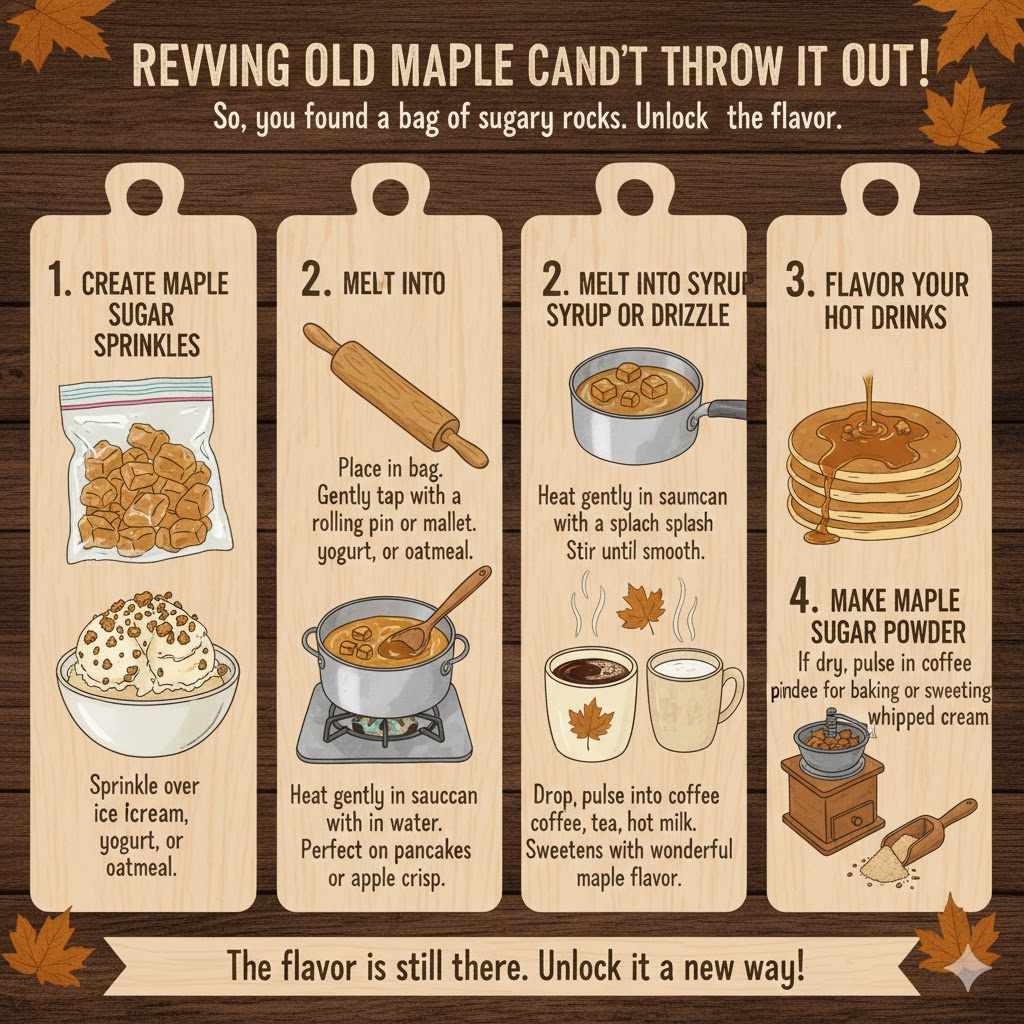
So, you found a bag of maple candy at the back of the pantry, and it’s turned into a collection of sugary rocks. Don’t toss it in the bin! As a woodworker, I believe in finding a use for every scrap. The same principle applies here. That candy is still pure, delicious maple sugar, and it can be repurposed.
- Create Maple Sugar Sprinkles: Place the hard candy in a heavy-duty plastic bag. Squeeze out the air and seal it. Now, grab a rolling pin, a meat mallet, or even a smooth hammer from the workshop and gently tap the candy until it shatters into small, crunchy bits. These are perfect for sprinkling over ice cream, yogurt, or oatmeal.
- Melt it into a Syrup or Drizzle: Put the candy pieces (large or small) in a small saucepan with a splash of water (about a teaspoon per few pieces of candy). Heat gently over low heat, stirring constantly until it melts down into a smooth maple syrup. This is amazing on pancakes, waffles, or drizzled over apple crisp.
- Flavor Your Hot Drinks: Drop a whole piece of hard maple candy into your morning coffee or a mug of hot tea. It will slowly dissolve, sweetening your drink with a wonderful maple flavor. This is also fantastic in a mug of hot milk for a cozy evening treat.
- Make Maple Sugar Powder: If the candy is dry and brittle (not sticky), you can break it into smaller pieces and pulse it in a clean coffee grinder or a powerful blender. This will turn it into a fine maple sugar powder you can use for baking, rimming a cocktail glass, or sweetening whipped cream.
Remember, the flavor is still there. All you have to do is unlock it in a new way!
Frequently Asked Questions (FAQ)
1. What is the white stuff on my maple candy?
That white, chalky-looking layer is called “sugar bloom.” It’s not mold! It’s simply sugar crystals that have formed on the surface due to changes in temperature or humidity. While it might change the texture slightly, the candy is perfectly safe and still delicious to eat.
2. Can I get sick from eating old maple candy?
It is extremely unlikely. The high concentration of sugar in maple candy makes it a terrible environment for harmful bacteria or mold to grow. As long as it was stored away from contaminants, it should be safe to eat indefinitely. The issue will be with quality (hardness, flavor), not safety.
3. Does maple cream go bad faster than maple candy?
Yes, it does. Maple cream (also called maple butter) has a higher moisture content and a much finer crystal structure, making it more prone to separating and drying out. It should be stored in the refrigerator after opening and is best consumed within a few months for the best texture and flavor.
4. What’s the ideal temperature to store maple candy?
The sweet spot is a consistent, cool room temperature. Think somewhere between 60-70°F (15-21°C). The key is to avoid big swings in temperature that can cause the candy’s texture to change.
5. Why did my maple candy get sticky?
Stickiness is almost always caused by one thing: humidity. Sugar acts like a sponge, pulling moisture from the air. If you leave your candy out on a humid day or store it in a container that isn’t airtight, the surface will become sticky to the touch.
6. Does homemade maple candy last as long as store-bought?
Yes, it should last just as long if it’s made and stored correctly. Since pure maple candy has no artificial preservatives anyway, there’s no difference between store-bought and homemade in terms of ingredients. The key is proper storage in an airtight container from the moment it cools.
7. Is there a way to soften hard maple candy?
Trying to “rehydrate” hard maple candy is tricky and often leads to a sticky mess. A better approach is to repurpose it. Your best bet is to embrace its hardness and break it into pieces for toppings or melt it down into a delicious syrup for other uses.
Conclusion: Your Sweetest Creations Deserve the Best Care
In woodworking, we finish a project with oil or varnish to protect it and bring out its natural beauty. Think of storing your maple candy the same way. You’re simply protecting a wonderful, natural creation so you can enjoy it at its absolute best. It doesn’t go “bad,” but it deserves a little care to stay perfect.
By keeping it in an airtight container in a cool, dark place, you’re guaranteeing that every time you reach for a piece, you’ll get that perfect, creamy, flavorful bite you expect. And if a few pieces get old and hard, you now have a handful of creative ways to give them a new life. Nothing goes to waste.
So go ahead, enjoy that beautiful taste of the maple tree. With a little bit of workshop wisdom, you can make that sweet moment last.