Is Silver Maple Good for Woodworking?
Silver maple is good for woodworking projects that do not need heavy-duty durability — it is lightweight, easy to cut and shape, and finishes smoothly, but at roughly 700–950 lbf on the Janka scale it is far softer than hard (sugar) maple’s 1,450 lbf. That softness means it dents and scratches more easily, so it suits painted furniture, drawer boxes, and carving better than heirloom tabletops. This guide covers how silver maple compares to hard maple, where it excels, and how to finish it without blotching.

What Is Silver Maple, and How Is It Different From Hard Maple?
Best Pre-Stain Fix for Silver Maple
 |
Varathane Pre-Stain Wood Conditioner – $18.29 Applied before staining, this evens out absorption on silver maple’s tight closed grain — the exact blotching problem this guide covers above.
|
Silver maple (Acer saccharinum) is technically a hardwood — “hardwood” is a botanical classification for broadleaf, seed-bearing trees, not a rating of how hard the wood actually is. This is the confusing part: silver maple is a hardwood species that produces genuinely soft wood, which is why it sits near the bottom of the hardness scale for common maples while still being classed the same way as oak or walnut.
📊 Silver maple rates about 700–950 lbf on the Janka hardness scale, versus 1,450 lbf for hard (sugar) maple — roughly half as dent-resistant. — Source: The Wood Database, Silver Maple
Pros of Working With Silver Maple
Silver maple is easy to machine because its low density means less resistance for saw blades, planers, and hand tools, so cuts stay cleaner with less tear-out than denser hardwoods. Its closed-pore, understated grain takes glue and both paint and clear finishes well, and it is one of the more affordable and widely available maple species since silver maple trees grow fast and are common landscape and shade trees, not a specialty forestry crop.

Cons and Limitations of Silver Maple
The same low density that makes silver maple easy to cut also makes finished pieces dent and scratch more easily than hard maple, oak, or walnut, so it is a poor choice for high-wear surfaces like tabletops or flooring. It can also “fuzz” or tear at the surface if you sand aggressively or run it through dull blades, since the soft fibers compress and shred instead of cutting cleanly.
Silver maple shares the same decay resistance as every other maple species — the U.S. Forest Products Laboratory classes maple heartwood as “slightly or non-resistant” to rot, so it is not a suitable choice for outdoor furniture or garden structures without heavy sealing and maintenance, regardless of how it performs indoors.
Silver Maple vs. Hard Maple vs. Other Woods
| Wood | Janka Hardness | Workability | Typical Cost | Best For |
|---|---|---|---|---|
| Silver Maple | 700–950 lbf | Easy, can fuzz if dull tools used | $ | Painted furniture, drawer parts, carving |
| Hard (Sugar) Maple | 1,450 lbf | Harder on tools, cleaner cuts | $$ | Tabletops, flooring, cutting boards |
| Red Oak | 1,290 lbf | Moderate, open grain | $$ | Furniture, cabinetry |
| Black Walnut | 1,010 lbf | Easy to moderate | $$$$ | Fine furniture, show pieces |
How to Finish Silver Maple Without Blotching
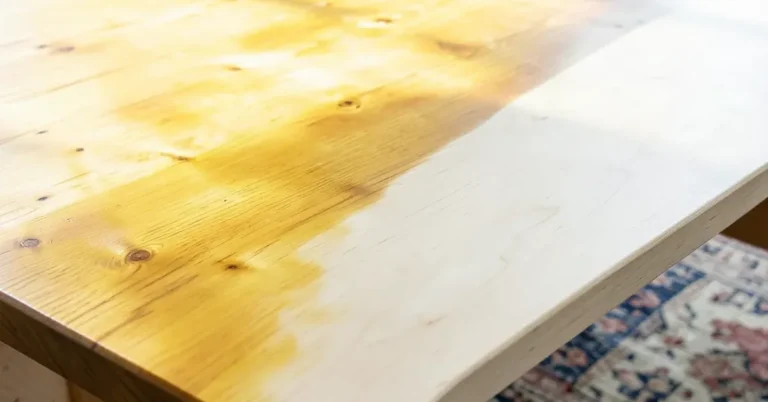
Silver maple’s tight, closed grain absorbs oil-based stain unevenly, the same blotching problem birch and pine plywood are known for — the fix is to apply a pre-stain wood conditioner and let it soak in for the time listed on the can before staining, which evens out how much stain the surface pulls in. For painted projects, silver maple’s smooth surface needs less filling than open-grained woods like oak, so a standard primer and two topcoats is usually enough for a professional-looking finish.

Best Uses for Silver Maple Projects
- Painted furniture and cabinetry: its smooth, understated grain is ideal under paint where wood figure does not need to show.
- Drawer boxes and secondary parts: lightweight and easy to machine for parts that are not on show.
- Carving and turning: soft, even texture holds fine detail well and is forgiving for beginners learning hand tools.
- Inexpensive practice or shop projects: low cost and wide availability make it a reasonable wood to learn joinery on before moving to hardwood species.
Avoid silver maple for tabletops, flooring, or anything else that takes daily wear, and skip it entirely for outdoor furniture unless you are prepared to seal and maintain it every year.
Frequently Asked Questions
Is silver maple a good choice for woodworking?
Yes, for the right projects. Silver maple is lightweight, easy to cut and shape, and takes paint well, which makes it a good fit for painted furniture, drawer parts, and carving. It is not a good fit for tabletops, flooring, or anything exposed to heavy daily wear, since it is significantly softer than hard maple.
Is silver maple good for outdoor furniture?
No. Silver maple has the same low natural decay resistance as every other maple species, so it will warp, stain, and rot outdoors just as fast as hard maple. If you want an outdoor project, choose a naturally durable species like cedar or teak instead.
How does silver maple compare to hard maple?
Silver maple is roughly half as hard as sugar (hard) maple — about 700–950 lbf versus 1,450 lbf on the Janka scale. It is easier to cut and shape but dents and scratches more easily once a project is finished, so hard maple is the better choice for anything that needs to withstand daily use.
Why does silver maple blotch when stained?
Silver maple’s tight, closed grain absorbs oil-based stain unevenly, the same issue birch and pine have. Applying a pre-stain wood conditioner first, and letting it penetrate for the time the label specifies, evens out stain absorption and prevents the dark blotchy patches this wood is known for.
Conclusion
Silver maple earns its place in the shop for painted furniture, drawer parts, and carving, where its light weight and smooth surface are real advantages. It is not a substitute for hard maple on anything that takes daily wear, and it belongs indoors only — the same low decay resistance as every other maple rules it out for outdoor use.
Sponsored / affiliate links. As an Amazon Associate I earn from qualifying purchases. I may earn additional commission from eligible campaigns.