Eastwood Contour SCT vs Porter-Cable Restorer: Which Should You Buy?
The Eastwood Contour SCT is the more powerful choice — a 9-amp, 1,000–3,700 RPM tool built for stripping rust and paint off metal — while the Porter-Cable Restorer is a lighter 3.5-amp drum sander built for wood and furniture work, and largely gone from new-tool shelves as of 2026. Picking the wrong one wastes money on drums the tool can’t spin fast enough to use. Here’s how the real specs, price, and availability compare.
Quick Answer
Pick the Eastwood Contour SCT ($171–$350) for auto-body rust and paint removal on metal — its 9-amp motor and 1,000–3,700 RPM range strip faster and outlast lighter tools. Pick the Porter-Cable Restorer for occasional wood-refinishing jobs, but check availability first: as of 2026, Amazon and Lowe’s mostly list replacement parts and roller sleeves for it, not the base tool.
Eastwood Contour SCT vs Porter-Cable Restorer: Spec Comparison
Best Surface Conditioning Tool Pick
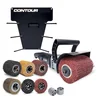
Eastwood Contour SCT Surface Conditioning Tool
9-amp motor, 1,000–3,700 RPM, 4″ drum, 3-year warranty. The tool this comparison recommends for metal.
- Best for: Stripping rust, paint, and body filler from steel panels and frames
- Why we picked it: Highest power and RPM range of the two tools compared here, still in active production
- Main drawback: Heavier (8.2 lbs) and pricier than the Porter-Cable Restorer
Compare more Eastwood Contour SCT kits
 Option 1 Contour SCT With 4 Accessory Drums
|
 Option 2 Contour SCT Master Kit + Rack
|
 Option 3 40 Grit Abrasive Drum, 4-Pack
|
As an Amazon Associate we earn from qualifying purchases.
These are two different classes of tool wearing similar “spin a roller and strip the surface” body styles. The specs below come from each manufacturer’s published documentation and current retailer listings, not marketing copy.
| Spec | Eastwood Contour SCT | Porter-Cable Restorer (PXRA2676) |
|---|---|---|
| Motor | 9 amp, 120V, dual-gear drive | 3.5 amp, 120V |
| Speed | 1,000–3,700 RPM (6-position dial) | 1,000–3,200 RPM (variable dial) |
| Weight | 8.2 lbs | ~4.5 lbs |
| Cord length | 7′6″ | Standard corded, dust management port |
| Drum size | 4″ accessory drums | 4″ drum, soft rubber roller |
| Body / gearbox | All-steel gear housing, less side shrouding (metal work) | Rubber front bumpers, full dust shroud with vacuum port |
| Warranty | 3-year | Varies by retailer, typically 2-year limited |
| Price (new, 2026) | $171–$350 depending on kit | Base tool largely unavailable new; parts/sleeves ~$15–$60 |
| Best for | Metal — rust, paint, filler, undercoating on auto bodies and steel | Wood — furniture stripping, light rust on small parts |
Eastwood Contour SCT is a surface conditioning tool built by Eastwood Company for auto-body and metal fabrication work — stripping rust, paint, body filler, and undercoating from steel panels, frame rails, and floor pans. Restoration projects that involve both wood and metal hardware often need both tool types on the bench.
What Is the Eastwood Contour SCT?
The Contour SCT (model 21145) runs a 9-amp, all-steel-gear motor with a 6-position dial covering 1,000 to 3,700 RPM, weighs 8.2 lbs, and ships with one 4-inch finishing drum and a spring-loaded slide-lock trigger. Eastwood built it with an in-line design specifically so the drum keeps spinning without adding torque load or heat into the metal — a real problem with angle grinders, which can warp thin sheet metal if you linger in one spot.
It accepts interchangeable abrasive drums, wire wheels, and finishing wheels in coarse-to-fine grits, so one tool handles rust removal, paint stripping, and final blending before primer. It’s backed by a 3-year warranty. Reviewers on Eastwood’s own site and in auto-restoration forums report it strips rust, Bondo, and undercoating in seconds with the right drum — though a minority note the abrasive drums wear out faster than expected under heavy daily use.
What Is the Porter-Cable Restorer?
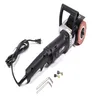
The Porter-Cable Restorer (model PXRA2676) is a 3.5-amp corded drum sander with a variable-speed dial from 1,000 to 3,200 RPM, a soft rubber roller for gouge-free surface prep, gear drive, rubber front bumpers to protect the work surface, and a dust management port that connects to a shop vac. At roughly 4.5 lbs it’s noticeably lighter and easier to control one-handed than the Eastwood tool.
It was designed and marketed as a multi-surface tool — sanding, grinding, buffing, and polishing wood, metal, and even concrete with interchangeable roller sleeves. As of 2026, availability has thinned out considerably: searching current retailers turns up mostly replacement parts (rear covers, bearings, roller sleeves) rather than the base tool itself, which suggests Porter-Cable has scaled back or discontinued new production. If you already own one, roller sleeves and abrasive bands are still sold separately by Porter-Cable and third-party sellers.
Key Differences: Power, Weight, Dust Control, and Price
Power and speed. The Eastwood Contour SCT’s 9-amp motor and 3,700 RPM top speed give it noticeably more cutting force than the Porter-Cable Restorer’s 3.5-amp motor and 3,200 RPM ceiling. On thick rust, seam sealer, or body filler, that extra power is the difference between one pass and three.
Weight and control. At 8.2 lbs, the Eastwood tool fatigues your arm faster on overhead or vertical work. The Restorer, at roughly half the weight, is easier to control one-handed — a real advantage on furniture refinishing where you’re following curved profiles rather than flat panels.
📊 9 amps vs. 3.5 amps, 3,700 RPM vs. 3,200 RPM, 8.2 lbs vs. ~4.5 lbs — Source: Eastwood Company and Porter-Cable published specifications, 2026
Dust control. This is where the two tools genuinely diverge in design intent, and it’s a distinction the tool’s marketing copy doesn’t spell out clearly. The Restorer has a full dust shroud with a working vacuum port, which auto-restoration and woodworking forum members consistently describe as effective for indoor use. The Contour SCT has less shrouding on one side by design — intentional, since less shrouding means better visibility and airflow when you’re chasing sparks and hot metal shavings across a body panel, but it also means more dust in the air if you’re using it in an enclosed shop.
“The Restorer is suited for wood or very messy stuff since it has a great shroud and a vacuum port that works perfect, while the Contour SCT [works better] on metal since it has less shrouding on one side and more power.”
Price and availability. The Restorer undercut the Eastwood tool by roughly $90–$100 when both were new, but that price advantage doesn’t matter much in 2026 if the base tool isn’t in stock. The Contour SCT remains in active production and ranges from about $171 for the standalone tool to $350 for the full master kit with a storage rack and multiple drums.
Which Tool Should Woodworkers Buy?
If your work is mostly wood — stripping old finish off a table top, prepping a chair frame for refinishing, or knocking rust off cast-iron plane soles and drawer hardware — a Porter-Cable Restorer is the right-sized tool, but plan on buying used or checking stock carefully since new units are scarce. A random-orbit sander or a wire wheel on a corded drill covers most of the same wood-refinishing ground if you can’t find one.
If you’re restoring metal hardware, hinges, or doing mixed wood-and-metal restoration work — old tool chests, iron-fitted workbenches, garden equipment with steel frames — the Eastwood Contour SCT is the more capable, currently-available tool, and its lack of built-in dust shrouding means pairing it with a shop vacuum or working outdoors is worth planning for. For a broader look at which power tool fits which job in the shop, see our tools and saws guide, and if you’re cross-shopping other Porter-Cable gear, our Porter-Cable vs. DeWalt comparison covers their broader corded and cordless lineups.
Common Mistakes When Choosing Between These Tools
- Buying the Restorer expecting it to strip heavy rust like the Eastwood. Its 3.5-amp motor is built for lighter-duty surface prep, not aggressive metal stripping.
- Running the Contour SCT indoors without ventilation. Less shrouding means more airborne dust and debris — use a shop vac nearby or work in a garage with the door open.
- Assuming replacement drums are interchangeable between brands. Eastwood and Porter-Cable use different spindle and drum mounting systems — check compatibility before ordering abrasives.
- Not checking current stock before budgeting for the Restorer. As of 2026, finding the base PXRA2676 tool new is inconsistent; confirm availability before committing to it over the Eastwood.
FAQ
Is the Porter-Cable Restorer still available in 2026?
Mostly no as a new base tool. Current searches on Amazon and Lowe’s return mainly replacement parts — rear covers, bearings, and roller sleeves — rather than the complete PXRA2676 unit, which suggests Porter-Cable has scaled back or ended new production. Existing owners can still buy replacement sleeves and drums.
Can the Eastwood Contour SCT be used on wood?
Yes, with the right grit drum it can strip old finish or smooth rough wood, but it’s overpowered and heavier than necessary for most wood-only jobs. It’s designed first for metal — rust, paint, and body filler — and wood capability is a secondary use case.
What RPM does the Eastwood Contour SCT run at?
It runs 1,000 to 3,700 RPM across a 6-position speed dial, powered by a 9-amp motor. That’s a wider and faster range than the Porter-Cable Restorer’s 1,000 to 3,200 RPM.
Does the Porter-Cable Restorer have dust collection?
Yes. It includes a dust management port that connects to a shop vacuum, and owners consistently rate its dust shroud as effective for indoor use — a genuine advantage over the Eastwood tool, which has less shrouding by design.
Which is better for auto body rust removal?
The Eastwood Contour SCT. Its 9-amp motor, higher RPM ceiling, and all-steel gear housing are built specifically for stripping rust, paint, and body filler from steel panels and frame rails, and it remains in active production as of 2026.
Conclusion
These aren’t really competing for the same job. The Eastwood Contour SCT is the stronger, more available tool for metal — rust, paint, and body filler on steel — while the Porter-Cable Restorer was built as a lighter wood-and-light-metal tool that’s become difficult to buy new in 2026. If you can only own one and your work leans toward auto restoration or heavy metal prep, the Eastwood is the safer buy; if it’s occasional furniture work, check Restorer stock first or reach for a random-orbit sander instead.
Sponsored / affiliate links. As an Amazon Associate I earn from qualifying purchases. I may earn additional commission from eligible campaigns.