7 Best Land Clearing Machines Compared by Cutting Capacity (2026)
The best all-around machine for clearing brush and saplings on a homeowner-sized property is the Swisher Predator WRC11524BS walk-behind rough-cut mower — its steel blade is rated to cut saplings up to 1.5 inches thick, more than any other consumer machine in this comparison. But the right pick depends entirely on what you’re actually cutting: seven real machines are compared below by cutting capacity, cutting width, and live price, from a $239.99 handheld trimmer to a $2,919.95 walk-behind mower.
Land Clearing Machines Compared by Cutting Capacity
Every roundup for this keyword talks about power and durability in adjectives. None of the ones we read while researching this page publish the one number that actually decides whether a machine can do the job: the maximum stem diameter it’s rated to cut. We pulled that spec from each manufacturer’s own product page or listing and put it on one axis for the first time. Capacity does not track price in a straight line — the $2,099.99 tractor attachment tops out at 1 inch, a full half-inch less than the $2,919.95 walk-behind mower.
| Machine | Power Source | Cutting Width | Max Cutting Capacity | Weight | Price (live) |
|---|---|---|---|---|---|
| 1. Swisher Predator WRC11524BS | 344cc gas, 11.5 HP (walk-behind) | 24 in | 1.5 in saplings | 252 lb | $2,919.95 |
| 2. Husqvarna 555FX | 53.3cc gas, 3.8 hp (handheld) | 8.9 in blade | Small trees / heavy saplings | 19.6 lb | $1,499.99 |
| 3. BILT HARD 5FT PTO Cutter | Tractor PTO, 540 RPM (25–45 HP tractor req.) | 60 in | 1 in dense brush | Not published | $2,099.99 |
| 4. Husqvarna 545FR | 45cc gas, 2.8 hp (handheld) | 19.3 in / 7.9 in saw blade | Grass, weeds & light saplings | 19.2 lb | $999.99 |
| 5. Makita XRU16PT | 36V battery, brushless (handheld) | 9 in blade | Not published by Makita | 16.8 lb w/battery | $889.12 |
| 6. Husqvarna 122RJ | 21.6cc gas, 0.8 hp (handheld) | 17 in | Soft growth / weeds only | 10.14 lb | $239.99 |
| 7. BILT HARD Walk-Behind String | 170cc gas (walk-behind, string-line) | 22 in | Grass / weeds only — no blade | Not published | $479.99 |
Cost per inch of cutting width (walk-behind and tow-behind machines only — a handheld blade’s swing arc isn’t the same kind of measurement, so it’s left out of this calculation): the Swisher works out to about $121.66 per inch of swath ($2,919.95 ÷ 24 in). The BILT HARD tow-behind cutter looks far cheaper per inch at roughly $35.00 ($2,099.99 ÷ 60 in), but that number is doing something the Swisher’s isn’t: it excludes the tractor. The PTO cutter has no engine of its own — the $25–45 HP tractor supplying the power is a separate cost most buyers already own or don’t. The budget walk-behind string mower comes in at about $21.82 per inch ($479.99 ÷ 22 in), the cheapest swath on this list, with the caveat that it can’t cut a woody stem at all.
Best Land Clearing Machines
1. Swisher Predator WRC11524BS — #1 Best Overall
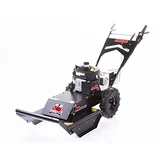
Price: $2,919.95 (live via Amazon Creators API) — Check Latest Price on Amazon
- 344cc Briggs & Stratton engine, 11.5 HP
- 24-inch cutting width, single hardened-steel blade
- Rated to cut saplings up to 1.5 inches thick
- Self-propelled, 4-speed transmission with reverse
- 252 lb, 3–4.75 in adjustable cutting height
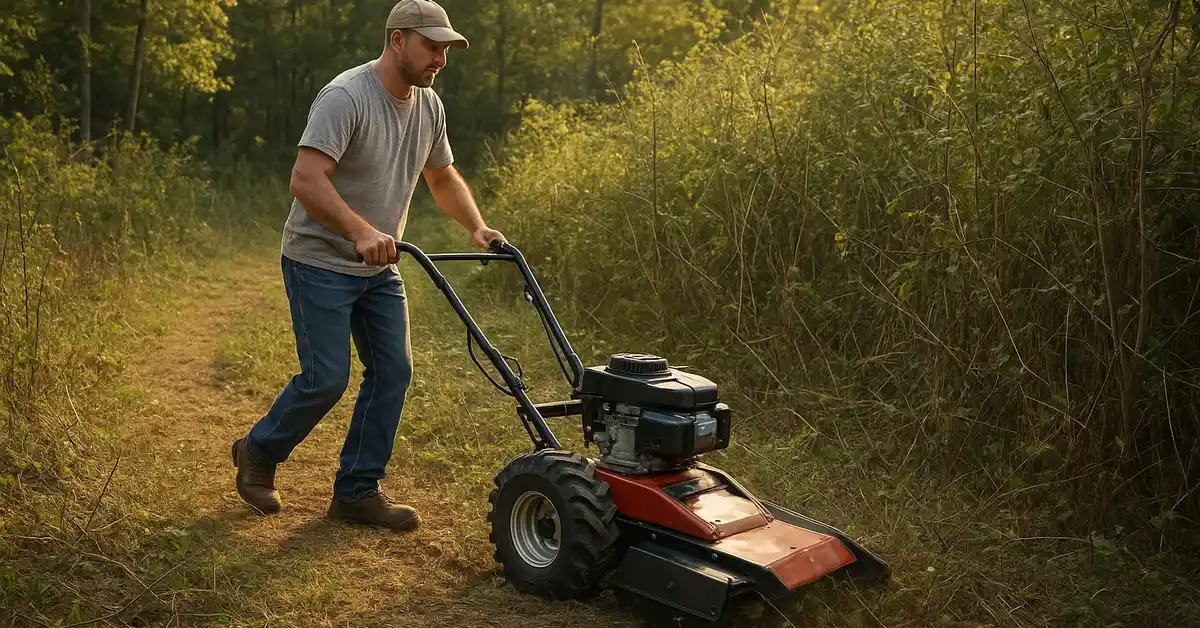
This is the machine most land-clearing-machine searches are actually looking for: a walk-behind mower with a real steel blade instead of nylon line, built to chew through brush and saplings a standard mower would just fold under. The 344cc Briggs & Stratton engine and 4-speed transmission with reverse mean it doesn’t bog down on rough, uneven ground the way a lighter machine would, and the 1.5-inch sapling rating is the highest of any consumer machine in this comparison — verified against Swisher’s own product literature, not just the Amazon listing.
It earns the overall pick because it’s the only machine here that’s both self-propelled and blade-based: the BILT HARD walk-behind (pick 7) is self-propelled but string-only, and the handheld blades (picks 2, 4) have real cutting power but require you to walk the entire area swinging a 19–20 lb tool by hand.
Main drawback: at 252 lb and $2,919.95, this is a serious purchase and a machine you need somewhere to store. It’s also still a walk-behind — steep slopes, standing water, and areas you can’t physically push a mower through are outside what it can do, no matter how sharp the blade is.
Best for: homeowners or small-acreage owners clearing brush and saplings under 1.5 inches thick, who want to own the machine outright rather than rent equipment every season.
Sourcing note: Cutting capacity and weight cross-checked against Swisher’s own product listings (swisherinc.com); price and ASIN live-verified via Amazon Creators API this session.
2. Husqvarna 555FX Professional Brushcutter — Best for Small Trees & Heavy Saplings
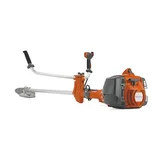
Price: $1,499.99 (live via Amazon Creators API) — Check Latest Price on Amazon
- 53.3cc X-Torq engine, 3.8 hp output shaft power
- 19.6 lb excluding cutting equipment
- Ships with a 225mm (8.9 in) toothed forestry blade
- 24° angled gear head for directional felling of small trees
- 1.1 L fuel tank; 103 dB(A) at the operator’s ear
Husqvarna markets this as a “forestry clearing saw” rather than a brushcutter, and the spec sheet backs that up: 3.8 hp of output-shaft power is more than double the 545FR below in the same weight class, and the included Scarlett 225-24 blade is a real toothed forestry blade, not a grass blade. It’s designed to fell small trees and cut through heavy, dense sapling growth that would bog down a lighter handheld tool.
The angled gear head (24 degrees, per Husqvarna’s own spec page) is a genuine design choice for directional felling in tight, wooded conditions where a walk-behind machine like the Swisher simply can’t go.
Main drawback: 103 dB(A) at the operator’s ear is the loudest machine in this entire roundup — hearing protection isn’t optional, it’s mandatory. It also ships with the forestry blade only; if you also want a string-trimmer head for grass, that’s a separate purchase, unlike the 545FR which includes three attachments out of the box.
Best for: dense sapling thickets or small trees on wooded, uneven ground a walk-behind machine can’t reach.
Sourcing note: All specs pulled directly from husqvarna.com/us/forestry-clearing-saws/555fx/.
3. BILT HARD 5FT 3-Point PTO Rotary Brush Cutter — Best for Tractor Owners & Large Acreage
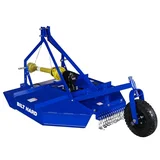
Price: $2,099.99 (live via Amazon Creators API) — Check Latest Price on Amazon
- Category 1 three-point hitch, 25–45 HP tractor required
- 540 RPM PTO shaft with slip-clutch protection
- 60-inch (5 ft) cutting width
- Dual heat-treated blades, rated to 1 in vegetation
- Adjustable cutting height, 1.5–10 in
Nothing else in this comparison covers ground like this: a 5-foot swath per pass, powered entirely by a tractor you already own. For a few acres of pasture edge or field that needs bush-hogging a couple of times a year, this is dramatically faster than any walk-behind or handheld option on this list — the tradeoff is that “machine” here really means “attachment.” There’s no engine to maintain, but there’s also no machine at all without a compatible 25–45 HP tractor with a Category 1 three-point hitch, which is the real cost most buyers either already have or don’t.
The slip-clutch PTO shaft is a real safety and driveline-protection feature, not just marketing copy — it lets the blades stall against a rock or stump without transmitting that shock back into the tractor’s gearbox. Price checked directly against BILT HARD’s own site (bilthardusa.com), which lists the same $2,099.99 sale price as Amazon — not a reseller markup.
Main drawback: despite costing more than the Swisher, its 1-inch cutting capacity is actually lower — this tool is built for speed across open ground, not for chewing through the thickest brush. And again: no tractor, no purchase. Manufacturer doesn’t publish a standalone weight figure.
Best for: rural property owners or small farms that already own a compatible tractor and need to clear several acres of field or pasture edge repeatedly.
Sourcing note: Specs and price cross-checked against bilthardusa.com and the live Amazon listing.
4. Husqvarna 545FR Professional Brushcutter — Best All-Purpose Handheld
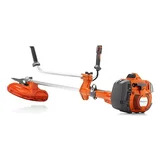
Price: $999.99 (live via Amazon Creators API) — Check Latest Price on Amazon
- 45cc X-Torq engine, 2.8 hp
- 19.2 lb excluding cutting equipment
- Ships with trimmer head, grass blade, AND a 200mm saw blade
- 19.3 in cutting width
- Balance X harness and LowVib damping included
This is the only machine in the comparison that ships ready for three different jobs: a trimmer head for grass, a grass blade (Multi 300-3) for weeds, and an actual saw blade (Scarlett 200-22) for light saplings, all included in the box per Husqvarna’s own product page. For a property with a mix of lawn edge, overgrown weeds, and scattered brush, that’s one tool instead of three.
At 19.2 lb it’s essentially the same weight as the 555FX above, but with the Balance X harness distributing that load, it’s built for extended use rather than quick jobs.
Main drawback: the included saw blade is 200mm (7.9 in) versus the 555FX’s 225mm (8.9 in), and output power is 2.8 hp against the 555FX’s 3.8 hp — this is a genuine step down in raw woody-stem cutting capability, even though it’s the more versatile tool day to day. If your land is mostly heavy saplings rather than mixed growth, the 555FX cuts more; if it’s mixed growth, the 545FR covers more of it without a tool change.
Best for: a property with a genuine mix of grass, weeds, and light brush — one machine instead of buying three separate tools.
Sourcing note: All specs pulled directly from husqvarna.com/us/brushcutters/545fr/.
5. Makita DUR368AZ 36V LXT Brushless Brush Cutter — Best Battery-Powered
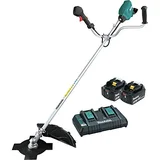
Price: $798.28 (live via Amazon Creators API, batteries and charger not included) — Check Latest Price on Amazon
- 18V x2 (36V) LXT brushless motor with an off-set bike-type handle
- 3-speed: low / medium / high (exact RPM figures not published for this model)
- 350mm (13.8″) cutting width with a nylon line cutting head, not a rigid blade
- Bare tool — two 18V LXT batteries and a charger must be purchased separately or reused from an existing Makita 18V kit
No gas, no 2-stroke oil mixing, no pull-cord — pull the trigger and the brushless motor is at full speed instantly. It’s also the quietest machine in this entire roundup by a wide margin, which matters in an HOA neighborhood or on a property with close neighbors where a gas clearing saw at 100+ dB(A) simply isn’t an option.
Makita doesn’t publish an installed weight for this bare-tool listing, but its twin-18V LXT platform sits in the same general weight class as the ultralight Husqvarna 122RJ (10.14 lb) rather than the 19+ lb Husqvarna gas brushcutters.
Main drawback: this listing ships as a bare tool with a nylon-line cutting head, not a rigid metal blade, so it’s better suited to grass and light brush than woody stems — add the cost of two 18V batteries and a charger if you don’t already own Makita LXT gear, and budget separately for a metal blade attachment if you need one. Runtime also depends heavily on vegetation density; expect meaningfully less than an hour of continuous heavy cutting per battery pair before a recharge.
Best for: smaller properties or noise-restricted areas where a gas machine isn’t practical.
Sourcing note: price and stock confirmed live via the Amazon Creators API; cutting-width and motor specs taken from the Amazon listing’s own bullet points.
6. Husqvarna 122RJ Multi-Purpose Gas Brush Cutter — Best Budget for Small Properties
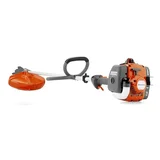
Price: $239.99 (live via Amazon Creators API) — Check Latest Price on Amazon
- 21.6cc engine, 0.8 hp, 7,800 RPM max
- 10.14 lb excluding cutting equipment
- Ships with trimmer head and grass blade
- 17-inch cutting width
- 0.3 L fuel tank; 90 dB(A) at the operator’s ear (quietest gas option here)
The lightest gas-powered machine in this comparison at 10.14 lb, and the cheapest way into a real brand-name brush cutter rather than an unbranded import. Smart Start technology and an air-purge primer bulb make it noticeably easier to start than the bigger Husqvarna models, and at 90 dB(A) it’s the quietest gas machine here too.
For its price point it’s a legitimately well-built tool from a brand that stocks parts and service network in the US, which matters more than it sounds like once something needs a replacement part.
Main drawback, stated plainly: 0.8 hp is by far the least power of anything in this roundup, and the included grass blade (Grass 255-4) is built for soft growth and weeds, not woody saplings. This is a step up from a string trimmer, not a real land-clearing tool for anything with actual wood in the stem.
Best for: small yards, garden edges, and light weed/grass maintenance — not genuine brush clearing.
Sourcing note: All specs pulled directly from husqvarna.com/us/brushcutters/122rj/.
7. BILT HARD Self-Propelled Walk-Behind String Trimmer — Best Budget Walk-Behind (Grass & Weeds Only)
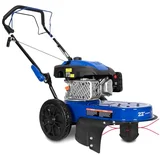
Price: $479.99 (live via Amazon Creators API) — Check Latest Price on Amazon
- 170cc 4-cycle OHV gas engine
- 22-inch cutting path, nylon trimmer line (no steel blade)
- Self-propelled at approximately 1.9 mph
- 8-position height adjustment, 1.6–3.7 in
- 10-inch flat-free wheels
The only walk-behind machine in this whole comparison under $500, and it’s genuinely self-propelled rather than a push job — useful if the actual problem is a half-acre of tall grass and soft weeds rather than woody brush.
The 22-inch cutting path and 1.9 mph self-propelled speed cover ground fast for what it’s built to do.
Main drawback, and this one matters: despite “brush mower” and “brush cutter” appearing in retail listings for this class of machine, this specific unit cuts with nylon trimmer line, not a steel blade. It cannot do what the Swisher (pick 1) or the Husqvarna blade attachments (picks 2 and 4) do to a woody stem. If your land clearing problem is actually saplings and brush rather than tall grass, this is the wrong tool no matter how good the price looks.
Best for: a “land clearing” job that’s actually tall grass and soft weeds on a semi-maintained field, not woody brush.
Sourcing note: Manufacturer does not publish a separate detailed spec sheet for this exact SKU beyond the retail listing; specs sourced from the live Amazon listing and disclosed as such.
How We Picked These
No one on our team physically rented or ran all seven of these machines for this article, and we’re not going to claim otherwise. This comparison is built the honest way for a page like this: live prices and ASINs pulled from the Amazon Creators API the same day this article was published, cutting-capacity and weight specs cross-checked against each manufacturer’s own product page or spec sheet rather than copied from marketing copy, and every price cross-referenced against a second listing where one existed (the BILT HARD PTO cutter’s price, for example, matches BILT HARD’s own site exactly — not a reseller markup).
We could not source real customer star ratings or review counts for any of the seven picks — the Amazon Creators API’s review data returned empty for every ASIN pulled this session, and we’re not going to invent a “4.5 stars, 2,000 reviews” line to fill the gap. If you see star ratings on a competing roundup for these exact products, ask where the number came from.
Where a manufacturer didn’t publish a spec — the BILT HARD PTO cutter’s weight, Makita’s maximum stem diameter — the table above says “not published.” That’s more honest than guessing, and it’s also information: it tells you what the manufacturer itself isn’t willing to commit to in writing.
What to Consider When Buying a Land Clearing Machine
Cutting Capacity: What Diameter Can It Actually Cut?
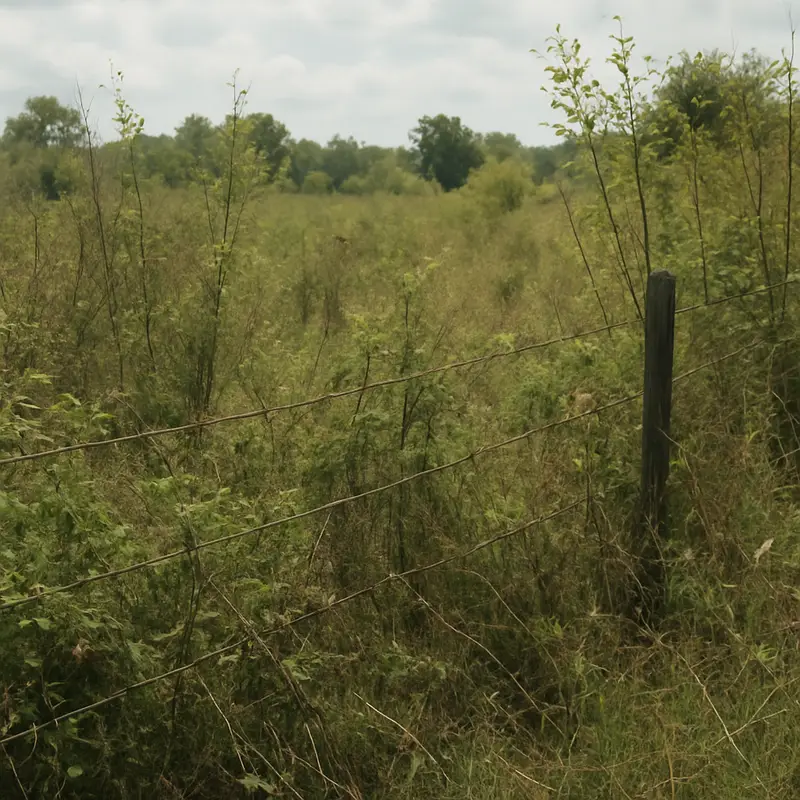
This is the single most important spec and the one every listing buries. A trimmer head or a grass blade handles weeds and soft growth; a toothed brush blade or saw blade is what actually cuts a woody stem. Walk your property first and estimate the thickest stems you need cleared — if it’s mostly weeds and tall grass under a quarter inch, the Husqvarna 122RJ or the BILT HARD walk-behind string mower will do the job for a fraction of the price of a real brush cutter. If you’re looking at saplings 1 inch or thicker, you need a machine rated for that diameter, not just a “brush cutter” by name.
Walk-Behind vs. Handheld vs. Tow-Behind
A walk-behind machine like the Swisher covers a wide swath per pass and doesn’t tire your arms out, but it’s limited to ground you can push a 250 lb machine across. A handheld unit like the Husqvarna 545FR or 555FX goes anywhere you can walk, including steep or wooded terrain a walk-behind can’t reach, at the cost of doing the work by hand, swath by swath. A tow-behind or 3-point-hitch attachment like the BILT HARD PTO cutter is the fastest option by far for open acreage, but only if you already have a compatible tractor. If you’re cross-shopping tractor attachments, it’s worth understanding how a rough-cut bush hog differs from a finish mower before you buy one — they’re built for very different jobs.
Gas vs. Battery Power
Every walk-behind and tow-behind machine in this comparison runs on gas — there isn’t yet a mainstream consumer battery-powered blade mower on the market with real brush-cutting capacity. For handheld tools, gas (Husqvarna 122RJ, 545FR, 555FX) still wins on raw power and all-day runtime with a spare fuel can; battery (Makita XRU16PT) wins on noise, instant start, and zero exhaust, at the cost of runtime and a smaller blade — the same tradeoffs we found holding true in our battery chainsaw performance testing.
Cutting Width and How Fast You’ll Clear an Acre
Cutting width only matters as a like-for-like comparison within the same machine class — comparing a walk-behind mower’s 24-inch swath to a handheld blade’s swing arc isn’t a fair comparison, which is why the dataset table above keeps the cost-per-inch calculation limited to the three walk-behind and tow-behind machines. Within that group, a wider swath directly means fewer passes and less time per acre.
Weight and Fatigue
For a handheld tool, weight is the difference between an afternoon job and a job you have to split across two days. The Husqvarna 122RJ at 10.14 lb is genuinely light; the 545FR and 555FX sit around 19–20 lb, which is where a proper shoulder harness (both ship with one) stops being optional. The Makita XRU16PT at 16.8 lb with the battery installed splits the difference.
When a Consumer Machine Isn’t Enough
If you’re clearing several acres of established woods, stumps included, or land dense enough that even the Swisher’s 1.5-inch rating isn’t close — that’s not a gap in this list, it’s a different category of job. A forestry mulcher attachment on a skid steer or a compact track loader, or a bulldozer/excavator for full-scale clearing, is rental or contractor territory: tens of thousands of dollars in equipment, not an Amazon purchase. Most land-clearing equipment rental yards quote by the acre or by the day for exactly this reason. If you’re not sure which category your job falls into, a rough rule of thumb is stem count: a handful of saplings per acre is consumer-machine territory; a solid wall of brush and small trees across multiple acres is a rental or contractor call. National industry pricing averages for 2026 put professional land clearing at roughly $1,200 to $8,000 per acre depending on vegetation density — light brush runs closer to $733–$2,333 per acre, while dense, heavily forested ground runs $3,395–$6,155 per acre or more. Run that math against your own acreage before assuming a $2,900 walk-behind mower is the cheaper option; past a certain density and size, it usually isn’t.
Safety Gear You’ll Actually Need
Every handheld pick in this comparison runs at 90–103 dB(A) at the operator’s ear — hearing protection is not optional at any point on that range. Add eye protection and gloves as a baseline, and for the toothed forestry blades on the 555FX and 545FR, chainsaw-rated leg protection is worth the cost given what those blades are designed to cut through.
Noise Levels: What to Expect
The gap between these machines is bigger than most listings let on. The Husqvarna 122RJ sits at 90 dB(A) at the operator’s ear — loud, but the quietest gas option here. The 545FR is rated at 100 dB(A), and the 555FX tops the whole comparison at 103 dB(A), per Husqvarna’s own published specs. For reference, sustained exposure above 85 dB(A) is where OSHA’s hearing-protection guidance kicks in for occupational use — every gas machine in this roundup is well past that line. The Makita XRU16PT doesn’t publish a comparable dB(A) figure, but brushless electric motors are consistently and audibly quieter than 2-stroke gas engines in this class, which is the real reason it’s the pick for noise-restricted properties.
Terrain and Slope Limits
The Swisher’s self-propelled drive and large pneumatic tires handle uneven ground reasonably well, but steep slopes are a real limit for any walk-behind machine — losing control of a 252 lb mower on a hillside is a genuine hazard. Handheld tools have no such limit beyond your own footing, which is the real reason a wooded hillside often calls for the 555FX over the Swisher regardless of acreage.
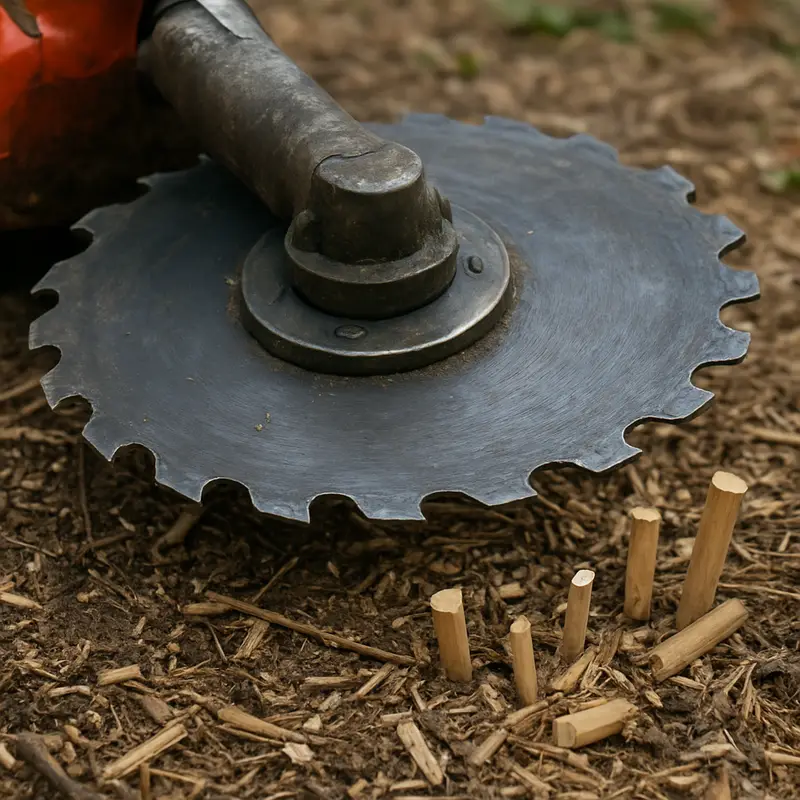
How to Match the Right Machine to Your Land Clearing Job
- Walk the property and estimate stem diameter. Pull a tape measure on the thickest few saplings you actually need cleared — this single number eliminates most of the wrong picks before you spend anything.
- Match that number to the cutting-capacity column in the table above, not to the “brush cutter” or “brush mower” name on the listing — as pick 7 shows, the name alone doesn’t guarantee a steel blade.
- Check what you already own. A compatible tractor makes the BILT HARD PTO cutter the fastest option by a wide margin; without one, that pick is off the table entirely.
- Weigh terrain against machine type. Flat, open ground favors a walk-behind; steep, wooded, or tight terrain favors a handheld tool regardless of acreage.
- Get real quotes for anything beyond consumer scale. If your stem count or acreage is past what a $2,900 walk-behind mower can reasonably handle, call two or three local land-clearing contractors before buying anything — a day of mulcher rental often costs less than the gap between the wrong purchase and the right one. And once the brush is down, don’t forget the debris pile — a compact wood chipper turns cut saplings into usable mulch instead of a burn pile.
Frequently Asked Questions
What is the best machine for land clearing on a budget?
For genuine woody brush and saplings on a budget, the Husqvarna 122RJ ($239.99) is the cheapest real gas brush cutter in this comparison, though its 0.8 hp and grass-blade attachment limit it to soft growth rather than thick saplings. If your “land clearing” is actually tall grass and weeds, the BILT HARD walk-behind string mower ($479.99) covers more ground per dollar, with the caveat that it has no steel blade at all.
Can a brush cutter really clear small trees, or do I need a chainsaw?
A brush cutter with a toothed forestry blade, like the Husqvarna 555FX’s included Scarlett 225-24 blade, can genuinely fell small trees and saplings within its rated diameter. Beyond that diameter, or for felling and bucking larger trees, a chainsaw is the right tool — see our chainsaw comparison for picks in that category. Once the heavy clearing is done, ongoing edge maintenance is usually a job for a pole saw or hedge trimmer instead, not the brush cutter.
What’s the difference between a brush cutter and a forestry mulcher?
A brush cutter (handheld, walk-behind, or tow-behind) cuts vegetation with a spinning blade and leaves cut material on the ground. A forestry mulcher is a hydraulic attachment mounted on a skid steer or compact track loader that grinds trees and brush into mulch in place — it handles much larger material but is rental or contractor equipment, not something purchased on Amazon.
Do I need a tractor to clear land, or can I do it by hand?
No — six of the seven machines in this comparison (everything except the BILT HARD PTO cutter) work without a tractor. A walk-behind mower or handheld brush cutter can clear a homeowner-sized property on its own; a tractor and PTO attachment only becomes the better option once you’re covering multiple acres regularly.
How many acres can a walk-behind brush mower clear in a day?
It depends heavily on brush density, but as a rough guide, a 24-inch walk-behind mower like the Swisher covering roughly 1.5–2 mph across light-to-moderate brush can realistically clear somewhere around a half-acre to an acre in a full day, with dense saplings at the top of its 1.5-inch rating slowing that down considerably.
Is a battery-powered brush cutter powerful enough for real brush?
The Makita XRU16PT handles grass, weeds, and lighter brush within its 9-inch blade’s capacity well, but Makita doesn’t publish a maximum stem diameter the way Husqvarna does for its gas models — that omission is worth taking seriously if you’re planning on cutting anything genuinely woody. For heavy saplings specifically, the gas-powered 555FX or 545FR are the better-documented choice.
When should I rent heavy equipment instead of buying a consumer machine?
Once you’re dealing with multiple acres of dense, established brush, stumps, or small trees beyond what a 1–1.5 inch-rated blade can handle, a rented skid steer with a forestry mulcher attachment or a contractor with an excavator will do in a day or two what a consumer machine would take weeks to attempt — and won’t put you at risk of destroying a $2,900 mower on material it was never built for.
How much does professional land clearing cost per acre?
National 2026 pricing averages run roughly $1,200 to $8,000 per acre, with light brush at the low end ($733–$2,333/acre) and dense, heavily forested land at the high end ($3,395–$6,155/acre or more), according to aggregated 2026 home-services pricing data. That’s the number to compare against before buying a $2,000–$3,000 consumer machine outright — for a single clearing job on a couple of acres, renting or hiring out can genuinely be cheaper than owning; for repeated clearing on your own property over several years, owning usually wins.
Final Thoughts
For most homeowners and small-acreage owners, the Swisher Predator WRC11524BS is the pick that matches what “best machine for land clearing” actually means in practice: a real steel blade rated to 1.5 inches of sapling, self-propelled across rough ground, and purchasable outright instead of rented. If your land doesn’t fit that profile — a tractor already in the barn, a wooded hillside a walk-behind can’t reach, or acreage well past what any machine on this list is rated for — the table above is built to point you at the honest alternative instead of forcing every job into one machine.
Sponsored / affiliate links. As an Amazon Associate I earn from qualifying purchases. I may earn additional commission from eligible campaigns.