Grinding Wheel vs Cutting Wheel: How to Match RPM & Stay Safe
A cutting wheel is thin and rated for edge-only cuts; a grinding wheel is up to 1/4″ thick and rated for face grinding — and swapping their jobs is a common way wheels disintegrate. Mounting a wheel rated below your angle grinder’s no-load RPM can also send fragments flying at over 100 mph. This guide covers matching wheel to grinder RPM, telling cutting and grinding wheels apart, and the OSHA/ANSI rules that actually prevent injuries.
Quick Answer
Use a thin Type 1 cutting wheel on its edge for slicing metal, and a thick Type 27 grinding wheel on its face for smoothing welds and stock removal — never swap the two jobs. Before mounting either one, check that the wheel’s printed maximum RPM is equal to or higher than your grinder’s no-load RPM; a wheel rated below the tool’s speed can disintegrate.
What Is a Grinding Cutting Wheel?
Best Cut-Off Wheel Pick
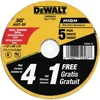
DEWALT 4-1/2″ Cut-Off Wheel, 5-Pack
A Type 1 aluminum oxide cut-off wheel sized for the most common 4-1/2 inch angle grinders — the size and RPM rating are printed right on the label so you can match it to your tool before mounting.
- Best for: general metal cutting — rebar, bolts, angle iron, sheet steel
- Why we picked it: name-brand consistency in thickness and RPM rating, so it matches its printed speed every time
- Main drawback: thin wheel wears down fast on thick stock — buy the 5-pack, not a single wheel
Compare more grinding & cutting wheel options
 Option 1 PRETEC 26-Pack Cutting, Flap & Grinding Set
|
 Option 2 FOXBC Multi-Material Cut-Off Disc
|
 Option 3 SALI 26-Piece Grinding & Cutting Set
|
As an Amazon Associate we earn from qualifying purchases.
A grinding cutting wheel is an abrasive disc mounted on an angle grinder to cut or grind metal, masonry, and stone. It is made of thousands of small abrasive grains — aluminum oxide, silicon carbide, cubic boron nitride, or diamond — held together by a resin or fiberglass-reinforced bonding material. As each grain dulls, it breaks away and exposes a fresh sharp grain underneath, which is what keeps the wheel cutting instead of just rubbing.
Composition of a Cutting Wheel
Each abrasive grain acts as a tiny cutting edge. As the grain passes over the workpiece it shears off a small chip, and the bonding material lets worn grains break away so a sharp edge is always exposed. Reinforcing fiberglass mesh layers inside the wheel are what keep a thin cut-off wheel from flexing and snapping under load.
Types of Wheels by Abrasive Material
- Aluminum Oxide: economical, general-purpose — removes rust, paint, and coatings, and shapes mild steel.
- Silicon Carbide: harder and more brittle than aluminum oxide — suited to cast iron, nonferrous metal, concrete, and stone.
- Diamond: the hardest option — cuts carbide, ceramics, and glass, and is used for precision tool and cutter grinding.
- Cubic Boron Nitride (CBN): built for hardened steels and superalloys, and for sharpening high-speed steel tools.
Grinding Wheel vs. Cutting Wheel: Key Differences
Both wheels mount on the same angle grinder, but they are built for opposite loads. A cutting wheel (Type 1) is thin and reinforced only for straight-in cutting force applied to its outer edge. A grinding wheel (Type 27) is thick and reinforced for side-loading, so it can be pressed flat against a surface without breaking. Using either one for the other’s job is the single most common cause of wheel failure.
| Feature | Cutting Wheel (Type 1) | Grinding Wheel (Type 27) |
|---|---|---|
| Thickness | Roughly 1/16″ to 1/8″ (thin kerf) | Up to 1/4″ thick |
| Working surface | Outer edge (periphery) only | Flat face, held at 15–35° |
| Job | Slicing through metal, tile, or masonry | Removing welds, deburring, shaping edges |
| Guard needed | Closed cut-off guard, covers 180° on both faces | Type 27 grinding guard |
| Failure risk if misused | Snaps or shatters if side-loaded or bent | Rough, inefficient cut; edge can chip |
The only acceptable working surface on a cutting wheel is its outer edge — never the flat side. Pressing a cutting wheel sideways into a workpiece, even briefly to widen a cut, puts it under a load it was never reinforced for and is a leading cause of sudden shattering.
How to Match a Wheel to Your Angle Grinder (Size, Arbor & RPM)
A wheel that looks like the right size can still be wrong for your grinder if its speed rating, bore size, or thickness doesn’t match. Check all three before every mount, not just the first time.
- Read your grinder’s no-load RPM — stamped on the nameplate near the trigger, usually 8,000–12,000 RPM for a 4-1/2″ grinder.
- Read the wheel’s maximum operating speed — printed on the paper blotter label on the wheel itself, never assumed from the box.
- Confirm the wheel’s rated RPM is equal to or higher than the grinder’s RPM. A wheel rated lower than the grinder’s speed can fly apart under normal use.
- Match the arbor (bore) size to the spindle — a 7/8″ bore is standard on most 4-1/2″ and 5″ wheels; forcing an ill-fitting wheel onto the spindle creates stress that can crack it.
- Match wheel diameter to the grinder’s guard — a wheel larger than the guard was designed for outruns the guard’s protection.
📊 OSHA 29 CFR 1910.215 requires the spindle speed of the machine to be checked before mounting a wheel, to confirm it does not exceed the wheel’s marked maximum operating speed. — Source: OSHA, Abrasive Wheel Machinery standard
Diameter and thickness matter too: thinner wheels (around 1/16″–1/25″) cut faster with less material loss but wear out sooner; wheels closer to 1/8″ last longer and suit heavier, repeated cuts. For the material itself, match the abrasive to the job — silicon carbide or diamond for masonry and stone, aluminum oxide for general steel, CBN for hardened tool steel.
Uses of Grinding Cutting Wheels
A grinding cutting wheel is one of several abrasive and cutting accessories covered in our tools and saws guide — below are the tasks it handles best.
Cutting Metal
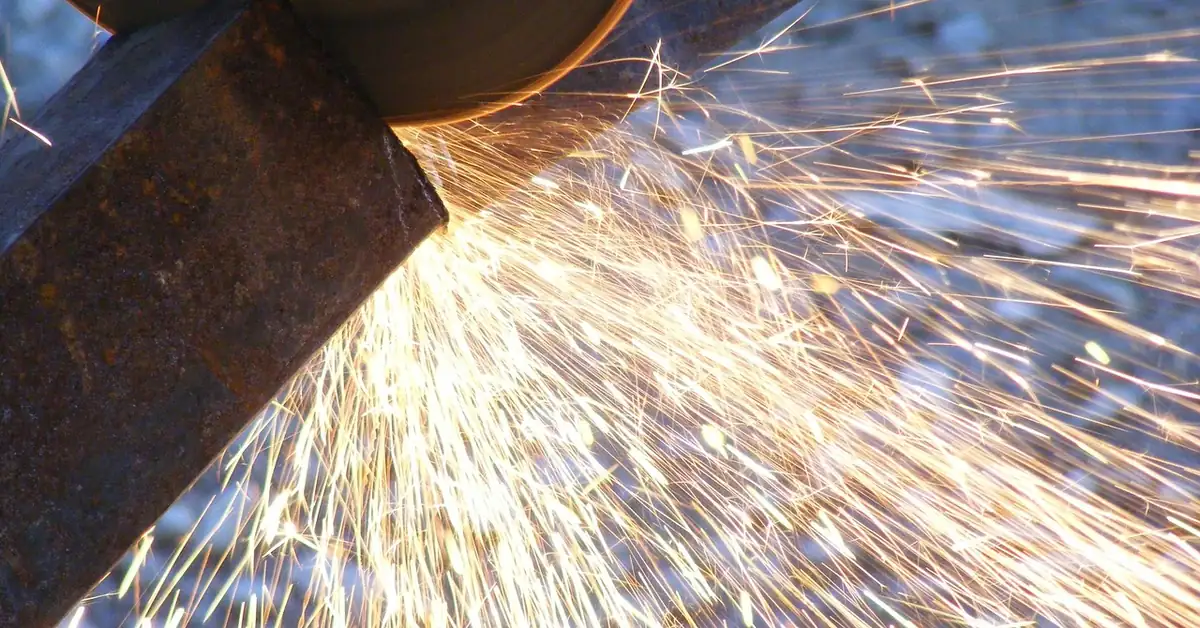
A cut-off wheel is the fastest way to slice through steel, aluminum, iron, or copper stock — rebar, bolts, angle iron, and sheet metal are the most common cuts made with a 4-1/2″ angle grinder.
Sharpening Tools
A grinding wheel with the right grit can restore an edge on knives, chisels, and mower blades — coarse grit removes chips and dullness quickly, fine grit brings the edge back to a clean finish.
Grinding and Finishing Surfaces
Grinding wheels also strip rust, paint, and coatings, smooth rough welds, and, at finer grits, polish metal surfaces to a bright finish.
Safety Precautions and OSHA/ANSI Rules
Abrasive wheels are governed by OSHA 29 CFR 1910.215 (Abrasive Wheel Machinery), which incorporates the ANSI B7.1 safety standard by reference. Machine guarding is one of OSHA’s ten most frequently cited violations, and abrasive-wheel injuries are a large share of those citations.
Wear the Right PPE
Safety goggles or a face shield, hearing protection, and cut-resistant gloves are the minimum. A wheel that disintegrates can throw fragments at over 100 mph — safety glasses alone are not rated to stop that.
Run the Ring Test on Every New Wheel
Before mounting a wheel, OSHA guidance calls for a ring test: tap the dry wheel gently with a non-metallic handle about 1–2 inches from the edge, at points 45° from vertical on each side, then rotate it 45° and repeat. A sound wheel rings with a clear metallic tone; a dull thud means the wheel is cracked and must be discarded.
Use the Correct Guard — Never Remove It
A guard for a Type 27 grinding wheel does not protect against a cutting wheel failure — cutting wheels need a closed guard that covers roughly 180° on both faces, because they are more likely to shatter than a grinding wheel. Removing the guard for clearance is one of the most cited safety violations on angle grinders.
Secure the Workpiece and Let the Wheel Reach Full Speed
Clamp the workpiece so it can’t shift mid-cut, and never stand in the wheel’s plane of rotation while it accelerates — a defect that causes disintegration is most likely to show up during start-up, before the wheel is at full speed.
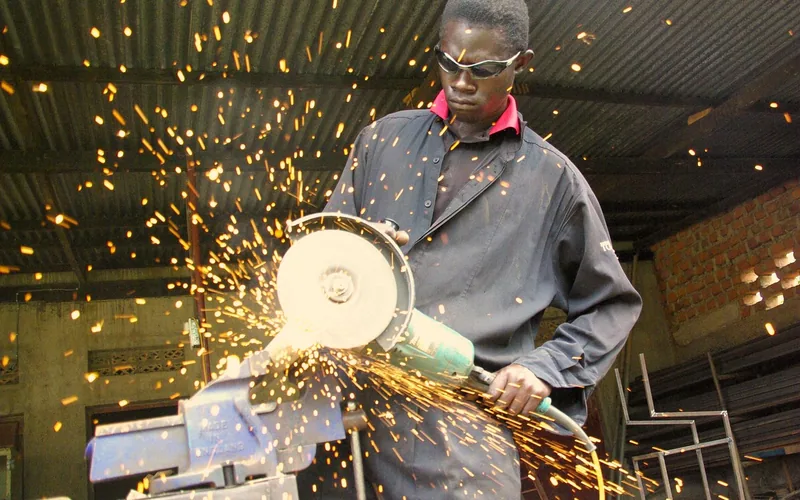
How to Cut Using a Grinding Cutting Wheel
- Secure the workpiece: clamp it in a vise so it cannot shift or bind the wheel mid-cut.
- Mark the cut line: use a straight edge and marker so the line is visible under sparks.
- Confirm the wheel: verify it’s a cutting wheel (not grinding), rated at or above your grinder’s RPM, and undamaged.
- Let it reach full speed: start the grinder away from the workpiece and let the wheel spin up before contact.
- Cut along the edge only: guide the wheel’s outer edge into the line with light, steady pressure — never rock or twist the wheel sideways in the cut.
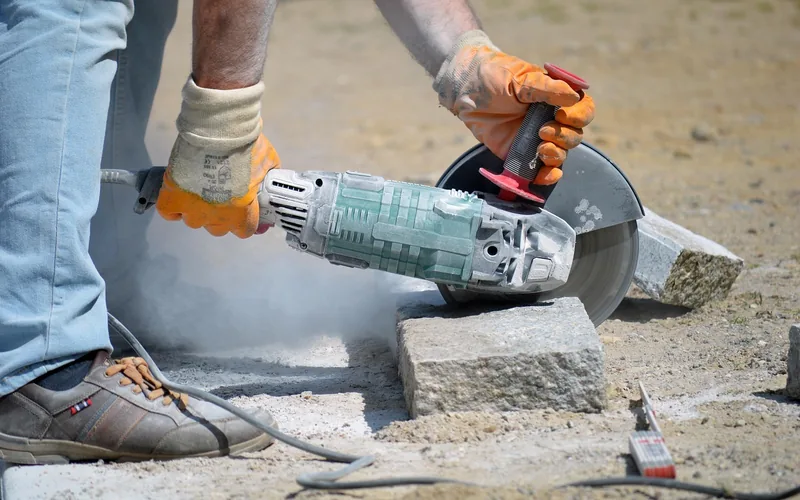
Common Mistakes to Avoid When Using a Grinding Cutting Wheel
Using a Grinding Wheel to Cut, or a Cutting Wheel to Grind
Grinding wheels are not built for the side-load and edge stress of a cutting motion — forcing one through a cut is slow, rough, and risks cracking the wheel. Cutting wheels used flat against a surface for grinding are worse: their thin profile isn’t reinforced for side pressure and can shatter.
Using the Wrong Wheel for the Material
Wheels are matched to specific materials — aluminum oxide for general steel, silicon carbide for masonry, CBN for hardened steel. The wrong abrasive wears out fast, glazes over, and can overheat the workpiece.
Overusing a Worn or Damaged Wheel
A wheel that’s chipped, cracked, or worn down to its rated minimum diameter should be replaced, not stretched for one more cut. Inspect — and ring test — before every use, not just when a wheel looks obviously damaged.
Skipping the Guard or PPE
Removing the guard for a few extra millimeters of clearance, or skipping goggles because a cut looks quick, removes the two layers of protection that matter most if a wheel does fail.
“In the shop, the RPM check takes ten seconds — read the number stamped on the wheel’s paper blotter, read the number stamped on the grinder’s nameplate, and confirm the wheel’s number is equal or higher. Skipping that step is the single most common reason I’ve seen a wheel come apart.”
How to Maintain a Grinding Cutting Wheel
Inspect Before and After Every Use
Check for cracks, chips, or an out-of-round edge before mounting and again after use. A damaged wheel should be discarded immediately — it will not cut accurately and is a disintegration risk.
Clean and Store Correctly
Brush off dust and debris after use, and keep wheels dry to prevent the bonding material from absorbing moisture. Store wheels flat or hanging in a cool, dry place away from temperature swings, which speed up resin degradation.
Watch the Shelf Life
Resin-bonded wheels degrade over time even in storage — most manufacturers recommend using them within two to five years of the manufacture date stamped on the label. An old wheel that still looks fine should still pass a ring test before it goes back on a grinder.
Conclusion
A grinding cutting wheel is only as safe as the match between its rating and your grinder: the right wheel type for the job, an RPM rating equal to or above the grinder’s speed, a snug arbor fit, and the correct guard. Get those four checks right every time and a cutting wheel and angle grinder combo is one of the most efficient tools in a metalworking shop.
Frequently Asked Questions on Grinding Cutting Wheels
Can you use a cutting wheel on a grinder?
Yes — angle grinders are the standard tool for cutting wheels. Match the wheel’s printed RPM rating to the grinder’s no-load speed, use the closed cutting-wheel guard, and cut only with the wheel’s outer edge.
Can you use a grinding wheel to cut metal?
No, not safely. Grinding wheels are built thick and reinforced for face pressure, not the edge-only slicing motion of a cut. Forcing one through a cut produces a slow, rough result and risks cracking the wheel — use a dedicated thin cutting wheel instead.
What happens if a wheel is rated below your grinder’s RPM?
A wheel spinning faster than its rated maximum speed can disintegrate, sending fragments outward at well over 100 mph. Always confirm the wheel’s printed maximum RPM is equal to or higher than the grinder’s no-load speed before mounting it.
What is the ring test and why does OSHA require it?
The ring test is a quick check for internal cracks: tap the dry wheel gently near its edge at points 45° apart and listen for a clear metallic tone. A dull thud means the wheel is cracked and unsafe. OSHA 1910.215 calls for this inspection before mounting any abrasive wheel.
What type of grinding wheel is best for tool and cutter grinding?
A ceramic alumina wheel is generally preferred for tool and cutter grinding — it offers a high stock-removal rate and long wheel life on tool steels compared with standard aluminum oxide wheels.
Sponsored / affiliate links. As an Amazon Associate I earn from qualifying purchases. I may earn additional commission from eligible campaigns.