Angle Grinder vs Circular Saw: What’s the Real Difference?
An angle grinder spins a small abrasive disc parallel to its motor at up to 12,000 RPM, built for grinding metal and rough cuts — a circular saw spins a toothed blade perpendicular to its motor at roughly 5,000 RPM, built for straight, clean wood cuts. Using the wrong tool causes ragged cuts or dangerous kickback, especially cutting wood with a grinder’s metal disc. This guide covers RPM and price differences, safe wood-cutting technique, and when each tool wins.
[Insert Affiliate Disclosure reusable block here]
What Is an Angle Grinder?
Best Wood-Cutting Disc Kit Pick
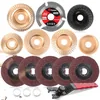
Pomsare 13PC Wood Carving & Sanding Disc Kit for 4.5″ Angle Grinders
A 3-tooth tungsten carbide wheel plus flap discs and reducing bushings — everything needed to turn a standard 4.5″ angle grinder into a safer wood-cutting and shaping setup.
- Best for: readers who want one kit that covers cutting, carving, and sanding wood with a grinder
- Why we picked it: a grinder-rated carbide disc is exactly the safety fix this article recommends over a standard metal cutting wheel
- Main drawback: carbide wheels still need two-handed control and a face shield — they reduce kickback risk, they don’t eliminate it
Compare more wood-cutting disc options
 Option 1 Carbide Cut-Off Wheel, 2-Pack (Wood, Plastic, Nail-Embedded Wood)
|
 Option 2 BLEKOO 4PC Wood Carving & Shaping Disc Set
|
 Option 3 3PC Tungsten Carbide Wood Grinding Disc Set (Flat, Beveled, Curved)
|
As an Amazon Associate we earn from qualifying purchases.
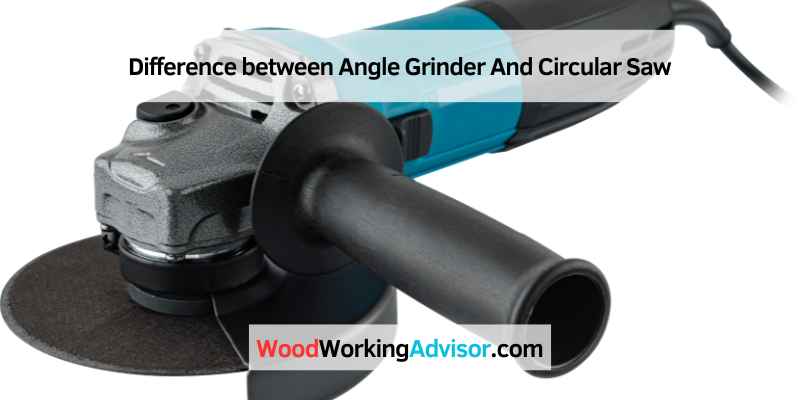
An angle grinder is a handheld power tool that spins a flat abrasive or cutting disc — usually 4 to 4.5 inches on compact models, up to 9 inches on large models — parallel to the motor housing at speeds up to 12,000 RPM. It has no base, guard over the cutting face, or rip fence, so depth and stability are controlled entirely by the operator’s hands. It is built primarily for grinding welds, cutting metal, and shaping masonry, not for precision straight cuts.

What Is a Circular Saw?
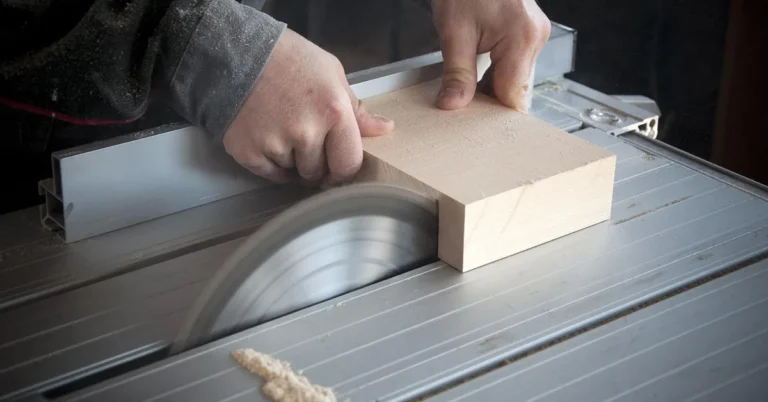
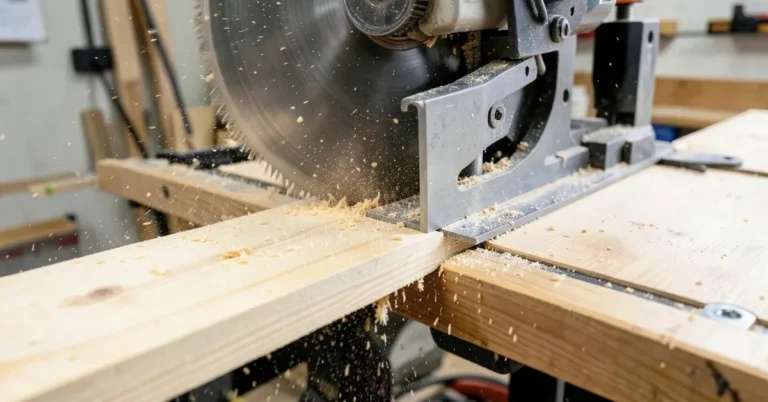
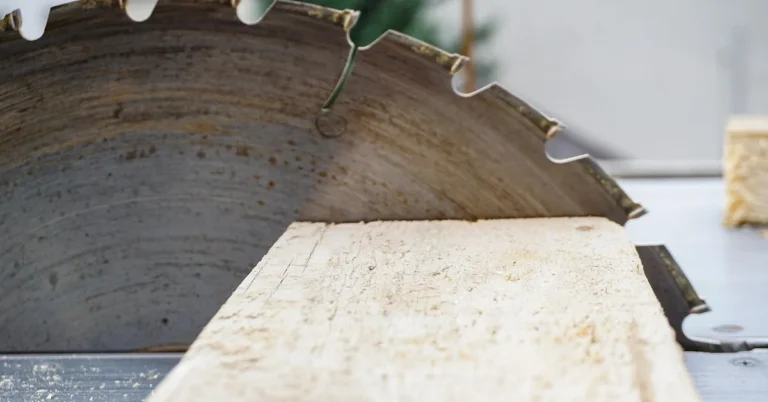
A circular saw is a handheld power tool that spins a toothed, round blade — typically 6.5 to 7.25 inches on standard models — perpendicular to the motor at roughly 5,000 RPM. Unlike an angle grinder, most circular saws have a flat base plate, an adjustable depth and bevel guide, and a blade guard, which is why they cut straighter lines in wood, plywood, and OSB with far less operator skill required. (A table saw is the stationary cousin of the circular saw — the handheld version covered here is what most woodworkers reach for on a job site.)
Angle Grinder vs Circular Saw: Key Differences at a Glance
Neither tool is a drop-in replacement for the other — the spec differences below explain why.
| Spec | Angle Grinder | Circular Saw |
|---|---|---|
| Disc/blade orientation | Parallel to motor (flat disc) | Perpendicular to motor (toothed blade) |
| Typical no-load speed | Up to 12,000 RPM | ~5,000 RPM |
| Common disc/blade size | 4–4.5 in (compact models) | 6.5–7.25 in |
| Base / guard | None — freehand only | Base plate, depth guide, blade guard |
| Best for | Grinding welds, cutting metal/masonry, polishing | Long, straight cuts in wood, plywood, OSB |
| Typical tool-only price | Roughly $30–$100 | Roughly $50–$150 |
Can You Use an Angle Grinder as a Circular Saw?
Yes, with the right disc — an angle grinder fitted with a grinder-rated cutting wheel can stand in for a circular saw on metal or masonry, though never for the precision or safety of a true circular saw on wood. The swap only works because the disc, not the motor, does the specialized job.
- Match the disc to the material: use a thin metal cutting wheel for steel, a diamond wheel for masonry, or a carbide-tooth wood-carving disc rated at or above your grinder’s RPM for wood — never a full-size toothed circular saw blade.
- Check the disc rating before mounting: the disc’s printed max RPM must be equal to or higher than your grinder’s no-load speed, or it can shatter.
- Secure the workpiece: clamp the material down — a grinder has no base or rip fence, so an unsecured workpiece is the most common cause of kickback.
- Keep the grinder moving at full speed: starting a cut at low speed or bogging the disc down is what causes binding and kickback, not high speed itself.
- Unplug and remove the disc when finished: this prevents accidental startup injuries during storage.
Can You Saw Wood With an Angle Grinder?
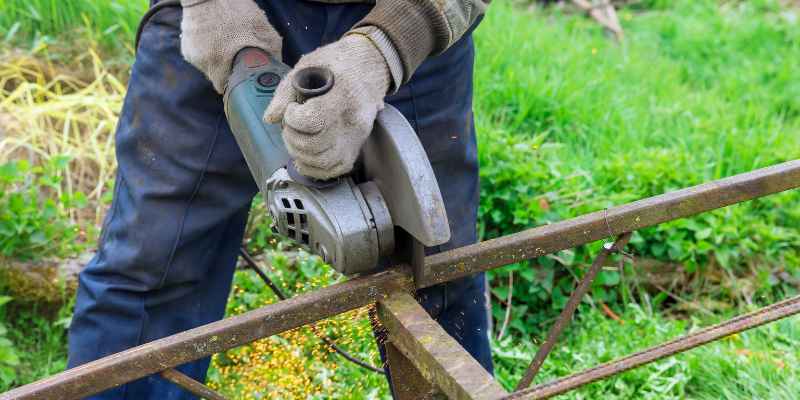
Yes, but only with a grinder-rated wood-cutting disc — never a metal cutting wheel or a circular saw blade. An angle grinder can rough-cut, trim, and shape wood, but it is not a precision woodworking tool: the freehand grip and lack of a base make straight, splinter-free cuts hard to achieve compared to a circular saw.
The real danger is disc mismatch. A standard metal or masonry disc will not cut cleanly through wood grain — it catches in the fibers instead, and that catch is what causes kickback. Use only a carbide-grit or three-tooth carbide wood-carving disc rated at or above your grinder’s RPM, and always wear a full face shield over safety glasses, heavy leather gloves, and hearing protection.
📊 Kickback, where the disc is thrust away from the object it is grinding, can result in severe cuts to hands, arms, head, torso, and legs. — Source: Cornell University Environment, Health & Safety, Angle Grinder Toolbox Talk
What Can’t Be Cut With an Angle Grinder?
An angle grinder handles most metal, masonry, and (with the right disc) wood, but a few materials are poor or unsafe matches for it:
- Thin metal sheets: the disc can warp or distort thin sheet metal rather than cutting it cleanly.
- Soft metals like aluminum or copper: the high disc speed can gum up or damage soft metal surfaces.
- Large stone slabs: cutting stone freehand with a grinder is a job for diamond blades and experienced hands only — a wet masonry saw is safer for anything beyond small cuts.
Angle Grinder or Circular Saw for Cutting Concrete and Pavers
For concrete and pavers, the angle grinder generally wins on control and cost, the circular saw wins on speed through thick material — and a standard wood-cutting circular saw blade should never touch masonry at all.
An angle grinder fitted with a diamond blade is easier to maneuver on pavers and detail cuts, is cheaper to buy, but produces more dust and struggles with thick slabs. A circular saw set up with a masonry/diamond blade — never a wood blade — cuts faster through thicker concrete but is bulkier and less maneuverable for tight or curved cuts. For most DIY paver and concrete work, a grinder with the correct diamond disc is the more practical choice; reach for a dedicated masonry saw only for repeated deep cuts.
Angle Grinder vs Reciprocating Saw for Cutting Metal
For general metal cutting and grinding, the angle grinder is the more versatile everyday tool; for thick stock or awkward angles, a reciprocating saw with a metal-cutting blade is often easier to control. We cover blade selection, technique, and a full head-to-head for this pairing in our Sawzall vs angle grinder guide.
Disadvantages and Safety Risks of Using an Angle Grinder
An angle grinder’s versatility comes with real trade-offs, most of them safety-related rather than performance-related.
- Kickback risk: the leading cause of angle grinder injuries — a bound or caught disc can thrust the tool back toward the operator with no guard on the cutting face to stop it. Always grip both handles and keep the disc guard in place.
- Noise: most models run loud enough to require hearing protection during any extended use.
- Vibration: extended freehand use causes hand and arm fatigue faster than a based, guided tool like a circular saw.
“Kickback, where the disc is thrust away from the object it is grinding, can result in severe cuts to hands, arms, head, torso, and legs. Ensure operators grip both handles during use.”
Frequently Asked Questions
Which is safer, an angle grinder or a circular saw?
A circular saw is generally safer for wood: it has a blade guard, a flat base, and depth/bevel guides that a freehand angle grinder lacks. Angle grinders carry a well-documented kickback risk, especially when the wrong disc is used on wood. Both tools require eye, hand, and hearing protection regardless of which one you choose.
Is an angle grinder more powerful than a circular saw?
Not necessarily — an angle grinder spins faster (up to 12,000 RPM versus roughly 5,000 RPM for a circular saw), but a circular saw’s larger, toothed blade and motor torque are built to push through thicker wood stock in a single pass. “Power” depends more on a specific model’s amps or voltage than on the tool category.
Can you put a circular saw blade on an angle grinder?
No. Circular saw blades aren’t rated for the RPM angle grinders spin at, and a grinder has no blade guard, riving knife, or base to control it. Mounting a toothed circular saw blade on a grinder is a documented cause of the blade grabbing and shattering. Use only a grinder-rated cutting or carbide wood-carving disc, never a full-size circular saw blade.
Do professionals use an angle grinder or a circular saw for wood?
Most reach for a circular saw for wood — it’s purpose-built, faster, and safer for straight cuts. Professionals use an angle grinder on wood mainly for rough trimming, flush-cutting protruding bolts or nails, or tight spots a circular saw can’t fit, and only with a carbide-tooth disc rated for the tool’s RPM.
Conclusion
An angle grinder and a circular saw solve different problems: the grinder’s parallel disc and 12,000 RPM speed make it the versatile choice for metal, masonry, and grinding, while the circular saw’s perpendicular blade and base plate make it the safer, faster choice for straight cuts in wood. You can make an angle grinder cut wood or stand in for a circular saw in a pinch, but only with the correct disc and full safety gear — never with a mismatched blade. For your next cutting job, see our woodworking tools & saws guide to match the right saw to the material.
Sponsored / affiliate links. As an Amazon Associate I earn from qualifying purchases. I may earn additional commission from eligible campaigns.