How Big Can Oak Trees Grow? Size Guide
Thinking about how large oak trees can get might seem tricky at first. You see so many different sizes, and it’s hard to know what’s typical or what to expect. But don’t worry, it’s simpler than you think!
We’ll walk through it step by step. Let’s explore what makes oaks grow big and what you can do to help them reach their full potential. We’ll break down everything you need to know about How Big Can Oak Trees Grow?
Size Guide.
Oak Tree Size Factors Explained
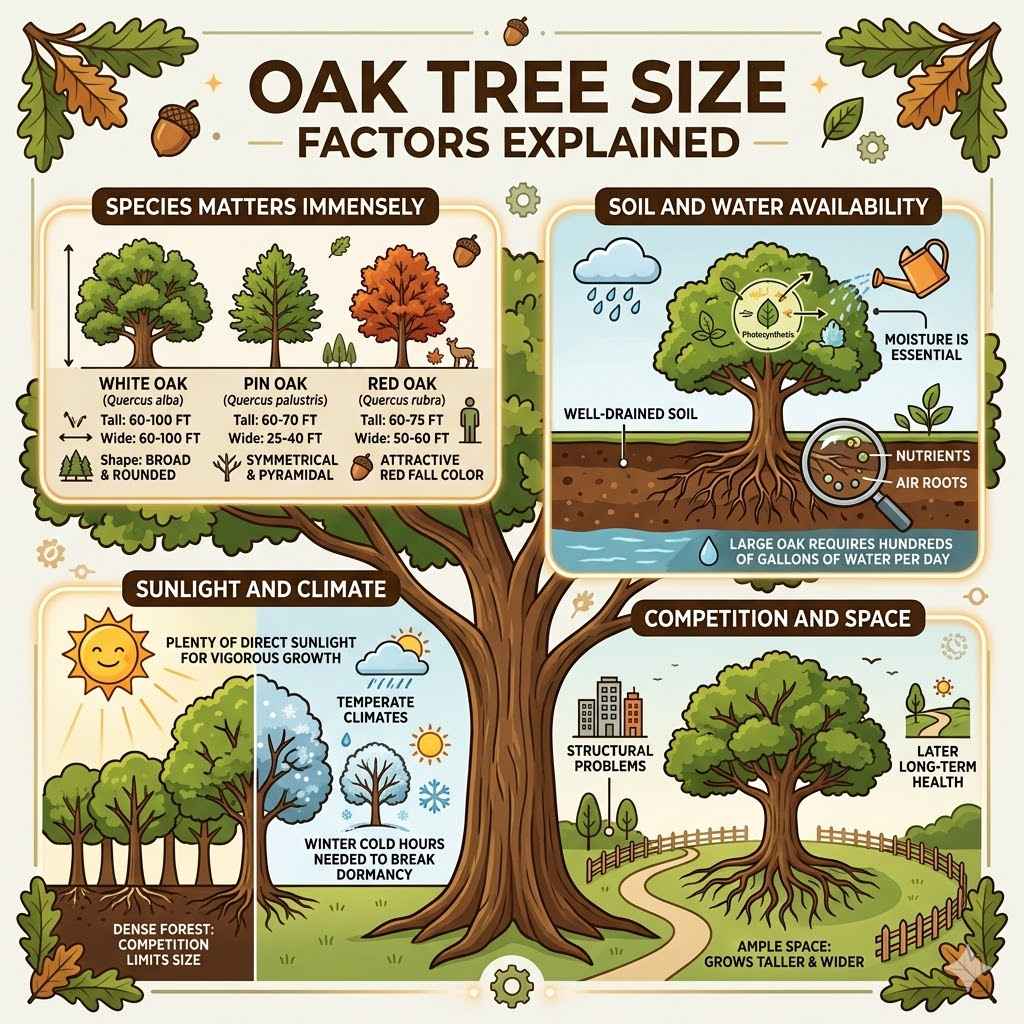
Oak trees are known for their impressive size, but their growth isn’t just about luck. Many things affect how tall and wide an oak can become. From the type of oak to where it lives, these elements play a big role in its final form.
Understanding these factors helps us appreciate why some oaks are giants while others are more modest.
Species Matters Immensely
There are many kinds of oak trees, and they all have different natural sizes. Some oaks, like the White Oak, are known for their broad canopies and impressive spread. Others, such as the Pin Oak, tend to grow more upright and less wide.
The specific species is often the biggest clue to how large an oak can grow.
White Oak Quercus alba is a large tree that can grow 60 to 100 feet tall and have a spread of 60 to 100 feet. This gives it a very full, rounded shape. It thrives in many different soils and conditions, making it a common sight in forests and yards across eastern North America. Its wood is also highly valued for furniture and barrels.
Pin Oak Quercus palustris is another popular oak, often used in landscaping due to its symmetrical, pyramidal shape. It typically reaches 60 to 70 feet in height but only spreads about 25 to 40 feet wide. It prefers moist, acidic soils and can tolerate some flooding. Its distinctive branching pattern gives it a somewhat formal appearance.
Red Oak Quercus rubra is a fast-growing oak that can reach 60 to 75 feet tall with a spread of 50 to 60 feet. It’s known for its attractive red fall color and its acorns, which are important food for wildlife. Red oaks are quite adaptable and can grow in a range of soil types, though they prefer well-drained conditions.
Choosing the right oak species for your location is key if you want a specific size or shape. Researching the mature dimensions of a particular oak before planting ensures you won’t be surprised by its eventual size and can provide the necessary space.
Soil and Water Availability
Just like any plant, oak trees need good soil and enough water to grow big and strong. Rich, well-drained soil provides the nutrients and air roots need to spread. Water is essential for photosynthesis and transporting those nutrients.
Without enough of either, an oak’s growth will be stunted.
Oak trees generally prefer slightly acidic to neutral soil, typically with a pH between 5.0 and 6.5. While many oaks are quite adaptable, they perform best in soils that are deep, moist, and well-drained. Heavy clay soils that hold too much water can be problematic, leading to root rot.
Sandy soils, on the other hand, might drain too quickly, requiring more frequent watering.
The amount of rainfall an oak tree receives also plays a critical role. In regions with consistent rainfall, oaks can reach impressive sizes. In drier climates, they might grow more slowly and remain smaller, unless supplemental irrigation is provided.
However, it’s important not to overwater, as this can lead to its own set of problems.
A mature oak tree can require a significant amount of water, especially during dry spells. Estimates suggest that a large oak tree can transpire hundreds of gallons of water per day. This highlights the importance of natural rainfall patterns or providing irrigation for optimal growth, particularly for young trees establishing themselves.
Sunlight and Climate
Oak trees are sun-lovers. They need plenty of direct sunlight to produce the energy needed for vigorous growth. Areas with full sun exposure will generally support larger and healthier oak trees compared to shady spots.
The climate also dictates the types of oaks that can thrive and their potential for growth.
Most oak species are native to temperate climates. They require a certain number of cold hours during winter to break dormancy properly in the spring. Extreme heat or prolonged periods of drought can stress oak trees, slowing their growth and making them more susceptible to diseases and pests.
For instance, the Northern Red Oak (Quercus rubra) is well-suited to USDA hardiness zones 4 through 8. Within these zones, it can reach its full potential. In areas outside this range, its growth might be limited, or it might struggle to survive.
Competition and Space
When oak trees grow close together, they compete for resources like sunlight, water, and nutrients. This competition can limit the size each individual tree can reach. Oaks planted with ample space around them tend to develop larger canopies and grow taller and wider.
In a dense forest, young oak saplings might grow upwards quickly to reach sunlight, but their trunks might remain slender for a long time. Once they are established and have more room, their branches will spread outwards. In urban or suburban settings, ensuring enough space around a planted oak is vital for its long-term health and size.
A common issue in landscaping is planting trees too close to buildings or other trees. This not only restricts growth but can also create structural problems later on. It’s important to consider the mature size of the oak and plan accordingly, providing it with the space it needs to flourish.
Understanding Oak Tree Growth Patterns
Oak trees don’t just grow a little bit each year; their growth has distinct phases and patterns. Understanding these patterns helps us appreciate the long life and gradual development of these magnificent trees.
The Sapling Stage
When an oak first sprouts from an acorn, it’s a tiny seedling. In its first few years, it focuses on developing a strong root system. This underground work is crucial for future growth.
The above-ground growth might seem slow during this period, but it’s building a solid foundation.
The sapling stage can last for several years, typically up to 5-10 years. During this time, the young tree is vulnerable to browsing by animals, competition from weeds, and harsh weather. Protecting saplings is important if you want them to survive and eventually grow large.
A well-established sapling might be anywhere from a few inches to a few feet tall. Its trunk will be thin and flexible. The leaves will be present, but the overall presence of the tree is modest.
This is the critical period where its long-term success is determined by the conditions it experiences.
Young Tree Development
Once an oak sapling has a good root system, it begins to grow more noticeably above ground. This is when it starts putting on height and developing a more robust trunk. The branches begin to spread outwards, and the tree starts to take on a more recognizable tree shape.
This phase can last for several decades. The rate of growth during this time depends heavily on the environmental factors discussed earlier. In ideal conditions, a young oak can grow 1 to 2 feet in height per year.
Its trunk diameter also increases steadily.
The tree develops a more defined crown. The branches become stronger and more numerous. This stage is where the oak truly starts to establish itself as a significant presence in its environment.
It’s actively seeking sunlight and maximizing its photosynthetic capabilities.
Mature Oak Characteristics
As an oak tree reaches maturity, its growth rate in height might slow down, but it continues to increase in trunk diameter and canopy spread. This is when many oaks achieve their most impressive, iconic forms. They become wider and more substantial, providing ample shade.
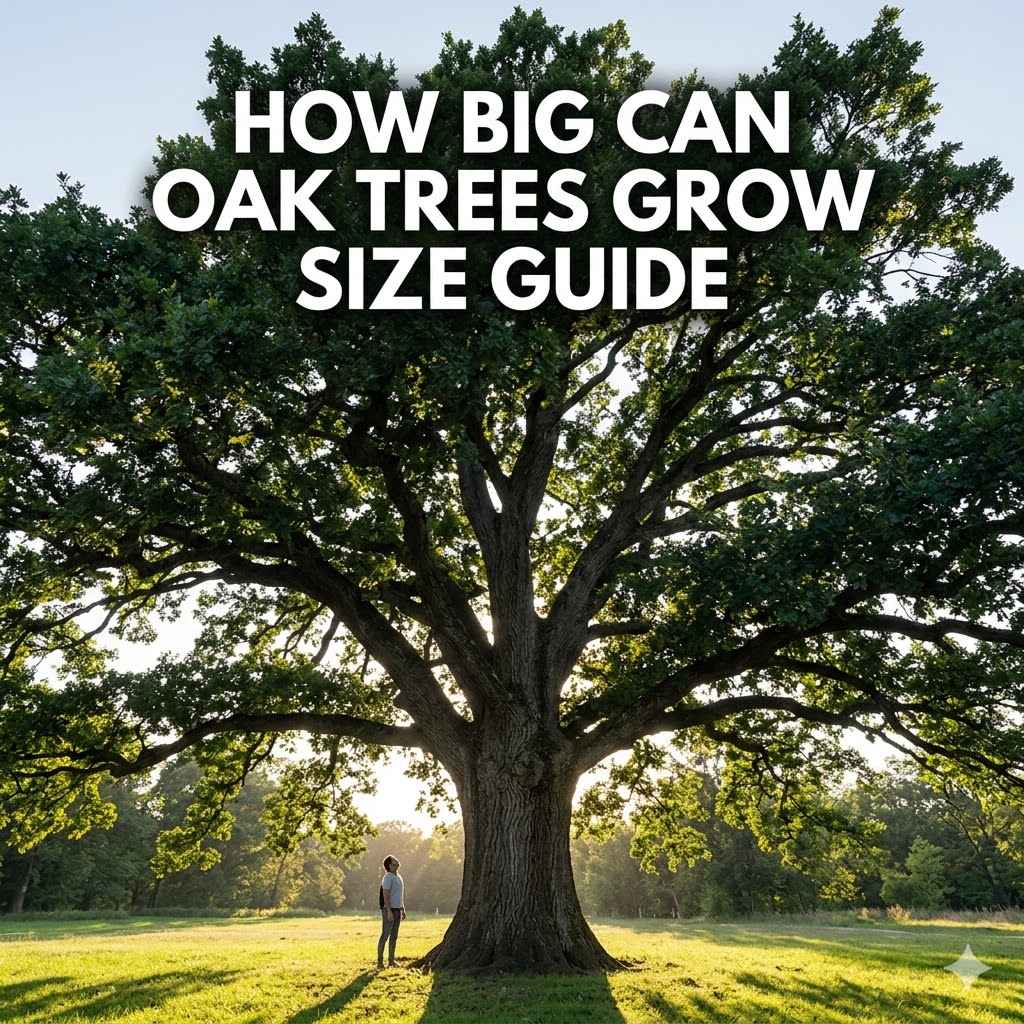
A mature oak can be a truly majestic sight. Its trunk is thick and often gnarled, with deeply furrowed bark. Its branches are vast and can spread outwards for many feet, creating a wide, inviting canopy.
This is the stage where the tree is at its peak in terms of size and presence.
Maturity can be reached anywhere from 20 to 50 years for some species, while others might take over 100 years to become fully mature. The age at which an oak is considered mature also depends on the specific species and its growth habits. They continue to grow and develop for their entire lives.
Ancient and Old-Growth Oaks
Some oak trees live for hundreds, even over a thousand years. These ancient oaks are living historical monuments. They are often characterized by their immense size, with massive trunks and sprawling, irregular branches.
Their form is a testament to centuries of growth and adaptation.
These trees have witnessed generations of change. Their age means they have survived numerous challenges, from droughts and storms to disease outbreaks. They often have hollows and cavities, which provide homes for wildlife.
Their presence adds immense ecological and aesthetic value to any landscape.
These ancient giants are rarely uniform in shape. Their growth becomes less predictable, with branches twisting and turning in unique ways. They are living sculptures, shaped by time and the environment.
Finding and preserving these old oaks is a great way to connect with the past and nature’s enduring power.
Real-World Examples of Large Oak Trees
Seeing how large oak trees can get in reality helps illustrate their potential. These examples show what’s possible with the right conditions and a long life.
The General Sherman Tree (Not an Oak, but Illustrative of Tree Size)
While the General Sherman Tree is a giant sequoia and not an oak, it serves as a powerful example of what massive scale in trees looks like. It’s the world’s largest tree by volume, standing about 275 feet tall with a trunk diameter of over 36 feet at its base. This illustrates the sheer potential for biological growth given the right environment and time.
This tree’s massive size is a result of millions of years of evolution, optimal growing conditions in Sequoia National Park, and its incredible age, estimated to be around 2,300 to 2,700 years old. Its sheer volume is staggering, showcasing the immense biomass a living organism can accumulate over vast periods.
Comparing this to oak trees, while oaks don’t reach these extreme volumes, they certainly share the characteristic of slow, continuous growth leading to very large specimens. It helps put into perspective the potential scale of woody plant life on Earth.
The Ankerwycke Yew (Historical Significance, though not an Oak)
Again, this is not an oak, but the Ankerwycke Yew in England is one of the oldest trees in Britain, estimated to be over 1,000 years old. Its trunk is massive and has split into several large sections, creating a hollow interior. It’s a testament to the longevity and resilience of trees.
This ancient yew has historical significance, as King John is said to have signed Magna Carta nearby in 1215. Its sprawling, ancient form is a picture of a tree that has experienced centuries of life, weathering storms and seasons. It stands as a symbol of endurance and natural heritage.
While yews have a different growth habit than oaks, this example emphasizes how age and favorable conditions can lead to truly monumental living structures. It inspires us to appreciate the potential longevity of trees, including oaks, and the stories they hold.
Large Oak Trees in Parks and Forests
In well-established parks and old-growth forests across the United States, you can find White Oaks, Red Oaks, and Burr Oaks that are well over 100 feet tall. Some of these have trunks that measure 3 to 5 feet in diameter. Their canopies can spread out 80 to 120 feet wide, creating significant shade.
These grand old oaks are often landmarks. They have had centuries to grow without significant competition or human interference. Their massive branches are like arms reaching out, supporting a dense crown of leaves that can measure several acres in surface area.
They are vital ecosystems in themselves, supporting countless insects, birds, and mammals.
One often finds these trees in areas with good soil, ample rainfall, and protection from severe weather. They are the result of generations of growth, adapting to their environment and thriving for hundreds of years. They are a living connection to the past and a vital part of the natural world.
How Big Can Oak Trees Grow? Size Guide
When we ask “How Big Can Oak Trees Grow? Size Guide,” we’re looking for typical and maximum sizes. This isn’t a single number because it depends on many factors.
However, we can provide a guide based on common species and ideal conditions.
Maximum Height Expectations
Most common oak species can reach heights between 60 and 100 feet. Some species, like the Bur Oak (Quercus macrocarpa), can even push towards 150 feet in exceptional circumstances and with very old age. The height is often achieved when the tree is competing for sunlight in a forest setting.
The rate of height growth is most rapid during the young tree development stage. Once a tree reaches a certain height, its energy might shift more towards increasing its trunk diameter and spreading its canopy. However, trees continue to grow taller throughout their lives, albeit at a slower pace.
Factors like soil depth and nutrient availability play a role. Trees with access to deep, fertile soil and consistent moisture are more likely to achieve maximum height potential than those in shallow, poor soils.
Maximum Width Expectations
The width, or spread, of an oak tree’s canopy is often as impressive as its height. Mature oaks can spread between 50 and 120 feet wide. Some species, like the White Oak, are known for their massive, spreading canopies that can be wider than they are tall.
This spread is crucial for capturing sunlight. A wide canopy allows the tree to maximize its leaf surface area for photosynthesis. It also provides shade, which can influence the understory vegetation and soil moisture.
When planting oaks, it’s essential to consider this mature width. Planting them too close to structures, power lines, or other trees can lead to future problems and the need for extensive pruning or even removal.
Average Sizes by Common Oak Type
To give you a clearer picture, here’s a look at the average mature sizes of some common oak types. These are general guidelines, and individual trees can vary.
| Oak Species | Average Height | Average Width |
|---|---|---|
| White Oak (Quercus alba) | 60-100 feet | 60-100 feet |
| Red Oak (Quercus rubra) | 60-75 feet | 50-60 feet |
| Pin Oak (Quercus palustris) | 60-70 feet | 25-40 feet |
| Bur Oak (Quercus macrocarpa) | 70-80 feet | 70-80 feet |
| Live Oak (Quercus virginiana) | 40-80 feet | 60-100 feet |
These figures represent mature trees, typically 50-100 years old or more. Younger trees will be significantly smaller, and exceptionally old or well-situated trees can sometimes exceed these averages.
Factors Influencing Size Limits
Even with the best conditions, an oak tree’s size is ultimately limited by genetics and its environment. A tree’s specific species dictates its maximum potential. Beyond that, consistent access to water, sunlight, and nutrients is paramount.
Soil health and the absence of major stresses, like disease or pollution, also play a vital role.
For example, an oak growing in a city with compacted soil, limited water, and exposure to exhaust fumes will likely not reach the size of an oak in a protected forest with rich, deep soil and ample rainfall. The urban environment introduces stresses that the rural one does not.
The genetic makeup of the acorn from which the tree grew also plays a part. Some genetic lines are predisposed to faster growth or larger final sizes than others. This is why even within the same species, you can see variations in size between individual trees.
Maintaining Healthy Oaks for Maximum Growth
To ensure an oak tree reaches its full potential size, proper care is essential, especially in its early years. Even mature oaks benefit from a healthy environment.
Site Selection and Planting
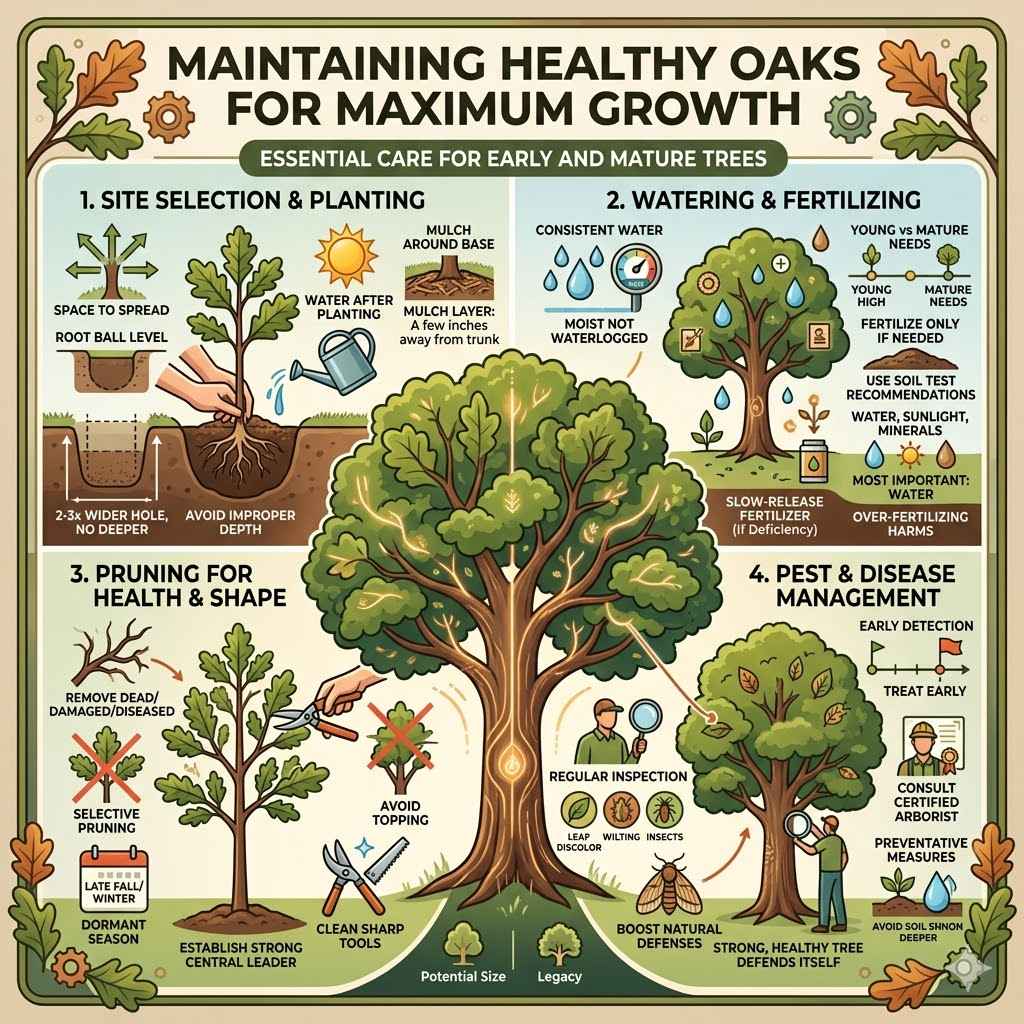
Choosing the right spot to plant an oak is the first step to a large tree. Consider the mature size of the species you choose. Ensure there’s enough space for its trunk, branches, and root system to spread without obstruction.
Oaks generally prefer full sun, so avoid planting them where they will be heavily shaded by other trees or structures.
When planting, dig a hole that is two to three times wider than the root ball, but no deeper. This allows the roots to spread outwards easily. Make sure the top of the root ball is level with the surrounding soil.
Improper planting depth is a common cause of tree failure and stunted growth.
Water the tree thoroughly after planting and continue to water it regularly during its first few years. Mulching around the base of the tree can help retain moisture, suppress weeds, and protect the roots from extreme temperatures. Keep the mulch a few inches away from the trunk to prevent rot.
Watering and Fertilizing
Young oak trees need consistent watering, especially during dry periods. The soil should be kept moist but not waterlogged. As the tree matures, its water needs decrease, but it’s still important to provide water during extended droughts.
Fertilizing is generally not necessary for oak trees unless a soil test indicates a nutrient deficiency. Over-fertilizing can actually harm the tree by encouraging rapid, weak growth that is more susceptible to pests and diseases. If fertilization is needed, use a slow-release, balanced fertilizer applied according to soil test recommendations.
The most important nutrient for tree growth is often water, followed by sunlight and essential minerals from the soil. A healthy soil ecosystem, with plenty of organic matter, will provide many of the nutrients an oak needs naturally.
Pruning for Health and Shape
Pruning is important for maintaining the health and structural integrity of an oak tree. Remove dead, damaged, or diseased branches as soon as they are noticed. This prevents the spread of disease and can improve the tree’s overall appearance.
For young trees, selective pruning can help establish a strong central leader and good branch structure. Avoid “topping” trees, which involves cutting off the main top of the tree. This practice damages the tree and leads to weak, bushy growth.
Pruning should ideally be done during the dormant season, typically late fall or winter. This reduces stress on the tree and minimizes the risk of disease transmission. Always use clean, sharp pruning tools to make clean cuts.
Pest and Disease Management
Healthy oak trees are more resistant to pests and diseases. Regular inspection of your oak tree for signs of trouble, such as unusual leaf discoloration, wilting, or insect infestations, is important. Early detection can make treatment more effective.
Common oak pests include the gypsy moth, oak wilt, and various borers. Diseases like oak wilt can be particularly devastating and spread quickly. If you suspect a serious pest or disease problem, consult with a certified arborist for diagnosis and treatment options.
Preventative measures, such as proper watering and avoiding soil compaction around the roots, can significantly boost a tree’s natural defenses. A strong, healthy tree is its own best defense against many common threats.
Frequently Asked Questions
Question: What is the average lifespan of an oak tree?
Answer: Oak trees can live for a very long time. Many common species live for 200 to 300 years. However, some ancient oaks have been recorded to live for over 1,000 years, becoming true giants of the forest.
Question: Do oak trees need a lot of sun to grow big?
Answer: Yes, oak trees are sun-loving plants. They need plenty of direct sunlight to photosynthesize and produce the energy needed for vigorous growth. More sun generally leads to a larger and healthier tree.
Question: When is the best time to plant an oak tree?
Answer: The best time to plant an oak tree is typically in the fall, after the leaves have dropped, or in early spring before new growth begins. This allows the roots to establish themselves before the stress of summer heat or winter cold.
Question: Can an oak tree grow in a small yard?
Answer: It depends on the species and the yard’s size. Some oaks, like the Pin Oak, have a more upright growth habit and narrower spread, making them more suitable for smaller spaces. However, always check the mature size of the specific oak species.
Question: How can I tell if my oak tree is healthy?
Answer: A healthy oak tree will have vibrant green leaves (during the growing season), a strong trunk, and branches with no obvious signs of damage or disease. Look for good growth, a full canopy, and a lack of wilting or unusual spots on the leaves.
Conclusion
So, how big can oak trees grow? It’s a journey that depends on the species, soil, water, sun, and time. Most oaks reach 60 to 100 feet tall with a spread of 50 to 120 feet.
With care, they can live for centuries and become truly monumental. You can help your oak reach its impressive potential by planting it in the right spot and giving it good care. Enjoy watching your oak grow!